A Clockwork Orange
Book Summary & Analysis
Book summary and writing analysis of A Clockwork Orange by Anthony Burgess.
A Clockwork Orange doesn’t “work” because it shocks you. It works because it traps you inside a mind that narrates like a party host and acts like a predator. The central dramatic question stays brutally simple: can Alex change without losing what makes him human? Burgess then makes you answer that question twice—once through crime and consequence, and once through “improvement” that feels like a worse crime. If you imitate the surface (violence + slang) you miss the engine: Burgess designs a moral argument you can’t step out of because the narrator never lets you stand at a safe distance.
The setting matters because it feels one step from now: a near-future England with municipal flats, record shops, milk bars, and bureaucratic offices that smell like policy. Burgess uses familiar details (public housing corridors, aging libraries, state hospitals) and then slides in the alien element—Nadsat—so you accept the world the way you accept your own city: by habit. You don’t need a map; you need a rhythm. And that rhythm keeps you reading even while you disapprove of the person leading you.
Alex drives the book as protagonist, and the primary opposing force changes masks: first the law and rival gangs, then the state’s reform machine, then the public’s appetite for revenge. Burgess escalates stakes by stripping Alex of control in stages. At first Alex controls the night, his droogs, even the tone of the narration. Then he loses his gang, then his freedom, then—more frightening—his ability to choose his own actions. That ladder of loss creates the real suspense: not “will he get caught?” but “what will remain of him?”
The inciting incident isn’t Alex’s first act of violence; he already lives there. The inciting incident hits when he chooses escalation and crosses into adult territory during the home invasion that ends with the cat-lady’s death. That decision forces the story to stop playing juvenile delinquency as a closed circuit and bring in institutions with teeth: police, courts, prison, and politics. If you try to copy Burgess without identifying this pivot, you’ll write a string of episodes that never convert into plot.
Burgess structures the book like a vice tightening. Prison doesn’t just punish Alex; it prepares him for the novel’s second act, where “rehabilitation” becomes the true antagonist. The Ludovico Technique turns Alex’s love of music into a lever against him, which raises stakes beyond bodily harm. Burgess makes the cost philosophical and sensory: Alex can’t even hear Beethoven without collapsing. That’s not decoration; that’s craft. He ties theme to an involuntary physical response so you feel the argument in your nerves.
The final escalation shifts Alex from offender to symbol. Politicians use him, intellectuals use him, and victims’ families use him. The story tests whether society’s cruelty looks different when it wears a suit and calls itself progress. Burgess refuses the clean moral arc most writers default to. He forces you to hold two thoughts at once: Alex commits evil, and the state commits a different evil when it removes choice.
Watch the ending mechanics. Burgess doesn’t “redeem” Alex with a speech; he changes the temperature of Alex’s desire. The question becomes less “can the state fix him?” and more “does he ever outgrow the performance of violence?” That shift lands because Burgess has trained you to read Alex’s voice as both confession and sales pitch. If you copy the book naively, you’ll aim for controversy. Burgess aims for complicity—and then makes you examine it.
Story Structure & Narrative Arc
Story structure and emotional arc in A Clockwork Orange.
The arc plays like a subversive Man-in-a-Hole that refuses catharsis. Alex starts with high internal freedom and low moral restraint—he feels invincible, witty, and self-authoring. He ends with a quieter, more ordinary desire for adulthood, but he also carries proof that society can violate the soul while claiming it saves it.
Key sentiment shifts land because Burgess flips the reader’s footing. The early highs feel energizing because the voice turns cruelty into charisma; then Burgess drops you through a trapdoor into institutional helplessness. The lowest points don’t come from injury alone; they come from Alex losing the ability to choose, even in his own mind and body. The climactic force comes from irony: the same society that demanded reform now recoils at the method, and Alex becomes a political football who can’t even enjoy the one pure pleasure he once had—music.

Studying this book—and stuck on your pages?
Put your draft in Draftly. Fix scenes and dialogue in the text—not in another tab. When you want sharper feedback, AI editors are ready.
Free welcome credits included. No credit card needed.Writing Lessons from A Clockwork Orange
What writers can learn from Anthony Burgess in A Clockwork Orange.
Burgess proves you can build a whole novel on one dominating craft choice: voice that doubles as worldview. Nadsat doesn’t exist to look clever; it controls reader distance. You decode just enough to feel fluent, and that small work investment buys Alex trust he doesn’t deserve. Notice the discipline: Burgess keeps syntax clear even when vocabulary turns strange. Many modern imitators crank up opacity and call it “authentic.” Burgess does the opposite. He makes comprehension easy so moral judgment becomes hard.
He also shows how to turn theme into mechanism. The Ludovico Technique doesn’t “symbolize” loss of free will; it operationalizes it. Alex’s body rebels before his mind can consent. That choice matters because it converts an abstract debate into immediate scene-level cause and effect. When Alex vomits at Beethoven, Burgess forces you to feel the cost in a place argument can’t reach. Writers who shortcut this kind of thematic work deliver lectures in dialogue. Burgess delivers a trigger and a consequence.
Watch the dialogue dynamics, especially between Alex and his droogs, and later between Alex and Dr. Brodsky during the treatment. Alex speaks like a ringmaster; he flatters, mocks, and commands with the same sentence music. The droogs answer with challenge and bruised pride, which lets Burgess dramatize power shifts without explanation. Then Brodsky speaks in professional calm, and that calm becomes menace because he refuses Alex’s language game. You can learn a lot here: make every conversation a contest over who gets to define reality.
Finally, study the atmosphere: Burgess builds dread with banality. A municipal flat corridor, a record shop, a prison chapel, a clinical screening room—these locations feel real because they feel administratively real. He doesn’t paint neon dystopia; he paints paperwork and habit. That restraint lets the violence and coercion feel closer to your life, not farther. Contemporary writers often rely on cinematic set pieces and a “big concept.” Burgess relies on a steady squeeze: familiar spaces, escalating constraints, and a narrator who keeps smiling while the walls move in.
How to Write Like Anthony Burgess
Writing tips inspired by Anthony Burgess's A Clockwork Orange.
If you want a voice like this, stop chasing “cool.” Chase control. Alex’s narration runs on rhythm, repetition, and precision. He tells you what to look at, when to laugh, and when to feel disgust, and he never asks permission. Build your own dialect sparingly and keep sentence grammar clean, or you’ll exhaust the reader. Use your invented words for emotion and social hierarchy, not for furniture. The moment your slang names every object, you signal insecurity, not mastery.
Don’t mistake Alex for a “complex antihero” you can assemble with a checklist. Burgess builds him from appetites first: sensory pleasure, dominance, performance, and a genuine love of music. Then Burgess attacks those appetites in a specific order to force change. Do the same. Decide what your character worships in private, then design scenes that tax that worship. And let your character narrate their own moral logic without winking at the reader. The voice must believe itself.
This genre tempts you to lean on spectacle: cruelty as content, dystopia as wallpaper, outrage as momentum. Burgess avoids that trap by making every shock do structural work. Each act of violence triggers a new kind of opposition, and each new authority extracts a deeper price. If you write transgression that doesn’t change the problem, you write episodes, not escalation. If you write institutions as faceless evil, you miss Burgess’s sharper move: he makes the system polite, procedural, and self-congratulatory.
Try this exercise. Write a 1,200-word scene in first person where your narrator commits a wrong act while sounding charming and lucid. Invent no more than twelve slang terms, and make each one reveal attitude, not information. Then write a second scene where an institution “helps” the narrator using calm professional language, and make the help remove a choice the narrator values. Finally, revise both scenes to link one sensory pleasure to the narrator’s identity, then make that pleasure become a weapon against them.
Who Would Edit This Book?
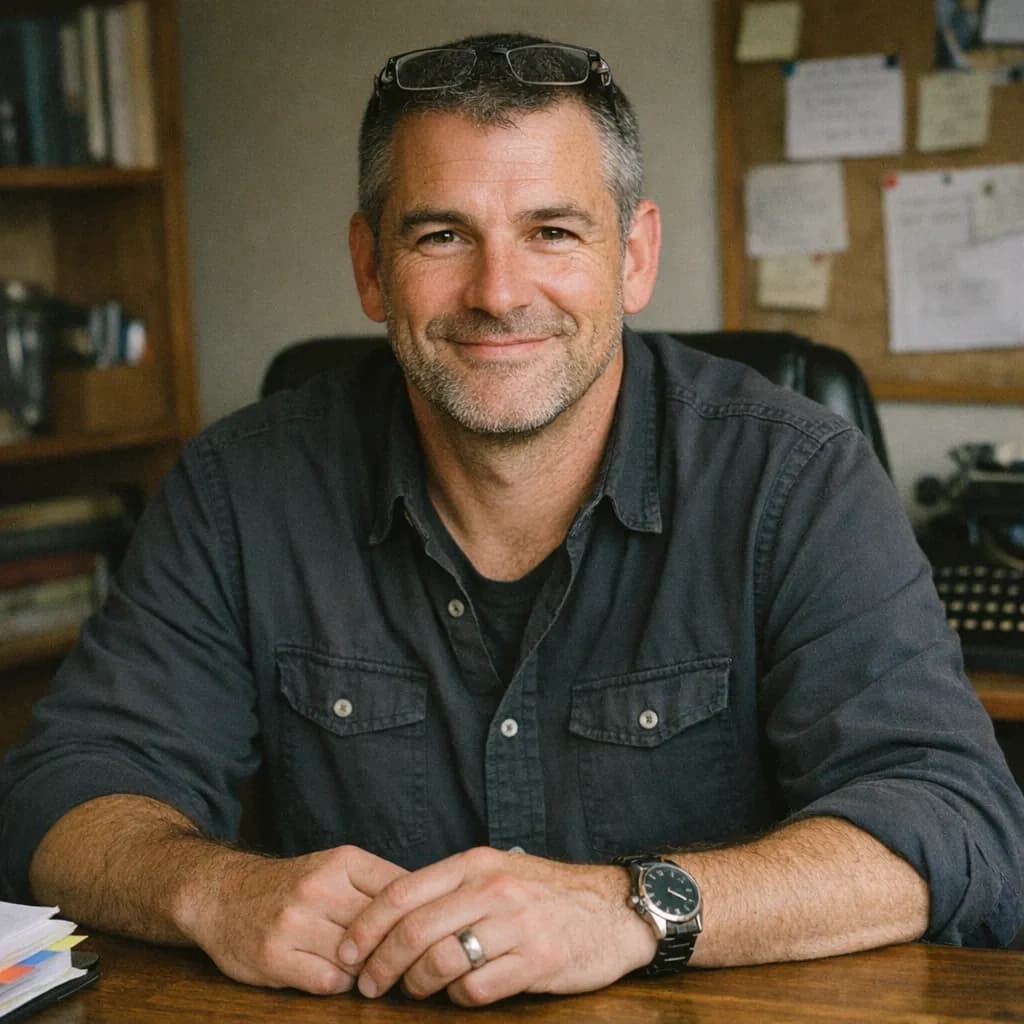
Callum Rhys Mahoney
Developmental Fiction Editor and Manuscript CoachI grew up between Wagga and my aunt’s place out near Narrandera, in a family that could argue for sport and then feed you like nothing happened. Books were around, but not in a precious way. My old man liked stories where people did what they said they’d do, even if it cost them. I still hear that voice when a character “can’t” make a decision because the plot needs another chapter. I didn’t set out to be an editor. I studied teaching, worked a few rough years in classrooms, and then left after a run of short contracts and one admin reshuffle that made it clear I was replaceable. A mate pulled me into doing learning materials and assessments because I could spot where people were gaming the question. That work taught me to watch for what the text rewards versus what it claims to reward - which is the same problem in a lot of manuscripts. I also spent a couple of seasons doing night shifts at a servo when money got tight. I kept a notebook behind the counter and wrote scenes between customers, mostly to stay awake. I remember one bloke coming in every Thursday, buying the same pie, and telling me the same story about a dog he swore was smarter than his ex. I don’t know why I remember that, but I do. Editing started as favour-work. People in town found out I’d read their drafts and I’d send back long emails with scene-by-scene notes. Somewhere along the line it became my paid work, mostly because I was consistent and because I’m not afraid to say, “This turn doesn’t belong to your protagonist.” I’m biased toward decisive characters and I don’t plan to cure myself of it; I’d rather a story risk an ugly choice than drift into polite inevitability.

Danae Marcelline Brooks
Developmental Fiction Editor & Manuscript CoachI grew up between church basements, tidewater heat, and people who could tell a whole family story while stirring a pot and never looking up. My mom kept paperback romances in a shoebox like they were contraband, and my aunt kept a shelf of mystery novels with cracked spines. I read both. I learned early that readers forgive a lot, but they don’t forgive being bored or being lied to. I didn’t come up dreaming about editing. I wanted steadier work than “writer,” and I was the kid who could take notes fast, so I ended up in admin jobs where I got volunteered into fixing other people’s documents. Outside of that, I spent a couple years doing hair out of a friend’s kitchen. That part of my life doesn’t explain my editing, but it’s true: I still remember the sound of a cape snapping and how people tell you the most pointed truths when they think you’re not allowed to answer back. Sometimes I miss that kind of honesty. A storm took out power for a week when I was in my late twenties, and I agreed to help a neighbor organize a stack of workshop pages because there wasn’t much else to do at night. The pages were a mess, but the voice was alive. I wrote margin notes the way I talk, not the way school taught me, and the neighbor asked for more. That turned into being the person people handed drafts to. I still carry this old belief that if you “work hard enough,” the story will behave. I don’t defend it, but I catch myself acting like it’s true when I see a writer piling scenes on top of scenes. Now I’m a developmental editor because I’m impatient with pretty sentences that protect a story from making decisions. My bias is I’ll side-eye passive main characters harder than most editors will, even when the genre gives them excuses. I don’t correct that. It’s the lens I read through, and writers who want a gentler read should pick someone else. If you want a first reader who will point at the exact scene where your book starts dodging consequences, I’m your person.
Frequently Asked Questions
- What makes A Clockwork Orange so compelling?
- Many people assume the violence drives the book. The real compulsion comes from voice: Alex narrates with such clarity and rhythm that you keep reading even as you object to him. Burgess also builds a clean moral machine where each consequence escalates from street-level power to state-level control, so the story feels like a tightening argument, not a parade of shocks. If you want the same grip, design a narrator who controls reader distance and a plot that steadily removes choices, not just safety.
- How long is A Clockwork Orange?
- People often treat length as a proxy for complexity, but Burgess proves you can do heavyweight work in a compact form. Most editions run around 180–220 pages, depending on formatting and the included ending. The tightness matters: Burgess moves fast, but he repeats key motifs—music, choice, conditioning—so the book accrues weight without sprawl. When you draft, measure your length against what changes in the character’s agency per chapter, not against a target word count.
- What themes are explored in A Clockwork Orange?
- A common assumption says the theme equals “violence is bad” or “government is bad.” Burgess runs a narrower, sharper line: he tests whether morality means anything without choice, and whether society commits its own brutality when it mechanizes virtue. He also explores language as social control, art as identity, and punishment as performance. Treat themes as pressures that create scene consequences—triggers, constraints, reversals—not as statements you can summarize in a paragraph.
- How does Burgess use Nadsat, and what can writers learn from it?
- Writers often assume invented slang must be dense to feel real. Burgess keeps Nadsat learnable and consistent, then uses it to manage complicity: you translate the words, and that small effort bonds you to Alex’s viewpoint. He also uses the dialect to soften and stylize brutality without hiding it, which creates moral friction. If you build a lexicon, limit it, repeat it with intention, and make it serve power dynamics in dialogue, not just flavor.
- Is A Clockwork Orange appropriate for young readers or classroom study?
- Some people treat “classic” as a safety label. This book contains sexual violence, assault, and psychological cruelty, and those elements show up on the page, not offstage. That said, teachers often choose it because it supports serious discussion about ethics, free will, and state power through concrete narrative mechanics. If you assign or recommend it, match the reader’s maturity and provide framing that emphasizes craft and argument, not shock value.
- How do I write a book like A Clockwork Orange without copying it?
- A common misconception says you need extreme content or a quirky dialect. You actually need an engine: a narrator with magnetic control and a structure that converts personal vice into institutional conflict, then into philosophical cost. Build a distinctive idiolect that stays readable, design escalating consequences that strip agency in stages, and tie theme to bodily or sensory mechanisms the reader can feel. Then test every scene by asking what choice shrinks or expands, and why that matters.
About Anthony Burgess
Build a private slang system, then leak its meaning by context to pull readers into complicity before you challenge their morals.
Anthony Burgess writes like a composer who suspects the reader will fall asleep if the beat stays steady for too long. He treats prose as scored sound: tempo changes, recurring motifs, ugly-to-pretty chord shifts, then a sudden punch of plain speech. The meaning arrives through pressure, not explanation. You feel the argument before you can paraphrase it.
His engine runs on a controlled collision: high diction against street talk, philosophy against slapstick, prayer against profanity. He loves a narrator who performs for you and also slips the knife in. That double-stance matters. You laugh, then you notice the joke aims at your moral comfort, not at a character. Burgess turns reader complicity into a craft tool.
The technical trap: people copy the surface—coinages, cleverness, “British” flourish—and miss the structural discipline underneath. Burgess builds constraints (a private lexicon, a formal pattern, a tight narrative funnel) so the chaos has rails. Without those rails, your imitation reads like noise. His style demands you manage clarity while you misbehave.
Burgess drafted with the working speed of someone paid by the hour and haunted by the calendar: get the first version down, then revise for music, consistency, and intended misreadings. You study him now because modern fiction still wrestles with the same problem he solved: how to make big ideas feel bodily, funny, and dangerous without turning the book into a lecture.














Ready to improve your draft with direction?
Open Draftly, bring your draft, and move from stuck to a stronger draft without losing your voice. Editors are on standby when you want a deeper pass.
Free welcome credits included. No credit card needed.