Half of a Yellow Sun
Book Summary & Analysis
Book summary and writing analysis of Half of a Yellow Sun by Chimamanda Ngozi Adichie.
Half of a Yellow Sun works because it never treats war as “the story.” It treats war as pressure. The central dramatic question stays personal and sharp: can these people keep the lives and loves they chose once history starts choosing for them? Adichie runs three lives through one tightening vise—Ugwu (a village boy becoming a houseboy and then something worse), Olanna (a woman trying to build a moral life inside a compromised elite), and Richard (an outsider who wants belonging and art without paying the full price). You don’t read to find out “what happened in Biafra.” You read to find out what happens to their loyalties when survival charges interest.
The inciting incident doesn’t arrive as a single explosion. It arrives as a choice that feels like progress. Ugwu leaves his village for Nsukka to work for Odenigbo, a radical lecturer, and the house fills with argument, books, and the intoxicating idea that history can bend if smart people talk hard enough. You might imitate that and think you need “big political scenes.” You don’t. You need a door that opens into a new moral weather system. Nsukka gives Ugwu language, status, and a front-row seat to adult desire. It also positions him so the later violence can’t feel distant or abstract.
Adichie escalates stakes by shrinking the characters’ options, not by inflating danger. Early, the danger feels social: family pressure, class contempt, who gets invited, who gets dismissed. Then the danger turns physical: pogroms, flight, hunger, conscription. But the escalation stays legible because she tracks concrete losses—books, a home, a salary, a sister, a child, a sense of self-respect—one by one. The setting makes this unavoidable: early 1960s Nigeria, first in university-town Nsukka, then Enugu, then refugee roads and camps as the Biafran secession and civil war (1967–1970) grind everything down.
The primary opposing force looks like “war,” but war never acts alone. Adichie builds the real antagonist as a system: ethnic violence, state power, propaganda, famine, and the human talent for denial. You see it in how quickly educated certainty turns into ration lines. You see it in how characters bargain with their own ethics to keep moving. If you copy this book naively, you might paint the antagonist as faceless evil and call it seriousness. Adichie refuses that shortcut. She lets ordinary people commit ordinary cruelties under extraordinary permission.
Structurally, the novel gains power from its calibrated out-of-order timeline and rotating focalization. Adichie doesn’t scramble time to look clever. She uses temporal crosscutting to plant dread. She lets you glimpse outcomes, then forces you to watch the decisions that make them inevitable. Each viewpoint covers a different kind of vulnerability: Ugwu learns; Olanna chooses; Richard rationalizes. The technique teaches a brutal craft lesson: you can make a reader feel “history” by controlling when they learn things, not by adding more facts.
The engine peaks when personal fault lines collide with public collapse. Love triangles and betrayals don’t sit beside war as “subplot.” They train the reader’s nervous system to recognize what loss feels like before the bombs make it loud. That’s why the book’s biggest punches land: Adichie sets up intimacy as a stakes-amplifier. Then she turns the amplifier toward starvation, displacement, and the costs of complicity. You don’t finish the book admiring a thesis. You finish it hearing the sound a life makes when it breaks and keeps going.
Story Structure & Narrative Arc
Story structure and emotional arc in Half of a Yellow Sun.
The book runs a Man-in-a-Hole arc disguised as a political epic. Ugwu starts in bright hunger and certainty—he believes proximity to education and “the right people” can make him good and safe. He ends with earned knowledge, moral injury, and a thinner, harder kind of hope that refuses fantasies.
Adichie earns her lows through contrast. She opens with comedy, domestic bustle, and intellectual swagger, so each later deprivation reads as subtraction, not mood. She engineers major sentiment shifts by tying public events to private thresholds: a decision to flee, a missing person, a humiliating compromise, an irreversible act. When the climactic moments hit, they land because you already watched these characters practice smaller forms of self-betrayal and courage in ordinary rooms.

Studying this book—and stuck on your pages?
Put your draft in Draftly. Fix scenes and dialogue in the text—not in another tab. When you want sharper feedback, AI editors are ready.
Free welcome credits included. No credit card needed.Writing Lessons from Half of a Yellow Sun
What writers can learn from Chimamanda Ngozi Adichie in Half of a Yellow Sun.
Adichie uses a braided structure to solve a craft problem you probably wrestle with: how to dramatize a massive historical event without shrinking your characters into symbols. She assigns each viewpoint a different kind of blindness. Ugwu lacks knowledge but absorbs detail; Olanna owns education but can’t outthink grief; Richard owns sensitivity but keeps begging for legitimacy. That division creates narrative torque. When the same crisis hits, each character misreads it in a different way, and the reader feels the full shape of the catastrophe without a lecturer stepping onstage.
Watch her dialogue in Odenigbo’s living room, especially the arguments between Odenigbo and Miss Adebayo with Ugwu hovering at the edges. The talk snaps because each speaker protects an identity, not an opinion. Odenigbo performs intellectual dominance; Miss Adebayo performs fearless modernity; Ugwu performs silent apprenticeship. You can steal this: build scenes where the subtext carries social hunger. Don’t write “political debate.” Write status combat with consequences for who gets loved, fed, or respected after the guests leave.
Adichie builds atmosphere through object-level specificity rather than “beautiful writing.” She makes Nsukka feel like heat, dust, kitchen smells, and the texture of a university town with ideas in the air. Later, she makes refugee movement feel like road grit, crowded rooms, and the cruel arithmetic of food. She anchors ideology to place. You should notice how often she returns to domestic spaces—kitchen, bedroom, yard—to measure the war’s encroachment. Many modern novels take the shortcut of cinematic war scenes. Adichie makes a tin of milk and a line for rations carry the terror.
The book also teaches restraint with sympathy. Adichie refuses to keep her characters “likable,” and that choice buys her trust. She lets them fail privately while the public disaster worsens, so the reader never escapes into moral tourism. She also refuses tidy redemption. When Ugwu changes, he changes through damage and memory, not through a speech. If you want to write with this kind of authority, you must let consequences stick on the page and in the psyche, even when you fear the reader will judge your character and, by extension, you.
How to Write Like Chimamanda Ngozi Adichie
Writing tips inspired by Chimamanda Ngozi Adichie's Half of a Yellow Sun.
Control your tone the way Adichie does. She writes with clarity first, lyricism second, and she saves the sharper poetry for moments when the character’s perception tilts. If you try to sound “literary” on every line, you’ll smother the engine. Build a plainspoken narrative surface that can carry sudden heat. Let humor show up in domestic moments, then cut it off clean when danger arrives. That contrast creates credibility. And don’t narrate from a podium. Narrate from inside a room where someone wants something and might not get it.
Construct characters by giving each one a private hunger and a public pose, then force them to choose which one pays the bill. Ugwu hungers for growth and belonging; he poses as the good boy. Olanna hungers for moral cleanliness; she poses as composed sophistication. Richard hungers for authenticity; he poses as the sensitive outsider who “understands.” You should track those pairs scene by scene. When you revise, underline every decision your character makes under stress. If the decision doesn’t cost them status, love, safety, or self-respect, you wrote an event, not development.
Avoid the big trap of the “historical issue novel,” where the author confuses information with drama. Adichie knows facts matter, but she never uses facts to replace choice. She also avoids the prestige shortcut of flattening villains and polishing victims. Instead, she shows how fear, ambition, and exhaustion make people do ugly things while still believing they act reasonably. If you write this genre, you must resist tidy moral signage. Put the ethical problem inside the character’s daily logistics. Make them choose between two goods or two harms, not good and evil.
Write one chapter using Adichie’s pressure method. Pick a domestic scene where your character feels safe and even a little smug. Seed it with one concrete external stressor that seems manageable at first, like a rumor, a shortage, a visitor, a new rule. Then write three versions of the scene from three viewpoints with three different blind spots, and stagger them in time so the reader learns the consequence before they see the choice. Finally, revise to remove every abstract sentence. Replace each one with a prop, a gesture, or a line of dialogue that reveals the same truth.
Who Would Edit This Book?

Callum Rhys Mahoney
Developmental Fiction Editor and Manuscript CoachI grew up between Wagga and my aunt’s place out near Narrandera, in a family that could argue for sport and then feed you like nothing happened. Books were around, but not in a precious way. My old man liked stories where people did what they said they’d do, even if it cost them. I still hear that voice when a character “can’t” make a decision because the plot needs another chapter. I didn’t set out to be an editor. I studied teaching, worked a few rough years in classrooms, and then left after a run of short contracts and one admin reshuffle that made it clear I was replaceable. A mate pulled me into doing learning materials and assessments because I could spot where people were gaming the question. That work taught me to watch for what the text rewards versus what it claims to reward - which is the same problem in a lot of manuscripts. I also spent a couple of seasons doing night shifts at a servo when money got tight. I kept a notebook behind the counter and wrote scenes between customers, mostly to stay awake. I remember one bloke coming in every Thursday, buying the same pie, and telling me the same story about a dog he swore was smarter than his ex. I don’t know why I remember that, but I do. Editing started as favour-work. People in town found out I’d read their drafts and I’d send back long emails with scene-by-scene notes. Somewhere along the line it became my paid work, mostly because I was consistent and because I’m not afraid to say, “This turn doesn’t belong to your protagonist.” I’m biased toward decisive characters and I don’t plan to cure myself of it; I’d rather a story risk an ugly choice than drift into polite inevitability.
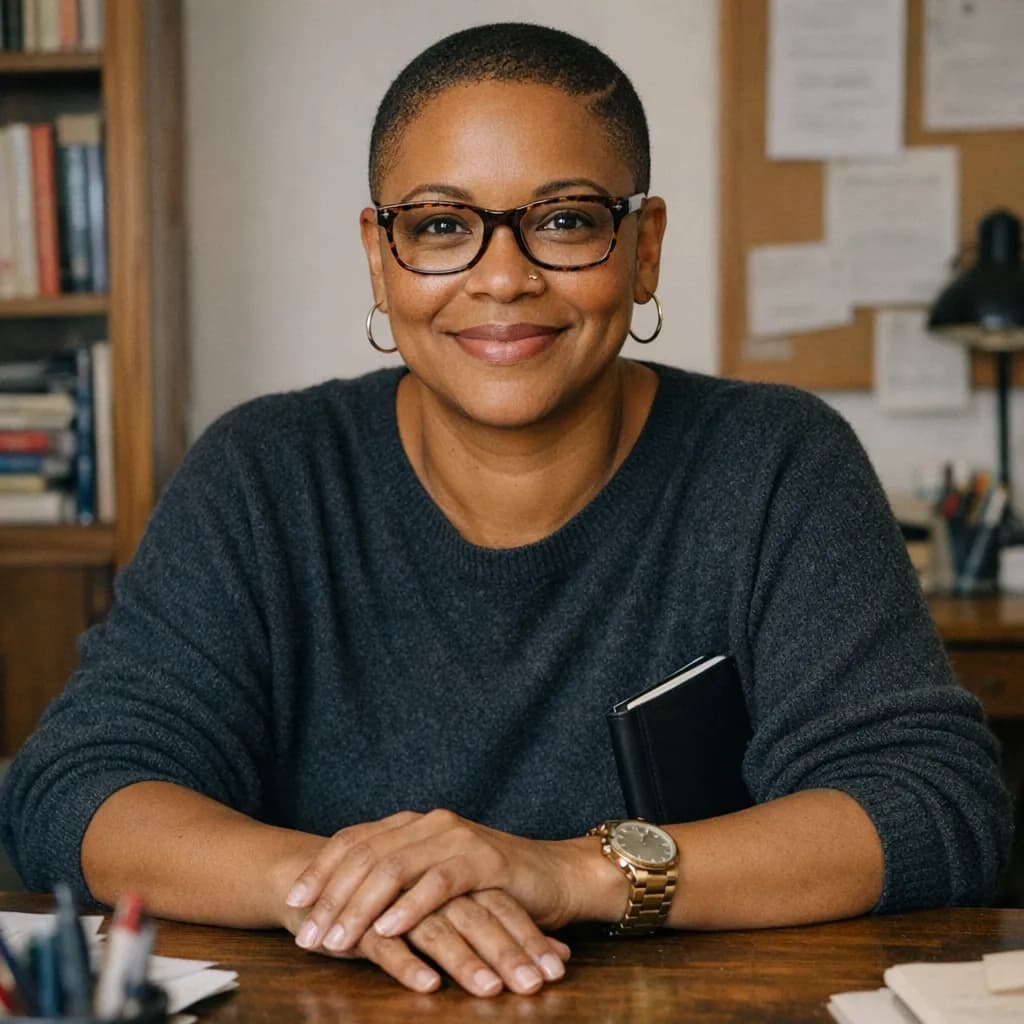
Danae Marcelline Brooks
Developmental Fiction Editor & Manuscript CoachI grew up between church basements, tidewater heat, and people who could tell a whole family story while stirring a pot and never looking up. My mom kept paperback romances in a shoebox like they were contraband, and my aunt kept a shelf of mystery novels with cracked spines. I read both. I learned early that readers forgive a lot, but they don’t forgive being bored or being lied to. I didn’t come up dreaming about editing. I wanted steadier work than “writer,” and I was the kid who could take notes fast, so I ended up in admin jobs where I got volunteered into fixing other people’s documents. Outside of that, I spent a couple years doing hair out of a friend’s kitchen. That part of my life doesn’t explain my editing, but it’s true: I still remember the sound of a cape snapping and how people tell you the most pointed truths when they think you’re not allowed to answer back. Sometimes I miss that kind of honesty. A storm took out power for a week when I was in my late twenties, and I agreed to help a neighbor organize a stack of workshop pages because there wasn’t much else to do at night. The pages were a mess, but the voice was alive. I wrote margin notes the way I talk, not the way school taught me, and the neighbor asked for more. That turned into being the person people handed drafts to. I still carry this old belief that if you “work hard enough,” the story will behave. I don’t defend it, but I catch myself acting like it’s true when I see a writer piling scenes on top of scenes. Now I’m a developmental editor because I’m impatient with pretty sentences that protect a story from making decisions. My bias is I’ll side-eye passive main characters harder than most editors will, even when the genre gives them excuses. I don’t correct that. It’s the lens I read through, and writers who want a gentler read should pick someone else. If you want a first reader who will point at the exact scene where your book starts dodging consequences, I’m your person.
Frequently Asked Questions
- What makes Half of a Yellow Sun so compelling?
- Many readers assume it works because the subject matter carries automatic weight. The book actually compels because Adichie makes history act on intimate needs: belonging, love, status, moral pride, safety. She crosscuts viewpoints and timelines to create dread, then cashes it out in concrete losses you can picture and count. If you want similar pull, you must build scenes where a character’s personal desire collides with a public force and the character still chooses—then you must let that choice leave a mark.
- How long is Half of a Yellow Sun?
- People often treat length as a badge of seriousness or a barrier to entry. Most editions run roughly 430–550 pages depending on formatting, but the more useful question involves density: Adichie spends pages to accumulate domestic normalcy so later deprivation registers as real subtraction. If you study it for craft, track how she uses scene length to control attachment, not just pacing. Let your own project earn its length through consequences, not through explanation.
- How do I write a book like Half of a Yellow Sun?
- A common rule says you should “write what you know,” which many people misread as “write your opinions loudly.” Adichie writes what she understands about human behavior under pressure, then she anchors it in researched specificity and lived texture. You should copy the mechanism, not the surface: multiple viewpoints with distinct blind spots, domestic stakes that scale into political stakes, and a timeline that reveals outcomes to intensify choices. Draft your scenes as moral tests, then revise until every test forces a cost.
- What themes are explored in Half of a Yellow Sun?
- Many summaries list themes as if naming them creates meaning. Adichie makes themes behave like forces: nationalism versus survival, love versus loyalty, class privilege versus bodily vulnerability, and the ethics of storytelling itself. She embeds them in arguments at Nsukka, in family negotiations, and in the humiliations of rationing and flight. If you want thematic strength, stop announcing ideas and start staging collisions where two values can’t both win, then make your character pick.
- Is Half of a Yellow Sun appropriate for younger readers?
- People often assume “historical fiction” equals safe classroom material. This novel includes war brutality, ethnic violence, sexual content, and moral injury, and it refuses to soften consequences for comfort. Mature older teens can read it with guidance, but you should match it to the reader’s readiness for trauma portrayal and ambiguity rather than to a neat age label. As a writer, notice how Adichie handles difficult material with specificity and restraint, not sensationalism.
- What writing lessons can authors learn from Half of a Yellow Sun?
- Writers often assume the lesson involves big themes and elegant prose. The sharper lesson involves control: Adichie controls viewpoint, time, and scene focus so the reader feels scale without losing intimacy. She uses domestic life as a measuring stick, so every political turn translates into what characters eat, where they sleep, and how they talk to each other. If you apply one lesson, make every historical beat change a relationship on the page, then check that you dramatize the change through action.
About Chimamanda Ngozi Adichie
Use calm, specific scenes to smuggle big arguments into the reader’s bloodstream—so they feel the idea before they can resist it.
Chimamanda Ngozi Adichie writes with a rare kind of control: she keeps the sentence clean while the ideas stay thorny. She builds meaning through contrast—private desire against public pressure, belonging against exile, what people say against what they can’t afford to admit. The surface reads smooth. Under it, every scene runs on social physics: status, shame, pride, and the tiny negotiations that decide who gets to be “normal.”
Her engine works through specificity that doesn’t show off. A brand name, a prayer style, a food smell, a classroom rule—small details that act like receipts. They certify the world so you trust her when she asks you to hold two truths at once. She uses this trust to move you into uncomfortable moral clarity: you start by judging, then you notice the cost of your judgment, then you revise yourself.
The technical difficulty: her prose refuses to announce its cleverness. The voice often sounds plain, but the structure rarely is. She shifts distance with surgical timing—close enough for intimacy, far enough for critique. And she embeds argument inside lived moments, so the story never turns into a lecture even when it carries a thesis.
Modern writers need her because she proved you can write politically without writing propaganda, and you can write globally without smoothing away local texture. In interviews she has described drafting and redrafting with rigor—staying loyal to clarity, cutting explanation, and revising until the emotional logic feels inevitable. You don’t imitate her by copying her calmness. You imitate her by earning it.














Ready to improve your draft with direction?
Open Draftly, bring your draft, and move from stuck to a stronger draft without losing your voice. Editors are on standby when you want a deeper pass.
Free welcome credits included. No credit card needed.