Things Fall Apart
Book Summary & Analysis
Book summary and writing analysis of Things Fall Apart by Chinua Achebe.
Things Fall Apart works because it asks a brutal central dramatic question and refuses to soften the answer: Can Okonkwo—an Igbo warrior and farmer in late-19th-century Umuofia (southeastern Nigeria)—build an identity strong enough to outmuscle shame, change, and the slow arrival of outsiders? Achebe doesn’t frame this as “man vs. colonizers” at first. He frames it as “man vs. his own rulebook,” then he tests that rulebook in public, in ritual, and in family.
If you imitate this book badly, you will copy the “cultural detail” and miss the mechanism. Achebe builds credibility by treating Igbo life as normal life—economics, jokes, proverbs, petty disputes, religious practice, status anxiety—then he turns those ordinary systems into a pressure chamber. Every custom carries a cost. Every social reward demands a moral payment. You don’t watch Okonkwo fight a villain; you watch him try to out-run a fear he never admits.
The inciting incident doesn’t arrive as an explosion. It arrives as a bargain that forces Okonkwo to live with a living symbol of his community’s politics. Umuofia takes Ikemefuna, a boy from Mbaino, as settlement for a murder. The clan assigns the boy to Okonkwo’s household. That decision looks administrative, even routine, and that’s the point. Achebe uses it to set a fuse inside the domestic space, where Okonkwo performs “strength” for an audience that includes his wives, his children, and himself.
From there, the book escalates stakes by making each “correct” action cost more than the last. Okonkwo’s household grows, his reputation hardens, and his son Nwoye begins to drift toward stories and softness—toward everything Okonkwo links to his father Unoka’s failure. Achebe keeps tightening the moral vise: if Okonkwo shows tenderness, he fears he becomes Unoka; if he refuses tenderness, he risks breaking the people he claims to lead.
The primary opposing force starts as internal—Okonkwo’s terror of weakness—and then it recruits external allies: clan law, public opinion, and later the missionaries and colonial court. Notice the order. Achebe earns the later “history” by first making you understand how a proud, functional community enforces itself. So when a new power arrives, it doesn’t replace a blank slate; it collides with an already working system full of cracks.
Achebe turns the second major structural pivot into a craft lesson about consequence. After Okonkwo commits a serious offense against the community (not a private sin, a public rupture), he leaves Umuofia for exile in Mbanta. You might expect exile to pause the story. Achebe uses it to widen the lens. Okonkwo loses daily status, daily friction, daily proof of who he thinks he is—and that absence makes him louder, not wiser. He returns with a plan for a world that no longer exists.
When the missionaries and the new government gain ground, Achebe doesn’t write a simple takeover plot. He writes a conversion plot. Individuals choose. Families split. Language changes meaning. That’s where the stakes climb: Okonkwo no longer fights for personal pride; he fights to keep the old forms of honor recognizable. He wants a clean, heroic conflict. Achebe gives him a messy one: persuasion, compromise, and bureaucracy.
The ending works because Achebe never lets Okonkwo become a symbol without remaining a man. Okonkwo makes a final, violent bid to force his community into the story he believes in. The community refuses the role. If you try to imitate this and you only imitate “a tragic ending,” you will miss the real craft: Achebe engineers tragedy by letting the protagonist’s best tool—unyielding will—become the very thing that makes him unfit for the new problem.
Story Structure & Narrative Arc
Story structure and emotional arc in Things Fall Apart.
Achebe writes a tragedy with a delayed fuse: a “Man of Iron in a World That Requires Bend.” Okonkwo starts with status, certainty, and a strict internal law—strength equals virtue, softness equals failure. He ends cornered inside his own definition of manhood, unable to adapt without feeling like he dies first.
The power comes from sharp sentiment shifts that feel earned, not announced. Achebe builds warmth and texture in everyday village life, then slices it with public decisions that demand private sacrifice. Each rise in Okonkwo’s fortune also tightens his cage. When the outsiders arrive, you already understand the clan’s logic, so the conflict lands as loss of meaning, not just loss of power. The climax hits hard because Okonkwo tries to force an old narrative onto a new audience—and the silence answers him.

Studying this book—and stuck on your pages?
Put your draft in Draftly. Fix scenes and dialogue in the text—not in another tab. When you want sharper feedback, AI editors are ready.
Free welcome credits included. No credit card needed.Writing Lessons from Things Fall Apart
What writers can learn from Chinua Achebe in Things Fall Apart.
Achebe earns your trust with controlled plainness. He writes in clean, direct sentences, then spikes them with proverbs and folktales that work like moral commentary and like texture. The trick: he doesn’t paste in “local color.” He uses sayings to show how people think under stress, how they justify, tease, warn, and negotiate status. When you borrow this approach, you must make each proverb do a job in the scene—shift power, sharpen a choice, reveal a value—otherwise it reads like decoration.
He builds character through reputation plus contradiction. Okonkwo looks simple if you stop at “violent, proud, hardworking.” Achebe keeps turning him so you see the engine: fear. Okonkwo fears his father’s laziness, debt, and music; he fears laughter; he fears softness in himself and in Nwoye. That fear drives scenes, not speeches. You can watch it in the domestic moments: he polices his household not just with anger but with performance. Writers who copy the surface will write “a tough guy.” Achebe writes a man auditioning for his own approval.
Achebe’s dialogue stays economical and socially loaded. Listen to the conversations between Okonkwo and Nwoye: Okonkwo interrogates what Nwoye enjoys, what stories he prefers, what kind of man he might become. He doesn’t argue philosophy; he applies pressure through contempt, tests, and abrupt commands. Then Achebe lets silence do the rest. Many modern novels over-explain family conflict with therapy-language or long backstory dumps. Achebe keeps it tribal, immediate, and physical. He makes every line carry a social consequence.
For atmosphere and world-building, Achebe anchors you in communal spaces that force behavior. He returns to locations like the village meeting places, the wrestling grounds, the marketplace, and the sacred spaces where people weigh decisions as a group. The setting in Umuofia doesn’t sit in the background; it adjudicates. That choice matters because the later arrival of missionaries and the court doesn’t just add new characters—it adds a rival system for deciding what counts as right. If you want this level of authority, you must build a world that can argue with your protagonist.
How to Write Like Chinua Achebe
Writing tips inspired by Chinua Achebe's Things Fall Apart.
Write with restraint first, then layer meaning. Achebe’s voice never begs you to admire it. He keeps the syntax clear, then he lets cultural idiom and proverb do the coloring. You should do the same. Draft your scenes in plain, modern clarity, then revise by adding only the phrases and images your viewpoint community would naturally use under pressure. If a line sounds like you showing off research, cut it. If it sounds like someone trying to win an argument in public, keep it.
Build your protagonist as a social instrument with a private wound. Okonkwo doesn’t float in abstract “trauma.” He measures himself in yams, titles, wives, wrestling fame, and public obedience. Those metrics give you scenes. Then Achebe plants one wound that corrupts every metric: fear of weakness. Give your character a concrete ladder they climb, then make them climb it for a reason they can’t admit. Track how that reason breaks their closest relationships first, because private damage sells public tragedy.
Avoid the prestige trap of flattening a culture into a message. Achebe refuses to write saints or cartoons. He shows beauty and cruelty inside the same system, and he shows individuals who benefit from it and suffer under it. Many writers chase a clean moral diagram—oppressed good, oppressor bad—and they lose the reader’s respect fast. Instead, dramatize competing values inside the community before an outside force arrives. Let readers feel why people protect customs even when those customs cut.
Try this exercise and don’t cheat. Write a 1,200–1,800 word sequence in three linked scenes set inside a tight-knit community. Scene one shows a public decision that seems reasonable. Scene two shows the private cost of that decision inside a household. Scene three shows the protagonist choosing reputation over tenderness in a way that “makes sense” in their world and still horrifies the reader. Use one proverb or folk story in each scene, but make it change the power dynamic, not decorate the page.
Who Would Edit This Book?

Callum Rhys Mahoney
Developmental Fiction Editor and Manuscript CoachI grew up between Wagga and my aunt’s place out near Narrandera, in a family that could argue for sport and then feed you like nothing happened. Books were around, but not in a precious way. My old man liked stories where people did what they said they’d do, even if it cost them. I still hear that voice when a character “can’t” make a decision because the plot needs another chapter. I didn’t set out to be an editor. I studied teaching, worked a few rough years in classrooms, and then left after a run of short contracts and one admin reshuffle that made it clear I was replaceable. A mate pulled me into doing learning materials and assessments because I could spot where people were gaming the question. That work taught me to watch for what the text rewards versus what it claims to reward - which is the same problem in a lot of manuscripts. I also spent a couple of seasons doing night shifts at a servo when money got tight. I kept a notebook behind the counter and wrote scenes between customers, mostly to stay awake. I remember one bloke coming in every Thursday, buying the same pie, and telling me the same story about a dog he swore was smarter than his ex. I don’t know why I remember that, but I do. Editing started as favour-work. People in town found out I’d read their drafts and I’d send back long emails with scene-by-scene notes. Somewhere along the line it became my paid work, mostly because I was consistent and because I’m not afraid to say, “This turn doesn’t belong to your protagonist.” I’m biased toward decisive characters and I don’t plan to cure myself of it; I’d rather a story risk an ugly choice than drift into polite inevitability.
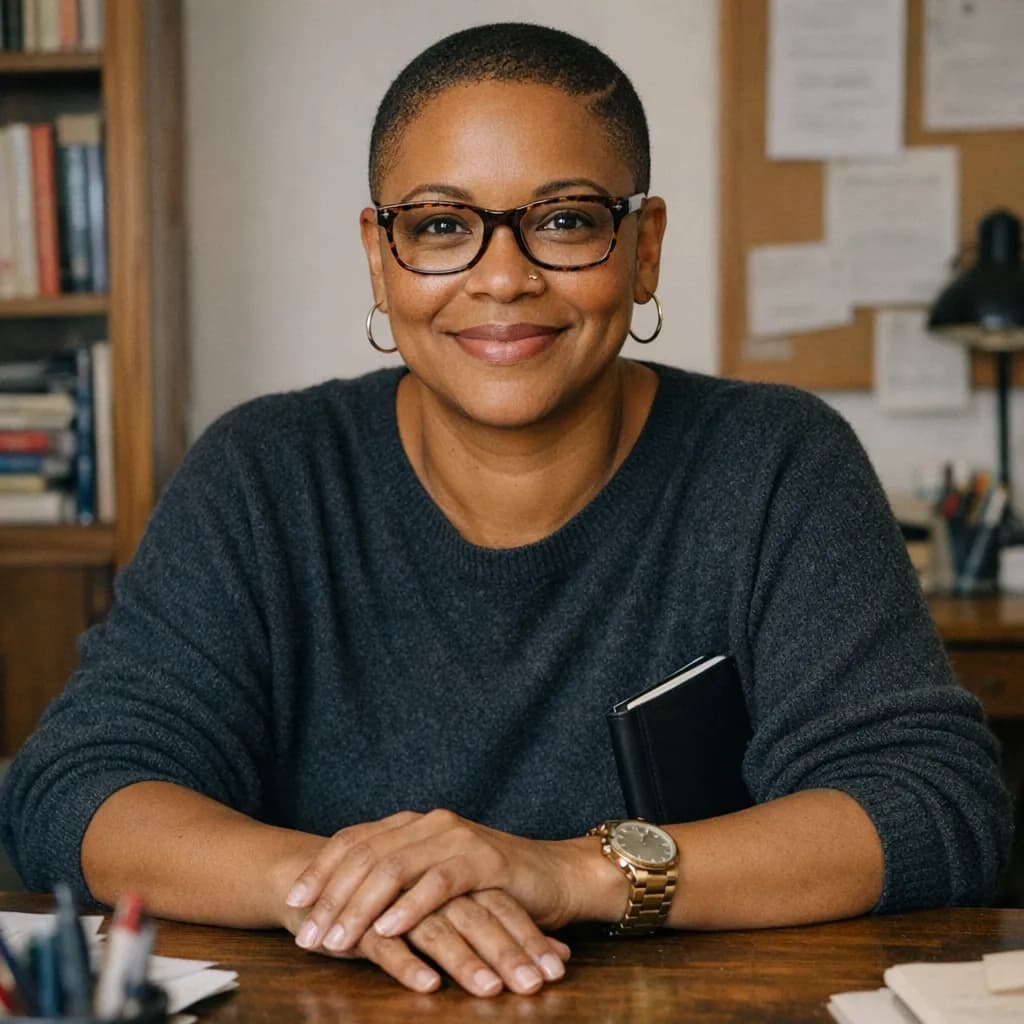
Danae Marcelline Brooks
Developmental Fiction Editor & Manuscript CoachI grew up between church basements, tidewater heat, and people who could tell a whole family story while stirring a pot and never looking up. My mom kept paperback romances in a shoebox like they were contraband, and my aunt kept a shelf of mystery novels with cracked spines. I read both. I learned early that readers forgive a lot, but they don’t forgive being bored or being lied to. I didn’t come up dreaming about editing. I wanted steadier work than “writer,” and I was the kid who could take notes fast, so I ended up in admin jobs where I got volunteered into fixing other people’s documents. Outside of that, I spent a couple years doing hair out of a friend’s kitchen. That part of my life doesn’t explain my editing, but it’s true: I still remember the sound of a cape snapping and how people tell you the most pointed truths when they think you’re not allowed to answer back. Sometimes I miss that kind of honesty. A storm took out power for a week when I was in my late twenties, and I agreed to help a neighbor organize a stack of workshop pages because there wasn’t much else to do at night. The pages were a mess, but the voice was alive. I wrote margin notes the way I talk, not the way school taught me, and the neighbor asked for more. That turned into being the person people handed drafts to. I still carry this old belief that if you “work hard enough,” the story will behave. I don’t defend it, but I catch myself acting like it’s true when I see a writer piling scenes on top of scenes. Now I’m a developmental editor because I’m impatient with pretty sentences that protect a story from making decisions. My bias is I’ll side-eye passive main characters harder than most editors will, even when the genre gives them excuses. I don’t correct that. It’s the lens I read through, and writers who want a gentler read should pick someone else. If you want a first reader who will point at the exact scene where your book starts dodging consequences, I’m your person.
Frequently Asked Questions
- What makes Things Fall Apart so compelling for writers?
- Many readers assume the novel grips you because it tackles colonialism, and that theme matters. Achebe also hooks you through craft: he builds a complete moral and social system, then he pits a man addicted to certainty against a world that shifts through small, believable choices. Okonkwo doesn’t “learn a lesson,” and that refusal creates tragic momentum. If you want the same force, you must design values, rewards, and punishments that feel inevitable, then let your protagonist cling to one value until it breaks them.
- How long is Things Fall Apart?
- People often think length determines depth, and they expect a sprawling epic. Things Fall Apart runs roughly 200 pages in many editions, and Achebe uses compression as a weapon: short scenes, quick transitions, and sharp selection of detail create the sense of a whole world without lingering. As a writer, notice how he skips connective tissue and trusts the reader to infer. If your draft feels slow, you probably explain what Achebe implies through action, ritual, and consequence.
- What themes are explored in Things Fall Apart?
- A common assumption says the book “is about colonialism,” full stop. Achebe explores bigger craft-friendly themes: the cost of masculinity performed as violence, the tension between communal law and personal conscience, faith as social belonging, and change as a series of choices rather than a single invasion. He also explores how language shapes what a society can imagine. When you write theme, don’t state it; stage it. Put two characters with different value systems into a decision that charges them both a price.
- How does Achebe build such a vivid setting in Things Fall Apart?
- Writers often believe vivid setting comes from long description or “sensory detail” checklists. Achebe builds Umuofia through function: crops, marriage negotiations, festivals, justice, gossip, and religious practice, all shown in scenes where people want something. The setting stays vivid because it keeps scoring behavior. Try this: every time you describe a place, attach it to a rule the community enforces there. If the location doesn’t change what characters can say or do, it will read like scenery.
- Is Things Fall Apart appropriate for high school or younger readers?
- Many assume “classic” equals safe, and that assumption misleads. The novel includes violence, death (including of a child), and intense cultural conflict, but it treats these elements with seriousness rather than sensationalism. For younger audiences, the key issue involves readiness for moral complexity: Achebe refuses simple heroes and villains. If you teach or write for that age group, you can mirror the approach by framing hard scenes around consequence and community reaction, not shock value.
- How do I write a book like Things Fall Apart without copying it?
- A common rule says you should copy structure, not surface, and that rule applies here. Don’t mimic proverbs, village life, or the historical context unless you own that knowledge and responsibility. Do borrow the engine: build a coherent community with enforceable values, create a protagonist whose “strength” also contains a fatal rigidity, and introduce change through believable, incremental choices that split families before they split nations. Then revise for honesty: if your protagonist’s flaw never costs them something they love, you wrote attitude, not tragedy.
About Chinua Achebe
Use plain declarative sentences plus delayed judgment to make the reader supply the moral verdict—and feel it land harder.
Chinua Achebe writes like a calm witness with a sharpened blade. He builds authority through plain statements that carry cultural weight, then lets the reader feel the impact a beat later. The trick is not “simplicity.” It’s control. He chooses what to explain, what to translate, and what to leave standing, and that choice makes the page feel both accessible and uncompromising.
Achebe’s engine runs on two tracks at once: story and argument, fused so tightly you stop noticing the seam. He uses proverb logic, communal observation, and matter-of-fact detail to establish a world as normal—then he introduces a pressure that reveals the cost of that normal. You don’t get told what to think. You get given enough structure that your judgment becomes inevitable.
Imitating him fails when you copy the surface: the clean sentences, the “African proverb” flavor, the restrained voice. The hard part lives underneath: how he stages moral choice, how he balances irony with empathy, how he switches between the village’s collective lens and an individual’s narrowing vision without announcing the shift.
Modern writers need him because he proved you can write in a clear, reader-facing English and still refuse the reader’s default assumptions. He changed what “neutral narration” can do: it can carry politics without speeches. He drafted with an editor’s eye for proportion—scene against summary, intimacy against distance—revising for clarity and pressure, not decoration.














Ready to improve your draft with direction?
Open Draftly, bring your draft, and move from stuck to a stronger draft without losing your voice. Editors are on standby when you want a deeper pass.
Free welcome credits included. No credit card needed.