Inferno
Book Summary & Analysis
Book summary and writing analysis of Inferno by Dante Alighieri.
Inferno works because it turns moral argument into forward motion. The central dramatic question never relaxes: will Dante (the pilgrim) earn a way back to God and meaning, or will confusion and self-deception keep him lost? Dante doesn’t “explore Hell” for vibes. He races a deadline and a verdict. Every encounter functions like a cross-examination where the witness (a sinner) tries to control the story, and the pilgrim has to decide what to believe, what to pity, and what to reject.
The inciting incident hits in the opening scene in the dark wood when three beasts block Dante’s climb toward the sunlit hill and he turns back in panic. That choice matters. He doesn’t just feel bad; he fails a test in public, in daylight, with his future visible on the slope above him. Then Virgil appears and offers a single, costly solution: go down to go up, and accept guidance. If you imitate Inferno naively, you will copy the “cool monsters” and miss the actual ignition, which comes from a protagonist who tries the obvious route, fails, and must accept a humiliating new method.
The opposing force wears many masks, but you can name it: spiritual inertia. Hell supplies weather, geography, and bureaucracy, but Dante’s real antagonist shows up as rationalization, seductive speech, and the human habit of making sin sound like fate. Virgil fights beside Dante, yet even he can’t solve the core problem for him. Dante must train his attention. He must stop treating suffering as entertainment and start reading it as evidence.
The setting gives the book its pressure-cooker physics. Dante places you in 1300, on the cusp of Easter, and he maps the afterlife like a grim civil engineer: circles, ledges, moats, rivers, gates, and a literal city. Each location forces a different kind of scene. A storm strips agency from the lustful; a rain of filth turns gluttony into environment; a boiling river makes violence visible. The world does not “mirror theme.” It enforces it.
Structure does the heavy lifting. Each circle works like an episode with a repeatable scene pattern: approach, warning, spectacle, conversation, exit. The repetition comforts you just enough to make the next variation hit harder. Stakes escalate through proximity. Early punishments horrify, but they still let Dante react as a tourist. Later, Hell demands choices: intervene or keep moving, believe a compelling liar or trust the architecture, cling to pity or learn discernment.
Dante also escalates by sharpening the blade of recognition. He stocks Hell with named figures—mythic, biblical, and contemporary—so every scene carries social risk. When Dante meets Francesca da Rimini, her lyric self-defense tries to recruit your sympathy; when he meets Filippo Argenti, his disgust erupts; when he confronts Ulysses, admiration becomes a trap. That variety prevents the book from becoming a single-note punishment parade. Each encounter tests a different weakness in the protagonist.
The midpoint shift arrives when “spectacle” stops satisfying Dante and the book starts arguing directly with the reader’s appetite for spectacle. You watch Dante learn that compassion can turn into complicity. You also watch Virgil’s limits show. He can explain, but he can’t grant grace, and the underworld’s gatekeepers remind you that authority and access do not equal salvation. If you copy only the tour-guide dynamic, you will write a chatty travelogue. Dante writes a curriculum.
By the time Dante reaches the lower depths, the book tightens its logic: sins become colder, more deliberate, and more political. The language cools. The punishments simplify into brutal clarity. The final movement toward Lucifer pays off the original promise: Dante doesn’t “defeat” Hell; he learns how to move through it without letting it move into him. He exits not because he outmuscles the place, but because he finally understands the rules he kept trying to negotiate.
Story Structure & Narrative Arc
Story structure and emotional arc in Inferno.
Inferno follows a Man-in-a-Hole arc with a twist: the hole itself teaches. Dante starts confused, self-excusing, and desperate for a shortcut back to the “right path.” He ends clearer-eyed and tougher-minded, still shaken but no longer negotiable. He trades emotional reflex for judgment, which counts as growth in a story where pity can kill your progress.
The sentiment shifts land because Dante makes each descent feel like a fresh bargain. Awe turns to dread, dread turns to fascination, fascination turns to nausea, and nausea finally turns to a clean, almost clinical resolve. Low points hit hardest when Dante meets persuasive sinners who sound like modern memoirists—fluent, wounded, and selective with facts—because you feel how easily you could buy the same story. The climax works because the book removes heat and noise; it ends in cold, simple betrayal, then flips the physical world so “down” becomes the route to “up.”

Studying this book—and stuck on your pages?
Put your draft in Draftly. Fix scenes and dialogue in the text—not in another tab. When you want sharper feedback, AI editors are ready.
Free welcome credits included. No credit card needed.Writing Lessons from Inferno
What writers can learn from Dante Alighieri in Inferno.
Dante designs Inferno as a sequence of courtroom scenes disguised as travel writing. Each episode stages a claim, a counterclaim, and a sentence already in force. You don’t read for “what happens next” so much as “what will this soul say to justify itself, and will the pilgrim accept it?” That format solves a problem many modern writers dodge with abstraction: how to dramatize theme without turning your narrator into a lecturer. Dante lets the damned speak, and he makes their punishments argue back.
Pay attention to how Dante handles dialogue when he meets Francesca da Rimini. She tells a love story that sounds tender and inevitable, and she frames herself as acted upon by Love itself. Dante doesn’t interrupt with a sermon; he collapses. That fainting spell serves craft, not melodrama. It proves the speech worked on him. Then the poem keeps moving, and the next circles implicitly rebut her rhetoric with uglier, less romantic forms of self-deception. You can learn a lot here about letting a charismatic character “win” a scene while still losing the book.
The atmosphere comes from concrete logistics, not fog machines. Dante gives you specific places with working properties: the vestibule with its aimless milling, the river crossings, the walls of the city of Dis, the ice of Cocytus. He uses sensory patterns to make ethics physical. Wind equals ungoverned appetite. Filthy rain equals degraded consumption. Ice equals betrayal’s emotional thermodynamics. Modern shortcut: you slap a bleak color palette on your setting and call it “dark.” Dante makes the setting behave like an argument.
Finally, notice the restraint behind the imagination. Inferno teems with monsters, yet Dante never lets spectacle replace orientation. He repeats a reliable scene grammar so you always know where you stand, who guides you, what rule you just broke, and what it costs. That editorial discipline keeps the reader from getting lost in a world designed to represent being lost. If your draft relies on constant novelty, you exhaust the reader. Dante uses repetition to build trust, then he breaks it at the moments that matter.
How to Write Like Dante Alighieri
Writing tips inspired by Dante Alighieri's Inferno.
Write with moral clarity without writing like a moralizer. Dante’s voice stays personal, but he refuses to sound casual. He alternates blunt report with sudden lyric intensity, and he earns the lyric by placing it in a scene where something threatens to break him. You should choose a governing stance for your narrator and test it early. If you want a voice that can handle horror and humor, decide what your narrator refuses to laugh at, what they refuse to pity, and what they will name without ornament.
Build characters as arguments that can talk. The damned don’t exist as scenery; each one arrives with a self-story, a vocabulary, and a preferred cause of blame. Virgil also arrives with limits, which keeps him from becoming a convenience. You should give every major character a persuasive pitch they can deliver under pressure, and then you should write the scene so the pitch almost works on you. Don’t settle for “tragic backstory.” Give them a logic you can summarize in one sentence and still feel tempted by.
Don’t confuse episodic structure with a bag of disconnected encounters. Dante avoids the anthology trap by tying every meeting to the protagonist’s education. The circles don’t merely escalate gore; they escalate responsibility. If you write a journey story, you must track what the protagonist learns to do that they could not do earlier, and you must make that skill costly. Many modern drafts treat a guide as a tour leader who explains lore. Virgil functions more like a coach who stops Dante from making the wrong emotional move.
Write an exercise that copies the mechanics, not the cosmetics. Draft eight short “circles” for your own theme, each with a physical rule that enforces a psychological flaw. For each circle, write a 250-word scene with the same pattern: approach, warning from the guide, a single striking image, a conversation where the inhabitant justifies themselves, and an exit that forces your protagonist to choose a reaction. Then revise by tracking one variable only: in each new scene, remove one excuse your protagonist relied on in the previous scene.
Who Would Edit This Book?
Callum Rhys Mahoney
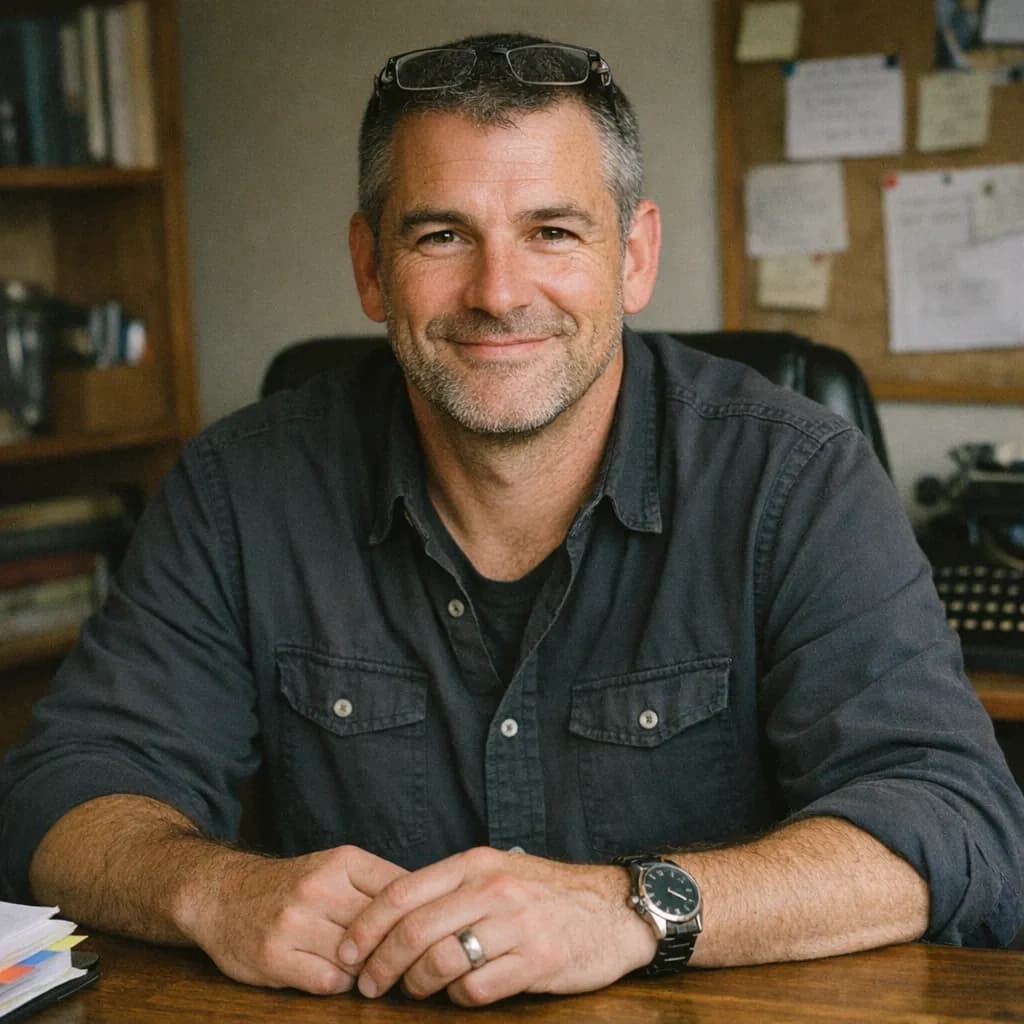
Developmental Fiction Editor and Manuscript CoachI grew up between Wagga and my aunt’s place out near Narrandera, in a family that could argue for sport and then feed you like nothing happened. Books were around, but not in a precious way. My old man liked stories where people did what they said they’d do, even if it cost them. I still hear that voice when a character “can’t” make a decision because the plot needs another chapter. I didn’t set out to be an editor. I studied teaching, worked a few rough years in classrooms, and then left after a run of short contracts and one admin reshuffle that made it clear I was replaceable. A mate pulled me into doing learning materials and assessments because I could spot where people were gaming the question. That work taught me to watch for what the text rewards versus what it claims to reward - which is the same problem in a lot of manuscripts. I also spent a couple of seasons doing night shifts at a servo when money got tight. I kept a notebook behind the counter and wrote scenes between customers, mostly to stay awake. I remember one bloke coming in every Thursday, buying the same pie, and telling me the same story about a dog he swore was smarter than his ex. I don’t know why I remember that, but I do. Editing started as favour-work. People in town found out I’d read their drafts and I’d send back long emails with scene-by-scene notes. Somewhere along the line it became my paid work, mostly because I was consistent and because I’m not afraid to say, “This turn doesn’t belong to your protagonist.” I’m biased toward decisive characters and I don’t plan to cure myself of it; I’d rather a story risk an ugly choice than drift into polite inevitability.

Danae Marcelline Brooks
Developmental Fiction Editor & Manuscript CoachI grew up between church basements, tidewater heat, and people who could tell a whole family story while stirring a pot and never looking up. My mom kept paperback romances in a shoebox like they were contraband, and my aunt kept a shelf of mystery novels with cracked spines. I read both. I learned early that readers forgive a lot, but they don’t forgive being bored or being lied to. I didn’t come up dreaming about editing. I wanted steadier work than “writer,” and I was the kid who could take notes fast, so I ended up in admin jobs where I got volunteered into fixing other people’s documents. Outside of that, I spent a couple years doing hair out of a friend’s kitchen. That part of my life doesn’t explain my editing, but it’s true: I still remember the sound of a cape snapping and how people tell you the most pointed truths when they think you’re not allowed to answer back. Sometimes I miss that kind of honesty. A storm took out power for a week when I was in my late twenties, and I agreed to help a neighbor organize a stack of workshop pages because there wasn’t much else to do at night. The pages were a mess, but the voice was alive. I wrote margin notes the way I talk, not the way school taught me, and the neighbor asked for more. That turned into being the person people handed drafts to. I still carry this old belief that if you “work hard enough,” the story will behave. I don’t defend it, but I catch myself acting like it’s true when I see a writer piling scenes on top of scenes. Now I’m a developmental editor because I’m impatient with pretty sentences that protect a story from making decisions. My bias is I’ll side-eye passive main characters harder than most editors will, even when the genre gives them excuses. I don’t correct that. It’s the lens I read through, and writers who want a gentler read should pick someone else. If you want a first reader who will point at the exact scene where your book starts dodging consequences, I’m your person.
Frequently Asked Questions
- What makes Inferno by Dante Alighieri so compelling?
- Many readers assume Inferno compels because it offers shocking punishments and famous monsters. The deeper hook comes from its repeating scene engine: each encounter forces a persuasive sinner to speak, and it forces Dante to respond with either discernment or sentimental collapse. That rhythm turns theology into drama and makes every stop feel like a test, not a postcard. If you want similar pull in your own work, measure whether each episode changes your protagonist’s judgment, not just the scenery.
- How long is Inferno by Dante Alighieri?
- A common assumption says length equals difficulty, but translation choices shape the experience more than raw page count. Inferno runs 34 cantos, and most modern editions land roughly between 200 and 350 pages depending on notes and formatting. The poem reads faster when you focus on the episode structure and slower when you linger on the speeches and allusions. As a writer, treat its length as a lesson in modular pacing: short units, strong exits, cumulative force.
- How do I write a book like Inferno by Dante Alighieri?
- Most people think they need an elaborate cosmology and a parade of set pieces. You actually need a repeatable scene format that can carry escalating judgment without turning preachy. Dante uses a guide, a rule-bound environment, and a series of interviews where characters try to control their own narrative. Start by designing the curriculum your protagonist must pass, then build locations that enforce the lesson physically. If your draft only imitates the aesthetics of “darkness,” your structure will collapse under its own ambition.
- What themes are explored in Inferno by Dante Alighieri?
- A common reading reduces Inferno to “sin gets punished,” which stays true but stays shallow. Dante also explores self-justification, the seduction of eloquence, the difference between pity and complicity, and the way politics and personal grievance distort moral vision. He stages these themes in scenes where someone makes a case for themselves and the world contradicts them. When you write theme, don’t announce it; let a character argue it and let consequences answer.
- Is Inferno by Dante Alighieri appropriate for younger readers?
- Many assume classic literature automatically suits school audiences, but Inferno includes vivid violence, sexual material, and theological judgment that can unsettle or confuse without guidance. The content also depends on historical and religious context, and students may miss the craft if they treat it as a monster catalog. If you teach or adapt it, choose passages for rhetorical technique and scene design, and frame discussions around persuasion and consequence rather than shock.
- What can writers learn from Inferno’s episodic structure?
- Writers often believe episodic stories feel random unless they bolt on a big external quest. Inferno shows a tighter method: keep the external path simple, then make each episode test a different weakness in the protagonist’s perception. Dante repeats a clear approach-conversation-exit pattern, which builds reader trust, then he raises stakes by intensifying the moral cost of each reaction. If your episodes don’t change your protagonist’s operating rules, you don’t have a journey; you have a playlist.
About Dante Alighieri
Use rigid structure (rules you can’t dodge) to make every scene feel like a verdict the reader reaches on their own.
Dante writes like a judge who also knows how to sing. He builds meaning by staging a moral argument as a physical journey, then forcing every image to do double duty: it must work as scene and as verdict. You read for the plot and get drafted into a system. That’s the trick. He makes your curiosity haul his philosophy without you noticing the harness.
His engine runs on strict constraints. Terza rima pushes thought forward before you feel ready, and the poem’s architecture keeps the pressure on: each episode must pay rent to the larger design. He controls your psychology by offering concrete, sensory pictures—ice, weight, stench, light—then tightening the interpretive screw a turn at a time. You don’t get to float in “vibes.” You must decide what things mean.
Imitating him fails because most writers copy the surface: grand statements, medieval décor, namedropping. Dante’s difficulty sits elsewhere. He earns authority by arranging consequences with ruthless clarity. Even when he rants, he uses placement, contrast, and proportion. He also varies distance: close-up humiliation, then panoramic cosmology. That zoom control makes the poem feel both intimate and absolute.
Modern writers still need him because he solved a problem you keep meeting: how to make big ideas feel inevitable instead of preachy. He shows how to outline a book as a moral machine, then write scenes that click into it. The work suggests careful pre-structure and relentless refinement—lines that must rhyme, land, and advance the argument. Constraint becomes revision discipline, not ornament.














Ready to improve your draft with direction?
Open Draftly, bring your draft, and move from stuck to a stronger draft without losing your voice. Editors are on standby when you want a deeper pass.
Free welcome credits included. No credit card needed.