The End of History and the Last Man
Book Summary & Analysis
Book summary and writing analysis of The End of History and the Last Man by Francis Fukuyama.
If you imitate this book the naive way, you will do what most smart writers do when they feel smart: you will stack claims, cite a few sources, and call it “rigorous.” Fukuyama wins your attention through a different mechanism. He builds a central dramatic question that never lets you relax: if liberal democracy has “won,” what still drives human conflict, ambition, and meaning—and what breaks when the fight ends?
Treat Fukuyama as the protagonist on the page. He occupies a concrete moment and place: the late 1980s and early 1990s, with the Berlin Wall falling, Soviet power collapsing, and American institutions feeling oddly inevitable. His primary opposing force doesn’t take human form. It takes conceptual form: history as an engine of rivalry, thymos as the hunger for recognition, and rival ideologies (fascism and communism most famously, but also nationalism and religion) as the recurring villains that keep returning under new masks.
The inciting incident doesn’t arrive as a car crash; it arrives as a public wager. In the opening essay-turned-book frame, Fukuyama makes a deliberately provocative decision: he claims that ideological evolution has reached an endpoint in liberal democracy. That claim works like a story hook because it invites contradiction. He doesn’t ask you to agree; he dares you to find the flaw. And you can’t resist, because he has picked a thesis with a built-in opponent.
Stakes escalate through a structure you can reuse: he starts with the headline claim, then forces it through increasingly hostile terrain. First he grounds it in big thinkers (Hegel and Kojève) and in the modern state’s logic; then he tests it against the two twentieth-century counter-systems; then he drags it into messier human materials—culture, religion, nationalism, economics, and finally the psychology of recognition. Each layer makes the question harder to answer. That’s escalation. Not more action—more pressure.
The real “plot” twist sits in the middle: the last man problem. Even if institutions stabilize, Fukuyama argues, human beings might sabotage peace out of boredom, pride, and the need to matter. That move keeps the book from turning into a victory lap. He turns the opposing force from “external enemy states” into “internal human appetite.” You should steal that move any time your premise risks sounding like a conclusion.
He lands the book by refusing to give you the comfort you came for. He grants the plausibility of democratic convergence while warning you about what that convergence might cost: spiritual flattening, petty status games, and the return of conflict in smaller, uglier forms. If you copy the surface—grand claims, sweeping history—you’ll write a pompous lecture. If you copy the engine, you’ll write a book that argues like a thriller: thesis, challenge, counterpunch, deeper challenge, and a final uneasy equilibrium.
Story Structure & Narrative Arc
Story structure and emotional arc in The End of History and the Last Man.
The emotional trajectory works like a subversive Man-in-Hole: confidence rises with each apparent confirmation that liberal democracy has no peer, then drops when Fukuyama reveals the internal cost of “winning.” He starts as the cool diagnostician of global events and ends as a wary psychologist of modern desire, less triumphal and more alert to relapse.
Key sentiment shifts land because he keeps changing the arena of proof. He begins in geopolitics (where “end” sounds plausible), then shifts to philosophy (where the claim gains backbone), then to human nature (where the claim becomes fragile). The low points hit when the enemy stops looking like the Soviet Union and starts looking like you: boredom, resentment, and the need for recognition that can’t find a worthy outlet.

Studying this book—and stuck on your pages?
Put your draft in Draftly. Fix scenes and dialogue in the text—not in another tab. When you want sharper feedback, AI editors are ready.
Free welcome credits included. No credit card needed.Writing Lessons from The End of History and the Last Man
What writers can learn from Francis Fukuyama in The End of History and the Last Man.
Fukuyama’s main craft trick looks simple but most writers refuse to do it: he states the strongest version of his claim early, then spends the rest of the book trying to break it. That creates narrative momentum without plot. You keep reading for the same reason you keep watching a tightrope act. You don’t wonder what he thinks; you wonder whether he can keep his balance as the wind picks up.
He uses a layered proof structure that mimics escalation in fiction. He starts with the clean arena (geopolitics after 1989), then moves into harder terrain (philosophy of history), then into the hardest terrain (human psychology). Each layer changes what “winning” even means. Modern shortcut writers stay in one arena and repeat themselves with hotter adjectives. Fukuyama changes the game board, which forces new moves.
Watch how he stages “dialogue” with named opponents through quotation, paraphrase, and pointed concession. When he engages thinkers like Hegel and Kojève, he doesn’t drop a name to sound educated; he extracts a usable engine—recognition—and then argues with it. That back-and-forth reads like an interview where the guest refuses to give a clean answer, and the host keeps tightening the question. You can feel the pressure of cross-examination even though nobody stands in a room trading one-liners.
His atmosphere comes from concrete historical touchpoints rather than mood-writing. He anchors his argument in late–Cold War Europe and the global aftershocks of communist collapse, then widens to modernization and state-building as lived realities, not abstract diagrams. Compare that to the common oversimplification: writers today summarize “the West won” and move on. Fukuyama slows down and asks what victory does to the victor’s soul, which gives the book its sting and its staying power.
How to Write Like Francis Fukuyama
Writing tips inspired by Francis Fukuyama's The End of History and the Last Man.
Write with calm nerve, not swagger. Fukuyama earns trust by sounding like someone who expects disagreement and welcomes it. You should treat certainty as a rhetorical tool you deploy sparingly, not as your default posture. Keep your sentences clean and declarative, then puncture them with precise qualifiers when the subject demands it. If you want authority, don’t add intensity. Add constraint. Show the reader you can name what your claim does not cover, and you will paradoxically widen their belief in what it does.
Build your “characters” as forces with desires, not as labels. Liberal democracy wants stability and legitimacy. Thymos wants recognition. Nationalism wants belonging with edges. Communism wants equality with a single script. Once you assign each force a craving and a fear, you can stage conflict that feels inevitable instead of academic. Give each force a moment where it looks like the hero. Then give it a moment where its hidden cost appears. That’s how you create development without inventing people.
Avoid the prestige trap of pretending that complexity equals depth. This genre tempts you to hide behind references, jargon, and omniscient throat-clearing. Fukuyama avoids that by letting one engine run through everything: recognition. He returns to it, tests it, and lets it complicate his own conclusion. Don’t imitate the surface by stacking philosophers. Imitate the discipline: pick one central engine, then force every chapter to either sharpen it, challenge it, or reveal a consequence you didn’t want.
Try this exercise. Write your thesis in one blunt sentence that a smart opponent would hate. Then write three “arenas” where the thesis must survive: a clean arena where it seems obviously true, a messy arena where exceptions swarm, and an internal arena where human motives sabotage the neat outcome. For each arena, write a two-page cross-examination: your opponent asks questions; you answer; your opponent presses on the weakest point. End each section by revising your thesis one notch, not to retreat, but to become harder to knock down.
Who Would Edit This Book?
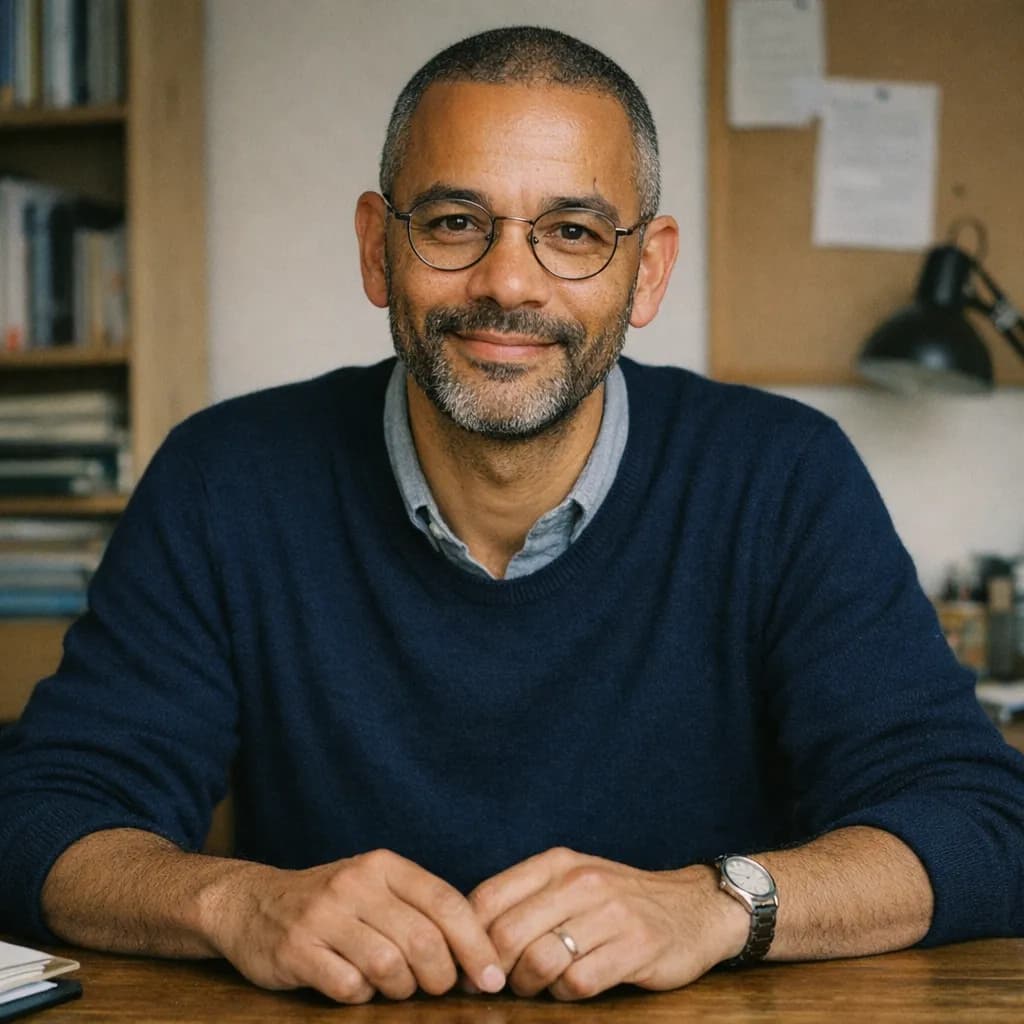
Alistair Rowan McEwan
Developmental Editor and Non-Fiction Manuscript CoachI grew up between Leeds and Glasgow, in that half-and-half way where you’re never fully from one place, so you learn to listen for what people mean instead of what they say. My mum kept old paperbacks and my dad kept newspapers, and I read both with the same suspicion. I still hear my gran’s voice when I write notes: she’d tap the page and say, “Aye, but what made that happen?” At nineteen I worked nights stacking shelves and days in a dull admin job for a small training provider, mostly because rent doesn’t care about your plans. They had me tidying course handouts and “improving the flow,” which meant cutting waffle and moving sections around until the trainer could teach without apologising. Around that time I got obsessed with making the perfect chilli recipe and kept a notebook of tiny tweaks. It didn’t make me a better editor, but I still do it, and I still overreact when a list of ingredients comes before the method. I didn’t set out to be an editor. A friend needed a second pair of eyes on a grant application, then another person asked, then a whole department started sliding documents onto my desk because I’d tell them the truth without making it personal. Later, I ended up in a communications role after a reorg - pure convenience - and I started doing beta-style reads for people writing practical books and narrative non-fiction on the side. Now I work with authors who want a manuscript that can survive a hard reader. I’m calm about most things, but I’m stubborn about causality: if a chapter claims a result, I want to see the choice that led there, and what it cost. I know my bias: I don’t spend long admiring lyrical voice if the argument is dodging responsibility. I’m the person you hand the draft to when you want the first reader who says, “This part doesn’t earn its conclusion,” and then shows you where it went off the rails.
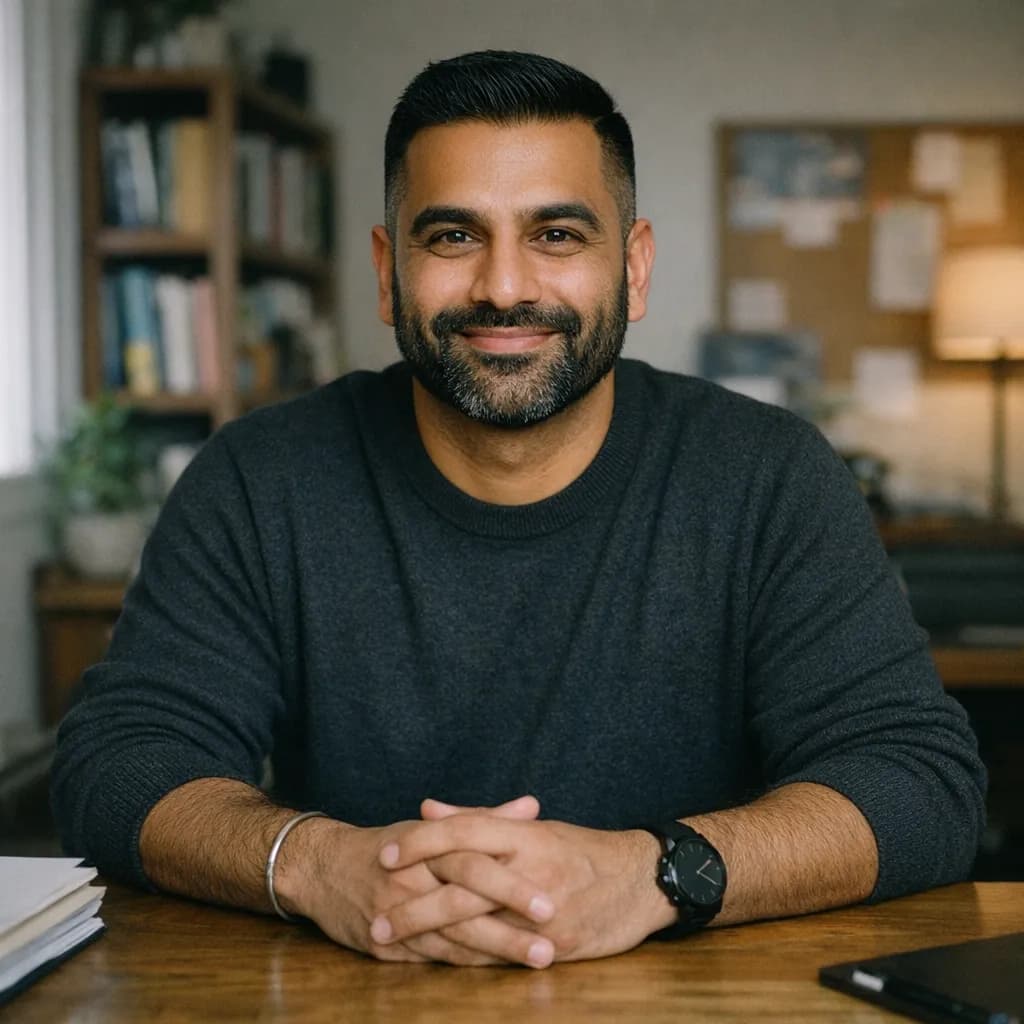
Arjunveer “Arj” Sandhu
Nonfiction Manuscript Editor & Writing Coach (Generalist)I grew up between Punjabi at home and English everywhere else, which taught me early that “I understood it” and “it was said clearly” aren’t the same thing. My dad ran a small trucking outfit and kept every receipt like it was scripture. My mom read Punjabi poetry and refused to explain it. I landed in the middle: I like meaning you can point to, and I don’t trust pretty fog. I didn’t plan on editing. I studied business because it was easy to explain at family dinners, then worked jobs where nobody had time for long sentences - operations, training docs, policy rewrites. I took a night improv course once because a friend wouldn’t go alone. I was bad at it. I still keep the ticket stub like it proves something. I started giving notes because people kept sending drafts with “can you make this make sense?” and I didn’t know how to say no. A supervisor once handed me a 40-page internal guide and said, “Fix it by Friday or we get audited.” That deadline became a habit: I read fast, I mark the real breaks, and I don’t pretend confusion is a personality trait. I’m harsher on fuzzy claims than clunky style, and I’m not interested in correcting that. Now I work with authors who want a first reader who won’t protect feelings at the expense of the book. I still ask, “What are you promising me in the first ten pages?” I don’t care if your voice is charming if your logic cheats. If your structure is designed to wander on purpose, I’m probably not your best match.
Frequently Asked Questions
- What makes The End of History and the Last Man so compelling?
- People assume it compels through controversy alone, as if a loud thesis equals a readable book. The deeper reason comes from structure: Fukuyama turns an argument into a survival test where each chapter increases the difficulty of the claim. He also adds a late-stage twist by relocating conflict from rival states to human psychology, so the book keeps generating stakes after the obvious “enemy” disappears. If you want similar pull, design your chapters as escalating trials, not as themed essays.
- How long is The End of History and the Last Man?
- Many assume length only matters as a page count, but for writers the more useful measure involves conceptual load per chapter. Most editions run roughly 400 pages, yet the book feels faster when you track the repeating engine—recognition—and slower when you treat each reference as a detour you must master. You don’t need to mimic the size to mimic the effect. Match the rhythm: claim, test, counterexample, refinement, consequence.
- Is The End of History and the Last Man appropriate for beginners in political theory?
- A common assumption says beginners should avoid it because it cites Hegel and Kojève. In practice, you can read it as an argument-first narrative, then backfill the philosophy as needed, because Fukuyama keeps translating abstractions into stakes about legitimacy, conflict, and meaning. For writers, that accessibility offers a lesson: you can include demanding ideas if you keep a single throughline and define terms by what they do in the world. Confusion often signals missing engines, not missing intelligence.
- What themes are explored in The End of History and the Last Man?
- Readers often reduce the themes to “democracy wins,” which misses the book’s sharper concern. Fukuyama explores recognition, legitimacy, the psychological cost of stability, and the way nationalism and religion resist tidy modernization stories. He also treats boredom and resentment as political forces, not private moods. If you want to write thematically at this level, don’t announce themes; make them compete, and let each victory create a new problem the next chapter must face.
- How do I write a book like The End of History and the Last Man?
- Most people think they need a grand topic and a pile of citations. You need a thesis with an opponent, an engine that explains why conflict persists, and a structure that keeps trying to falsify your own idea. Fukuyama succeeds because he escalates difficulty and allows his claim to suffer damage without collapsing. Draft your table of contents as a sequence of hostile questions, not as categories. Then revise until every chapter forces you to earn your premise again.
- What can writers learn from Fukuyama’s style and structure?
- A common rule says nonfiction style should stay neutral and “objective,” which often produces dead prose. Fukuyama stays controlled, but he never loses the feel of a mind in motion: he proposes, concedes, distinguishes, and tightens definitions as pressure rises. That creates forward pull even when he discusses abstractions. If your drafts sound like a report, add a visible opponent and let your sentences show decision-making—what you accept, what you reject, and why it matters now.
About Francis Fukuyama
Define your terms up front, then trace one clean causal chain to make big ideas feel inevitable.
Francis Fukuyama writes like a careful prosecutor who also knows the jury gets bored. He states a big claim early, then earns the right to keep it by stacking definitions, historical pivots, and institutional details in a strict order. The craft trick is not “sound smart.” It’s to control the reader’s agreement step by step: first on terms, then on mechanisms, then on consequences.
He builds meaning by turning abstractions into working parts. “Legitimacy,” “state capacity,” “recognition,” “trust” don’t float; they act. He shows what each concept does inside a system, where it breaks, and what it costs to repair. That makes his arguments feel testable even when they cover huge terrain. You keep reading because every paragraph promises a payoff: if you accept this lever, you’ll predict the next outcome.
Imitating him fails because most writers copy the surface: the long sentences, the academic nouns, the confident tone. Fukuyama’s difficulty sits elsewhere: he balances sweeping synthesis with constant guardrails. He anticipates objections before the reader forms them, and he uses qualifying clauses as steering, not hedging. He makes the reader feel guided, not lectured.
Modern writers need him because he models how to argue in public without turning prose into a spreadsheet. Study how he outlines problems as competing incentives, not villains; how he revisits a thesis with updated constraints; and how he revises by tightening causal links. He changed the expectation that big ideas must arrive dressed in fog. He proves they can arrive with receipts.














Ready to improve your draft with direction?
Open Draftly, bring your draft, and move from stuck to a stronger draft without losing your voice. Editors are on standby when you want a deeper pass.
Free welcome credits included. No credit card needed.