The Trial
Book Summary & Analysis
Book summary and writing analysis of The Trial by Franz Kafka.
Kafka builds The Trial around a brutal central dramatic question: Can Josef K. prove his innocence inside a system that never states the crime? Notice the trick. He doesn’t ask “Will K. win his case?” because the book never grants a winnable definition of winning. Kafka forces you to watch a competent man try to negotiate with a fog bank. If you imitate this naively, you’ll write “weird stuff happens” scenes. Kafka writes procedural pressure. Each scene functions like a hearing, even when nobody calls it that.
The inciting incident happens on K.’s thirtieth birthday in his rented room in a respectable boarding house in an unnamed Central European city that looks like early-20th-century Prague in plain clothes. Two warders arrive at breakfast and announce his arrest. They don’t take him away. They don’t show a warrant. They don’t even deny him his job. They invade his private space, eat his food, and talk as if the case already exists in some higher filing cabinet. Kafka picks the most intimate setting (your room, your morning routine) and installs a public institution inside it. That move matters more than the “arrest” label.
K. serves as his own protagonist and his own accelerant. He reacts with pride, sarcasm, and a lawyerly instinct to cross-examine the world into coherence. That would work in a normal realist novel. Here, Kafka turns that instinct into gasoline. Each time K. demands clarity, the system punishes him with more process. The primary opposing force never becomes a single villain; it takes shape as a distributed bureaucracy with human faces—warders, minor officials, the Examining Magistrate, advocates, clerks—who all act certain, and none of whom own the rules. If you try to copy Kafka by inventing a sinister mastermind, you’ll miss the point. The terror comes from the absence of anyone to appeal to.
Kafka escalates stakes by narrowing K.’s options while widening the world. The first hearing happens in a shabby tenement court tucked behind everyday life. K. walks in expecting a room with a judge and a charge sheet. He finds a crowd, an improvised stage, and an audience hungry for performance. He improvises a speech, tries to seize narrative control, and discovers the court treats his rhetoric as just another exhibit. From there, every “helpful” doorway opens into a corridor of dependency: women who offer access in exchange for complicity, officials who trade hints for obedience, professionals who profit from delay.
The structure keeps K. moving, but it never lets him make real progress. Kafka uses repetition with variation: K. returns to offices, files, and corridors, but each return degrades him. He loses time at the bank. He loses social standing. He loses certainty about what counts as evidence. He also loses the comforting fantasy that innocence works like a receipt you can show at the counter. The novel’s stakes climb from inconvenience to existential threat because the system colonizes his attention. That’s the real takeover.
Kafka also refuses the modern shortcut of “clear rules.” Writers love to design a clean dystopia with a neat handbook. Kafka designs a bureaucracy that behaves like a natural environment. People adapt to it the way tenants adapt to damp walls. The law occupies attics, back rooms, and cramped offices above laundries. Everyone knows it exists, nobody can summarize it, and yet everyone enforces it. If you imitate the surface oddness without building this social ecology, your story will feel random instead of inevitable.
By the final movement, Kafka stops pretending K. can negotiate his way out. The book turns the screw by making the end feel administrative, not melodramatic. That choice completes the engine: the system doesn’t need hatred. It needs compliance, fatigue, and the human desire to “handle it correctly.” Kafka makes you see how K. collaborates with his own destruction through a series of reasonable decisions. You can reuse that today in any genre—thriller, literary, even romance—if you treat institutions as characters and make your protagonist’s virtues double as their trap.
Story Structure & Narrative Arc
Story structure and emotional arc in The Trial.
The Trial runs on a subversive Tragedy curve that looks calm on the surface and brutal underneath. Josef K. starts as a capable, status-secure professional who believes language and logic can solve problems. He ends with his inner posture broken: he stops treating life as an argument he can win and starts treating it as a process he must endure.
The book lands its gut-punches through controlled reversals. Kafka gives K. small moments that feel like progress—access to insiders, plausible strategies, a sense of momentum—then he reframes them as deeper entanglement. The lowest points hit hard because Kafka doesn’t stage them as “defeat.” He stages them as normal workdays ruined by invisible paperwork, private humiliations in public spaces, and conversations that sound reasonable until you notice they never answer the question you asked.

Studying this book—and stuck on your pages?
Put your draft in Draftly. Fix scenes and dialogue in the text—not in another tab. When you want sharper feedback, AI editors are ready.
Free welcome credits included. No credit card needed.Writing Lessons from The Trial
What writers can learn from Franz Kafka in The Trial.
Kafka’s great craft gamble looks simple: he writes clean, almost bureaucratic sentences about irrational events. That contrast generates the dreamlike chill. He doesn’t decorate the prose to signal “symbolism.” He reports the absurd with the tone of a clerk closing a file. You can steal that technique today by keeping your language literal while your situation skews. When you add too much stylistic fog—purple dread, winking surrealism—you anesthetize the reader. Kafka keeps you awake by sounding sane.
He also designs the opposing force as a network, not a person. The court never needs a face because it owns a grammar. Everyone speaks in the same evasive certainty: they promise “possibilities,” they warn about “proper channels,” they imply knowledge they never share. Watch K.’s exchanges with the Examining Magistrate at the first hearing: K. tries to argue a case; the Magistrate treats his argument as behavior to be managed. That mismatch turns dialogue into combat without raised voices. Modern stories often shortcut this with a single corrupt judge. Kafka shows you a scarier move: make every minor character a local agent of the same pressure.
Kafka builds atmosphere through logistics. The law lives in attics, tenement rooms, and back corridors, not in marble halls. That choice matters because it kills the comforting fantasy that power stays “over there.” When K. climbs into those cramped offices and meets clerks and endless files, Kafka makes bureaucracy physical: heat, dust, bodies, papers. Many modern writers try to create mood with vague unease. Kafka creates mood by staging scenes in spaces that impose posture, breath, and shame.
Structurally, the novel runs on progress that isn’t progress. Each new lead expands the system and shrinks K.’s autonomy. Kafka repeats motifs—hearings, intermediaries, corridors—but he changes the emotional meaning each time. Early on, K. feels superior; later, he feels implicated; later still, he feels tired. If you oversimplify this book into “man vs. system,” you’ll miss the engine: K.’s own competence becomes the lever that moves him deeper into the mechanism. Kafka teaches you how to write a trap that tightens because your protagonist behaves intelligently.
How to Write Like Franz Kafka
Writing tips inspired by Franz Kafka's The Trial.
Write with straight-faced clarity even when the world behaves irrationally. You don’t need quirky metaphors to earn weirdness. You need control. Keep sentences crisp, concrete, and confident, as if you file a report. Then let events violate the report’s implied order. That tension creates dread. If you start telegraphing your theme with theatrical language, you give readers a safe distance. Kafka keeps readers trapped beside K. by refusing to step back and comment.
Build your protagonist so their strengths generate the plot. Josef K. doesn’t stumble into trouble because he acts foolish. He escalates trouble because he acts like a competent professional who believes procedures exist to serve reason. Give your character a credible social role, a daily rhythm, and a self-image they must defend. Then design antagonistic encounters that threaten that self-image first, before they threaten survival. When the character tries to restore status through argument, connections, or performance, you get action that feels inevitable.
Avoid the genre trap of “mystery as answer.” Many writers copy Kafka by withholding information and calling it depth. That produces only frustration unless you replace missing answers with active pressure. Kafka never makes the question “Who did it?” He makes the question “What counts as guilt here?” and he keeps the system responding, obstructing, seducing, and redirecting. Make every scene change the protagonist’s options. If a scene only adds strangeness, cut it or rebuild it until it changes leverage.
Write one chapter that functions like a hearing without calling itself a hearing. Put your protagonist in a non-legal location that should feel private or routine, then introduce an authority figure who speaks as if a case already exists. Give the protagonist three attempts to regain control: a logical objection, a social maneuver, and an emotional appeal. Let each attempt produce a different kind of entanglement rather than a clean failure. End the chapter with a new procedural obligation, not a revelation, and you’ll feel the Kafka engine click into place.
Who Would Edit This Book?

Callum Rhys Mahoney
Developmental Fiction Editor and Manuscript CoachI grew up between Wagga and my aunt’s place out near Narrandera, in a family that could argue for sport and then feed you like nothing happened. Books were around, but not in a precious way. My old man liked stories where people did what they said they’d do, even if it cost them. I still hear that voice when a character “can’t” make a decision because the plot needs another chapter. I didn’t set out to be an editor. I studied teaching, worked a few rough years in classrooms, and then left after a run of short contracts and one admin reshuffle that made it clear I was replaceable. A mate pulled me into doing learning materials and assessments because I could spot where people were gaming the question. That work taught me to watch for what the text rewards versus what it claims to reward - which is the same problem in a lot of manuscripts. I also spent a couple of seasons doing night shifts at a servo when money got tight. I kept a notebook behind the counter and wrote scenes between customers, mostly to stay awake. I remember one bloke coming in every Thursday, buying the same pie, and telling me the same story about a dog he swore was smarter than his ex. I don’t know why I remember that, but I do. Editing started as favour-work. People in town found out I’d read their drafts and I’d send back long emails with scene-by-scene notes. Somewhere along the line it became my paid work, mostly because I was consistent and because I’m not afraid to say, “This turn doesn’t belong to your protagonist.” I’m biased toward decisive characters and I don’t plan to cure myself of it; I’d rather a story risk an ugly choice than drift into polite inevitability.
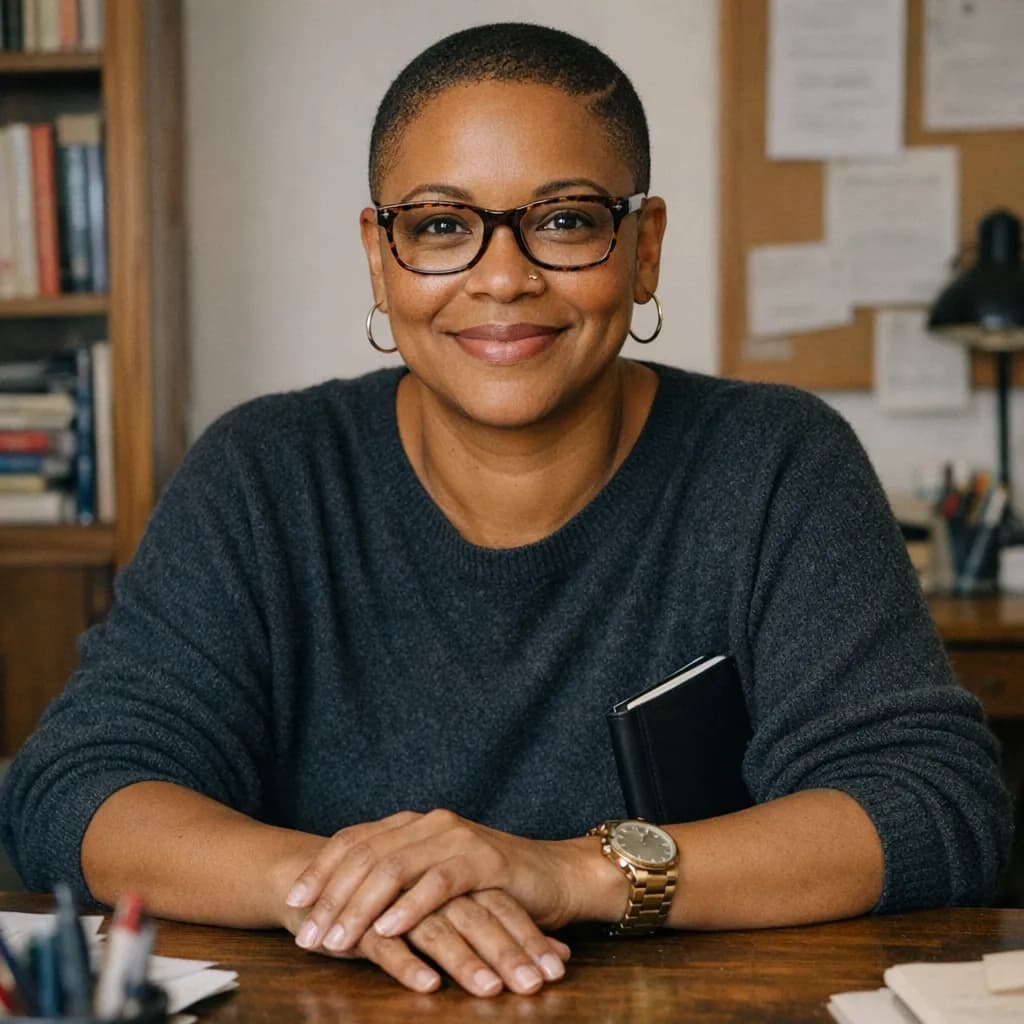
Danae Marcelline Brooks
Developmental Fiction Editor & Manuscript CoachI grew up between church basements, tidewater heat, and people who could tell a whole family story while stirring a pot and never looking up. My mom kept paperback romances in a shoebox like they were contraband, and my aunt kept a shelf of mystery novels with cracked spines. I read both. I learned early that readers forgive a lot, but they don’t forgive being bored or being lied to. I didn’t come up dreaming about editing. I wanted steadier work than “writer,” and I was the kid who could take notes fast, so I ended up in admin jobs where I got volunteered into fixing other people’s documents. Outside of that, I spent a couple years doing hair out of a friend’s kitchen. That part of my life doesn’t explain my editing, but it’s true: I still remember the sound of a cape snapping and how people tell you the most pointed truths when they think you’re not allowed to answer back. Sometimes I miss that kind of honesty. A storm took out power for a week when I was in my late twenties, and I agreed to help a neighbor organize a stack of workshop pages because there wasn’t much else to do at night. The pages were a mess, but the voice was alive. I wrote margin notes the way I talk, not the way school taught me, and the neighbor asked for more. That turned into being the person people handed drafts to. I still carry this old belief that if you “work hard enough,” the story will behave. I don’t defend it, but I catch myself acting like it’s true when I see a writer piling scenes on top of scenes. Now I’m a developmental editor because I’m impatient with pretty sentences that protect a story from making decisions. My bias is I’ll side-eye passive main characters harder than most editors will, even when the genre gives them excuses. I don’t correct that. It’s the lens I read through, and writers who want a gentler read should pick someone else. If you want a first reader who will point at the exact scene where your book starts dodging consequences, I’m your person.
Frequently Asked Questions
- What makes The Trial by Franz Kafka so compelling?
- A common assumption says suspense comes from clear stakes and clear clues. Kafka flips that: he creates compulsion by keeping the situation legible in detail but illegible in meaning. You watch Josef K. navigate rooms, officials, and procedures that behave consistently while refusing to explain themselves. That consistency makes the nightmare feel real, not random. If you want similar pull in your own work, track cause-and-effect at the scene level even when you refuse answers at the plot level.
- What themes are explored in The Trial?
- People often reduce the book to a single theme like “bureaucracy bad” or “existential dread.” Kafka goes narrower and sharper: he dramatizes how systems rewrite personal identity, how guilt can function as a social condition, and how language fails when power controls definitions. He also shows how people collaborate with oppressive structures through politeness, ambition, and the desire to do things “properly.” When you write theme from this model, let it emerge from repeated choices under pressure, not from speeches.
- How long is The Trial?
- Many readers assume length tells them difficulty. The Trial runs roughly in the 200–300 page range in most English editions, but the real challenge comes from its logic, not its size. Kafka writes scenes that feel straightforward and then leave you with unresolved implications, which slows reading because you keep re-evaluating what just happened. As a writer, note how he uses short, concrete interactions to create long aftershocks. Don’t confuse brevity with simplicity.
- Is The Trial appropriate for teenagers or new readers of classic literature?
- A common rule says you should start classics with something “accessible” and plot-driven. The Trial can work for teens and new classic readers if they tolerate ambiguity and social discomfort, but it can frustrate anyone who reads only for solutions. The content focuses more on psychological and institutional pressure than graphic material, though it carries an oppressive mood. If you recommend it, frame it as a study in power and procedure, and remind the reader to track scenes, not answers.
- How do I write a book like The Trial?
- Many writers think they should imitate Kafka’s weirdness: odd officials, unnamed cities, dream logic. That imitation fails because Kafka’s real method runs on structure and voice. He gives you a competent protagonist, a procedural antagonist, and a chain of encounters where each “solution” increases entanglement. Start by designing an institution with consistent behaviors rather than a single villain, then write scenes where the protagonist’s best tools—reason, status, charm—become liabilities. Revise until every scene changes leverage.
- What narrative techniques does Kafka use in The Trial?
- People often assume Kafka relies on symbolism alone. He actually relies on tonal restraint, strategic repetition, and dialogue that dodges the question while sounding perfectly normal. He also anchors the surreal in concrete logistics: rooms, stairs, offices, paperwork, schedules. Those physical details make the abstract threat feel touchable. If you borrow these techniques, keep your prose plain, your spaces specific, and your conversations asymmetrical—one person seeks clarity, the other manages behavior.
About Franz Kafka
State the impossible in a calm, official voice to make the reader accept the nightmare before they notice it.
Kafka didn’t write “weird.” He wrote administrative reality until it became supernatural. He starts with a plain reportorial voice, then inserts one impossible fact and refuses to react to it. That refusal does the heavy lifting: it forces you to accept the nightmare on its own terms, the way you accept a policy change at work. The dread comes from how reasonable everything sounds.
His engine runs on procedural pressure. Characters try to comply, explain, appeal, and behave correctly—while the rules shift, authorities multiply, and language turns slippery. Kafka makes meaning by trapping a sane mind inside an insane system and recording the mind’s attempts to stay respectable. You don’t fear the monster. You fear the form you filled out wrong.
The technical difficulty hides in the neutrality. If you add “spooky” styling, you break the spell. Kafka’s sentences move with legal patience, stacking clauses that feel fair-minded and complete, then ending in a conclusion that offers no relief. He uses precision to deny you a foothold: no cathartic confession, no clean villain, no moral lecture—just the next step in the process.
Modern writers still need him because he solved a problem we keep re-inventing: how to dramatize power without speeches, and how to create terror without gore. His drafts often came in intense bursts, then stalled under perfectionism and doubt; you can feel that friction in the work’s unfinished edges and relentless clarity. He changed literature by proving that the most unreal stories can sound like the most truthful ones.














Ready to improve your draft with direction?
Open Draftly, bring your draft, and move from stuck to a stronger draft without losing your voice. Editors are on standby when you want a deeper pass.
Free welcome credits included. No credit card needed.