The Brothers Karamazov
Book Summary & Analysis
Book summary and writing analysis of The Brothers Karamazov by Fyodor Dostoyevsky.
If you try to copy The Brothers Karamazov by copying its gloom, its sermons, or its length, you will write a fog bank. Dostoyevsky makes the book work through a simple but brutal mechanism: he locks a family into a public moral crisis, then forces every private desire to testify in front of everyone. You watch people try to keep their secrets while the town turns each glance into evidence. That pressure, not the philosophy, generates the story.
The central dramatic question runs like a wire through every scene: who bears guilt for the father’s murder, and what does guilt mean when everyone wanted him gone? Dostoyevsky doesn’t treat guilt as a courtroom concept. He treats it as a contagious emotion that spreads through a room, a family, a whole town. Your reader keeps turning pages because the book keeps redefining what “responsible” looks like.
The inciting incident doesn’t arrive as a neat crime. It arrives as a choice. Alyosha Karamazov, the novice monk, leaves the monastery after Elder Zosima sends him into the world, straight into the family feud with his father Fyodor Pavlovich and his brothers Dmitri and Ivan. That decision matters because it drags the book’s moral witness into the mess. If Alyosha stays cloistered, you get talk. When he walks into town, you get consequences.
Dostoyevsky sets this engine in a small Russian provincial town in the 1860s, with the monastery, the Karamazov house, taverns, courtyards, and cramped rooms where people can’t escape each other’s eyes. He uses proximity as a weapon. He makes characters collide in spaces that force them to perform. If you write “big themes” without staging them in choke points like this, you give your reader opinions instead of drama.
The protagonist role shifts depending on what you measure. Alyosha carries the book’s moral center and emotional continuity. Dmitri carries the plot’s kinetic charge because he acts, threatens, spends, and erupts. Ivan carries the intellectual fuse because his ideas change what others feel permitted to do. Dostoyevsky lets that triangle operate like a single protagonist split into functions: conscience, appetite, and mind. The primary opposing force sits inside that split: the family’s appetite for justification, embodied in Fyodor’s shamelessness and in each son’s private claim that he “had reasons.”
Stakes escalate through public exposure. First the family argument turns into a town spectacle. Then money and inheritance disputes sharpen into threats. Then Dmitri’s desperation over Grushenka and the missing money pushes him toward violence. Finally the murder turns every earlier scene into retroactive evidence. Dostoyevsky structures escalation like a tightening net: every act of self-defense becomes another strand.
Notice what he refuses to do. He does not build suspense by hiding information with clever twists. He builds dread by showing you the ingredients early — hatred, entitlement, humiliation, rationalization — then asking how long a town can sit on that powder keg before a spark lands. If you imitate the surface of “slow Russian novel” without engineering this inevitability, your middle will sag and your themes will preach.
So treat the book as a pressure cooker with witnesses. Each scene forces a character to answer, in public or in private, a question they can’t answer cleanly: what do you owe your father, your brother, your desire, your god, your own mind? Dostoyevsky makes those debts collide until someone pays in blood, and everyone else tries to pay in words. Your job, if you borrow the engine, stays the same: make the words cost something.
Story Structure & Narrative Arc
Story structure and emotional arc in The Brothers Karamazov.
The book runs a subversive Man-in-Hole that keeps switching who “falls.” Alyosha starts with borrowed certainty inside the monastery and ends with earned, bruised responsibility in the world. He doesn’t “win” by fixing the family. He wins by choosing action and compassion when the story gives him every excuse to retreat into purity.
Key sentiment shifts land because Dostoyevsky makes emotion argue with intellect in the same scene. He lifts you with moments of spiritual clarity, then undercuts them with petty cruelty, then drops you through the murder and its aftermath into a moral fog where innocence and guilt stop behaving like opposites. The low points hit hard because the book prepares them with visible rationalizations. When the crisis arrives, you don’t feel surprised. You feel indicted.

Studying this book—and stuck on your pages?
Put your draft in Draftly. Fix scenes and dialogue in the text—not in another tab. When you want sharper feedback, AI editors are ready.
Free welcome credits included. No credit card needed.Writing Lessons from The Brothers Karamazov
What writers can learn from Fyodor Dostoyevsky in The Brothers Karamazov.
Dostoyevsky builds plot out of competing explanations, not events. He stages scenes as moral experiments: put three people in a room, give each a different definition of “justice,” then force a decision that stains someone’s hands. He repeats motifs—money owed, insult taken, forgiveness offered—and each repetition changes its meaning. You don’t read “themes.” You watch themes mutate under pressure.
He writes dialogue like hand-to-hand combat, with interruptions, reversals, and sudden confessions that function as tactical moves. Watch Ivan and Alyosha in their conversations about suffering and faith: Ivan presses logic like a blade, Alyosha answers with presence rather than argument, and the imbalance creates tension you can’t solve with a clever line. Many modern novels clean dialogue into quotable speeches. Dostoyevsky lets it sprawl, because sprawl reveals where a character cheats.
He anchors atmosphere in specific rooms and social rituals. The monastery doesn’t act as a vague “spiritual place.” It acts as a public stage where reputations matter, where a bow or a refusal to bow becomes story. The taverns and cramped houses don’t “set mood.” They compress choices. Modern writers often slap on a cinematic description and move on. Dostoyevsky uses setting to force proximity, and proximity forces moral exposure.
He also weaponizes the narrator’s posture. The voice pretends to report, to gossip, to correct itself, to admit what it can’t know, and that instability mirrors the book’s central concern: nobody owns the whole truth. If you imitate the voice by adding “quirky” asides, you will sound fake. If you imitate the function—make the narration itself part of the town’s rumor mill—you will earn the same restless credibility.
How to Write Like Fyodor Dostoyevsky
Writing tips inspired by Fyodor Dostoyevsky's The Brothers Karamazov.
Write your narrator like a person with a stake in the story, not a faceless camera. Dostoyevsky’s voice carries curiosity, judgment, and occasional embarrassment, and that blend makes the town feel alive. You can do this without ranting. Choose what your narrator notices under stress, what they gloss over, and what they correct later. Then keep that pattern consistent. If you want “big ideas,” earn them through lived observation, not TED Talk certainty.
Build characters as moral machines, each with a private logic that sounds reasonable inside their own skull. Alyosha seeks healing, Dmitri seeks absolution through intensity, Ivan seeks cleanliness through intellect, and each strategy breaks in a different way. Give every major character a sacred value, a shame they hide, and a temptation that offers relief. Then make those three elements collide in scenes with witnesses. Development won’t come from backstory. It will come from the moment their logic stops working.
Avoid the prestige trap of mistaking argument for drama. This genre tempts you to write long debates and call them “depth.” Dostoyevsky dodges that by attaching every idea to a relationship and a consequence. When Ivan speaks, a brother must live next to those words. When Dmitri boasts, he must pay the bill in the next chapter. If you can remove a philosophical passage and nothing in the plot changes, you wrote an essay with character names.
Write one chapter as a pressure-cooker hearing. Put three characters in a confined place—a kitchen, a church office, a courtroom hallway. Give each a secret motive and a public mask. Now assign one concrete object that everyone interprets differently: a sum of money, a letter, a bruise, a promise. Let them talk until someone loses control, then make one irreversible action happen before the scene ends. In revision, underline every sentence that dodges responsibility and sharpen it.
Who Would Edit This Book?
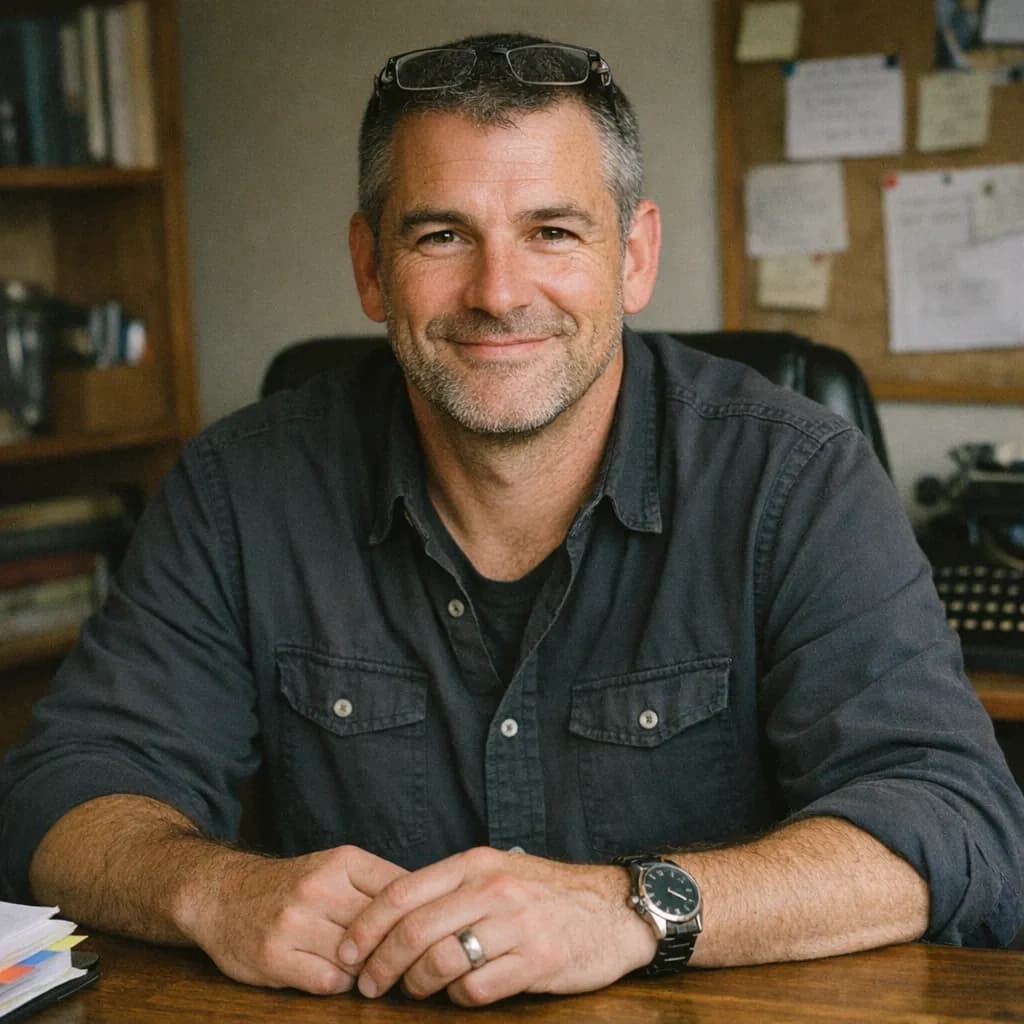
Callum Rhys Mahoney
Developmental Fiction Editor and Manuscript CoachI grew up between Wagga and my aunt’s place out near Narrandera, in a family that could argue for sport and then feed you like nothing happened. Books were around, but not in a precious way. My old man liked stories where people did what they said they’d do, even if it cost them. I still hear that voice when a character “can’t” make a decision because the plot needs another chapter. I didn’t set out to be an editor. I studied teaching, worked a few rough years in classrooms, and then left after a run of short contracts and one admin reshuffle that made it clear I was replaceable. A mate pulled me into doing learning materials and assessments because I could spot where people were gaming the question. That work taught me to watch for what the text rewards versus what it claims to reward - which is the same problem in a lot of manuscripts. I also spent a couple of seasons doing night shifts at a servo when money got tight. I kept a notebook behind the counter and wrote scenes between customers, mostly to stay awake. I remember one bloke coming in every Thursday, buying the same pie, and telling me the same story about a dog he swore was smarter than his ex. I don’t know why I remember that, but I do. Editing started as favour-work. People in town found out I’d read their drafts and I’d send back long emails with scene-by-scene notes. Somewhere along the line it became my paid work, mostly because I was consistent and because I’m not afraid to say, “This turn doesn’t belong to your protagonist.” I’m biased toward decisive characters and I don’t plan to cure myself of it; I’d rather a story risk an ugly choice than drift into polite inevitability.

Danae Marcelline Brooks
Developmental Fiction Editor & Manuscript CoachI grew up between church basements, tidewater heat, and people who could tell a whole family story while stirring a pot and never looking up. My mom kept paperback romances in a shoebox like they were contraband, and my aunt kept a shelf of mystery novels with cracked spines. I read both. I learned early that readers forgive a lot, but they don’t forgive being bored or being lied to. I didn’t come up dreaming about editing. I wanted steadier work than “writer,” and I was the kid who could take notes fast, so I ended up in admin jobs where I got volunteered into fixing other people’s documents. Outside of that, I spent a couple years doing hair out of a friend’s kitchen. That part of my life doesn’t explain my editing, but it’s true: I still remember the sound of a cape snapping and how people tell you the most pointed truths when they think you’re not allowed to answer back. Sometimes I miss that kind of honesty. A storm took out power for a week when I was in my late twenties, and I agreed to help a neighbor organize a stack of workshop pages because there wasn’t much else to do at night. The pages were a mess, but the voice was alive. I wrote margin notes the way I talk, not the way school taught me, and the neighbor asked for more. That turned into being the person people handed drafts to. I still carry this old belief that if you “work hard enough,” the story will behave. I don’t defend it, but I catch myself acting like it’s true when I see a writer piling scenes on top of scenes. Now I’m a developmental editor because I’m impatient with pretty sentences that protect a story from making decisions. My bias is I’ll side-eye passive main characters harder than most editors will, even when the genre gives them excuses. I don’t correct that. It’s the lens I read through, and writers who want a gentler read should pick someone else. If you want a first reader who will point at the exact scene where your book starts dodging consequences, I’m your person.
Frequently Asked Questions
- What makes The Brothers Karamazov so compelling?
- Most people assume the book grips you because it tackles huge themes like faith and doubt. It grips you because it turns those themes into immediate social danger: every belief becomes a permission slip for a choice, and every choice leaves evidence. Dostoyevsky also splits the “protagonist” function across Alyosha, Ivan, and Dmitri, so the story can argue with itself without stalling. If you want similar pull, make each idea change what a character risks in the next scene.
- How long is The Brothers Karamazov?
- A common assumption says length equals difficulty, and this novel looks intimidating on a shelf. In English editions it often runs around 800–1,000 pages, depending on translation and notes, but the bigger challenge comes from density of conflict, not vocabulary. Dostoyevsky stacks scenes where relationships carry history and stakes, so you feel the weight. If you study it as structure, track which scenes force a decision, not which pages contain “important” philosophy.
- How do I write a book like The Brothers Karamazov?
- Writers often think they need to copy the voice, the sermons, or the sheer scale. You need to copy the engine: make a closed social world, introduce a moral crisis that touches everyone, and then let characters justify themselves into catastrophe. Build each major character around a different coping strategy, then stage collisions in rooms with witnesses. Don’t chase profundity. Chase consequence. If your “ideas” don’t change behavior, you wrote decoration.
- What themes are explored in The Brothers Karamazov?
- People list themes like faith, free will, guilt, patricide, and the problem of evil and then stop there. Dostoyevsky treats themes as forces that shape decisions under stress, especially inside family bonds where love and resentment tangle. He also explores how communities manufacture truth through rumor, testimony, and storytelling, which matters to any writer building public stakes. When you analyze themes, always ask: what choice does this theme force, and what does it cost?
- Is The Brothers Karamazov appropriate for modern readers and aspiring writers?
- A common worry says older novels feel irrelevant because they move slowly or focus on religion. You can read it as a masterclass in conflict design: every scene pressures identity, reputation, and moral self-image, which never goes out of date. Some parts will challenge you with long conversations and cultural context, but that challenge trains attention and structural thinking. If you feel lost, don’t blame your taste—choose a character and track what they want right now.
- How does Dostoyevsky handle dialogue and monologues without boring the reader?
- Many writers follow the rule “keep dialogue tight” and cut anything that resembles a speech. Dostoyevsky earns long exchanges by making them tactical: characters interrupt, confess, accuse, and retreat, and each shift changes power in the room. He also attaches talk to imminent consequence, so words function as actions with fallout. If you write long dialogue, give it a clear battleground—status, money, love, salvation—and make someone leave the scene worse off than they entered.
About Fyodor Dostoyevsky
Use self-contradicting interior logic to make your reader argue with your character while still fearing they’re right.
Dostoyevsky writes like a man arguing with himself in public—and winning by losing. He turns story into a moral pressure chamber: each scene pushes a character toward a choice they can’t live with, then makes them live with it anyway. The trick isn’t “dark themes.” It’s control of contradiction. He lets a character speak with absolute certainty, then shows the cost of that certainty in the next breath.
His engine runs on psychological leverage. He builds meaning by forcing motives to collide: pride vs need, faith vs suspicion, love vs humiliation. He keeps you reading by staging confession as suspense. You don’t wait for a gunshot; you wait for a sentence that finally tells the truth—and then you doubt it. He uses rumor, accusation, and self-justification as plot, so the real action happens inside the reader: judgment, recoil, uneasy recognition.
The technical difficulty hides in the mess. Dostoyevsky’s pages look chaotic, but they obey a ruthless hierarchy: every rant, interruption, and digression serves a tighter noose around the character’s moral neck. If you imitate the noise without the structure, you get melodrama. If you imitate the philosophy without the heat, you get an essay wearing a trench coat.
Modern writers still need him because he proved you can build a page around competing voices, not tidy conclusions. He drafted under brutal deadlines and still revised for dramatic effect: he compresses time, sharpens confrontations, and rearranges reveals to maximize inner conflict. He didn’t change literature by making it “deep.” He changed it by making conscience behave like a plot device.














Ready to improve your draft with direction?
Open Draftly, bring your draft, and move from stuck to a stronger draft without losing your voice. Editors are on standby when you want a deeper pass.
Free welcome credits included. No credit card needed.