Love in the Time of Cholera
Book Summary & Analysis
Book summary and writing analysis of Love in the Time of Cholera by Gabriel García Márquez.
If you try to imitate Love in the Time of Cholera by copying its “epic romance” premise, you will write a soft-focus collage of longing and call it depth. Márquez builds something stricter. He rigs the whole novel around one ruthless dramatic question: can Florentino Ariza turn a teenage vow into an adult reality without it becoming pathetic—or predatory—or simply too late? He doesn’t ask whether love exists. He asks whether time strengthens love or exposes it as self-deception.
He triggers that question with a clean mechanical move in the opening: Dr. Juvenal Urbino dies in a domestic accident, and Florentino shows up at the wake to repeat his old promise to Fermina Daza. That choice does two jobs at once. It gives Florentino permission to act, and it shocks Fermina into drawing a bright moral line. You watch a man mistake timing for fate, and you feel the story’s engine catch. If you write this scene wrong, you will make Florentino “romantic.” Márquez makes him audacious, ridiculous, and dangerous in the same breath.
The primary opposing force doesn’t wear a villain’s cape. It looks like a respected marriage, a clean house, a medical career, a city’s public health, and the sheer weight of years. Urbino functions as the embodied argument for order: reason over fever, hygiene over superstition, civic duty over private obsession. Florentino fights that order with persistence and narrative pressure, not with better ethics. The book refuses to let you hide inside a tidy love triangle because the true opponent stays bigger than any one man.
The setting matters because it supplies the metaphor and the logistics. Márquez plants you in a Caribbean river port city modeled on late-19th- and early-20th-century Colombia, with telegrams and steamships, cholera scares, social clubs, church influence, and class boundaries that decide who marries whom. He uses the texture—markets, docks, heat, illness, gossip—as a clock. Time doesn’t float as theme; it grinds as schedule, reputation, and bodily decline.
Structurally, the novel escalates stakes by making “waiting” active, not idle. Florentino doesn’t sit by a window and sigh for fifty years. He builds a career in the River Company of the Caribbean, accumulates leverage, and rehearses love through a long series of affairs—each one a test that both proves and corrupts his claim of fidelity. Meanwhile Fermina’s marriage doesn’t serve as a pause button; it forms a full life with routines, pride, fights, reconciliations, and the slow disillusionment that comes from living with a person instead of a dream.
Márquez keeps the pressure on by refusing one clean moral reading. Florentino’s devotion can look like discipline in one scene and like self-serving mythmaking in the next. Fermina can look hard in one moment and tender in another, without the book begging you to “like” her. This is where naive imitators fail: they flatten ambiguity into “complexity” by making everyone vague. Márquez does the opposite. He makes choices sharp, then makes the consequences messy.
The late structure shifts from social war to private negotiation. Once Urbino dies, the story stops asking whether Florentino can outlast a marriage and starts asking whether two elderly people can invent a relationship that honors reality, not nostalgia. The external stakes shrink (fewer chaperones, fewer scandals that matter) while the internal stakes explode: dignity, bodily fear, loneliness, the terror of wasting the last years. That reversal gives the ending its strange force. You don’t cheer because love “wins.” You lean in because the book makes winning feel complicated.
If you want the real blueprint, notice this: Márquez doesn’t write a romance about feeling; he writes a romance about time as an antagonist and desire as a craft. He engineers scenes that force the characters to update their stories about themselves, then he tests those updates against the body, society, and memory. Copy that engine and you can write your own long-burn obsession without borrowing his plot, his setting, or his famous sentences.
Story Structure & Narrative Arc
Story structure and emotional arc in Love in the Time of Cholera.
The book runs a subversive Man-in-Hole arc with a delayed climb. Florentino starts as a love-struck adolescent who mistakes intensity for destiny, then ends as an old man who finally risks real contact instead of protected yearning. The emotional trick sits in the gap between what he says he wants and what he trains himself to live with.
Key sentiment shifts land because Márquez alternates between private intoxication and public consequence. The early fall hits when Fermina rejects Florentino and the dream shatters into obsession. The mid-book steadies into a strange “productive” rise as Florentino gains status, yet each conquest undercuts his claimed purity. The late surge arrives after Urbino’s death, but the story refuses a simple triumph; it makes the climax feel like both liberation and a negotiated surrender to age, loneliness, and the need to stop performing love and start practicing it.

Studying this book—and stuck on your pages?
Put your draft in Draftly. Fix scenes and dialogue in the text—not in another tab. When you want sharper feedback, AI editors are ready.
Free welcome credits included. No credit card needed.Writing Lessons from Love in the Time of Cholera
What writers can learn from Gabriel García Márquez in Love in the Time of Cholera.
Márquez runs the book on delayed causality. He opens with an ending (Urbino’s death) and uses that shock to buy your attention, then he backfills decades not as “background” but as evidence in a case. Each return to the past changes the meaning of the present scene, so you read forward with a lawyer’s hunger for motive. If you only copy the time jumps, you will get disorientation. Copy the function: every shift must answer a question the present moment creates.
He treats obsession as both lyric and ledger. You get sentences that feel lush, but the story keeps count: years waited, letters written, social barriers, reputational costs, bodies aging, illnesses looming. That accounting turns emotion into plot. Modern writers often take a shortcut and call intensity “high stakes.” Márquez proves stakes through accumulation. He makes you feel the drag of time, then he weaponizes it.
Watch how he writes conversation without relying on “witty banter.” When Florentino declares himself to Fermina after Urbino’s funeral, he doesn’t negotiate; he asserts a narrative. Fermina refuses to participate in that narrative, and the clash creates the scene’s electricity. The dialogue works because each line tries to control the story’s meaning, not because the lines sound clever. If you want to steal something, steal that: make dialogue a fight over reality, not a performance of personality.
He builds atmosphere through concrete civic life instead of decorative description. You see the riverboats, the telegraph culture, the social clubs, the marketplace heat, the ever-present threat of cholera, and the class etiquette that polices desire. That world makes romance difficult in practical ways, so longing never floats free of consequence. A common modern oversimplification treats setting as “vibes.” Márquez uses setting as a pressure system that forces choices, then he lets those choices stain the characters for decades.
How to Write Like Gabriel García Márquez
Writing tips inspired by Gabriel García Márquez's Love in the Time of Cholera.
Write the voice as if you hold two truths in your mouth at once: tenderness and bluntness. Márquez never begs you to admire Florentino, but he also never strips him of humanity. You need that editorial distance. Avoid purple sentences that preen. Aim for sentences that sound inevitable, like the narrator knows more than the characters and refuses to rescue them. If you can’t tell a cruel fact with a calm tone, you can’t pull off this kind of tragicomic romance.
Build characters across time by changing their coping strategies, not their “traits.” Florentino starts by romanticizing pain, then he operationalizes it through work, habits, and substitutes. Fermina starts as a girl caught between desire and family control, then she becomes a woman who values order because it keeps her standing. Track what each character protects at different ages. Make their virtues create their blind spots. If you only age their bodies and keep their minds identical, you will write a costume drama.
Don’t fall into the genre trap of moralizing the obsession or sanitizing it. The book stays compelling because it lets devotion look noble in one light and grotesque in another, sometimes in the same scene. Many writers either condemn the lover to signal virtue or romanticize him to signal passion. Both moves feel cheap. You earn complexity by showing consequences with receipts. Make the world react. Make the lover pay. And still let the desire persist, because that persistence scares us.
Try this exercise. Write an opening scene that happens after the “ending,” where a public event forces your protagonist to act on a private vow. Then draft three flashback scenes that each reframe the vow: first as sincere, then as self-serving, then as desperate. In every scene, include one concrete logistical detail from the setting that changes what love can practically do. End by returning to the present and making the protagonist choose a next step that costs them dignity, time, or safety.
Who Would Edit This Book?
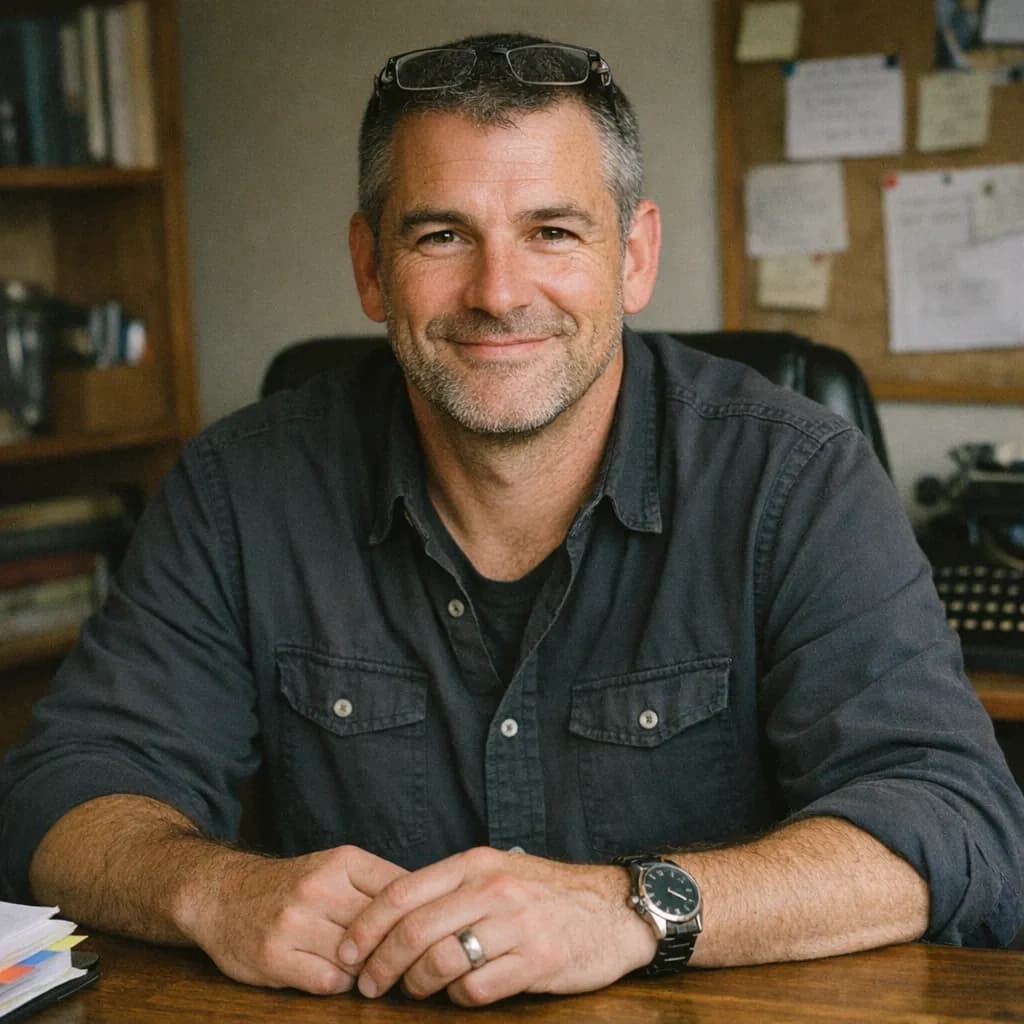
Callum Rhys Mahoney
Developmental Fiction Editor and Manuscript CoachI grew up between Wagga and my aunt’s place out near Narrandera, in a family that could argue for sport and then feed you like nothing happened. Books were around, but not in a precious way. My old man liked stories where people did what they said they’d do, even if it cost them. I still hear that voice when a character “can’t” make a decision because the plot needs another chapter. I didn’t set out to be an editor. I studied teaching, worked a few rough years in classrooms, and then left after a run of short contracts and one admin reshuffle that made it clear I was replaceable. A mate pulled me into doing learning materials and assessments because I could spot where people were gaming the question. That work taught me to watch for what the text rewards versus what it claims to reward - which is the same problem in a lot of manuscripts. I also spent a couple of seasons doing night shifts at a servo when money got tight. I kept a notebook behind the counter and wrote scenes between customers, mostly to stay awake. I remember one bloke coming in every Thursday, buying the same pie, and telling me the same story about a dog he swore was smarter than his ex. I don’t know why I remember that, but I do. Editing started as favour-work. People in town found out I’d read their drafts and I’d send back long emails with scene-by-scene notes. Somewhere along the line it became my paid work, mostly because I was consistent and because I’m not afraid to say, “This turn doesn’t belong to your protagonist.” I’m biased toward decisive characters and I don’t plan to cure myself of it; I’d rather a story risk an ugly choice than drift into polite inevitability.
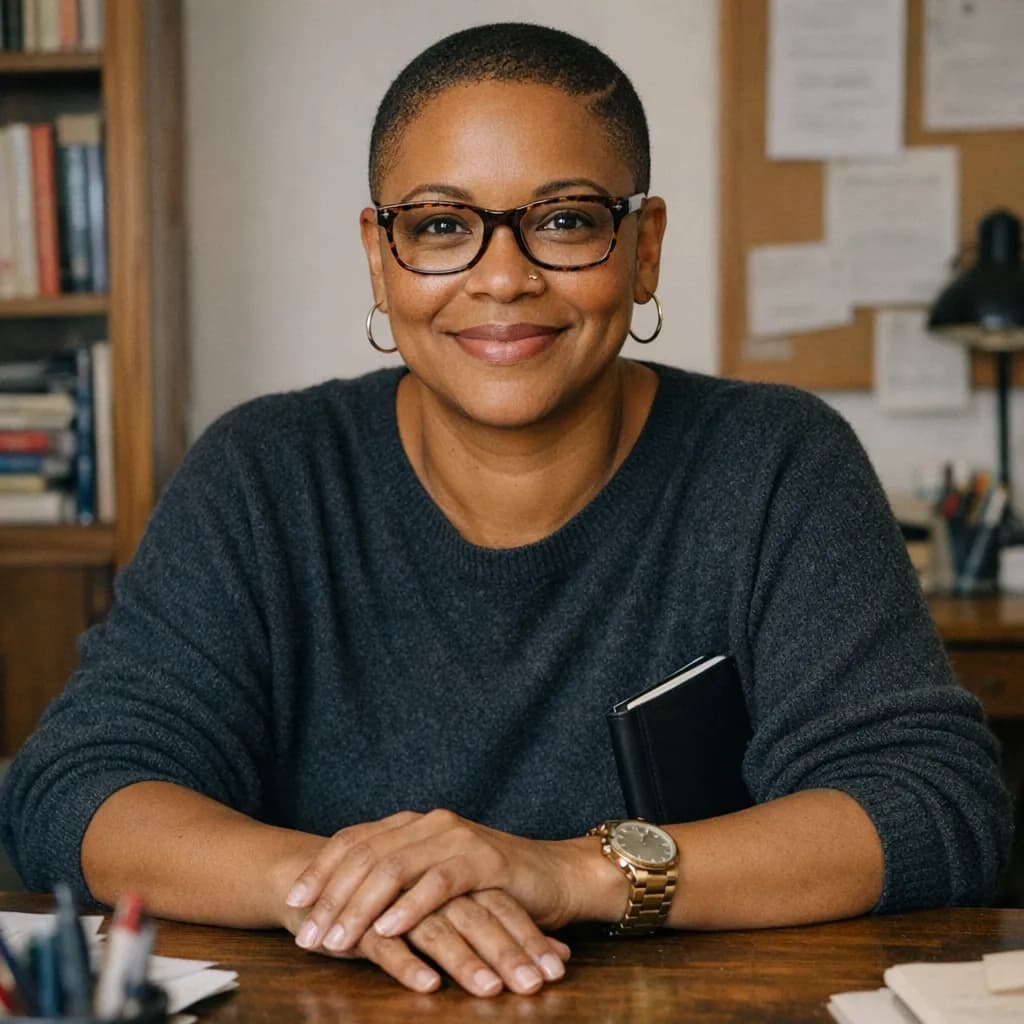
Danae Marcelline Brooks
Developmental Fiction Editor & Manuscript CoachI grew up between church basements, tidewater heat, and people who could tell a whole family story while stirring a pot and never looking up. My mom kept paperback romances in a shoebox like they were contraband, and my aunt kept a shelf of mystery novels with cracked spines. I read both. I learned early that readers forgive a lot, but they don’t forgive being bored or being lied to. I didn’t come up dreaming about editing. I wanted steadier work than “writer,” and I was the kid who could take notes fast, so I ended up in admin jobs where I got volunteered into fixing other people’s documents. Outside of that, I spent a couple years doing hair out of a friend’s kitchen. That part of my life doesn’t explain my editing, but it’s true: I still remember the sound of a cape snapping and how people tell you the most pointed truths when they think you’re not allowed to answer back. Sometimes I miss that kind of honesty. A storm took out power for a week when I was in my late twenties, and I agreed to help a neighbor organize a stack of workshop pages because there wasn’t much else to do at night. The pages were a mess, but the voice was alive. I wrote margin notes the way I talk, not the way school taught me, and the neighbor asked for more. That turned into being the person people handed drafts to. I still carry this old belief that if you “work hard enough,” the story will behave. I don’t defend it, but I catch myself acting like it’s true when I see a writer piling scenes on top of scenes. Now I’m a developmental editor because I’m impatient with pretty sentences that protect a story from making decisions. My bias is I’ll side-eye passive main characters harder than most editors will, even when the genre gives them excuses. I don’t correct that. It’s the lens I read through, and writers who want a gentler read should pick someone else. If you want a first reader who will point at the exact scene where your book starts dodging consequences, I’m your person.
Frequently Asked Questions
- What makes Love in the Time of Cholera so compelling?
- Many people assume the book works because it tells a grand romantic story. It actually works because it turns time into an active antagonist and makes “waiting” produce consequences, not just mood. Márquez keeps forcing you to reassess Florentino’s devotion by showing what it costs other people and what it does to his own character. If you want similar pull, don’t chase prettiness; build a chain of causes that makes desire look different at 20, 40, and 70.
- How is Love in the Time of Cholera structured?
- A common assumption says the book moves chronologically from youth to old age. Márquez frames the story with Urbino’s death near the start, then uses long retrospective sections to supply evidence for the present pursuit. That structure keeps the central question alive because each flashback changes the meaning of Florentino’s current actions. If you borrow this, anchor every time shift to a specific pressure in the present scene, or readers will feel you “paused the story” to show research.
- What themes are explored in Love in the Time of Cholera?
- People often reduce the themes to love conquers all. Márquez explores love as obsession, love as habit, love as social contract, and love as storytelling—plus the body’s betrayal through aging and illness, and a society shaped by class, religion, and public health fear. He pairs romance with decay so you can’t pretend feeling stays pure over time. When you write theme, let it emerge through repeated choices under pressure, not through speeches that announce what the book “means.”
- Is Love in the Time of Cholera appropriate for younger readers?
- Some assume it reads like a conventional, uplifting romance. The book includes explicit sexual content, morally complicated relationships, and an unsentimental view of obsession and aging, so suitability depends on maturity and context. It also asks readers to tolerate ambiguity rather than receive clear moral cues. If you write for a broad audience, remember that “adult” content isn’t just explicitness; it also includes ethical complexity, and you must signal that complexity early so readers consent to the ride.
- How long is Love in the Time of Cholera?
- Many expect a sprawling epic to feel slow because of length alone. Most editions run roughly 350–400 pages in English translation, but the perceived length comes more from the decades it covers and the density of incident than from page count. Márquez compresses time with summary, then expands key moments when a choice changes a life. If your long novel drags, don’t blame length; check whether your scenes change a value, not just add information.
- How do I write a book like Love in the Time of Cholera?
- A tempting misconception says you need poetic sentences and a star-crossed premise. You need an engine that makes desire measurable: escalating costs, social friction, and time that changes the characters’ needs. Build a protagonist whose longing produces action with consequences, and choose an opposing force that looks respectable and sensible, not evil. Then revise for moral pressure: make every “romantic” beat also carry a credible downside, and your story will earn its ambiguity instead of posing as deep.
About Gabriel García Márquez
State the impossible in a calm, factual sentence to make the reader accept it—and then use precise everyday details to make it hurt.
Gabriel García Márquez wrote like a reporter who never stopped believing in ghosts. He delivers the impossible in a tone that treats it as paperwork: measured, specific, and oddly calm. That calm voice does the real work. It makes you accept miracles, while you focus on the human logistics around them—who owed whom, who remembered what, who lied, who waited. He doesn’t “sell” wonder. He normalizes it, then uses it to expose ordinary hunger, pride, and grief.
His engine runs on compression. He stacks years into paragraphs, generations into a sentence, and private motives into public ritual. He doesn’t chase suspense with cliffhangers; he builds inevitability. He tells you outcomes early, then makes you read for cause and consequence—how one small choice ripples into a family myth you can’t correct anymore.
The technical difficulty hides in the surface ease. His sentences feel simple until you try to write them. You need clean syntax, hard nouns, exact sensory anchors, and strict control of what the narrator believes. If your narrator winks, apologizes, or explains the magic, the spell breaks. If your details drift into “poetic” fog, the world stops feeling documented.
He drafted with discipline and revised with patience, working toward a voice that sounds effortless and final. Modern writers still need him because he proved you can treat myth as a method, not a mood: you can build a whole reality from consistent social rules, repeated phrases, and remembered stories. He changed what “realism” could contain—without changing what readers demand from a sentence: clarity, authority, and consequence.














Ready to improve your draft with direction?
Open Draftly, bring your draft, and move from stuck to a stronger draft without losing your voice. Editors are on standby when you want a deeper pass.
Free welcome credits included. No credit card needed.