The War of the Worlds
Book Summary & Analysis
Book summary and writing analysis of The War of the Worlds by H. G. Wells.
The War of the Worlds works because Wells treats an outrageously high-concept premise like a local news event that keeps getting worse. He anchors the whole book in one plain, credible consciousness: the unnamed narrator, a middle-class writer in late-Victorian Surrey. The central dramatic question never bloats into “Can humanity win?” It stays sharper and more personal: can this specific man get home, keep his mind, and make sense of a world that stops obeying the rules?
The inciting incident happens at the sand-pits on Horsell Common, when the “meteor” proves not to be a rock and the cylinder unscrews itself. Note the mechanic: Wells makes the narrator choose proximity. He goes to look. He returns. He goes again. Curiosity, then duty, then disbelief pull him back into the danger zone. If you imitate this book naively, you will start with explosions and chase scenes. Wells starts with attention, with the social habit of watching.
From there, Wells escalates stakes through jurisdiction failure. First, the threat belongs to a curious crowd and a few local authorities. Then it becomes a military problem. Then it becomes a national migration. The Martians do not just attack; they reorganize the map. Each new tool (Heat-Ray, then the tripods, then the black smoke) forces a new kind of response and therefore a new kind of scene. Wells never repeats the same danger twice in a row.
The protagonist faces two opposing forces at once. The obvious one sits in the machines: the Martians and their technology, which operate with clean indifference. The quieter opposing force lives in human collapse: panic, bad leadership, rumor, and the instinct to turn cruelty into “reason.” Wells uses that double opposition to keep the book from becoming a single-note monster story. Even when the Martians disappear from the page for a chapter, the pressure stays.
Structure-wise, Wells alternates motion with confinement. He sends the narrator onto roads choked with refugees, then traps him in tight spaces where time slows and ethics sharpen. That alternation gives you two pleasures: the wide-angle social panorama and the microscope view of what fear does to a pair of people in the dark. If you copy only the spectacle, you miss the engine: Wells lets the reader feel both scale and claustrophobia.
The setting does more than decorate. Wells uses specific places—Woking, Weybridge, London streets, the ruined suburbs—to measure the invasion like a spreading stain. Every landmark you recognize becomes a yardstick for loss. And because the narrator speaks in a controlled, observant voice, the book never asks you to believe in Martians through theatrics. It asks you to believe in them because the narrator behaves like someone who wants to stay sane.
Watch how Wells handles “hope.” He offers it, then taxes it. The narrator keeps thinking the army will stabilize the situation, that organized society will reassert itself, that human cleverness will catch up. Each time, Wells shows the cost of that belief: it delays action, it keeps people on roads too long, it makes them trust the wrong signals. If you imitate the book and hand your protagonist inspiring speeches or a grand plan, you will break the spell. Wells makes survival feel improvised, not heroic.
Finally, Wells lands the ending by honoring the premise instead of the ego. The climax does not reward the narrator with conquest; it rewards him with comprehension. Wells uses the invasion to shrink human arrogance and then restore ordinary life with a new, uneasy awareness. You finish the book feeling two things at once: relief and insult. That mix lasts, and it lasts because Wells earned it with a chain of consequences you can’t argue with.
Story Structure & Narrative Arc
Story structure and emotional arc in The War of the Worlds.
Wells builds a Man-in-a-Hole arc, then refuses to let it turn into a victory lap. The narrator starts as a confident observer who believes the world stays legible if you look closely enough. He ends as a survivor who still observes, but now he knows observation never equals control. That internal shift matters more than any battlefield outcome.
The sentiment shifts land because Wells keeps changing the kind of pain. Early dread comes from curiosity curdling into danger at Horsell Common. Mid-book despair comes from social breakdown on the roads and the humiliating realization that institutions fail fast. The lowest point hits during forced intimacy and moral threat in the ruined house with the curate, where the enemy includes your own species. The climax punches because it arrives as an anti-climax: the terror collapses for a reason outside human heroics, which forces a sobering reframe instead of a cheer.

Studying this book—and stuck on your pages?
Put your draft in Draftly. Fix scenes and dialogue in the text—not in another tab. When you want sharper feedback, AI editors are ready.
Free welcome credits included. No credit card needed.Writing Lessons from The War of the Worlds
What writers can learn from H. G. Wells in The War of the Worlds.
Wells wins your trust with voice first. The narrator sounds like a sensible adult recounting a public disaster with restraint, not a character auditioning for your sympathy. He uses concrete observation and measured inference, then he admits uncertainty at the exact moments you would expect propaganda or melodrama. That discipline lets Wells sell impossible images—tripods striding over towns, a Heat-Ray sweeping a crowd—without begging you to believe.
He also controls distance like a surgeon. He moves from wide, reportorial panoramas (roads out of London, the massing of troops near Weybridge) into tight, sensory containment (the ruined house where the narrator hides near the Martian pit). That oscillation prevents monotony and keeps the invasion from becoming a single continuous chase. Modern genre shortcuts often keep the camera in one mode—either nonstop action or nonstop introspection. Wells shows you that scale and intimacy should take turns applying pressure.
Dialogue works here because Wells uses it to reveal competing survival philosophies, not to “explain the lore.” Look at the narrator’s exchanges with the curate during their hiding: the curate spirals into fatalism and loud, self-justifying prayer, while the narrator tries to maintain silence and practical thought. Wells makes the conflict physical: noise equals death. That turns an abstract clash of beliefs into a scene-level problem with a timer.
World-building stays credible because Wells anchors it in real geography and social behavior. Horsell Common feels like a place with footpaths and gossip, not a generic “small town.” London does not become a cinematic ruin; it becomes a logistical nightmare of bridges, crowds, and misinformation. Many modern takes on invasion stories over-invest in technical jargon or government briefings. Wells instead shows you the one detail that matters in the moment—heat, smoke, sound, distance—then lets the reader’s imagination do the expensive work.
How to Write Like H. G. Wells
Writing tips inspired by H. G. Wells's The War of the Worlds.
Write your narrator like a witness who hates exaggeration. Give them a calm default setting, then make them work to keep it. Let them name what they see, admit what they cannot know, and resist the urge to sound “epic.” Wells earns terror by underplaying it and staying specific. If your sentences start performing, your danger stops feeling real. When you want to intensify emotion, cut adjectives and add sequence: what happened, what it caused, what your character did next.
Build your protagonist as a competent ordinary person, not a chosen one in disguise. The narrator counts distances, notices crowds, bargains for transport, and makes imperfect calls under stress. He also keeps a private goal that never stops mattering, even when the world collapses. Give your lead one domestic tether—someone to reach, something to protect, a promise to keep—then keep attacking the logistics of honoring it. Growth comes from narrowing choices, not from speeches.
Avoid the big genre trap: treating the invaders as the only enemy and the only source of variety. Wells keeps inventing new forms of peril, but he also makes humans dangerous in mundane ways—panic, selfishness, bad information, moral collapse. If every chapter features the same kind of attack, you train the reader to skim. Change the threat vector. Switch from visible violence to invisible contamination, from speed to silence, from open roads to forced proximity.
Try this exercise. Pick one ordinary location you know well: a park, a commuter station, a supermarket car park. Write a scene where your narrator goes there out of curiosity, not courage, because something “fell” there. Stage three returns: first to look, second to confirm, third because a social or moral obligation drags them back. Each return must raise the cost and shrink the exit options. End the scene with a single irreversible demonstration of power that redefines what “safe” means.
Who Would Edit This Book?
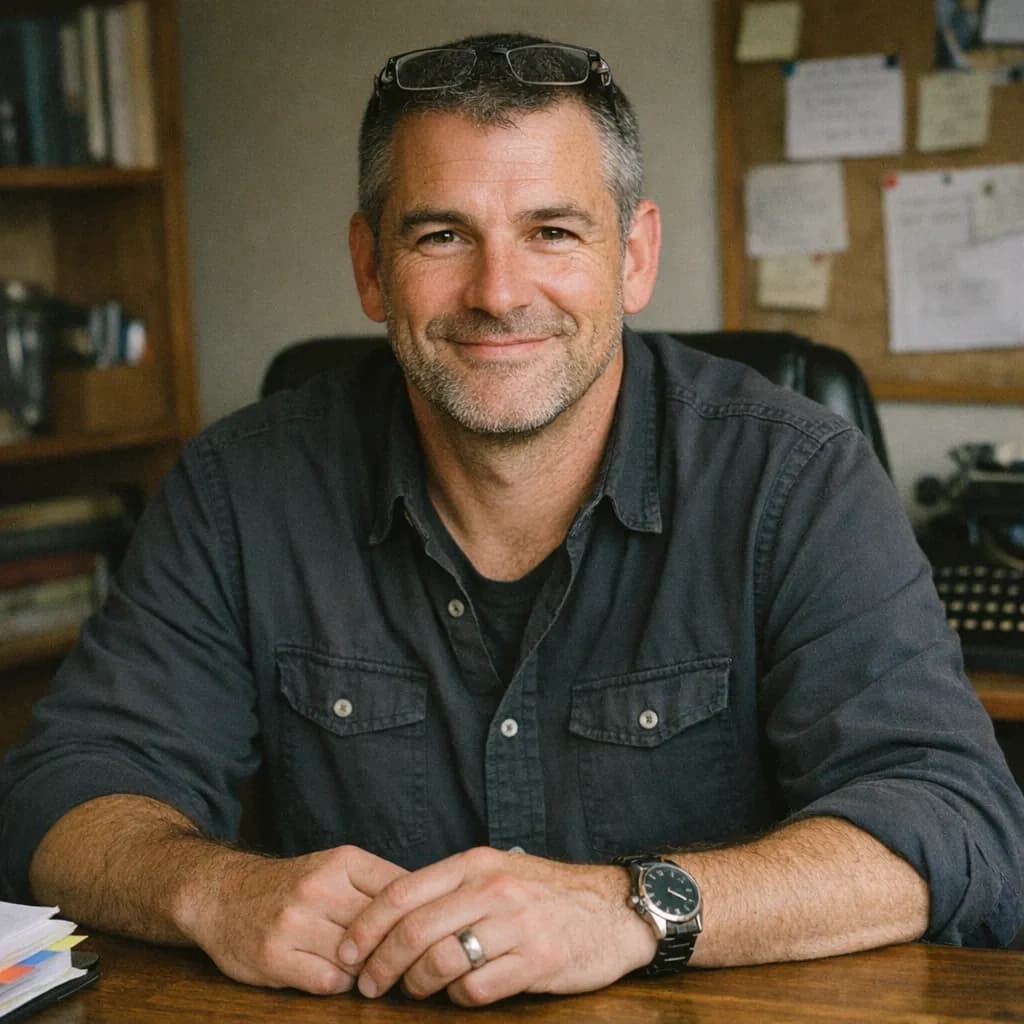
Callum Rhys Mahoney
Developmental Fiction Editor and Manuscript CoachI grew up between Wagga and my aunt’s place out near Narrandera, in a family that could argue for sport and then feed you like nothing happened. Books were around, but not in a precious way. My old man liked stories where people did what they said they’d do, even if it cost them. I still hear that voice when a character “can’t” make a decision because the plot needs another chapter. I didn’t set out to be an editor. I studied teaching, worked a few rough years in classrooms, and then left after a run of short contracts and one admin reshuffle that made it clear I was replaceable. A mate pulled me into doing learning materials and assessments because I could spot where people were gaming the question. That work taught me to watch for what the text rewards versus what it claims to reward - which is the same problem in a lot of manuscripts. I also spent a couple of seasons doing night shifts at a servo when money got tight. I kept a notebook behind the counter and wrote scenes between customers, mostly to stay awake. I remember one bloke coming in every Thursday, buying the same pie, and telling me the same story about a dog he swore was smarter than his ex. I don’t know why I remember that, but I do. Editing started as favour-work. People in town found out I’d read their drafts and I’d send back long emails with scene-by-scene notes. Somewhere along the line it became my paid work, mostly because I was consistent and because I’m not afraid to say, “This turn doesn’t belong to your protagonist.” I’m biased toward decisive characters and I don’t plan to cure myself of it; I’d rather a story risk an ugly choice than drift into polite inevitability.

Danae Marcelline Brooks
Developmental Fiction Editor & Manuscript CoachI grew up between church basements, tidewater heat, and people who could tell a whole family story while stirring a pot and never looking up. My mom kept paperback romances in a shoebox like they were contraband, and my aunt kept a shelf of mystery novels with cracked spines. I read both. I learned early that readers forgive a lot, but they don’t forgive being bored or being lied to. I didn’t come up dreaming about editing. I wanted steadier work than “writer,” and I was the kid who could take notes fast, so I ended up in admin jobs where I got volunteered into fixing other people’s documents. Outside of that, I spent a couple years doing hair out of a friend’s kitchen. That part of my life doesn’t explain my editing, but it’s true: I still remember the sound of a cape snapping and how people tell you the most pointed truths when they think you’re not allowed to answer back. Sometimes I miss that kind of honesty. A storm took out power for a week when I was in my late twenties, and I agreed to help a neighbor organize a stack of workshop pages because there wasn’t much else to do at night. The pages were a mess, but the voice was alive. I wrote margin notes the way I talk, not the way school taught me, and the neighbor asked for more. That turned into being the person people handed drafts to. I still carry this old belief that if you “work hard enough,” the story will behave. I don’t defend it, but I catch myself acting like it’s true when I see a writer piling scenes on top of scenes. Now I’m a developmental editor because I’m impatient with pretty sentences that protect a story from making decisions. My bias is I’ll side-eye passive main characters harder than most editors will, even when the genre gives them excuses. I don’t correct that. It’s the lens I read through, and writers who want a gentler read should pick someone else. If you want a first reader who will point at the exact scene where your book starts dodging consequences, I’m your person.
Frequently Asked Questions
- What makes The War of the Worlds so compelling?
- People assume the hook comes from the Martians, so they chase spectacle. Wells hooks you with credibility: a steady eyewitness voice, real place-names in Surrey and London, and a chain of consequences that never feels convenient. He also varies the pressure—public panic, military failure, private confinement—so dread keeps changing shape instead of repeating. If you want the same pull in your work, track cause-and-effect on the page and make every new scare force a new decision.
- How do I write a book like The War of the Worlds?
- Writers often think “bigger threat” equals “better story,” so they add louder action. Wells instead builds an escalation ladder where each rung changes the rules: new weapon, new environment, new kind of fear, new social behavior. Start with a believable observer and a small curiosity-driven choice, then let that choice trap them inside widening consequences. Keep your scenes logistical and moral, not just visual, and revise until each chapter forces a different form of problem-solving.
- What themes are explored in The War of the Worlds?
- A common assumption says the book only preaches imperial guilt, and it does push hard on human arrogance and colonial brutality. But Wells also explores fragility: how fast institutions fail, how thin “civilization” runs under hunger and fear, and how nature can humble technology without caring who deserves it. Treat theme as an outcome of pressures, not as a message you paste onto characters. If your scenes test values, the themes will show up on their own.
- Is The War of the Worlds appropriate for younger readers?
- Some readers assume classic science fiction reads “safe” because it lacks modern gore. Wells writes intense fear, mass panic, death, and psychological breakdown, plus a claustrophobic stretch with the curate that can unsettle sensitive readers. Younger readers who enjoy suspense and can handle grim scenes often do fine, especially with context. As a writer, notice how Wells implies horror through reaction and consequence more than explicit description; that technique lets you control intensity without censorship-by-blandness.
- How long is The War of the Worlds?
- People often equate length with “depth,” but this novel stays relatively short and still feels large because Wells compresses time and selects high-leverage scenes. Most editions run roughly 180–250 pages depending on formatting and supplemental material. For writers, that matters because it proves you can deliver epic scale through scene choice and narrative distance, not word count. Measure your draft by how often each scene changes the situation, not by how many pages you’ve stacked.
- What can writers learn from the narrator’s voice in The War of the Worlds?
- Many assume a first-person narrator must sound distinctive through quirks and catchphrases. Wells does the opposite: he makes the voice dependable, observant, and self-correcting, which creates authority under stress. He uses modesty—admitting gaps, reporting rumors as rumors—to increase trust, then he spends that trust on the impossible. If your narrator keeps “selling” emotions, pull them back into sensory fact and decision, and let the reader feel the panic through what the voice tries to control.
About H. G. Wells
Use a calm, credible witness-narrator to report impossible events, and you’ll make readers accept the premise before they notice they’ve surrendered.
H. G. Wells made the speculative story behave like an argument you can’t stop reading. He treats the impossible as a test rig for ordinary human motives: fear, pride, hunger, status. He doesn’t ask you to admire an idea; he asks you to watch people mis-handle it in real time. That’s why his best moments feel less like “science fiction” and more like social pressure turning into plot.
His engine runs on plausibility first, wonder second. He builds a credible observer—often educated, often fallible—then lets that observer report events with the calm of someone taking notes for a lawsuit. That steady voice buys him permission to introduce one wild premise and keep escalating it. You believe because the sentence keeps its balance, even when the world doesn’t.
The technical trap: Wells looks simple. The prose reads fast. So you copy the surface and miss the hidden scaffolding: tight cause-and-effect, controlled ignorance, and a narrator who frames every scene with a judgment call. He chooses what the witness notices, what they rationalize away, and what they admit too late. That control creates dread without melodrama.
Modern writers still need him because he solved a problem we still have: how to make big ideas feel personal without speeches. He drafted to keep momentum, then revised to sharpen the explanatory joints—the “therefore” logic inside the drama. He changed literature by proving the novel could run on concepts and still hit like experience.














Ready to improve your draft with direction?
Open Draftly, bring your draft, and move from stuck to a stronger draft without losing your voice. Editors are on standby when you want a deeper pass.
Free welcome credits included. No credit card needed.