The Lord of the Rings
Book Summary & Analysis
Book summary and writing analysis of The Lord of the Rings by J. R. R. Tolkien.
The central dramatic question in The Lord of the Rings stays brutally simple: can Frodo carry the Ring to its destruction before Sauron recovers it and breaks the free peoples of Middle-earth? Tolkien wins because he refuses to “add complexity” by muddying that question. He adds weight instead. Every chapter tests one thing: will Frodo choose the hard right over the easy wrong, and will anyone still stand beside him when it stops being romantic?
The inciting incident doesn’t happen when Bilbo finds the Ring. It happens when Gandalf returns to Bag End, drops the truth on Frodo, and Frodo makes the specific decision to leave the Shire with the Ring. Not “to go on an adventure.” To remove a lethal object from the place that made him soft. If you imitate Tolkien naively, you’ll start with fireworks and quaintness and call it “slow-burn.” Tolkien earns slow-burn because the decision carries consequence. The Shire becomes a baseline he can never fully return to.
The setting does heavy lifting because Tolkien treats geography as a machine for applying pressure. You start in a late Third Age countryside with beer, birthdays, and hedgerows, then you cross into spaces that strip comforts in a planned sequence: the Old Forest’s wrongness, Bree’s thin safety, Weathertop’s exposure, Rivendell’s respite, Moria’s confinement, Lothlórien’s temptation, the River’s drift, Rohan’s war-fog, Gondor’s siege math, Mordor’s industrial desolation. Place doesn’t decorate plot. Place argues with the characters.
The primary opposing force wears two faces. Sauron supplies the external threat, a distant will that pushes armies, spies, and terror across the map. But Tolkien aims the real blade at Frodo’s interior: the Ring’s promise to solve a problem now. He personifies that pressure through the Nazgûl’s pursuit, Boromir’s “reasonable” plea, Saruman’s rationalizations, and Gollum’s servile intimacy. He shows you the same corruption pattern at different scales so you feel the trap closing.
Tolkien escalates stakes through scope and specificity at the same time. You don’t just go from “danger” to “bigger danger.” You go from a secret flight that could ruin one home to a moral choice that could poison every home. He widens the map while he narrows Frodo’s options. Notice how often the story offers a better plan that fails on values: use the Ring, hide the Ring, entrust the Ring to power. Tolkien keeps forcing the same refusal under new costs.
Structurally, the engine runs on alternation: fellowship, fracture, then parallel marches that converge in meaning rather than in geography. The Council of Elrond formalizes the mission, but the Breaking of the Fellowship forces the true story to begin. From there, Tolkien crosscuts war and stealth so you never mistake spectacle for victory. Rohan and Gondor provide the “loud” plot with heroic payoffs; Frodo and Sam provide the “quiet” plot where every step feels like debt.
Frodo doesn’t “grow” in the way modern coming-of-age arcs like to promise. He diminishes. He loses appetites, sleep, and ease with his own body. Tolkien makes that diminution the point because the quest demands spiritual expenditure, not skill acquisition. If you imitate this book by giving your hero more powers, more confidence, more quips, you’ll miss the design. Tolkien asks: what does it cost to do the right thing when nobody can clap for you?
The ending works because Tolkien refuses the neat lie that virtue equals control. Frodo fails at the Crack of Doom. He claims the Ring. Tolkien then lets a prior choice—mercy to Gollum—complete the mission in an ugly, fitting way. The story proves its own theme under laboratory conditions: you can’t white-knuckle absolute corruption, but you can plant outcomes through earlier restraint. If you try to copy that without the groundwork, you’ll write a “twist.” Tolkien writes a verdict.
Story Structure & Narrative Arc
Story structure and emotional arc in The Lord of the Rings.
The story follows a Man-in-Hole trajectory stretched across an epic canvas: Frodo begins content, untested, and surrounded by community; he ends inwardly wounded, unable to fully re-enter the life he saved. The external world rises into a hard-won reprieve, but the protagonist’s personal fortune drops even as the mission succeeds. Tolkien treats that mismatch as truth, not tragedy bait.
Key sentiment shifts land because Tolkien times relief like oxygen. He gives you sanctuaries—Rivendell, Lothlórien, Ithilien—not as rewards, but as contrast that makes the next descent hurt. The deepest lows arrive when choice collapses: the Ringwraith wound that never quite heals, the breaking of the Fellowship, Shelob’s attack, and the ashen crawl through Mordor. The climax hits with force because Tolkien denies the fantasy of willpower at the exact moment you expect it, then pays off mercy as delayed causality.

Studying this book—and stuck on your pages?
Put your draft in Draftly. Fix scenes and dialogue in the text—not in another tab. When you want sharper feedback, AI editors are ready.
Free welcome credits included. No credit card needed.Writing Lessons from The Lord of the Rings
What writers can learn from J. R. R. Tolkien in The Lord of the Rings.
Tolkien builds authority through controlled diction shifts. He writes the Shire in plain, sensory domestic language, then lets the sentence lengthen and archaize as the world opens, which trains your ear to accept “high style” as earned, not pasted on. Pay attention to how he uses lists and measured repetition to create the sense of history behind the present moment. Modern fantasy often buys grandeur by naming things loudly. Tolkien earns grandeur by making the narrative voice sound like it remembers.
He also understands scene function. Tom Bombadil doesn’t exist to “move plot”; he exists to define the Ring by contrast and to unsettle your assumptions about power. Moria doesn’t exist to show off monsters; it exists to compress the Fellowship until cracks show, then to make loss feel like architecture collapsing. When you build set pieces, ask what claim the scene makes about your story’s moral physics. If the scene can’t argue, it can’t last.
Watch how Tolkien stages dialogue as ethical pressure, not banter. In the Council of Elrond, Boromir speaks like a practical patriot, not a villain, and Tolkien lets his reasoning sound persuasive before the narrative refutes it with consequences. Later, when Frodo and Sam spar over Gollum—Sam’s suspicion versus Frodo’s pity—Tolkien uses short, tired exchanges that sound like real people on no sleep. Modern dialogue shortcuts chase “voice” with jokes. Tolkien chases belief with motive.
World-building sticks because Tolkien ties it to embodied experience in specific places. You smell the wet, claustrophobic wrongness of the Dead Marshes and you feel time distort in Lothlórien, where Galadriel offers Frodo a vision that tempts him with explanation and control. He doesn’t explain cultures like an encyclopedia. He lets landscape, song, and artifact behave like evidence. If you want readers to trust your world, stop summarizing it and start letting it inconvenience your characters.
How to Write Like J. R. R. Tolkien
Writing tips inspired by J. R. R. Tolkien's The Lord of the Rings.
Write your narrator like a witness, not a hype man. Tolkien’s tone feels calm even when wolves circle, and that calm sells danger because it refuses to perform. You can use elevated language, but you must earn it by anchoring it in concrete action and texture. Avoid the modern habit of winking at the reader to prove you feel clever. If your voice keeps cracking jokes to dodge sincerity, you’ll never reach the kind of emotional gravity this book carries.
Build characters as moral instruments, not personality bundles. Frodo carries burden, Sam carries loyalty, Aragorn carries deferred authority, Boromir carries honorable fear, and each trait collides with the Ring in a different way. Don’t copy the roles; copy the clarity. Give every major character a virtue that can turn into a vice under pressure. Then engineer scenes where the pressure targets that exact hinge, so change shows up as choice, not as a paragraph that announces growth.
Resist the genre trap of treating lore as story. Tolkien writes songs, lineages, and languages, but he never lets them replace consequence. He also avoids the opposite trap: “darkness” as a paint job. Mordor feels terrifying because it behaves like a system that eats food, sleep, and hope, not because it uses edgy adjectives. If you write epic fantasy, you must make travel, scarcity, and distance matter. Otherwise your world becomes a themed backdrop for fights.
Try this exercise. Write a quest chapter where nothing “big” happens, then force it to change the protagonist anyway. Put your character in a landscape with a specific emotional temperature, like the Dead Marshes, and make the setting push a private temptation to the surface. Add a companion whose advice sounds reasonable but leads toward the wrong value, like Boromir’s logic or Gollum’s guidance. End the chapter with a small, costly choice that plants a payoff you can’t cash until much later.
Who Would Edit This Book?
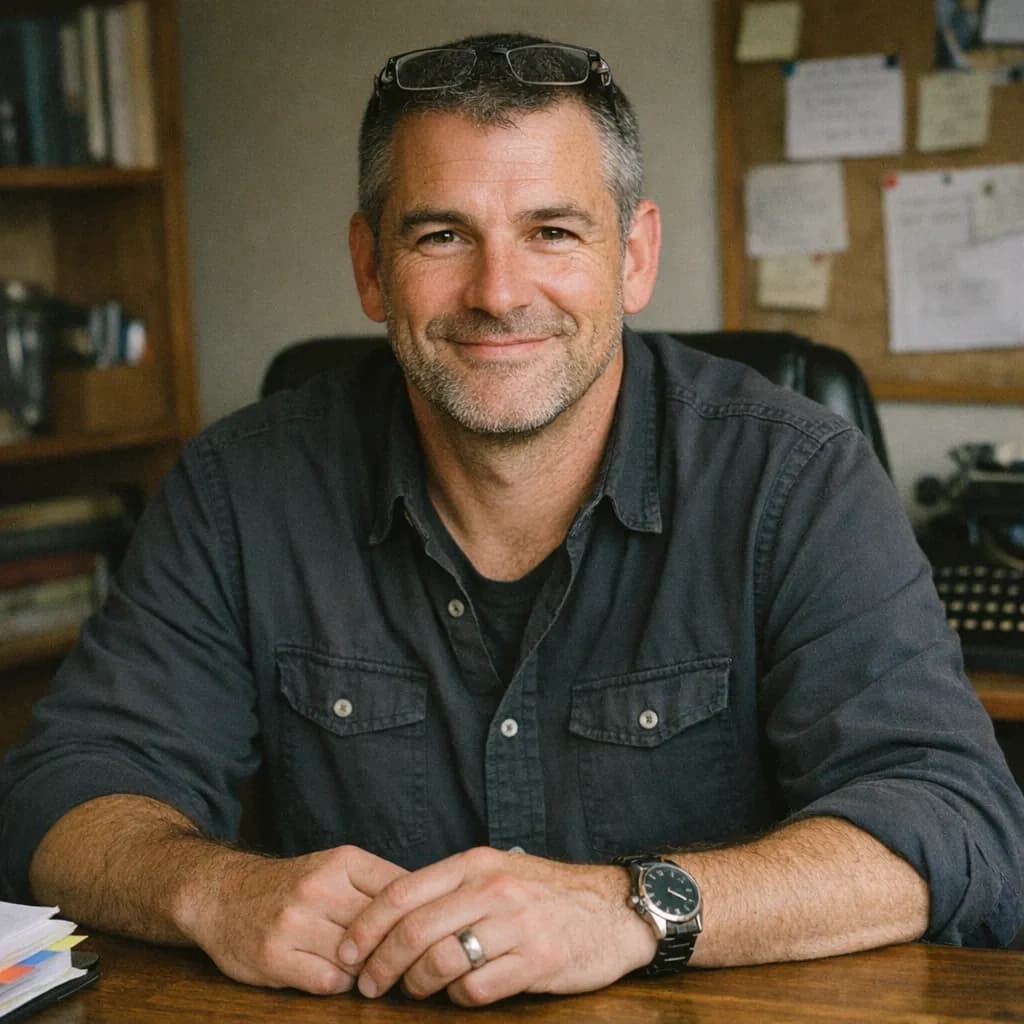
Callum Rhys Mahoney
Developmental Fiction Editor and Manuscript CoachI grew up between Wagga and my aunt’s place out near Narrandera, in a family that could argue for sport and then feed you like nothing happened. Books were around, but not in a precious way. My old man liked stories where people did what they said they’d do, even if it cost them. I still hear that voice when a character “can’t” make a decision because the plot needs another chapter. I didn’t set out to be an editor. I studied teaching, worked a few rough years in classrooms, and then left after a run of short contracts and one admin reshuffle that made it clear I was replaceable. A mate pulled me into doing learning materials and assessments because I could spot where people were gaming the question. That work taught me to watch for what the text rewards versus what it claims to reward - which is the same problem in a lot of manuscripts. I also spent a couple of seasons doing night shifts at a servo when money got tight. I kept a notebook behind the counter and wrote scenes between customers, mostly to stay awake. I remember one bloke coming in every Thursday, buying the same pie, and telling me the same story about a dog he swore was smarter than his ex. I don’t know why I remember that, but I do. Editing started as favour-work. People in town found out I’d read their drafts and I’d send back long emails with scene-by-scene notes. Somewhere along the line it became my paid work, mostly because I was consistent and because I’m not afraid to say, “This turn doesn’t belong to your protagonist.” I’m biased toward decisive characters and I don’t plan to cure myself of it; I’d rather a story risk an ugly choice than drift into polite inevitability.

Danae Marcelline Brooks
Developmental Fiction Editor & Manuscript CoachI grew up between church basements, tidewater heat, and people who could tell a whole family story while stirring a pot and never looking up. My mom kept paperback romances in a shoebox like they were contraband, and my aunt kept a shelf of mystery novels with cracked spines. I read both. I learned early that readers forgive a lot, but they don’t forgive being bored or being lied to. I didn’t come up dreaming about editing. I wanted steadier work than “writer,” and I was the kid who could take notes fast, so I ended up in admin jobs where I got volunteered into fixing other people’s documents. Outside of that, I spent a couple years doing hair out of a friend’s kitchen. That part of my life doesn’t explain my editing, but it’s true: I still remember the sound of a cape snapping and how people tell you the most pointed truths when they think you’re not allowed to answer back. Sometimes I miss that kind of honesty. A storm took out power for a week when I was in my late twenties, and I agreed to help a neighbor organize a stack of workshop pages because there wasn’t much else to do at night. The pages were a mess, but the voice was alive. I wrote margin notes the way I talk, not the way school taught me, and the neighbor asked for more. That turned into being the person people handed drafts to. I still carry this old belief that if you “work hard enough,” the story will behave. I don’t defend it, but I catch myself acting like it’s true when I see a writer piling scenes on top of scenes. Now I’m a developmental editor because I’m impatient with pretty sentences that protect a story from making decisions. My bias is I’ll side-eye passive main characters harder than most editors will, even when the genre gives them excuses. I don’t correct that. It’s the lens I read through, and writers who want a gentler read should pick someone else. If you want a first reader who will point at the exact scene where your book starts dodging consequences, I’m your person.
Frequently Asked Questions
- What makes The Lord of the Rings so compelling for writers?
- People often assume the book works because it offers “a big world” and a clear good-versus-evil fight. Tolkien’s real advantage comes from how he turns the quest into moral physics: every choice creates debt, and the Ring charges interest. He also crosscuts war and stealth so heroism never solves the central problem by itself. When you study it, track what each scene forces a character to refuse, not what each scene allows them to do, and your own plots will tighten.
- How long is The Lord of the Rings?
- Many writers think length equals sprawl, and sprawl equals boredom. The Lord of the Rings runs roughly 1,000+ pages depending on edition, but Tolkien sustains it by changing the type of pressure, not just adding events. He alternates refuge and ordeal, then uses travel to transform relationships and values. If you plan an epic, measure your story by turning points and emotional recalibration, not by word count targets, and you’ll avoid the “long because I can” trap.
- What themes are explored in The Lord of the Rings?
- A common assumption says the theme equals “friendship triumphs” or “good beats evil.” Tolkien goes sharper: power corrodes, mercy plants future outcomes, and even victory can wound the victor. He also treats industrial domination as a spiritual problem, not a political slogan, which gives the conflict an ache that outlasts battles. When you write theme, don’t declare it. Make it show up as a repeated choice with escalating cost, and let the ending deliver the final argument.
- How does Tolkien build such a believable world without info-dumping?
- Writers often believe they must explain the world to prove it exists. Tolkien implies depth by treating history as pressure on the present: ruins, songs, and names function like evidence, not lectures. He also anchors the fantastic in logistics—roads, weather, hunger, distance—so the world behaves consistently. When you world-build, let characters bump into the world’s rules in scene, and only explain what the character needs to survive the next ten minutes.
- How do I write a book like The Lord of the Rings without copying it?
- The usual rule says you should copy the tropes but change the costumes. That approach produces cardboard epics with familiar beats and no internal necessity. Instead, copy Tolkien’s underlying engine: a simple mission that forces increasingly costly moral refusals, supported by geography that applies specific kinds of stress. Design your own corrupting “Ring” as a temptation that sounds helpful, then test multiple characters with it at different scales. After each draft, ask what your story makes easy that Tolkien made expensive.
- Is The Lord of the Rings appropriate for younger readers and what can writers learn from that?
- Many assume it qualifies as a children’s adventure because it includes hobbits and clear villains. Tolkien writes accessible prose in places, but he doesn’t soften grief, fear, or moral compromise, and that seriousness teaches writers a key lesson about audience. You can write for younger readers without patronizing them, but you must keep cause and effect honest. Calibrate intensity through clarity and pacing, not through removing consequences, and readers will follow you further than you expect.
About J. R. R. Tolkien
Use “implied history” (songs, sayings, and artifacts with real consequences) to make your world feel older than your plot.
Tolkien doesn’t “add lore” to a story. He builds a story that behaves like lore. He writes as if the world existed first and the plot arrived later, like a footnote that started walking. That single choice changes how a reader reads: you stop watching the author perform, and you start listening for echoes. The result feels older than the page in front of you.
His main engine sits in the pressure between the ordinary and the archaic. He anchors you in plain needs—food, roads, fear, loyalty—then lifts the ceiling with elevated diction, song, genealogy, and ritual. That contrast creates a specific psychology: you trust the tactile details, so you accept the mythic claims. Many imitators copy the mythic tone and forget the tactile proof, so their “epic” reads like costume jewelry.
Technically, his difficulty hides in his control of distance. He zooms out to chronicler voice, then snaps back to a hobbit’s boots and appetite. He uses embedded histories, poems, and reported speech not as decoration but as authority machines: each inset text implies other texts you didn’t read. That implied library makes the world feel deep without constant explanation.
Modern fantasy changed because Tolkien showed you could fuse philology, fairy tale, and novelistic suspense into one readable line. He drafted, redrafted, and recomposed for years, often circling back to rename, re-map, and re-balance implications across the whole system. Study him now because your readers still crave depth—but they punish fake depth. Tolkien teaches you how to earn it.














Ready to improve your draft with direction?
Open Draftly, bring your draft, and move from stuck to a stronger draft without losing your voice. Editors are on standby when you want a deeper pass.
Free welcome credits included. No credit card needed.