A Personal Matter
Book Summary & Analysis
Book summary and writing analysis of A Personal Matter by Kenzaburō Ōe.
A Personal Matter works because it refuses to treat “character growth” as a mood. Ōe turns it into a series of concrete, reputation-threatening decisions made under time pressure. The central dramatic question stays brutally simple: will Bird accept his newborn son and the life that comes with him, or will he escape into a fantasy of freedom that requires a moral crime? If you imitate the book by copying its bleakness or its shocks, you will miss the point. Ōe wins because he builds an ethical vice, then tightens it one click per scene.
The inciting incident does not arrive as a vague “problem.” It arrives as a specific medical verdict in a hospital in early-1960s Tokyo: Bird’s child has a severe brain abnormality. Bird does not simply “feel conflicted.” He makes a decision in the same breath as the news: he postpones naming and seeing the baby as a person. That move sounds small, but it functions like a legal loophole. It gives him psychological permission to treat the child as an object and to bargain with fate, doctors, and even his wife.
Ōe sets Bird against an opposing force that never needs a villain’s mustache. The main antagonist takes the shape of responsibility enforced by institutions: the hospital’s procedures, the doctors’ language, the expectations of marriage, and the social shame that waits outside the ward. Bird can’t punch any of that. He can only squirm. Meanwhile, his own appetites and self-pity supply the internal opposition that makes every “reasonable” choice feel like a trap.
Notice how stakes escalate without car chases. Each attempt at escape creates a cost Bird can’t refund. He drinks harder, lies more cleanly, and starts treating other people as instruments to keep his options open. Ōe uses the city as a pressure cooker: bars, cheap hotels, and cramped apartments offer temporary exits, but each exit leaves evidence. The book keeps asking the same craft question in new clothes: what does Bird do next to protect his self-image, and what does that choice destroy?
Midway, the story sharpens from “avoidance” into “complicity.” Bird’s fantasies of Africa and freedom stop functioning as dreams and start functioning as alibis. He begins to act as if a “merciful” outcome might appear if he nudges the system—if he delays, if he persuades, if he looks away at the right moment. This is where many writers go soft. They give the protagonist a single monstrous impulse and call it darkness. Ōe does the opposite. He shows Bird assembling a rational case, step by step, until you recognize how ordinary the logic sounds.
The structure keeps tightening because Ōe never lets Bird confess cleanly. Every conversation becomes a negotiation over reality. Bird talks around facts, tests people’s boundaries, and listens for permission he can pretend he didn’t ask for. His wife stands as the most personal opposing force, not because she lectures, but because her presence makes evasion feel childish. The hospital also functions as a moral courtroom: fluorescent light, forms, and professional calm create an atmosphere where Bird’s panic looks grotesque.
By the late stages, Bird’s choices start colliding. He can’t maintain the fantasy of the “free man” while also managing a marriage, a newborn crisis, and a secret life. Ōe escalates by shrinking the distance between Bird and the consequences. The book forces Bird into scenes where he must look directly at what he has treated as abstract: the baby’s body, the medical facts, his wife’s stare, his own lies.
Ōe resolves the novel not by rewarding virtue but by exhausting evasion. The ending works because it does not claim redemption as a halo. It makes acceptance feel like a hard, imperfect action taken in the presence of shame. If you try to copy this book by writing “a flawed man who learns a lesson,” you will write a sermon. If you copy the actual engine, you will write a sequence of choices where every option costs something the protagonist values—and the reader feels the cost in their teeth.
Story Structure & Narrative Arc
Story structure and emotional arc in A Personal Matter.
Ōe writes a subversive Man-in-a-Hole that flirts with tragedy. Bird starts in smug, boyish self-mythology—he thinks of himself as a man destined for “elsewhere,” not for diapers and hospital forms. He ends not purified but cornered into adulthood, forced to act while disgust and love occupy the same body.
The power comes from sharp sentiment pivots. Each time Bird reaches for relief—alcohol, sex, travel fantasies—the story grants a brief high, then exacts a larger moral payment. The low points land because Ōe ties them to concrete logistics: who signs what, who hears what, who shows up at the wrong time. The climax hits hard because Bird cannot solve the problem with a new belief; he must choose an action that stains him either way.

Studying this book—and stuck on your pages?
Put your draft in Draftly. Fix scenes and dialogue in the text—not in another tab. When you want sharper feedback, AI editors are ready.
Free welcome credits included. No credit card needed.Writing Lessons from A Personal Matter
What writers can learn from Kenzaburō Ōe in A Personal Matter.
Ōe engineers moral suspense the way a thriller writer engineers bombs under tables. He plants a ticking clock inside paperwork, visiting hours, and medical decisions. You watch Bird’s mind try to wriggle free, but you also watch the institution of the hospital keep time. That craft move matters because it turns “internal conflict” into external, scene-level pressure. You never float in vibes; you sit in rooms where someone needs an answer.
The prose stays close enough to Bird to contaminate you with his self-justifications, but Ōe refuses to flatter him with lyrical confession. He gives Bird ugly, often comic self-awareness that reads like a man performing for himself. This creates a double effect: you understand Bird’s fear, and you also see the tricks he uses to keep that fear from becoming responsibility. Modern novels often shortcut this with a therapist monologue or a tidy trauma reveal. Ōe earns it through repeated choices that keep incriminating Bird.
Watch how Ōe uses dialogue as a moral x-ray instead of a delivery system for backstory. In Bird’s interactions with Himiko, he doesn’t trade “meaningful” lines; he bargains for permission to remain a child. Himiko pushes and indulges in the same moment, and Bird hears exactly what he wants to hear. Ōe writes these exchanges so the subtext drives the scene: Bird asks for an exit, and the other person asks, quietly, what exit will cost. You can lift that technique today by writing dialogue that forces a character to negotiate their self-image out loud.
The atmosphere never relies on exotic description. Ōe builds Tokyo through functional spaces that reflect Bird’s ethics: the bright hospital where facts refuse to blur, the bars and rooms where Bird tries to blur them anyway, the ordinary streets that make his private drama feel embarrassingly public. That contrast creates shame as setting, not as narration. Many writers now oversimplify “dark literary fiction” into relentless bleak tone. Ōe varies texture—panic, farce, tenderness, nausea—so the reader keeps recalibrating, which keeps the moral question alive instead of numbing.
How to Write Like Kenzaburō Ōe
Writing tips inspired by Kenzaburō Ōe's A Personal Matter.
Write a voice that admits ugliness without dressing it up as honesty. Bird’s narration (and the way the book tracks his attention) keeps trying to turn cowardice into a reasonable plan. You should aim for that same slippery clarity. Let your sentences sound like a smart person explaining a bad choice to themselves. Avoid poetic guilt. If you want lyricism, spend it on the physical world, not on self-pity. And keep a thin thread of dark humor available, because the mind often jokes when it panics.
Build your protagonist out of a self-myth and then attack it with logistics. Bird doesn’t just “want freedom.” He wants a specific identity, and he has props for it: travel fantasies, masculine stories, a sense of specialness. Give your character an internal brand they try to protect. Then introduce a problem that demands unglamorous behavior right now. Track how they manage impressions with different people, scene by scene. When they “grow,” don’t let them announce it. Make them do something that costs them their favorite story about themselves.
Don’t confuse provocation with power. This novel includes material that can tempt you into writing for shock value, especially around sex, drink, and moral taboo. Ōe avoids exploitation by keeping cause and effect tight. Every indulgent scene functions as a lever that moves the central dilemma forward, usually by creating evidence, obligation, or a new lie. If you add transgression as decoration, you will look like you borrowed darkness because you didn’t earn stakes. Make every “escape” scene increase pressure on the main decision.
Try this exercise: write eight scenes where your protagonist must answer the same question, but you never let them answer it directly. Set half the scenes in a sterile, rule-bound location and half in a location designed for forgetting. In each scene, force a specific micro-decision with a deadline: sign, call, tell, pay, show up, leave. End every scene with a new fact that makes the next avoidance more expensive. After you draft, underline every sentence where the character generalizes. Replace it with a concrete action or a measurable consequence.
Who Would Edit This Book?

Callum Rhys Mahoney
Developmental Fiction Editor and Manuscript CoachI grew up between Wagga and my aunt’s place out near Narrandera, in a family that could argue for sport and then feed you like nothing happened. Books were around, but not in a precious way. My old man liked stories where people did what they said they’d do, even if it cost them. I still hear that voice when a character “can’t” make a decision because the plot needs another chapter. I didn’t set out to be an editor. I studied teaching, worked a few rough years in classrooms, and then left after a run of short contracts and one admin reshuffle that made it clear I was replaceable. A mate pulled me into doing learning materials and assessments because I could spot where people were gaming the question. That work taught me to watch for what the text rewards versus what it claims to reward - which is the same problem in a lot of manuscripts. I also spent a couple of seasons doing night shifts at a servo when money got tight. I kept a notebook behind the counter and wrote scenes between customers, mostly to stay awake. I remember one bloke coming in every Thursday, buying the same pie, and telling me the same story about a dog he swore was smarter than his ex. I don’t know why I remember that, but I do. Editing started as favour-work. People in town found out I’d read their drafts and I’d send back long emails with scene-by-scene notes. Somewhere along the line it became my paid work, mostly because I was consistent and because I’m not afraid to say, “This turn doesn’t belong to your protagonist.” I’m biased toward decisive characters and I don’t plan to cure myself of it; I’d rather a story risk an ugly choice than drift into polite inevitability.
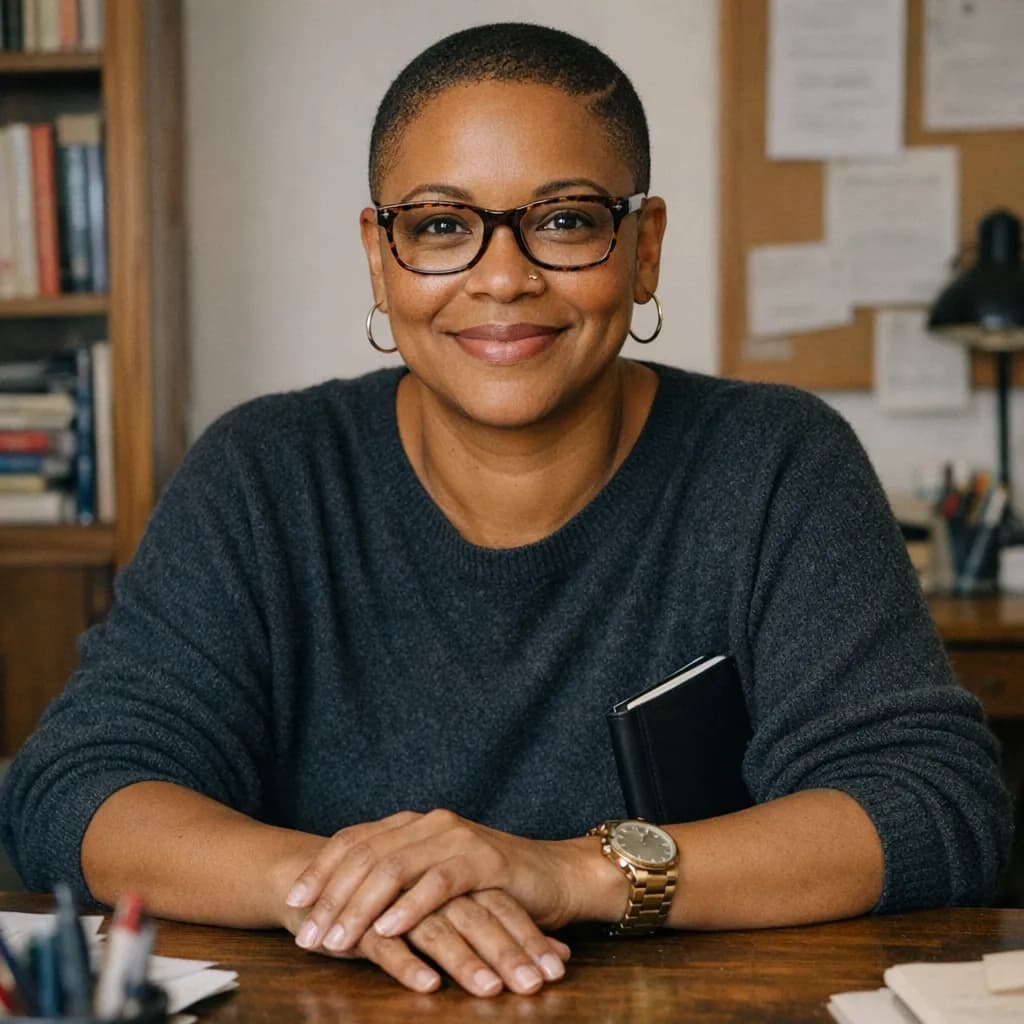
Danae Marcelline Brooks
Developmental Fiction Editor & Manuscript CoachI grew up between church basements, tidewater heat, and people who could tell a whole family story while stirring a pot and never looking up. My mom kept paperback romances in a shoebox like they were contraband, and my aunt kept a shelf of mystery novels with cracked spines. I read both. I learned early that readers forgive a lot, but they don’t forgive being bored or being lied to. I didn’t come up dreaming about editing. I wanted steadier work than “writer,” and I was the kid who could take notes fast, so I ended up in admin jobs where I got volunteered into fixing other people’s documents. Outside of that, I spent a couple years doing hair out of a friend’s kitchen. That part of my life doesn’t explain my editing, but it’s true: I still remember the sound of a cape snapping and how people tell you the most pointed truths when they think you’re not allowed to answer back. Sometimes I miss that kind of honesty. A storm took out power for a week when I was in my late twenties, and I agreed to help a neighbor organize a stack of workshop pages because there wasn’t much else to do at night. The pages were a mess, but the voice was alive. I wrote margin notes the way I talk, not the way school taught me, and the neighbor asked for more. That turned into being the person people handed drafts to. I still carry this old belief that if you “work hard enough,” the story will behave. I don’t defend it, but I catch myself acting like it’s true when I see a writer piling scenes on top of scenes. Now I’m a developmental editor because I’m impatient with pretty sentences that protect a story from making decisions. My bias is I’ll side-eye passive main characters harder than most editors will, even when the genre gives them excuses. I don’t correct that. It’s the lens I read through, and writers who want a gentler read should pick someone else. If you want a first reader who will point at the exact scene where your book starts dodging consequences, I’m your person.
Frequently Asked Questions
- What makes A Personal Matter so compelling?
- A common assumption says literary novels work through theme and language more than plot. Ōe proves the opposite: he drives the book with a single brutal decision that keeps resurfacing under tighter constraints, so every scene forces a choice. He also makes avoidance active, not inert—Bird’s dodges create new obligations and uglier bargains, which feels like plot, not “character study.” If your draft feels slow, check whether each scene changes what your protagonist must do next.
- What themes are explored in A Personal Matter?
- People often reduce the novel to themes like responsibility, disability, and fatherhood, then stop there. Ōe also interrogates self-mythology—how an adult keeps a childish story of freedom alive by treating other people as obstacles or tools. He threads shame through institutions like marriage and medicine, so the theme becomes social as well as personal. When you write theme, don’t declare it; set up repeating choices that force the reader to feel the argument in real time.
- How do I write a book like A Personal Matter?
- Many writers think they need a “flawed protagonist” and an edgy tone, then they improvise scenes of misery. Instead, copy the mechanism: pick one irreversible problem, attach it to a deadline, and make every attempted escape increase the moral price. Build a protagonist who can argue for their cowardice in intelligent language, then confront them with concrete procedures and witnesses. After each chapter, ask what new cost your protagonist incurred to keep pretending they stayed free.
- How long is A Personal Matter?
- A common misconception says length determines depth, especially in literary fiction. This novel runs at a relatively compact novel length in most English editions, often around two hundred pages, and it feels intense because Ōe compresses time and choices rather than expanding backstory. He uses short spans and tight settings to keep the dilemma hot. If you want similar force, don’t add pages—reduce the time window and make decisions stack faster.
- Is A Personal Matter appropriate for all readers?
- People sometimes assume “award-winning” equals universally comfortable. Ōe writes frank material—sexual content, heavy drinking, and ethically disturbing thoughts—because he wants to show how a mind rationalizes under fear, not because he wants to sensationalize. That makes the book better for mature readers who can handle moral discomfort without needing a clear hero. As a writer, treat intensity like a tool: earn it with consequence, and signal your boundaries through what the narrative condemns or condones.
- What writing lessons can be learned from A Personal Matter?
- Writers often believe they must choose between psychological depth and forward motion. Ōe shows you can fuse them by turning internal conflict into external decisions with paperwork, deadlines, and other people who demand answers. He also teaches you to vary emotional texture—panic, comedy, tenderness—so the reader doesn’t numb out under a single tone. If you want to apply the lesson, revise for decisions: in every scene, make your protagonist commit to something they can’t easily walk back.
About Kenzaburō Ōe
Use long, qualifying sentences to trap the narrator inside their own honesty—so the reader feels every attempted escape route close.
Kenzaburō Ōe writes like a moral argument that refuses to stay abstract. He plants you inside a mind that wants to be decent, then shows you the exact moments where decency becomes inconvenient, embarrassing, or impossible. He does not chase elegance. He chases accountability. His pages make you feel the weight of naming things correctly—and the shame of using the wrong name.
His engine runs on collision: private guilt vs public language, bodily fact vs political story, the clean sentence vs the messy human it tries to contain. He often lets a scene look “almost normal” before he tightens a screw—one odd detail, one social slip, one flash of violence—and now you can’t pretend it’s just atmosphere. He keeps you reading by forcing you to re-evaluate what you thought you understood, not by dangling plot candy.
The technical difficulty is control. Ōe’s sentences can sprawl, double back, qualify themselves, and still land with purpose. If you imitate the surface—long sentences, bleakness, intellectual talk—you get sludge. The real trick is how he stages conscience as action: every reflection changes what the character does next, even if the change looks like refusal.
Ōe matters now because he shows how to write about injury—personal and civic—without turning it into branding. He builds meaning through repetition with pressure: an image returns, a phrase returns, and each return carries more consequence. Think of drafting as interrogation. Put your first version on the stand, then revise until every sentence answers: “What am I avoiding admitting?”














Ready to improve your draft with direction?
Open Draftly, bring your draft, and move from stuck to a stronger draft without losing your voice. Editors are on standby when you want a deeper pass.
Free welcome credits included. No credit card needed.