War and Peace
Book Summary & Analysis
Book summary and writing analysis of War and Peace by Leo Tolstoy.
War and Peace works because it refuses the cheap promise of a single “main plot” and still delivers a single pressure system. The central dramatic question sounds simple but behaves like a vise: when history turns violent, who gets to steer a life—your will, or forces you barely see? Tolstoy tests that question across drawing rooms and battlefields until you stop treating “character” and “world” as separate topics. If you want to borrow his power, start there. Don’t start with length, costumes, or a cast list you can’t control.
Tolstoy builds the inciting mechanics in a social room, not on a battlefield. In the opening Petersburg soirées at Anna Pavlovna Scherer’s salon (1805), he stages the first collision between private desire and public tide: everyone performs opinions about Napoleon, war, and loyalty, and those opinions instantly sort people into danger and advantage. Pierre drifts in as the wrong kind of honest. Andrei shows up already sick of the whole charade. Natasha doesn’t appear yet, but the atmosphere sets her future costs. You should notice the craft move: he ignites the story with status, language, and misread motives—then he cashes it in as actual war.
If you try to imitate this book naively, you will mistake “many characters” for “many storylines.” Tolstoy doesn’t juggle plots; he tracks consequences. Each major character faces a personal want that looks reasonable in a peaceful year and becomes destructive in a war year. Pierre wants meaning and moral cleanliness. Prince Andrei wants glory and later wants peace from disappointment. Natasha wants love and a life that feels true now, not later. The opposing force doesn’t wear a black cape. It shows up as the churn of armies, gossip, money, family obligation, and the stubborn gap between what people think they control and what they actually control.
The setting does a lot of structural labor. Tolstoy anchors you in Russia during the Napoleonic Wars from 1805 through 1812 and into the aftermath, moving between St. Petersburg and Moscow society and the military fronts at places like Austerlitz and Borodino. He treats geography like a moral instrument. Petersburg trains people to speak in slogans. Moscow trains them to feel. The army trains them to lie to themselves in a different key. You don’t read “scenes”; you read systems where a choice turns costly in a new way.
Stakes escalate through a repeating pattern: private intention meets public machinery, then the public machinery smashes the private intention into a new shape. Austerlitz doesn’t just “raise the tension.” It strips Andrei of the story he told himself about heroism. Pierre’s inheritance and Freemasonry don’t just “add subplots.” They inflate his sense of agency so Tolstoy can puncture it later. Natasha’s romantic errors don’t just “add drama.” They show how the same hunger that makes her vivid also makes her vulnerable to predators and self-deception.
Tolstoy also escalates by changing the unit of consequence. Early, a bad evening costs you a reputation. Later, it costs you a marriage, an estate, a life. By 1812, it costs you a city. When Moscow burns and the French occupy it, Tolstoy turns the private sphere inside out. Home stops functioning as refuge and becomes a battlefield of logistics, ethics, and grief. Pierre’s “I will do something decisive” fantasy crashes into the chaos of occupation, where even decency becomes hard to execute cleanly.
Pay attention to how he handles the climax: he refuses the Hollywood single lever. Borodino lands because Tolstoy makes you feel how little any one person controls while still making each decision morally real. People bleed. Families break. Armies move like weather. And yet he never lets you off with “history did it.” He keeps you inside choices, minute by minute, when the choice cannot fix anything, only reveal you.
In the end, the book doesn’t “resolve the plot” so much as it resolves an argument about life. Pierre and Natasha and Andrei’s shadowed legacy embody a hard-earned shift from performative purpose to lived responsibility. Tolstoy then doubles down with essays on history that many readers skip—your mistake if you want the blueprint. He shows you the hidden weld: the same method that makes his scenes feel true also powers his philosophy. If you want to reuse the engine today, don’t borrow the furniture. Borrow the pressure: make every scene prove or break a belief about agency under large events.
Story Structure & Narrative Arc
Story structure and emotional arc in War and Peace.
War and Peace runs a subversive Man-in-a-Hole across multiple lives, with Pierre Bezukhov as the clearest emotional barometer. He starts as a well-meaning, unserious outsider who thinks intelligence plus decency should equal direction. He ends as a man who accepts limits without surrendering responsibility, trading grand poses for durable commitments.
The book hits so hard because Tolstoy times his sentiment shifts around illusions. Each rise comes from a story a character tells themselves—glory, romance, moral purity, patriotic certainty. Each fall comes when reality refuses to cooperate and forces a redefinition. The low points land because Tolstoy doesn’t frame them as “twists.” He frames them as inevitable invoices for earlier self-deception, paid under the bright light of war and social judgment.

Studying this book—and stuck on your pages?
Put your draft in Draftly. Fix scenes and dialogue in the text—not in another tab. When you want sharper feedback, AI editors are ready.
Free welcome credits included. No credit card needed.Writing Lessons from War and Peace
What writers can learn from Leo Tolstoy in War and Peace.
Tolstoy’s signature move looks like sprawl, but he runs a disciplined braid. He intercuts courtship, inheritance, military campaigns, and spiritual crises to ask one question from different angles. You feel breadth without confusion because each thread carries the same kind of payload: a belief meets a consequence. Many modern epics skip that and rely on lore, maps, and a “main quest.” Tolstoy relies on moral physics. When Pierre adopts a new creed, the next scenes test it until it breaks or hardens.
He also writes dialogue as social combat, not information delivery. In Anna Pavlovna’s salon, characters talk about Napoleon, but they really measure each other’s safety, usefulness, and rank. Later, when Natasha speaks with Sonya about love and duty, the words carry competing loyalties inside a single conversation. Tolstoy lets people interrupt, misread, and perform. He trusts subtext. Modern dialogue often over-clarifies emotion to keep pace. Tolstoy slows down and forces you to watch people manage their image while their true motive leaks out.
His world-building lives in specific rooms and routines, not in exposition. You remember the Rostovs’ Moscow home because you watch how they host, spend, flirt, worry, and pray. You understand the army because you watch officers chase favor, soldiers misunderstand orders, and leaders retrofit narratives after disasters. Tolstoy builds atmosphere through logistics: who arrives late, who pays, who whispers in French, who sleeps on straw, who can’t get a cart. Many writers chase “cinematic” description and miss the detail that actually convinces: behavior under constraint.
Finally, he earns his philosophical digressions by making them extensions of scene craft. He shows you how people create fake causality—crediting genius, blaming villains, praising “turning points”—then he undercuts it with messy, witnessed reality. That move teaches you a structural lesson: you can argue an idea inside a novel if you dramatize the counterargument first. Don’t staple a lecture onto a plot. Make the plot generate the lecture, then make the lecture send you back to reread the plot with sharper eyes.
How to Write Like Leo Tolstoy
Writing tips inspired by Leo Tolstoy's War and Peace.
Write with a calm, slightly amused authority. Tolstoy never begs you to feel; he arranges facts so you convict yourself. You can do that by stating observations cleanly, then letting implications bloom in the reader’s head. Keep your tone consistent across ballroom comedy and battlefield horror. Don’t “switch to epic mode” when cannons appear. Use the same clear sentence style, and let the events supply the magnitude. If you over-signal importance, you will sound like you don’t trust your material.
Build characters as bundles of self-stories that reality can punish. Give each major figure a private script for how life should work, then place them in arenas that contradict that script. Pierre wants moral certainty, Andrei wants meaningful distinction, Natasha wants immediate emotional truth. Now design scenes where their strengths become liabilities. Track a character’s language. When they gain maturity, they stop speaking in slogans and start speaking in specifics. When they regress, they borrow other people’s phrases.
Avoid the genre trap of mistaking scale for substance. Big casts, long timelines, and historical facts won’t create gravity. Consequences create gravity. Tolstoy avoids “war as spectacle” by focusing on confusion, rumor, ego, and chance, then showing how those small forces steer outcomes. If you write battle scenes, don’t choreograph them like a highlight reel. Choreograph perception. Who sees what, who misunderstands, who lies afterward, and who pays for that lie in a later, quieter scene.
Try this exercise. Write one belief statement for each of four characters about control, love, duty, or glory. Then write three paired scenes for each character: first, a social setting where the belief sounds smart; second, a crisis setting where the belief fails; third, a recovery setting where the character revises the belief in concrete behavior. Intercut the pairs so each scene answers the previous one from a different life. End by writing a short authorial paragraph that challenges your own causal story.
Who Would Edit This Book?
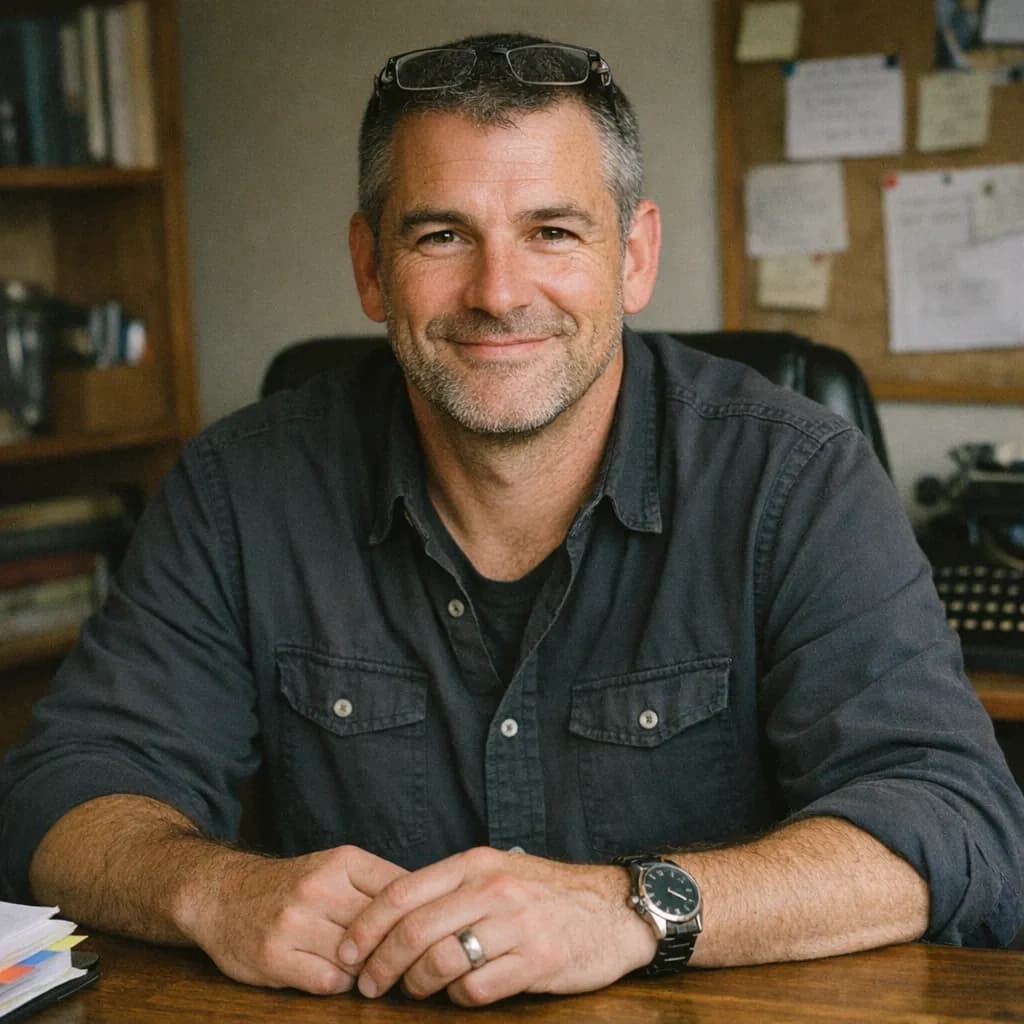
Callum Rhys Mahoney
Developmental Fiction Editor and Manuscript CoachI grew up between Wagga and my aunt’s place out near Narrandera, in a family that could argue for sport and then feed you like nothing happened. Books were around, but not in a precious way. My old man liked stories where people did what they said they’d do, even if it cost them. I still hear that voice when a character “can’t” make a decision because the plot needs another chapter. I didn’t set out to be an editor. I studied teaching, worked a few rough years in classrooms, and then left after a run of short contracts and one admin reshuffle that made it clear I was replaceable. A mate pulled me into doing learning materials and assessments because I could spot where people were gaming the question. That work taught me to watch for what the text rewards versus what it claims to reward - which is the same problem in a lot of manuscripts. I also spent a couple of seasons doing night shifts at a servo when money got tight. I kept a notebook behind the counter and wrote scenes between customers, mostly to stay awake. I remember one bloke coming in every Thursday, buying the same pie, and telling me the same story about a dog he swore was smarter than his ex. I don’t know why I remember that, but I do. Editing started as favour-work. People in town found out I’d read their drafts and I’d send back long emails with scene-by-scene notes. Somewhere along the line it became my paid work, mostly because I was consistent and because I’m not afraid to say, “This turn doesn’t belong to your protagonist.” I’m biased toward decisive characters and I don’t plan to cure myself of it; I’d rather a story risk an ugly choice than drift into polite inevitability.
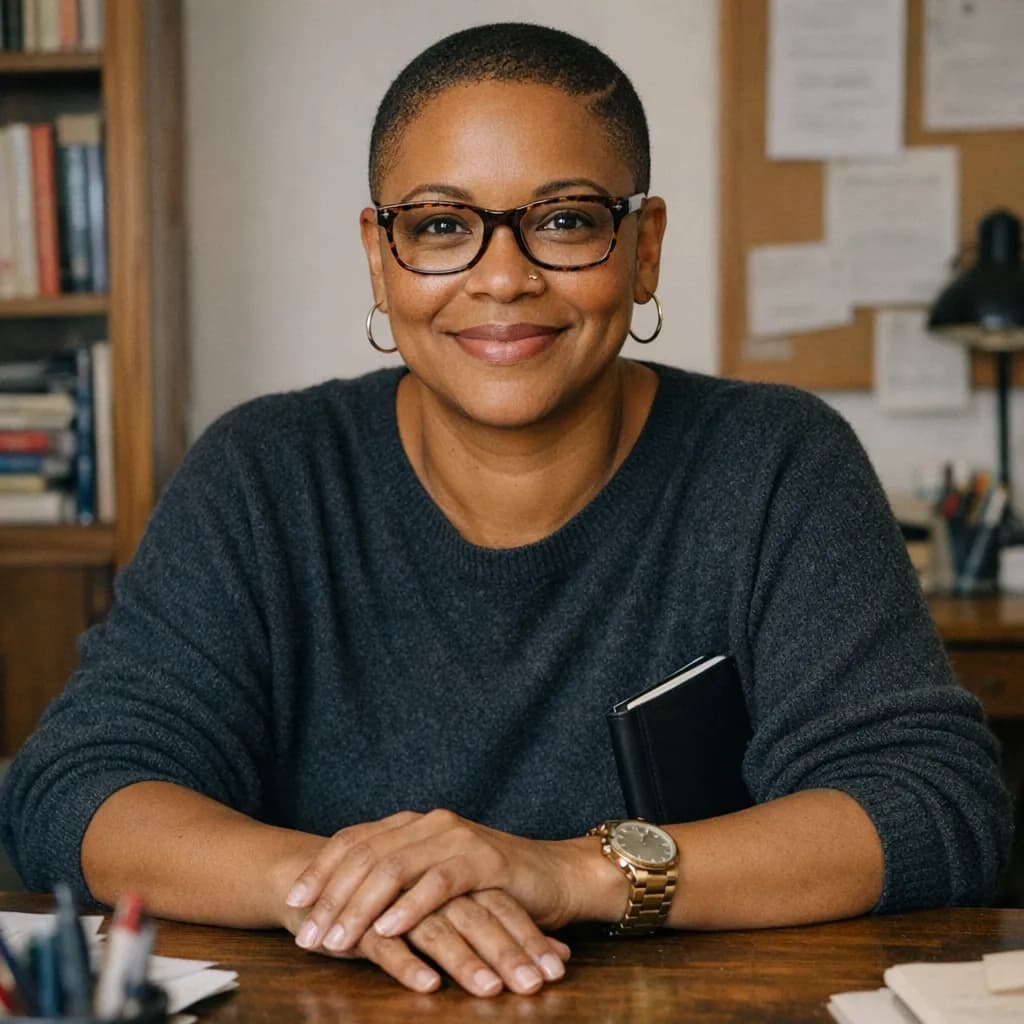
Danae Marcelline Brooks
Developmental Fiction Editor & Manuscript CoachI grew up between church basements, tidewater heat, and people who could tell a whole family story while stirring a pot and never looking up. My mom kept paperback romances in a shoebox like they were contraband, and my aunt kept a shelf of mystery novels with cracked spines. I read both. I learned early that readers forgive a lot, but they don’t forgive being bored or being lied to. I didn’t come up dreaming about editing. I wanted steadier work than “writer,” and I was the kid who could take notes fast, so I ended up in admin jobs where I got volunteered into fixing other people’s documents. Outside of that, I spent a couple years doing hair out of a friend’s kitchen. That part of my life doesn’t explain my editing, but it’s true: I still remember the sound of a cape snapping and how people tell you the most pointed truths when they think you’re not allowed to answer back. Sometimes I miss that kind of honesty. A storm took out power for a week when I was in my late twenties, and I agreed to help a neighbor organize a stack of workshop pages because there wasn’t much else to do at night. The pages were a mess, but the voice was alive. I wrote margin notes the way I talk, not the way school taught me, and the neighbor asked for more. That turned into being the person people handed drafts to. I still carry this old belief that if you “work hard enough,” the story will behave. I don’t defend it, but I catch myself acting like it’s true when I see a writer piling scenes on top of scenes. Now I’m a developmental editor because I’m impatient with pretty sentences that protect a story from making decisions. My bias is I’ll side-eye passive main characters harder than most editors will, even when the genre gives them excuses. I don’t correct that. It’s the lens I read through, and writers who want a gentler read should pick someone else. If you want a first reader who will point at the exact scene where your book starts dodging consequences, I’m your person.
Frequently Asked Questions
- What makes War and Peace so compelling?
- Many people assume it works because it feels “epic,” with wars, romances, and a huge cast. The deeper reason involves pressure and consequence: Tolstoy keeps forcing private beliefs to collide with public events until every scene changes how you judge a character’s agency. He also varies distance—close interiority, then wide social observation—so you feel both intimacy and historical scale. If you want to learn from it, track how each high-level event rewires a low-level relationship, not the other way around.
- How long is War and Peace?
- People treat length as the point, and they either idolize it or fear it. In English translation, you usually face around 1,200–1,400 pages depending on edition and type size, plus Tolstoy’s essay-like sections on history. That bulk matters only because Tolstoy uses it to show repeated cycles of illusion, reversal, and re-meaning across years. If you study it for craft, measure it in structural turns and consequence chains, not page count.
- Who is the protagonist in War and Peace?
- A common rule says a novel must have one protagonist with one clear external goal. Tolstoy breaks that expectation by running an ensemble, but Pierre Bezukhov functions as the emotional center because his hunger for meaning keeps colliding with events he cannot control. Prince Andrei and Natasha operate as co-centers, each testing different versions of purpose and love. If you want to write this kind of book, you must choose a thematic spine that unifies multiple “main characters,” or the whole thing turns into anecdotes.
- What themes are explored in War and Peace?
- Readers often list themes like love, war, fate, and Russian identity, which stays true but stays shallow. Tolstoy drills into agency: how people narrate their lives, how societies reward certain stories, and how history punishes the gap between confidence and reality. He also explores moral luck, the seduction of glamour, and the difference between performing virtue and practicing it under stress. When you extract themes for your own work, tie each one to a repeated scene pattern, not to a thesis sentence.
- Is War and Peace appropriate for beginners or younger readers?
- A common assumption says classics reward “any reader” if they just try hard enough. War and Peace demands patience with names, social nuance, and long stretches where Tolstoy prioritizes moral observation over plot speed, so it can frustrate some beginners and many younger readers. That said, it doesn’t require specialized knowledge as much as it requires attention to cause and effect across relationships. If you recommend it, match the reader’s stamina and curiosity, and encourage slow reading over “finish fast” pride.
- How do I write a book like War and Peace?
- The misconception says you need a giant outline, a historical timeline, and a mountain of research, then the magic happens. You actually need a unifying dramatic question about human agency, then a set of characters whose desires allow you to test that question in multiple arenas—family, money, romance, war, belief. Tolstoy keeps coherence by making each thread pay off in consequence, not trivia. If you attempt it, start smaller: prove you can braid two lives cleanly before you braid twelve.
About Leo Tolstoy
Use precise motive-tracking (want → choice → excuse → consequence) to make ordinary scenes feel inevitable and morally charged.
Tolstoy writes like a moral instrument, not a mood. He takes ordinary social life—meals, visits, dances, paperwork—and loads it with consequence by tracking what people want, what they say, and what they do instead. The trick is not “big themes.” The trick is relentless clarity about motives, plus the courage to show the motive changing mid-sentence.
He builds meaning by splitting the reader in two. One part enjoys the story; the other part judges it. He creates that split with a steady supply of close, specific observation and then a sudden, clean generalization that feels earned. He makes you complicit in a character’s rationalizations, then he turns the light on and shows the cost.
His technical difficulty hides in his apparent simplicity. The sentences look plain until you notice how they carry multiple time-scales at once: the instant of perception, the memory it triggers, the social script the character performs, and the ethical verdict hovering above it. You can’t fake that by writing long or “Russian.” You need control of viewpoint, selection, and timing.
Tolstoy also models ruthless revision in practice: he reworked scenes to sharpen cause-and-effect, recalibrate sympathy, and strip out “writerly” fog. Modern writers need him because he proves you can write with maximum readability and still deliver maximum psychological pressure. He changed the novel by making the inner life feel testable—like evidence, not decoration.














Ready to improve your draft with direction?
Open Draftly, bring your draft, and move from stuck to a stronger draft without losing your voice. Editors are on standby when you want a deeper pass.
Free welcome credits included. No credit card needed.