The Time of the Hero
Book Summary & Analysis
Book summary and writing analysis of The Time of the Hero by Mario Vargas Llosa.
The Time of the Hero works because it treats a school as a war zone and then refuses to tell you a clean, comforting truth about it. The central dramatic question never becomes “Will someone get caught?” but “Can anyone tell the truth here without getting destroyed?” Vargas Llosa turns that question into an engine: every scene tests whether a character will protect the group’s code or their own conscience. If you imitate this book naively, you’ll copy the surface violence and miss the real weapon: social fear.
The setting does a lot of heavy lifting, so you should name it precisely if you borrow the mechanism. Vargas Llosa places you in mid-20th-century Lima, inside the Leoncio Prado Military Academy, where boys train to become men by learning to lie well, obey fast, and never look soft. The academy operates like a closed economy. Status replaces money. Humiliation replaces law. You can’t write this kind of story in a vague “tough school” and expect the same heat.
The inciting incident triggers when the cadets of “the Circle” steal a chemistry exam and then scramble to cover their tracks after the theft draws attention. This isn’t just a caper. The act forces each boy to choose a side, and that choice creates leverage. The key scene choice sits in the decision to participate and then to stay silent afterward, because silence becomes a contract. A lot of writers would call the theft “the plot.” Vargas Llosa uses it as the first drop of poison in a communal cup.
The protagonist isn’t a lone hero with a simple goal; the book rotates focus, but it repeatedly returns to Alberto Fernández, nicknamed “the Poet,” because he understands stories and uses them as currency. He writes pornographic letters for classmates, negotiates, observes, and calculates. His primary opposing force doesn’t wear one face. It takes the form of the academy’s code of complicity, enforced most sharply through figures like Jaguar, whose dominance depends on the group’s fear. You should notice the trick: the villain equals the system, and the system recruits teenagers as its agents.
Vargas Llosa escalates stakes by tightening the trap, not by inflating spectacle. After the exam theft, suspicion, punishment, and retaliations ripple through the dorms. The book keeps asking: who benefits if the truth stays buried? As soon as someone dies in connection to the cover-up, the story pivots from “school scandal” to “moral crime,” and every earlier compromise suddenly carries a price tag. If you try to imitate this escalation with bigger fights instead of deeper consequence, you’ll get noise, not dread.
Structurally, he builds pressure through fractured chronology and viewpoint shifts that withhold context, then snap it into place later. That technique doesn’t exist to look clever. It forces you to experience the academy the way a cadet does: you rarely get the full story, you hear rumors, you infer motives, and you discover too late what your silence funded. The book’s power comes from delayed clarity. If you copy the fragmentation without controlling what the reader knows and when, you’ll produce confusion instead of compulsion.
The endgame doesn’t reward “courage” the way a workshop cliché would. Alberto tries to tell the truth through official channels, and the institution applies its real curriculum: contain the damage, protect the façade, sacrifice the expendable. The climax lands because it answers the dramatic question with a bitter lesson. Truth exists, but power decides whether truth matters. A lesser novel would let a single confession cleanse the world. This one shows you how a world stays dirty.
So the real blueprint looks like this: trap characters inside a social machine, make a small wrongdoing create shared liability, then use shifting perspectives to show how that liability deforms everyone differently. Vargas Llosa doesn’t write “about” corruption; he engineers a situation where corruption feels like the safest choice in the moment. That’s the engine you can reuse today, in any setting where belonging costs more than honesty.
Story Structure & Narrative Arc
Story structure and emotional arc in The Time of the Hero.
The emotional trajectory fits a bruising Man-in-a-Hole that refuses to climb all the way out. Alberto starts as a clever adapter who thinks words can buy safety; he ends with sharper moral vision but less faith in the systems that claim to reward it. He doesn’t transform into a triumphant whistleblower. He transforms into someone who understands the price of speaking.
Key sentiment shifts hit because Vargas Llosa alternates dominance and vulnerability across boys who all pretend they feel nothing. Early scenes give the academy a crude, almost comic swagger, then the story yanks that swagger into dread once a cover-up demands real sacrifice. The low points land with force because the book frames them as choices the characters make, not accidents that happen. The climax stings because it replaces the hope of justice with the reality of containment, and you feel the institution keep breathing after an individual moral act fails to stop it.

Studying this book—and stuck on your pages?
Put your draft in Draftly. Fix scenes and dialogue in the text—not in another tab. When you want sharper feedback, AI editors are ready.
Free welcome credits included. No credit card needed.Writing Lessons from The Time of the Hero
What writers can learn from Mario Vargas Llosa in The Time of the Hero.
Vargas Llosa builds credibility through texture, not explanation. He plants you in specific rooms and routines at Leoncio Prado—dormitories, drills, punishments, the smell of sweat and fear—and he lets those physical facts dictate behavior. You don’t “learn” that violence rules the school because a narrator tells you; you watch boys calibrate every sentence to avoid humiliation. Modern writers often shortcut this with a single bully scene and a paragraph of backstory. This novel earns the atmosphere by making it operational in every interaction.
He also weaponizes structure. He fractures chronology, switches viewpoints, and drops you into scenes mid-motion, then trusts you to assemble the truth the way the cadets do: through partial information and rumor. That choice turns form into meaning. You feel complicit when you misjudge someone early and only later learn what corner they lived in. Many contemporary novels use multiple POV as a fairness device—everyone gets a chapter, everyone gets understood. Vargas Llosa uses it as a pressure device—everyone gets exposed, and understanding arrives too late to prevent damage.
Watch how he handles dialogue as dominance, not “voice.” When Jaguar confronts Alberto, the exchange doesn’t read like witty banter or clean exposition. Jaguar tests boundaries with threats and insinuations; Alberto parries with half-truths, jokes, and strategic retreats. Each line changes the power balance in the room. That’s the craft lesson: dialogue should perform the conflict, not describe it. A common modern oversimplification treats dialogue like a transcript of information. Here, dialogue works like a knife fight where nobody wants to be seen holding the blade.
And he refuses the comforting moral geometry of clean heroes and villains. Alberto writes letters and bargains; Jaguar intimidates and also obeys his own warped code; officers protect the institution more than the boys. Vargas Llosa doesn’t excuse anyone, but he does show the incentives that make cruelty feel like survival. Writers who imitate only the harshness end up preaching. Writers who imitate the incentives can make readers feel the trap closing and still care about the people inside it.
How to Write Like Mario Vargas Llosa
Writing tips inspired by Mario Vargas Llosa's The Time of the Hero.
Write with a disciplined brutality. Don’t decorate the prose to prove you can. Vargas Llosa keeps the language concrete, then lets structure and subtext generate complexity. You should do the same. If you want a “literary” effect, earn it through selection and placement, not through fancy phrasing. Use scene entries that arrive late, so the reader must orient fast, but then reward them with crisp physical cues and clear intention. Confusion never counts as depth. It just counts as unpaid labor.
Build characters as negotiations with a system, not as bundles of traits. Alberto doesn’t just feel guilty; he calculates what guilt costs him in status, safety, and belonging. Jaguar doesn’t just act violent; he protects a hierarchy that protects him. Give each major character a private economy: what they trade, what they hoard, what they fear losing. Then force transactions. Don’t wait for a “character moment.” Make every scene a bid for position, and let the reader track the shifting price of loyalty.
Avoid the genre trap of making the institution a cartoon villain. This story works because the academy doesn’t need a mustache-twirler; it runs on procedures, image-management, and the quiet agreement that boys should absorb the damage. If you write a similar book and rely on one sadistic officer to carry the menace, you shrink the theme into a personal grudge. Spread the harm across normal people doing their jobs, friends protecting friends, and victims enforcing the code on newer victims. That’s how dread becomes believable.
Try this exercise. Write one pivotal incident of wrongdoing in a closed community: a theft, a hazing, a lie that “protects” the group. Draft it three times from three characters with different stakes, and shift the timeline so the second version reveals a detail that redefines the first. In each version, include one line of dialogue that functions as a threat without stating a threat. Then write a fourth scene where an honest character tries to report the truth to an authority, and let the authority solve the problem by protecting the institution, not the victim.
Who Would Edit This Book?
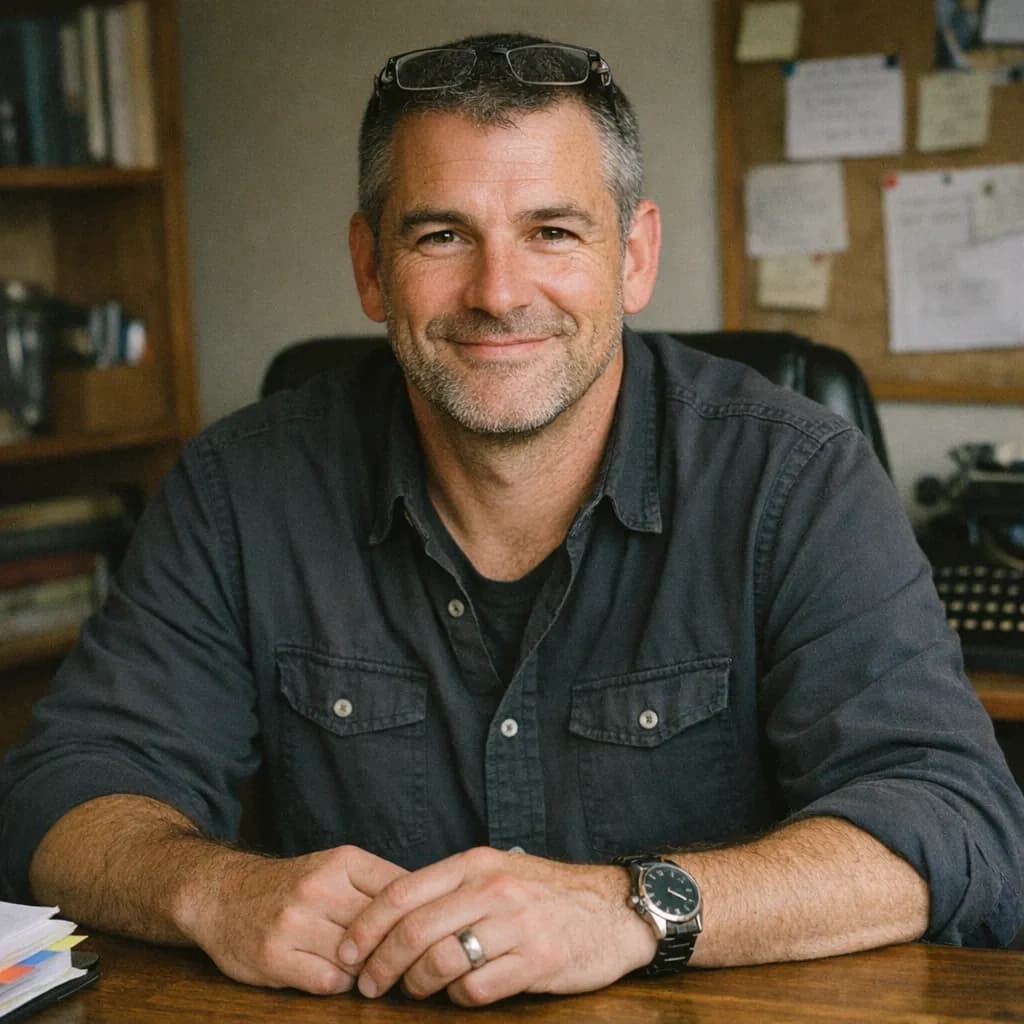
Callum Rhys Mahoney
Developmental Fiction Editor and Manuscript CoachI grew up between Wagga and my aunt’s place out near Narrandera, in a family that could argue for sport and then feed you like nothing happened. Books were around, but not in a precious way. My old man liked stories where people did what they said they’d do, even if it cost them. I still hear that voice when a character “can’t” make a decision because the plot needs another chapter. I didn’t set out to be an editor. I studied teaching, worked a few rough years in classrooms, and then left after a run of short contracts and one admin reshuffle that made it clear I was replaceable. A mate pulled me into doing learning materials and assessments because I could spot where people were gaming the question. That work taught me to watch for what the text rewards versus what it claims to reward - which is the same problem in a lot of manuscripts. I also spent a couple of seasons doing night shifts at a servo when money got tight. I kept a notebook behind the counter and wrote scenes between customers, mostly to stay awake. I remember one bloke coming in every Thursday, buying the same pie, and telling me the same story about a dog he swore was smarter than his ex. I don’t know why I remember that, but I do. Editing started as favour-work. People in town found out I’d read their drafts and I’d send back long emails with scene-by-scene notes. Somewhere along the line it became my paid work, mostly because I was consistent and because I’m not afraid to say, “This turn doesn’t belong to your protagonist.” I’m biased toward decisive characters and I don’t plan to cure myself of it; I’d rather a story risk an ugly choice than drift into polite inevitability.
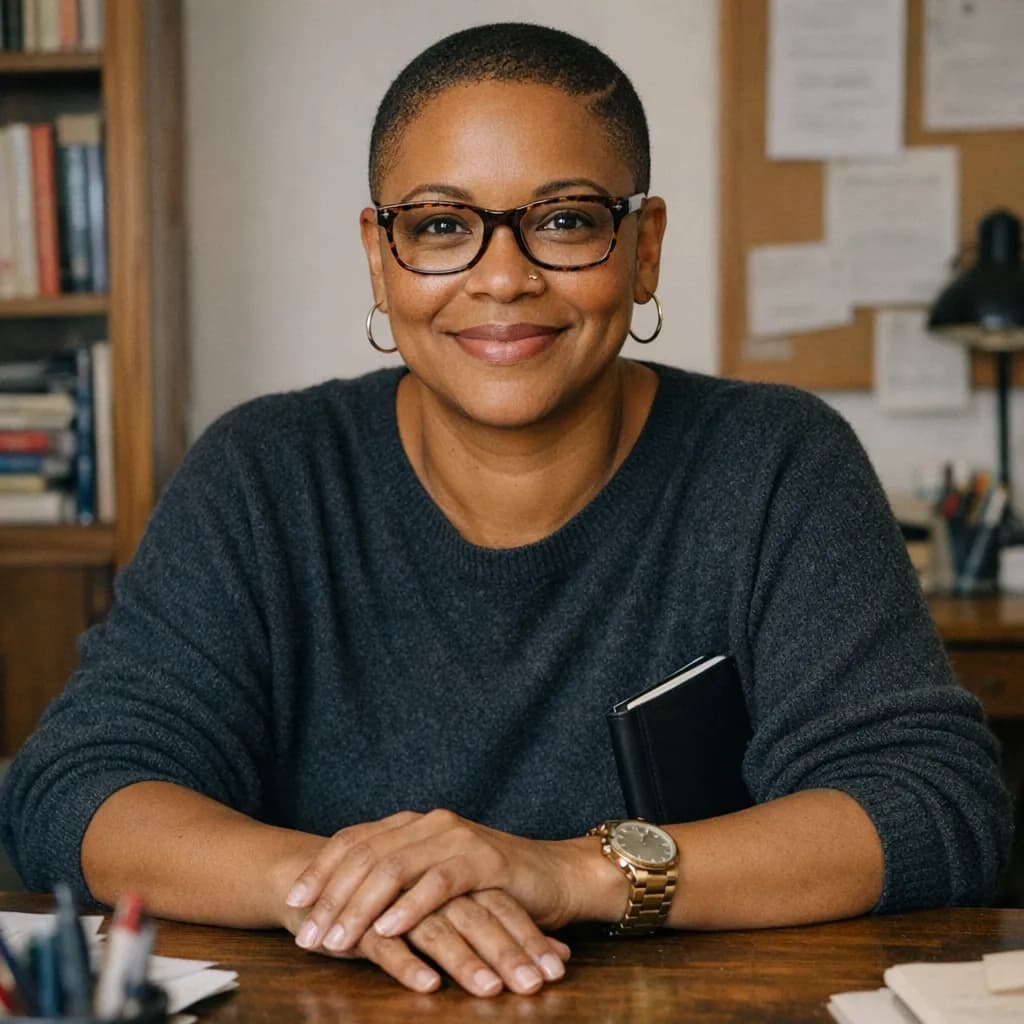
Danae Marcelline Brooks
Developmental Fiction Editor & Manuscript CoachI grew up between church basements, tidewater heat, and people who could tell a whole family story while stirring a pot and never looking up. My mom kept paperback romances in a shoebox like they were contraband, and my aunt kept a shelf of mystery novels with cracked spines. I read both. I learned early that readers forgive a lot, but they don’t forgive being bored or being lied to. I didn’t come up dreaming about editing. I wanted steadier work than “writer,” and I was the kid who could take notes fast, so I ended up in admin jobs where I got volunteered into fixing other people’s documents. Outside of that, I spent a couple years doing hair out of a friend’s kitchen. That part of my life doesn’t explain my editing, but it’s true: I still remember the sound of a cape snapping and how people tell you the most pointed truths when they think you’re not allowed to answer back. Sometimes I miss that kind of honesty. A storm took out power for a week when I was in my late twenties, and I agreed to help a neighbor organize a stack of workshop pages because there wasn’t much else to do at night. The pages were a mess, but the voice was alive. I wrote margin notes the way I talk, not the way school taught me, and the neighbor asked for more. That turned into being the person people handed drafts to. I still carry this old belief that if you “work hard enough,” the story will behave. I don’t defend it, but I catch myself acting like it’s true when I see a writer piling scenes on top of scenes. Now I’m a developmental editor because I’m impatient with pretty sentences that protect a story from making decisions. My bias is I’ll side-eye passive main characters harder than most editors will, even when the genre gives them excuses. I don’t correct that. It’s the lens I read through, and writers who want a gentler read should pick someone else. If you want a first reader who will point at the exact scene where your book starts dodging consequences, I’m your person.
Frequently Asked Questions
- What makes The Time of the Hero so compelling?
- A common assumption says the book hooks you through scandal and violence. It actually hooks you through moral mathematics: every choice carries a social cost, and the novel tracks who pays it. Vargas Llosa makes the academy feel like a closed system where silence functions like currency, so you keep reading to see which characters break first and what that break buys them. If you want similar pull, design incentives and penalties before you design plot twists, and then test them in scene.
- How long is The Time of the Hero?
- People often assume length predicts difficulty, but structure predicts difficulty more. Most editions run roughly 350–450 pages depending on translation and formatting, yet the bigger challenge comes from the shifting viewpoints and non-linear reveal of information. You can read it quickly if you accept temporary uncertainty and keep tracking who knows what, not just what happens. As a craft study, notice how often a later scene re-prices an earlier one.
- What themes are explored in The Time of the Hero?
- Many readers name the obvious themes: masculinity, violence, and corruption. The sharper theme involves complicity as a social technology—how groups manufacture loyalty by distributing guilt. Vargas Llosa also explores storytelling itself as power through Alberto’s role as “the Poet,” showing how words can buy status and also mask harm. When you write theme at this level, you don’t announce it. You build a system where the theme becomes the only honest description of what characters must do to survive.
- Is The Time of the Hero appropriate for younger readers?
- A common rule says “classic literature suits everyone,” but content and tone matter. The novel includes brutality, sexual material, and an unsentimental view of adolescent cruelty inside a military setting, so it often fits mature teens and adults rather than younger readers. From a writing perspective, the book offers valuable lessons in depicting harm without melodrama, but you should match your own audience’s tolerance and your own purpose. Don’t chase “grit” unless you can justify it in the story’s moral logic.
- How does The Time of the Hero use multiple perspectives effectively?
- Writers often believe multiple POV exists to “show both sides.” Vargas Llosa uses it to show how a single event mutates as it passes through fear, pride, and self-preservation. Each viewpoint controls access to information, so the reader learns the truth by assembling contradictions, not by receiving a clean explanation. If you attempt this, treat each POV as a filter with an agenda. And always track revelation: every switch must change what the reader believes, not just who holds the camera.
- How do I write a book like The Time of the Hero?
- A common misconception says you need a harsh setting and shocking scenes. You actually need a closed community with enforceable rules, a shared secret that creates mutual liability, and a character who tries to convert private truth into public fact. Then you must escalate consequences through social mechanics—status loss, isolation, retaliation—before you escalate through spectacle. Draft the system first: who benefits from silence, who enforces it, and what “justice” looks like to the institution. Your plot will grow out of that logic.
About Mario Vargas Llosa
Cut between viewpoints at the moment of highest pressure to make the reader supply the missing truth—and keep reading to confirm it.
Mario Vargas Llosa builds novels the way a courtroom builds a case: not by telling you what to think, but by controlling what you can know, when you can know it, and who gets to speak first. His pages run on engineered collision—public stories versus private motives, ideals versus appetites, the official version versus the version that leaks out in gossip, memory, and shame. You don’t read him in a straight line; you get drafted into an argument where the evidence keeps changing shape.
His core craft move looks simple until you try it: he fractures chronology and point of view without losing narrative authority. He cuts between scenes mid-thought, stitches dialogue to interior commentary, and lets the same event appear through competing accounts. The effect is psychological pressure. You feel smart for keeping up, then uneasy when you realize your certainty came from a viewpoint he quietly rigged.
The technical difficulty isn’t “complex structure” in the abstract. It’s continuity of causality. Vargas Llosa can jump time, switch heads, and still make each beat land because every scene advances a power contest—someone wants something, someone resists, and the social machine grinds on. He uses clarity at the sentence level to earn complexity at the story level.
Writers still need him because modern fiction often mistakes intensity for noise. He proves you can write politically and still seduce; you can run a big cast and still feel intimate; you can build a maze and still deliver clean emotional exits. He worked with discipline—planned structures, long drafting sessions, and heavy revision—because this kind of control doesn’t appear by “finding the voice.” You design it, then you sand it until the joins disappear.














Ready to improve your draft with direction?
Open Draftly, bring your draft, and move from stuck to a stronger draft without losing your voice. Editors are on standby when you want a deeper pass.
Free welcome credits included. No credit card needed.