Frankenstein
Book Summary & Analysis
Book summary and writing analysis of Frankenstein by Mary Shelley.
Frankenstein works because it runs on a single, vicious dramatic question: what do you owe what you create—especially when you create it in private, then let it loose in public? Mary Shelley doesn’t build suspense from “Will the monster kill again?” She builds it from “Will Victor take responsibility before his denial destroys everyone he claims to love?” If you copy the surface (a lab, a stitched body, a rampage), you’ll miss the actual fuel: shame, secrecy, and belated accountability.
The setting locks that fuel in place. Shelley plants you in late‑18th‑century Europe, moving from Geneva’s domestic respectability to Ingolstadt’s university culture, then out into Alpine passes, Scottish coasts, and Arctic ice. Those locations don’t serve as gothic wallpaper. They externalize Victor Frankenstein’s inner weather: the further he runs from ordinary life, the more extreme the landscape gets. That escalation teaches you a craft rule you can reuse today: when your character’s choices tighten the moral noose, make the world feel narrower, colder, higher, or more exposed.
The inciting incident doesn’t happen when Victor studies science. It happens when he crosses a line and refuses to name it as a line. In Ingolstadt, after he “discovers” the principle of life, he decides to assemble a being and then isolates himself to do it—cutting off letters, friendships, and health. Shelley makes that decision concrete: he chooses obsession over community, then he chooses speed over care. You can feel the exact mechanism: he builds a process that allows no witnesses, no brakes, and no second thoughts.
Then Shelley compounds the inciting incident with a second, sharper one: the moment Victor succeeds and instantly rejects the result. In the creation scene, he animates the creature and, within hours, abandons it in disgust. Most writers imitate the lightning and the horror. Shelley wants you to notice the managerial failure. Victor creates a sentient being, offers no language, no shelter, no explanation, and then acts surprised when consequences develop a pulse. If you want the book’s power, you must write the abandonment as an ethical choice, not a spooky accident.
The protagonist fights an opposing force with two faces. Victor battles the creature’s physical agency, yes, but he mostly battles his own refusal to act like an adult. The creature functions as antagonist because Victor gives it no place in the human world, then denies it a place in his own story. Shelley reinforces this opposition through structure: nested narrators force you to watch characters editorialize their own guilt. Each narrator argues his case. Each one also exposes what he can’t bear to admit.
Stakes escalate through a simple but brutal pattern: Victor delays, and someone else pays. He keeps secrets when he should speak. He flees when he should stay. He makes private vows instead of public repairs. Shelley doesn’t raise stakes with bigger explosions; she raises them with shrinking options. By the time Victor understands the creature’s loneliness and intelligence, Victor already trained the creature in rejection. When Victor later agrees to make a companion, Shelley turns the screw again: she makes Victor’s next choice public in its consequences and irreversible in its moral cost.
The midpoint doesn’t “reveal a twist.” It redefines the enemy. The creature tells his story and proves he can reason, learn, and suffer. That revelation yanks the book out of simple horror and into moral tragedy. Now you can’t hide behind genre comfort. You must answer a harder question: if the so‑called monster behaves like a person, what does that make the creator who refuses him?
The endgame works because Shelley denies you a clean victory condition. Victor can’t undo creation, and he can’t outsource responsibility to fate, science, or the creature’s “nature.” The Arctic frame closes like a coffin: obsession drives Victor into a landscape that mirrors his inner emptiness, while Walton watches and records—another ambitious man tempted by the same hunger. If you try to imitate this ending naively, you’ll chase spectacle. Shelley chases judgment. She leaves you with an engine you can steal: build a story where the final terror comes from a character realizing he lived by a comforting lie, and it cost real lives.
Story Structure & Narrative Arc
Story structure and emotional arc in Frankenstein.
Frankenstein traces a tragic downward arc disguised as an adventure. Victor begins with confident hunger—he thinks brilliance grants permission—and he ends emptied out, still chasing, still justifying, still unable to reverse the one act that made him powerful. Internally, he shifts from ambition to denial to fixation, and that shift matters more than any corpse or storm.
Shelley lands her hardest blows through reversals that arrive right after Victor makes a “reasonable” choice. Each time he prioritizes reputation, comfort, or speed, the story punishes the innocent and tightens his isolation. The low points hit because Shelley makes them morally legible: you can point to the precise earlier moment when Victor could have spoken, stayed, confessed, or cared. The climax doesn’t feel like a boss fight. It feels like the last possible consequence finally catching up.

Studying this book—and stuck on your pages?
Put your draft in Draftly. Fix scenes and dialogue in the text—not in another tab. When you want sharper feedback, AI editors are ready.
Free welcome credits included. No credit card needed.Writing Lessons from Frankenstein
What writers can learn from Mary Shelley in Frankenstein.
Shelley’s most teachable move hides in plain sight: she frames the whole novel as testimony. Walton writes letters. Victor tells his history as a cautionary tale. The creature delivers a structured argument for his own humanity. That nesting does two jobs at once. It creates plausibility in a wild premise, and it forces you to watch characters curate their self-image. Modern writers often shortcut this with “unreliable narrator” winks. Shelley earns it by letting each voice reveal what it tries to conceal.
She also controls sympathy with scene selection, not speeches. The creature’s development doesn’t come from a single “I feel sad” monologue; it comes from concrete learning beats—watching the De Lacey family, absorbing language, performing secret acts of help, then facing rejection at the cottage. Shelley turns literacy into a weapon and a wound. That choice keeps the book from collapsing into simple horror: the creature can name injustice, so you can’t dismiss him as pure instinct.
Notice how Shelley writes confrontation dialogue as a moral chess match. When the creature meets Victor on the Mer de Glace, he doesn’t plead like a victim or snarl like a cartoon. He bargains, indicts, and sets terms. Victor responds with disgust and blame, then slides into reluctant negotiation. You can steal this: write your antagonist as someone who can articulate a case against your protagonist. If you can’t give the “villain” a coherent argument, you probably haven’t built a real moral problem.
Atmosphere comes from consequence-linked place, not fog machines. Geneva’s interiors emphasize family bonds and social reputation. Ingolstadt’s rooms turn claustrophobic as Victor’s obsession narrows his life. The Arctic doesn’t just look cold; it feels like the logical end of a man who keeps choosing isolation, extremity, and purity over messy repair. Plenty of modern gothic imitators spray on aesthetic dread and call it tone. Shelley uses geography as emotional math: each new landscape equals the next stage of Victor’s self-exile.
How to Write Like Mary Shelley
Writing tips inspired by Mary Shelley's Frankenstein.
You can’t copy Shelley’s voice by sprinkling in formal sentences and calling it “literary.” You need a narrator with a stake in persuading someone. Walton wants validation. Victor wants exoneration dressed as warning. The creature wants recognition. Write your narration like a closing argument, not a diary. Let the sentences carry intent. And when you reach for big rhetoric, tether it to a specific sensory moment, or the prose will float away and take your reader’s trust with it.
Build characters the way Shelley does: through choices under social pressure, not through profiles. Victor doesn’t just “fear consequences.” He chooses secrecy when confession would cost him status. The creature doesn’t just “want love.” He studies, helps, risks rejection, then adapts his strategy when kindness fails. Track what each character believes they deserve, then engineer scenes that dispute that belief. If a character never loses an argument with reality, you wrote a mascot, not a person.
The genre trap Shelley avoids looks obvious now, but writers still fall into it: making the monster the problem instead of making creation the problem. If your story blames the creature, you give the protagonist an escape hatch. Shelley keeps slamming that hatch shut. Victor’s worst acts involve omission, delay, and self-protection—unsexy sins that readers recognize in themselves. Don’t hide your engine behind gore. Make the horror come from a choice your reader might rationalize.
Try this exercise and don’t rush it. Write a frame narrator who discovers a broken person and decides to record their story for a practical reason, not for art. Then write the embedded confession as a sequence of five decisions, each one defensible in the moment and disastrous in hindsight. Finally, write a third voice that answers the confession with a counter-narrative that forces your reader to revise their moral math. Keep each voice distinct through sentence length, metaphor habits, and what they refuse to name.
Who Would Edit This Book?

Callum Rhys Mahoney
Developmental Fiction Editor and Manuscript CoachI grew up between Wagga and my aunt’s place out near Narrandera, in a family that could argue for sport and then feed you like nothing happened. Books were around, but not in a precious way. My old man liked stories where people did what they said they’d do, even if it cost them. I still hear that voice when a character “can’t” make a decision because the plot needs another chapter. I didn’t set out to be an editor. I studied teaching, worked a few rough years in classrooms, and then left after a run of short contracts and one admin reshuffle that made it clear I was replaceable. A mate pulled me into doing learning materials and assessments because I could spot where people were gaming the question. That work taught me to watch for what the text rewards versus what it claims to reward - which is the same problem in a lot of manuscripts. I also spent a couple of seasons doing night shifts at a servo when money got tight. I kept a notebook behind the counter and wrote scenes between customers, mostly to stay awake. I remember one bloke coming in every Thursday, buying the same pie, and telling me the same story about a dog he swore was smarter than his ex. I don’t know why I remember that, but I do. Editing started as favour-work. People in town found out I’d read their drafts and I’d send back long emails with scene-by-scene notes. Somewhere along the line it became my paid work, mostly because I was consistent and because I’m not afraid to say, “This turn doesn’t belong to your protagonist.” I’m biased toward decisive characters and I don’t plan to cure myself of it; I’d rather a story risk an ugly choice than drift into polite inevitability.
Danae Marcelline Brooks
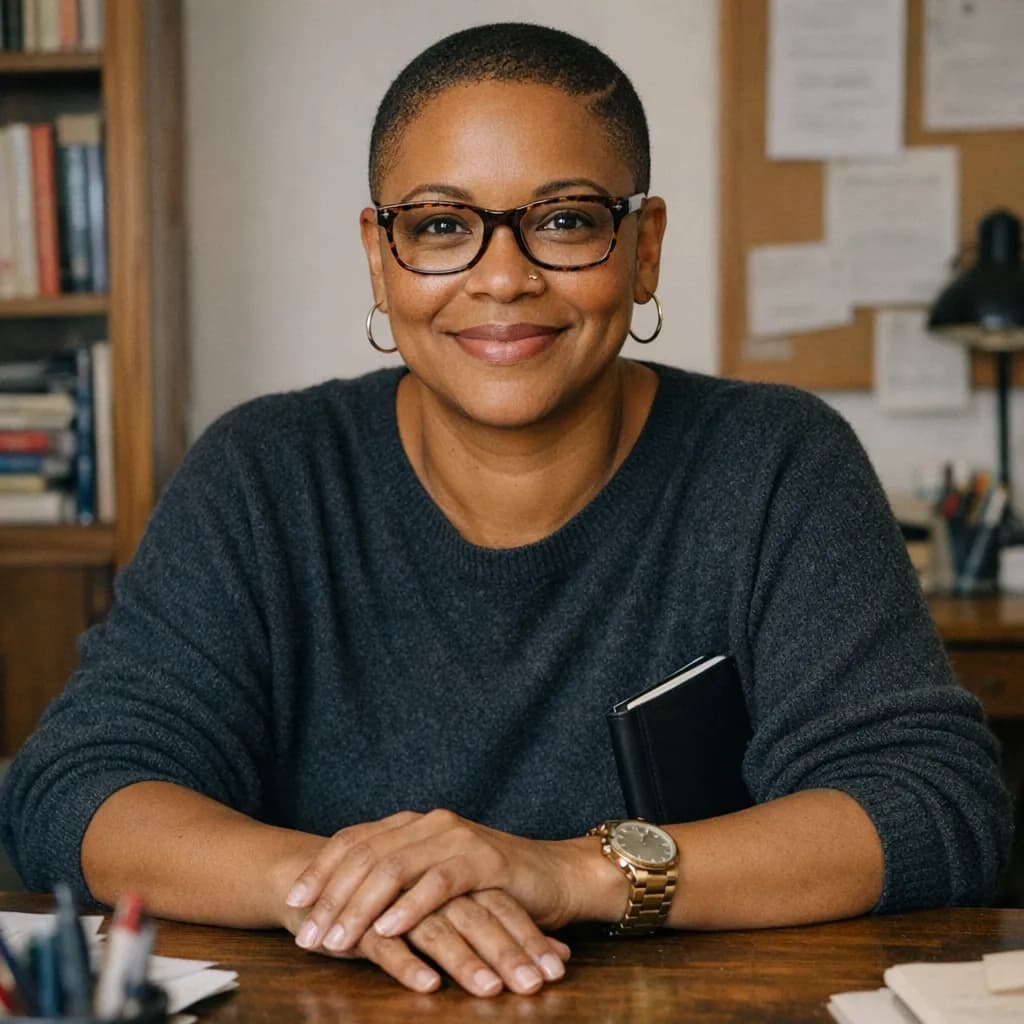
Developmental Fiction Editor & Manuscript CoachI grew up between church basements, tidewater heat, and people who could tell a whole family story while stirring a pot and never looking up. My mom kept paperback romances in a shoebox like they were contraband, and my aunt kept a shelf of mystery novels with cracked spines. I read both. I learned early that readers forgive a lot, but they don’t forgive being bored or being lied to. I didn’t come up dreaming about editing. I wanted steadier work than “writer,” and I was the kid who could take notes fast, so I ended up in admin jobs where I got volunteered into fixing other people’s documents. Outside of that, I spent a couple years doing hair out of a friend’s kitchen. That part of my life doesn’t explain my editing, but it’s true: I still remember the sound of a cape snapping and how people tell you the most pointed truths when they think you’re not allowed to answer back. Sometimes I miss that kind of honesty. A storm took out power for a week when I was in my late twenties, and I agreed to help a neighbor organize a stack of workshop pages because there wasn’t much else to do at night. The pages were a mess, but the voice was alive. I wrote margin notes the way I talk, not the way school taught me, and the neighbor asked for more. That turned into being the person people handed drafts to. I still carry this old belief that if you “work hard enough,” the story will behave. I don’t defend it, but I catch myself acting like it’s true when I see a writer piling scenes on top of scenes. Now I’m a developmental editor because I’m impatient with pretty sentences that protect a story from making decisions. My bias is I’ll side-eye passive main characters harder than most editors will, even when the genre gives them excuses. I don’t correct that. It’s the lens I read through, and writers who want a gentler read should pick someone else. If you want a first reader who will point at the exact scene where your book starts dodging consequences, I’m your person.
Frequently Asked Questions
- What makes Frankenstein so compelling?
- Most people assume the book works because it invents a memorable monster and delivers gothic shocks. Shelley actually hooks you with responsibility: Victor creates life, then tries to dodge the bill. She keeps the creature intelligent and articulate, so you can’t file him under “evil” and move on; you must track how neglect turns into retaliation. If you want similar pull, build a premise where the scariest outcome comes from a character’s avoidable choice, then make every later scene cash that check.
- How long is Frankenstein by Mary Shelley?
- A common assumption says length equals difficulty, especially with older prose. Most editions run roughly 70,000–80,000 words, but the real challenge comes from the layered narration and the moral argument woven into it. Shelley asks you to follow who speaks, why they speak, and what they try to gain from speaking. As a writer, you should measure “length” by how many structural turns you can sustain cleanly, not by page count.
- What themes are explored in Frankenstein?
- People often reduce the themes to “science is dangerous” or “don’t play God,” and that reading misses the craft. Shelley explores responsibility, isolation, education, social rejection, and the gap between intention and impact. She also interrogates authorship itself: who gets to tell the story, who gets believed, and how charisma can camouflage guilt. When you write with themes like these, don’t announce them; make characters pay for them in specific scenes with specific costs.
- Is Frankenstein appropriate for teens or students?
- Many assume “classic” automatically means suitable, and “horror” automatically means inappropriate. The book includes violence, death, and intense emotional cruelty, but it rarely relies on graphic description; it relies on dread and consequence. Students can handle it well if you guide them through the nested narrators and the ethical debate rather than treating it like a monster romp. Remind them to track choices and causality, not just incidents.
- How does Frankenstein use the frame narrative and why does it matter?
- A common rule says a frame narrative just adds flavor or slows the story down. Shelley uses it as a pressure chamber: Walton’s letters validate Victor, Victor’s confession shapes what Walton records, and the creature’s story competes for moral authority. That layering lets Shelley show how smart people rationalize harm while still sounding noble. If you try this technique, keep every narrator’s agenda visible through what they emphasize, omit, or over-explain.
- How do I write a book like Frankenstein without copying it?
- Writers often think they need the same props—storms, laboratories, stitched bodies—to get the same effect. Shelley’s reusable engine focuses on a creator who makes a private, irreversible choice, then refuses the public duty that follows. Build a modern equivalent: an invention, a relationship, a lie, a platform, a policy—anything that produces a vulnerable “created” party. Then escalate stakes through delay and denial, and let your antagonist present a credible moral case that forces your protagonist to answer, not just fight.
About Mary Shelley
Use nested narrators to delay certainty and make the reader feel complicit in the judgment they’re forming.
Mary Shelley writes like a moral engineer. She builds a story the way you build a trial: witness testimony, conflicting accounts, and a verdict you feel before you can argue against it. She doesn’t ask you to fear the monster first. She asks you to fear the chain of choices that made him—and then makes you notice the same chain in yourself.
Her engine runs on framed narration and delayed certainty. She forces you to live inside other people’s interpretations before you get access to events. That design creates a quiet pressure: you keep reading not to learn what happened, but to learn whose story you can trust. The horror comes less from gore than from responsibility—who owed what to whom, and who refused to pay.
The technical difficulty hides in the restraint. You must sustain intensity through reasoned language, keep sympathy unstable, and make philosophy feel like weather. Copycats grab the “gothic” furniture and miss the real load-bearing beams: causality, accusation, and the slow tightening of ethical consequence.
Modern writers still need Shelley because she showed how to make big ideas dramatic without turning characters into lectures. Her pages prove you can run suspense through argument, not just action. And she drafted like someone testing a machine: set up the frame, run the moral experiment, then revise until every scene pushes the same question without repeating it.














Ready to improve your draft with direction?
Open Draftly, bring your draft, and move from stuck to a stronger draft without losing your voice. Editors are on standby when you want a deeper pass.
Free welcome credits included. No credit card needed.