Don Quixote
Book Summary & Analysis
Book summary and writing analysis of Don Quixote by Miguel de Cervantes.
Don Quixote works because it runs on a clean dramatic question with an ugly answer. Can Alonso Quijano force the world to match the ideals in his books without getting destroyed by the world’s indifference? Cervantes builds a machine where every scene tests perception against consequence. The novel stays funny because the joke never sits on a pedestal; it keeps paying interest in pain, pride, and social friction. You can imitate the surface (tilting at windmills) and miss the engine (a man auditioning reality until reality throws him off the stage).
The inciting incident happens when Alonso Quijano, a minor gentleman in rural La Mancha in early 17th-century Spain, decides to become “Don Quixote de la Mancha” after bingeing chivalric romances. He doesn’t merely fantasize. He renames himself, refashions old armor, declares a peasant woman his lady Dulcinea, and rides out to seek adventures. That decision creates the book’s governing constraint: Quixote will interpret random events as chivalric tests, and everyone else will respond as peasants, innkeepers, muleteers, priests, barbers, and bureaucrats who must live with the mess.
You need to name the primary opposing force correctly or you will write the wrong book. Quixote doesn’t battle “villains” most of the time. He battles consensus reality—other people’s practical needs, social hierarchies, and physical laws. Sancho Panza, his squire, plays the counterforce with the most scene-time, but he also serves as the pressure gauge. When Sancho starts believing, you feel the dream gaining power; when he bargains, lies, or panics, you watch the dream hit the wall.
Cervantes escalates stakes through accumulation, not by raising a single antagonist’s power level. Early disasters bruise bodies and pride in small-town spaces: an inn that Quixote insists ranks as a castle, a brawl with muleteers, a “rescue” that becomes an assault. Then the consequences thicken. People recognize him, mock him, exploit him, and eventually stage-manage him. The world stops reacting spontaneously and starts responding strategically. That shift matters: the novel moves from slapstick collision to social warfare.
Structure-wise, Part I tracks a pattern of sortie, misreading, injury, regrouping, and renewed vow. But Cervantes refuses repetition by varying who controls the frame in each episode. Sometimes Quixote forces his interpretation on a scene; sometimes other characters force an interpretation on him. By the time you reach the middle, you watch a key escalation: educated figures (the priest, the barber, later the Duke and Duchess) treat him as material. They turn his delusion into entertainment, and the book’s comedy starts to taste like cruelty.
The most common mistake writers make when copying Don Quixote involves “quirk.” They try to write a lovable eccentric who sees dragons everywhere. Cervantes writes something harsher and more useful: a man who chooses a story so hard that it begins to rewrite his identity, and a world that cannot decide whether to correct him, profit from him, or join him. That ambiguity fuels the chapters. If you remove it—if you make the world uniformly kind or uniformly mean—you flatten the engine.
Setting does real work. La Mancha’s dusty roads, ventas (roadside inns), farms, and villages offer no romance by default. Cervantes chooses a landscape that refuses lyricism unless a character forces it into being. Later settings widen into more courtly spaces where performance and deception thrive, and the novel’s stakes shift from bruises to humiliation and psychological erosion. You should notice how Cervantes uses place as a moral instrument: the road punishes; the estate toys; the city judges.
In the end, the stakes land where they always belonged: not in whether Quixote “wins” an adventure, but in whether he can live with himself when the story breaks. Cervantes doesn’t ask you to pick a side between dream and reality. He asks you to watch what each costs. If you want to reuse this engine today, don’t imitate the horse, the lance, or the windmills. Imitate the pressure system: a character commits to a meaning, the world refuses, and the refusal changes both character and world in escalating ways.
Story Structure & Narrative Arc
Story structure and emotional arc in Don Quixote.
Don Quixote follows a subversive Man-in-a-Hole arc where the “hole” looks like comedy and the ladder looks like belief. Quixote starts internally electrified and certain he can author his life into nobility; he ends internally quiet, with his certainty dissolved. The outside world never becomes more magical, but his relationship to it changes from conquest to confrontation to surrender.
The sentiment shifts land because Cervantes alternates three forces: wish-fulfillment, public correction, and public exploitation. Early lows come from physics and poverty—falls, beatings, hunger, ridicule. Mid-book lows deepen when other people stop merely contradicting Quixote and start using him, which turns laughter into discomfort. The climactic turn doesn’t require a bigger monster; it requires a final, undeniable verdict from the social world that Quixote cannot rewrite, and his response hits hard because you watched him insist for so long.

Studying this book—and stuck on your pages?
Put your draft in Draftly. Fix scenes and dialogue in the text—not in another tab. When you want sharper feedback, AI editors are ready.
Free welcome credits included. No credit card needed.Writing Lessons from Don Quixote
What writers can learn from Miguel de Cervantes in Don Quixote.
Cervantes gives you a masterclass in double narration: the event and the interpretation fight on the same line. Quixote doesn’t simply “see” a windmill as a giant; he argues the world into that shape, then the world answers with splintered wood and broken teeth. That technique solves a modern problem: you can keep an eccentric POV without trapping the reader in it. You let the reader hold two truths at once—what happened and what it meant to the character—and you harvest comedy, tension, and pathos from the gap.
He also uses dialogue as a debating chamber, not a delivery system. Listen to Quixote and Sancho negotiate after disasters: Quixote reframes failure as enchantment or destiny; Sancho reframes it as hunger, bruises, and unpaid bills. Neither voice “wins” permanently, so their exchanges keep moving. Many modern novels default to witty banter or on-the-nose therapy talk. Cervantes makes dialogue do plot work by making it a contest over reality, with immediate consequences when one frame overrides the other.
Cervantes builds atmosphere through anti-romantic concreteness. He plants you on dusty La Mancha roads, in a venta with bad beds and worse wine, among muleteers who don’t care about your symbolism. That choice matters because it forces Quixote to supply the lyricism himself, which reveals character every time. Writers often take the shortcut of a naturally “fantastical” setting to excuse heightened behavior. Cervantes does the harder thing: he drops a mythic mind into an unpoetic world and makes the friction generate heat.
Finally, the book’s structure teaches you how to escalate without a single supervillain. As the story progresses, strangers stop reacting and start performing, and you watch the social world weaponize narrative against the narrator. That move feels modern because it mirrors how audiences, institutions, and attention economies work: people turn you into a story and then punish you for it. Many writers try to raise stakes by adding bigger action. Cervantes raises stakes by changing who controls the frame of the scene—and that change cuts deeper than another swordfight.
How to Write Like Miguel de Cervantes
Writing tips inspired by Miguel de Cervantes's Don Quixote.
Write the voice as a controlled collision between registers. Quixote speaks in elevated, archaic certainty; the world answers in blunt, practical terms; and the narrator keeps a dry, disciplined distance. You can’t cheat this with “funny old-timey” words. You need consistent logic inside each register, plus clean transitions so the reader never loses the literal action. If you want humor, earn it through sincerity under pressure, not through winks at the audience.
Build your protagonist around a chosen story, not a “quirk.” Quixote doesn’t suffer random delusions; he commits to a moral identity and uses it to interpret every stimulus. Give your lead a doctrine they can apply to anything, then give them a body that can’t cash the checks their doctrine writes. Use the sidekick as a living counter-metric. Sancho tracks food, fear, status, and payoffs, and his shifting belief gives the narrative its pulse.
Avoid the genre trap of repetition. Episodic quests tempt you to stack similar scenes until readers feel the treadmill. Cervantes escapes by rotating the power dynamic: sometimes the world corrects Quixote, sometimes it exploits him, sometimes it briefly collaborates, and sometimes Sancho drives the mischief. Each episode changes the social context and therefore changes the kind of damage. If your episodes don’t leave scars—social, physical, moral—you write sketches, not a novel.
Try this exercise and don’t rush it. Write one ordinary setting you know well, like a convenience store or a bus stop. Create a protagonist with a grand interpretive frame that misreads the place in a specific way, and create a companion who reads it with embarrassing accuracy. Draft the scene twice. In version one, let the protagonist control the frame and make the companion react. In version two, let the locals control the frame and force the protagonist to improvise. Compare where the emotion sharpens.
Who Would Edit This Book?
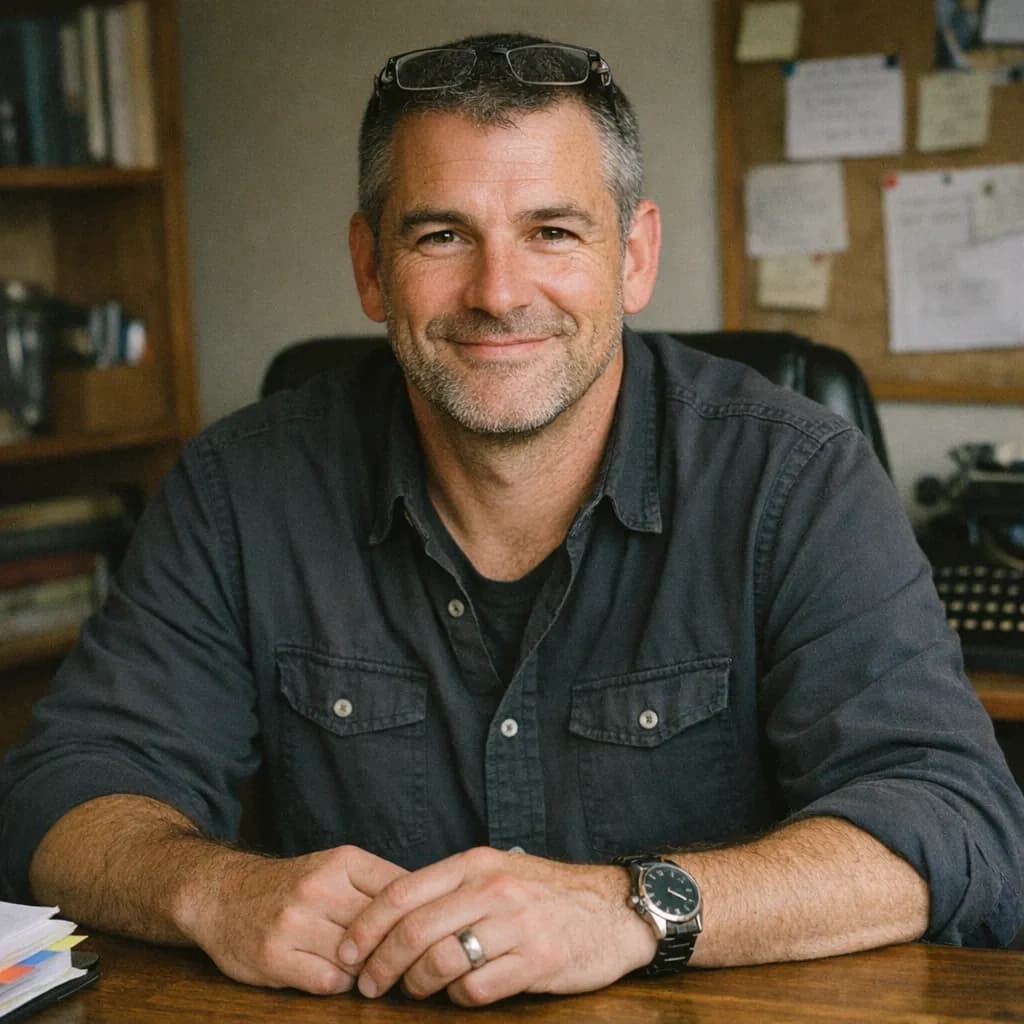
Callum Rhys Mahoney
Developmental Fiction Editor and Manuscript CoachI grew up between Wagga and my aunt’s place out near Narrandera, in a family that could argue for sport and then feed you like nothing happened. Books were around, but not in a precious way. My old man liked stories where people did what they said they’d do, even if it cost them. I still hear that voice when a character “can’t” make a decision because the plot needs another chapter. I didn’t set out to be an editor. I studied teaching, worked a few rough years in classrooms, and then left after a run of short contracts and one admin reshuffle that made it clear I was replaceable. A mate pulled me into doing learning materials and assessments because I could spot where people were gaming the question. That work taught me to watch for what the text rewards versus what it claims to reward - which is the same problem in a lot of manuscripts. I also spent a couple of seasons doing night shifts at a servo when money got tight. I kept a notebook behind the counter and wrote scenes between customers, mostly to stay awake. I remember one bloke coming in every Thursday, buying the same pie, and telling me the same story about a dog he swore was smarter than his ex. I don’t know why I remember that, but I do. Editing started as favour-work. People in town found out I’d read their drafts and I’d send back long emails with scene-by-scene notes. Somewhere along the line it became my paid work, mostly because I was consistent and because I’m not afraid to say, “This turn doesn’t belong to your protagonist.” I’m biased toward decisive characters and I don’t plan to cure myself of it; I’d rather a story risk an ugly choice than drift into polite inevitability.
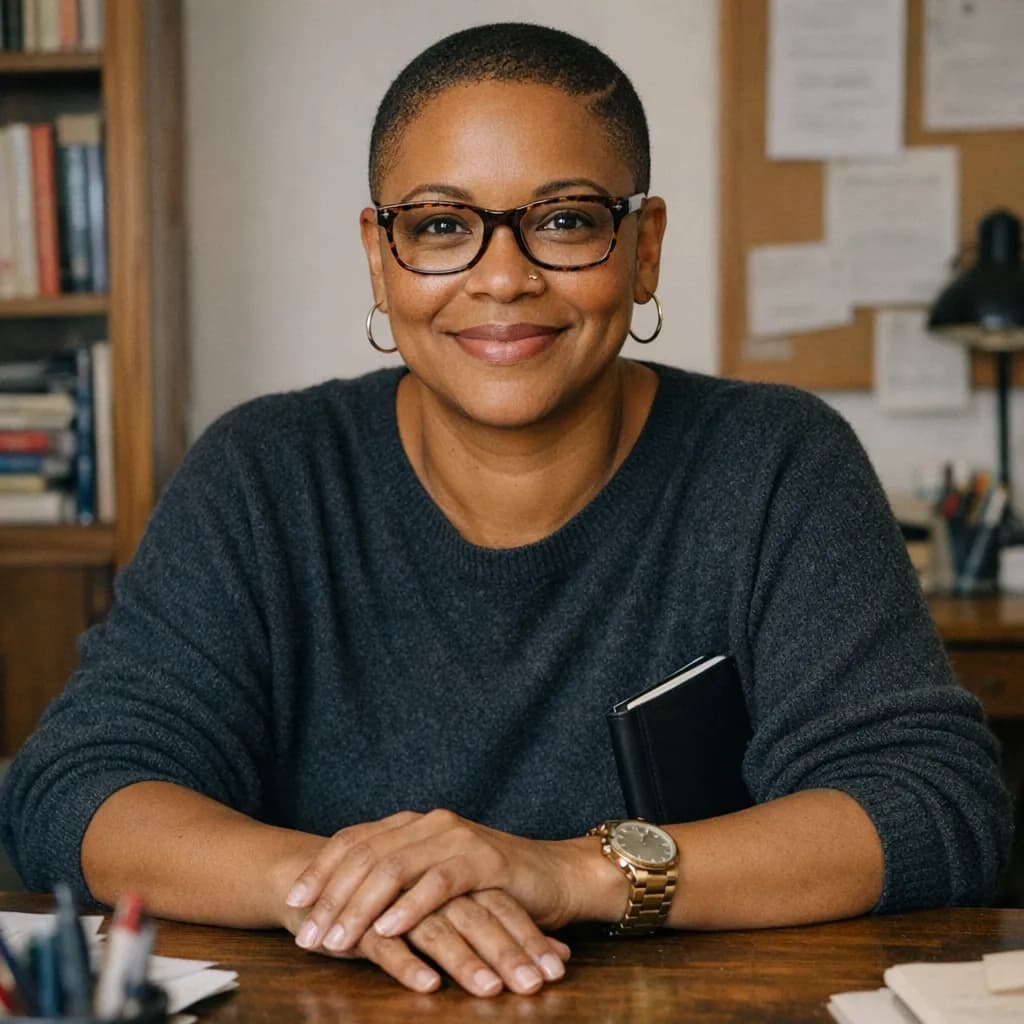
Danae Marcelline Brooks
Developmental Fiction Editor & Manuscript CoachI grew up between church basements, tidewater heat, and people who could tell a whole family story while stirring a pot and never looking up. My mom kept paperback romances in a shoebox like they were contraband, and my aunt kept a shelf of mystery novels with cracked spines. I read both. I learned early that readers forgive a lot, but they don’t forgive being bored or being lied to. I didn’t come up dreaming about editing. I wanted steadier work than “writer,” and I was the kid who could take notes fast, so I ended up in admin jobs where I got volunteered into fixing other people’s documents. Outside of that, I spent a couple years doing hair out of a friend’s kitchen. That part of my life doesn’t explain my editing, but it’s true: I still remember the sound of a cape snapping and how people tell you the most pointed truths when they think you’re not allowed to answer back. Sometimes I miss that kind of honesty. A storm took out power for a week when I was in my late twenties, and I agreed to help a neighbor organize a stack of workshop pages because there wasn’t much else to do at night. The pages were a mess, but the voice was alive. I wrote margin notes the way I talk, not the way school taught me, and the neighbor asked for more. That turned into being the person people handed drafts to. I still carry this old belief that if you “work hard enough,” the story will behave. I don’t defend it, but I catch myself acting like it’s true when I see a writer piling scenes on top of scenes. Now I’m a developmental editor because I’m impatient with pretty sentences that protect a story from making decisions. My bias is I’ll side-eye passive main characters harder than most editors will, even when the genre gives them excuses. I don’t correct that. It’s the lens I read through, and writers who want a gentler read should pick someone else. If you want a first reader who will point at the exact scene where your book starts dodging consequences, I’m your person.
Frequently Asked Questions
- What makes Don Quixote so compelling for writers?
- Most people assume it works because it feels like a string of funny misadventures. That surface holds because Cervantes builds a repeatable engine: every episode stages a clash between an idealized narrative and the stubborn facts of bodies, money, and social rank. The reader stays engaged because each clash changes the rules—first the world merely resists, then it learns, then it exploits. If you study it, you don’t just learn “satire”; you learn how to escalate consequences without inflating the plot into nonsense.
- How long is Don Quixote?
- A common assumption says length equals difficulty, and Don Quixote does run long in modern editions, often around 900–1,100 pages in English depending on translation and notes. But the real challenge comes from its episodic structure and layered narration, not from sentence-by-sentence opacity. Treat it like a craft anthology: read in arcs, track recurring arguments between Quixote and Sancho, and notice how later scenes echo earlier ones with sharper social stakes. Your attention improves when you measure changes, not chapters.
- Is Don Quixote appropriate for modern readers and younger audiences?
- People often assume “classic” means universally appropriate or universally inappropriate. Cervantes writes earthy comedy, violence played for consequence, and social attitudes rooted in 17th-century Spain, so you should expect moments that require context and discussion. Younger readers can handle it if you frame it as a book about stories reshaping behavior, not as a costume drama. As a writer, you should note where your own taste resists the text; resistance often points to a craft lever you can still learn from.
- What themes are explored in Don Quixote?
- Many summaries list themes like illusion versus reality and stop there. Cervantes goes further and tests how communities react to someone who refuses the shared script: correction, mockery, compassion, exploitation, and finally fatigue. He also probes authorship itself—who gets to tell the story, who profits from it, and how a “true” account competes with popular versions. When you write, don’t just announce a theme; build a repeatable scene mechanism that forces characters to make choices that expose the theme under stress.
- How does Don Quixote influence modern fiction and metafiction?
- A popular belief says Cervantes “invented the modern novel” because he breaks the fourth wall and plays with narration. The deeper influence comes from how he makes narrative authority unstable: the story keeps reminding you that texts shape people, and people shape texts, and both can lie. Modern metafiction often settles for cleverness. Cervantes keeps it consequential—characters suffer reputational and physical costs when a story gains traction. If you borrow the technique, tie your formal games to real stakes, not to clever footnotes.
- How do writers write a book like Don Quixote without copying it?
- Writers often assume they need a similarly quirky hero and a chain of comic episodes. You actually need the underlying contract: a protagonist chooses a worldview that generates actions, and the world answers with escalating, varied forms of resistance. Then you let the social environment evolve—people learn the protagonist’s pattern and begin to anticipate, punish, or exploit it. Keep a companion character who both grounds the scenes and changes over time. After each episode, ask what permanent cost remains; costs create a novel.
About Miguel de Cervantes
Use a “serious” narrator to report absurd actions with calm precision, and you’ll make the reader laugh while still believing the stakes.
Cervantes didn’t just tell a story. He built a machine that tests stories. He sets a character loose inside the stories he has swallowed, then watches what happens when a human being treats fiction like a user manual. That choice moves the reader from passive consumption to active judgment: you keep asking, “Is this noble, ridiculous, true, staged?” And the book keeps changing its answer.
His core engine is double-vision. He lets you feel the heat of an ideal (honor, love, destiny), then he tilts the mirror and shows the bruises it causes in real bodies, real villages, real budgets. He achieves this without cynicism by giving even the “deluded” perspective a clean inner logic. You laugh, then you notice you laughed at something you secretly admire.
The technical difficulty hides in his control of narrative layers. He stacks narrators, documents, rumors, corrections, and “found” sources, then uses those seams to steer your trust like a dimmer switch. Many writers imitate the jokes and miss the governance: every digression, inset tale, and self-contradiction still pays rent. It builds authority, complicates motive, or reframes what you thought you knew.
Modern writers study him because he normalizes the novel as an argument with itself. He makes the book aware of its readership, its market, its knockoffs, and its own lies—and still delivers emotional consequence. If you revise like Cervantes, you don’t just polish sentences. You revise the reader’s position: where they stand, what they believe, and when you make them change their mind.














Ready to improve your draft with direction?
Open Draftly, bring your draft, and move from stuck to a stronger draft without losing your voice. Editors are on standby when you want a deeper pass.
Free welcome credits included. No credit card needed.