The Man in the High Castle
Book Summary & Analysis
Book summary and writing analysis of The Man in the High Castle by Philip K. Dick.
If you copy The Man in the High Castle naively, you will copy the surface: swastikas on posters, katanas on walls, a grim “what if the Axis won?” premise. Dick wins for a different reason. He builds a story engine that runs on epistemic pressure: the constant squeeze between what characters think is real, what power demands they call real, and what their private rituals let them suspect.
The central dramatic question does not ask “Will the Nazis lose?” It asks a quieter, crueler question: in a conquered America, can a person tell the truth to themselves without getting bought, broken, or erased? You watch multiple protagonists (not one hero) circle that question from different social altitudes. Nobusuke Tagomi tries to act decently inside an empire that rewards obedience. Juliana Frink tries to stay alive and sane while men project ideology onto her body. Frank Frink tries to build something honest in a world that turns craft into counterfeit. You could call the primary opposing force “the Axis,” but the sharper antagonist is the system that forces everyone to treat perception as contraband.
Dick anchors that pressure in specific place and time. He puts you in early 1960s America split into zones: Japanese-administered Pacific States (San Francisco, the Bay Area), a Nazi-controlled East Coast, and a tense Rocky Mountain buffer. He refuses the modern shortcut of dumping a “world bible” on your head. Instead he lets you learn the rules through transactions: antique shops, corporate offices, trade fairs, and living rooms where people measure each other’s status by what they dare to say.
The inciting incident arrives as a deliberate choice, not an explosion. Frank decides to quit his safe factory job and start making jewelry with Ed McCarthy. That sounds small until you understand the local physics: in the Pacific States, Japanese patrons decide who earns dignity, and the state decides who earns safety. Frank’s choice exposes him as Jewish on paper, makes him vulnerable to bureaucratic violence, and forces him into the book’s central arena: authenticity versus performance.
Dick escalates stakes the way a good editor escalates a note: he tightens the meaning of every scene. First you watch “soft” pressure—taste, manners, collectible value—shape people’s lives. Then you see political pressure intrude. Childan’s antique business stops being about commerce and starts being about humiliation. Tagomi’s professional decisions stop being about diplomacy and start being about life and death. Juliana’s romantic and sexual choices stop being private and start being ideological tests.
The structural spine that keeps this multi-protagonist novel from dissolving into vignettes comes from one prop with teeth: The Grasshopper Lies Heavy, the forbidden novel-within-the-novel. Characters treat it as gossip, then as heresy, then as a crack in the wall of reality. Dick uses the book as a roving inciting incident—each time a character reads it or hears about it, the story re-ignites and the stakes shift from “how do I survive?” to “what world am I even in?”
The midpoint turn does not deliver a clean victory; it delivers a cognitive rupture. Tagomi’s crisis pushes him into an altered perception of “America,” and Dick uses that experience to raise the real stakes: not regime change, but the stability of the characters’ shared reality. Meanwhile Juliana’s path makes the threat personal and immediate as she draws close to a violent ideologue who treats The Man in the High Castle as a target.
If you want to learn from this book, copy the engine, not the décor. Dick keeps asking one craft question: what does a character pay, right now, to keep believing what keeps them safe? When you answer that question scene by scene, you get the same dread and momentum—without needing a single chase scene or a speech about freedom.
Story Structure & Narrative Arc
Story structure and emotional arc in The Man in the High Castle.
The emotional trajectory plays like a subversive “Man in Hole” split across several lives: small hopes rise through craft, love, and decency, then reality yanks the floor out. The protagonists start by coping—making deals with the occupying order, telling themselves they can stay “outside politics.” They end with fewer illusions and a sharper, lonelier integrity, even when the world stays the same.
Key sentiment shifts land because Dick never lets dread stay abstract. He makes the high points tactile—money earned, a piece of jewelry completed, a conversation that almost turns honest—and then he poisons them with consequences. The low points hit hard because they arrive through ordinary channels: paperwork, reputation, a seemingly “reasonable” request from a superior. The climactic force comes less from external conquest than from internal recognition: once a character sees the lie clearly, they cannot return to comfortable belief.

Studying this book—and stuck on your pages?
Put your draft in Draftly. Fix scenes and dialogue in the text—not in another tab. When you want sharper feedback, AI editors are ready.
Free welcome credits included. No credit card needed.Writing Lessons from The Man in the High Castle
What writers can learn from Philip K. Dick in The Man in the High Castle.
Dick teaches you how to make a setting feel oppressive without turning every page into a manifesto. He builds pressure through taste, etiquette, and commerce—Childan’s antique shop scenes in San Francisco do more work than a paragraph of geopolitical backstory. Each object carries two meanings at once: a commodity and a confession. When a “historical” artifact might be fake, Dick makes the theme operational. The reader stops asking “what happened in this timeline?” and starts asking “how do people decide what counts as real?”
He also shows you how to run multi-POV without losing cohesion. You don’t need one protagonist if you enforce one central question. Tagomi, Juliana, Frank, and Childan all orbit the same gravitational mass: truth versus survival. Notice how Dick crosscuts at moments of decision, not moments of travel. He treats every viewpoint as a different instrument playing the same melody, so the book feels like one argument, not four short stories.
Watch his dialogue discipline, especially between Tagomi and Mr. Baynes. They talk like professionals who understand that every sentence carries risk. Dick avoids the modern shortcut where characters “say the theme” in clean, quotable lines. Instead he loads subtext into politeness, pauses, and procedural language. The tension comes from what they cannot ask directly and what they must pretend not to notice. You can steal that today by giving your characters a reason to speak around the truth.
Finally, Dick nails atmosphere by staging philosophy inside concrete action. Tagomi’s moments of dislocation don’t float as dreamy speculation; they interrupt a day with weight, consequence, and sensory detail. The I Ching functions as more than a quirky motif—it acts like a decision-making machine that reveals character. Many modern takes on “mind-bending” fiction lean on twists as decoration. Dick earns the bend by making it cost something in the character’s body, job, and relationships.
How to Write Like Philip K. Dick
Writing tips inspired by Philip K. Dick's The Man in the High Castle.
Write with sober humor, not wink-wink cleverness. Dick lets absurdity sit in the room like an uninvited guest, and he never rushes to explain it away. You should treat the world’s ugliness as normal to the characters and strange to the reader, not the other way around. Keep your sentences clean and observant. When you feel tempted to “perform” your premise, cut the performance and show a transaction, a ritual, or a minor courtesy that carries a threat.
Build characters as coping strategies. Don’t start with their backstory; start with what they do to stay intact. Childan performs resentment as professionalism. Tagomi performs calm as a moral shield. Frank performs craftsmanship as proof he exists. Juliana tests reality by leaning into risk. Give each main character a private instrument panel: what they fear, what they rationalize, what they consult (a book, a tool, a superstition) when they cannot decide. Then pressure that panel until it sparks.
Avoid the genre trap where the alternate-history premise becomes the protagonist. If your chapters read like “cool facts” about your world, you wrote a travel brochure, not a novel. Dick dodges that by making ideology show up as inconvenience first, then coercion, then violence. He also avoids tidy rebellion fantasies. Most people in his world don’t join a cause; they negotiate their own dignity hour by hour. If you want the same bite, make your stakes personal before you make them political.
Try this exercise. Invent a forbidden piece of art inside your story that depicts a different, unsettling version of reality. Put it in circulation through three characters who will interpret it for selfish reasons. In scene one, let it function as gossip. In scene two, let it force a professional decision with real consequences. In scene three, let it trigger a moral act the character cannot undo. Between scenes, show one ordinary object changing meaning because the character can’t unsee what they saw.
Who Would Edit This Book?
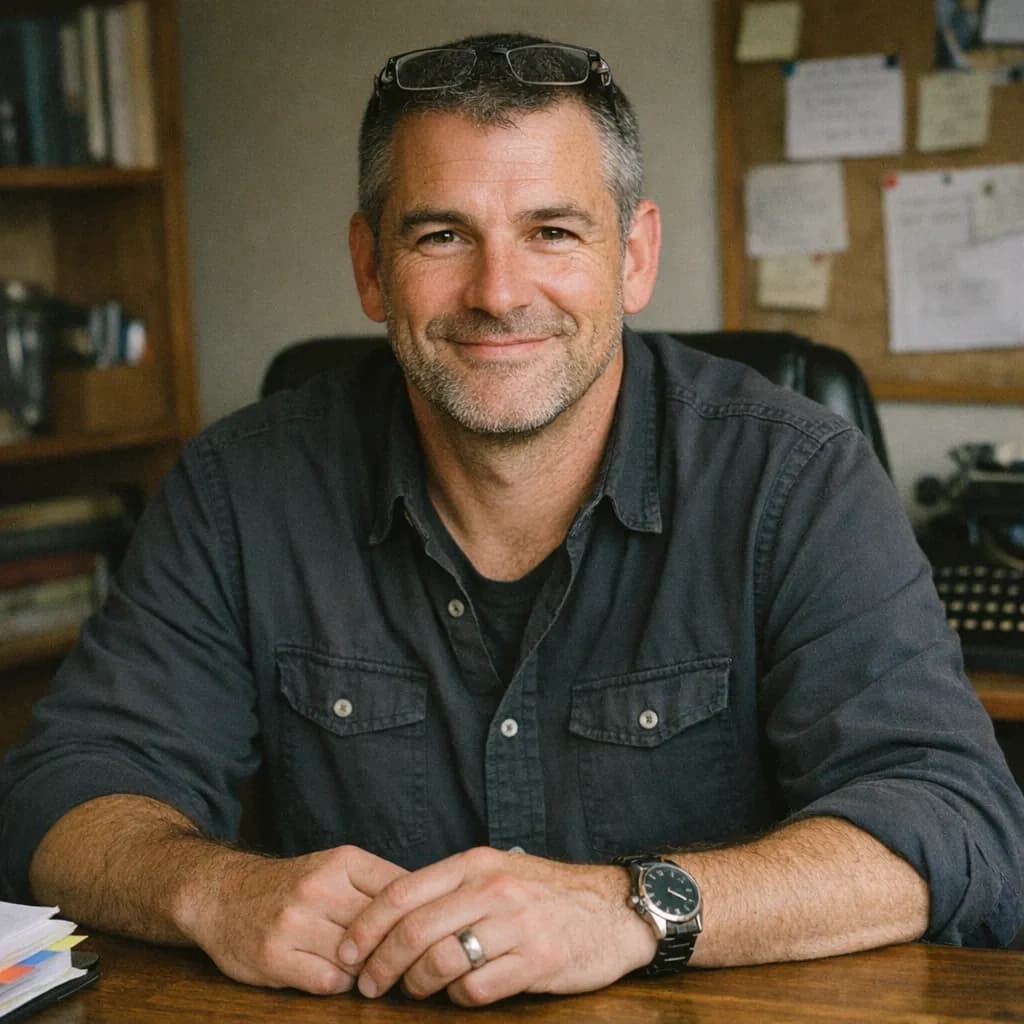
Callum Rhys Mahoney
Developmental Fiction Editor and Manuscript CoachI grew up between Wagga and my aunt’s place out near Narrandera, in a family that could argue for sport and then feed you like nothing happened. Books were around, but not in a precious way. My old man liked stories where people did what they said they’d do, even if it cost them. I still hear that voice when a character “can’t” make a decision because the plot needs another chapter. I didn’t set out to be an editor. I studied teaching, worked a few rough years in classrooms, and then left after a run of short contracts and one admin reshuffle that made it clear I was replaceable. A mate pulled me into doing learning materials and assessments because I could spot where people were gaming the question. That work taught me to watch for what the text rewards versus what it claims to reward - which is the same problem in a lot of manuscripts. I also spent a couple of seasons doing night shifts at a servo when money got tight. I kept a notebook behind the counter and wrote scenes between customers, mostly to stay awake. I remember one bloke coming in every Thursday, buying the same pie, and telling me the same story about a dog he swore was smarter than his ex. I don’t know why I remember that, but I do. Editing started as favour-work. People in town found out I’d read their drafts and I’d send back long emails with scene-by-scene notes. Somewhere along the line it became my paid work, mostly because I was consistent and because I’m not afraid to say, “This turn doesn’t belong to your protagonist.” I’m biased toward decisive characters and I don’t plan to cure myself of it; I’d rather a story risk an ugly choice than drift into polite inevitability.
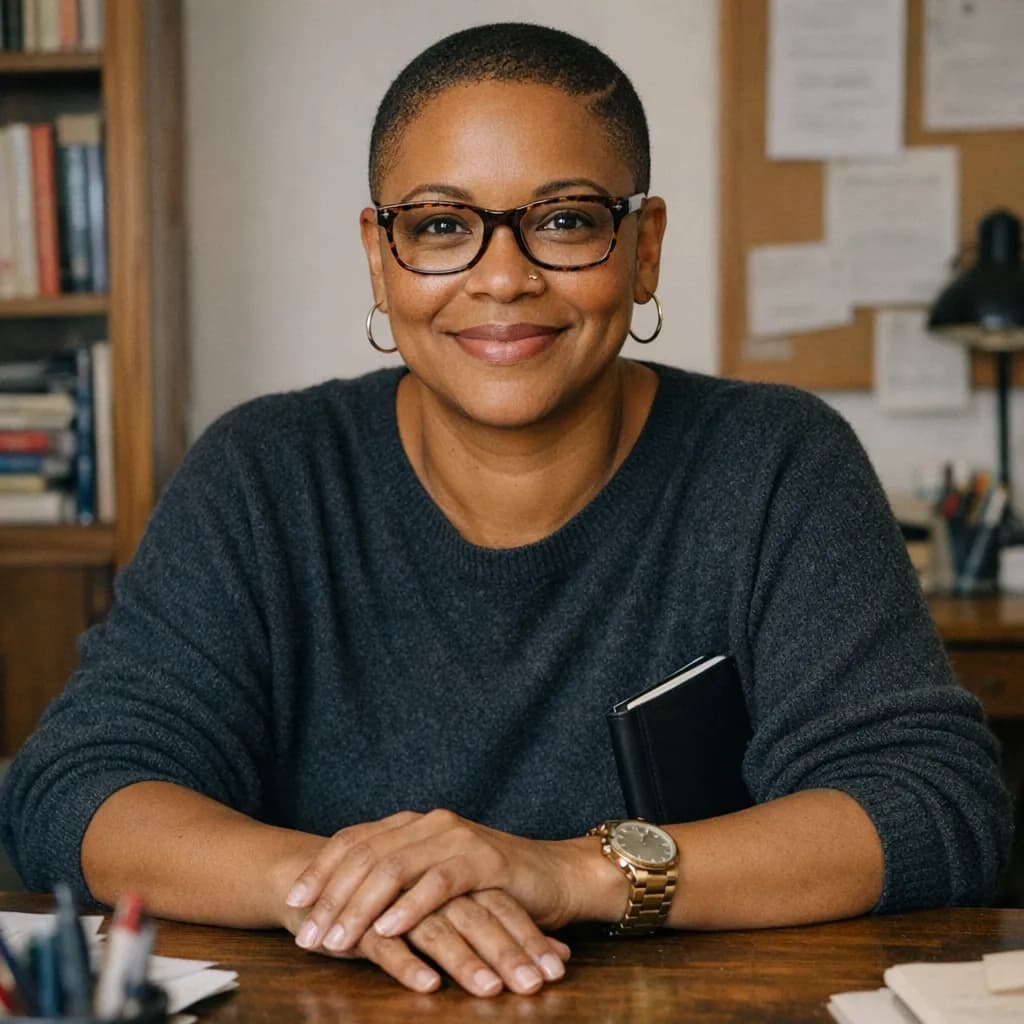
Danae Marcelline Brooks
Developmental Fiction Editor & Manuscript CoachI grew up between church basements, tidewater heat, and people who could tell a whole family story while stirring a pot and never looking up. My mom kept paperback romances in a shoebox like they were contraband, and my aunt kept a shelf of mystery novels with cracked spines. I read both. I learned early that readers forgive a lot, but they don’t forgive being bored or being lied to. I didn’t come up dreaming about editing. I wanted steadier work than “writer,” and I was the kid who could take notes fast, so I ended up in admin jobs where I got volunteered into fixing other people’s documents. Outside of that, I spent a couple years doing hair out of a friend’s kitchen. That part of my life doesn’t explain my editing, but it’s true: I still remember the sound of a cape snapping and how people tell you the most pointed truths when they think you’re not allowed to answer back. Sometimes I miss that kind of honesty. A storm took out power for a week when I was in my late twenties, and I agreed to help a neighbor organize a stack of workshop pages because there wasn’t much else to do at night. The pages were a mess, but the voice was alive. I wrote margin notes the way I talk, not the way school taught me, and the neighbor asked for more. That turned into being the person people handed drafts to. I still carry this old belief that if you “work hard enough,” the story will behave. I don’t defend it, but I catch myself acting like it’s true when I see a writer piling scenes on top of scenes. Now I’m a developmental editor because I’m impatient with pretty sentences that protect a story from making decisions. My bias is I’ll side-eye passive main characters harder than most editors will, even when the genre gives them excuses. I don’t correct that. It’s the lens I read through, and writers who want a gentler read should pick someone else. If you want a first reader who will point at the exact scene where your book starts dodging consequences, I’m your person.
Frequently Asked Questions
- What makes The Man in the High Castle so compelling?
- Many people assume the hook comes from the alternate-history premise alone. Dick makes it compelling by turning the premise into daily psychological pressure: status games, fear, and self-censorship do the heavy lifting. He also plants a destabilizing “book inside the book” that keeps re-opening the central question of what reality even means. If you want similar pull, don’t chase bigger events; chase sharper decisions that cost your characters something tangible.
- How long is The Man in the High Castle?
- A common assumption says length determines complexity, especially in world-heavy speculative fiction. This novel runs relatively short for the genre (often around 250–300 pages depending on edition), yet it feels expansive because Dick compresses world-building into scenes of commerce, etiquette, and moral compromise. He earns scope through implication rather than exposition. As a craft check, ask whether each page changes a character’s options, not just the reader’s knowledge.
- How do I write a book like The Man in the High Castle?
- Writers often think they need an elaborate timeline and a pile of research to compete. You need a more ruthless engine: a single governing question (truth vs survival) that every viewpoint answers differently under pressure. Build your world through transactions and social rituals, then introduce one destabilizing artifact that forces choices across the cast. If your scenes don’t end with a narrowed set of options, your premise will sit there like wallpaper.
- What themes are explored in The Man in the High Castle?
- People usually list themes like fascism, freedom, and identity and stop there. Dick also tests authenticity as a lived problem: fake antiques, performed manners, and borrowed ideologies all blur the line between real and useful. He ties epistemology to survival, so “truth” never stays abstract. As a writing reminder, you should make your themes operate through objects and decisions, not speeches and slogans.
- Is The Man in the High Castle appropriate for young readers?
- A common rule says alternate history equals teen-friendly adventure, but this book runs on moral dread rather than escapism. It contains mature political themes, implied and direct violence, and a suffocating atmosphere that some younger readers may find bleak or confusing. The challenge comes less from explicit content than from ambiguity and psychological tension. If you write for younger audiences, you can borrow the craft while softening the moral claustrophobia and clarifying consequences.
- How does Philip K. Dick handle world-building without info-dumps?
- Many writing guides insist you must “explain the rules” early so readers don’t get lost. Dick trusts readers and teaches the world through social friction: who bows, who buys, who gets stared at, who fears paperwork. He reveals power structures via small humiliations in places like Childan’s shop and Tagomi’s office, not via lectures. If you feel tempted to add a history paragraph, replace it with a scene where someone pays for that history.
About Philip K. Dick
Introduce one verifiable contradiction early, then escalate its social cost to make the reader question reality without losing the plot.
Philip K. Dick writes like the floor has a trapdoor. He starts with a world that behaves “normally,” then introduces one small contradiction that nobody can fully explain. That contradiction spreads. The reader’s job shifts from watching events to auditing reality. You turn pages because you want the rules back—and he keeps rewriting the rules in front of you.
His engine runs on epistemic pressure: who knows what, who can trust what, and what a mind does when its evidence stops agreeing. He builds meaning by forcing characters to interpret signals under stress—bad memories, suspect authority, synthetic people, corporate language, domestic arguments. The point isn’t prediction. The point is disorientation with consequences.
Technically, the hard part is control. Dick often uses plain sentences, familiar objects, and working-class problems, then uses them to carry metaphysical weight. If you imitate the surface—paranoia, weird gadgets, “What is real?”—without the underlying cause-and-effect, you get noise. He makes the strange feel logical, then makes logic feel strange.
He wrote fast and aimed for momentum, not polish. You can see it in the urgent forward lean: scenes argue, reveal, and pivot more than they decorate. Modern writers still need him because he normalized the idea that reality itself can function as plot, not backdrop—and that the deepest twist can happen inside a character’s certainty.














Ready to improve your draft with direction?
Open Draftly, bring your draft, and move from stuck to a stronger draft without losing your voice. Editors are on standby when you want a deeper pass.
Free welcome credits included. No credit card needed.