The Unwomanly Face of War
Book Summary & Analysis
Book summary and writing analysis of The Unwomanly Face of War by Svetlana Alexievich.
If you try to imitate The Unwomanly Face of War by “collecting powerful stories,” you’ll write a scrapbook. Alexievich writes an argument with a pulse. Her central dramatic question doesn’t ask what happened in WWII; it asks what war does to a woman’s inner life, and why everyone worked so hard to erase that answer afterward. The protagonist sits in plain sight: the listening writer who insists on recording the unsayable. The primary opposing force also sits in plain sight: the state-approved myth of the Great Patriotic War, plus the smaller, more intimate censorship of families, husbands, and even the veterans’ own shame.
She sets you in the Soviet Union, decades after 1941–45, in kitchens and cramped apartments where medals hang in boxes and memory sits like a heavy coat. The book’s inciting incident doesn’t come from a battlefield scene. It comes from a decision at the desk: Alexievich chooses to seek women who fought—snipers, machine-gunners, nurses, partisans, pilots—and to ask them for the “unofficial” truth they never told at parades. Then she pushes further. She refuses the safe questions that invite rehearsed heroism, and she stays when the voice breaks, when silence fills the room, when the speaker says, in effect, Don’t write that.
The stakes escalate through access, not action. Early conversations offer public language: slogans, medals, clean courage. Then the interviews turn private, and the cost rises. These women risk more than embarrassment. They risk social punishment (“no one will marry you”), family conflict (“why shame us”), and the collapse of the identity they survived on. Alexievich keeps tightening the frame from history to body: hair cut off for the front, boots that don’t fit, blood, lice, hunger, menstruation, the smell of burned villages, the horror of learning you can get used to anything.
Structure-wise, she builds a montage that behaves like a plot. Each testimony serves as a scene with a turn: a proud beginning, a disturbing detail, a moment of moral fracture, and a line that won’t let you go. You watch the chorus move from initiation (girls volunteering, lying about age) to the long middle of endurance (frontline labor, killing, nursing, freezing, carrying the dead) to the aftermath, which lands as the book’s true climax: the return home where victory refuses to make room for them. Society expects them to resume “womanhood” as if war never touched their hands.
The book’s “midpoint” doesn’t announce itself, but you feel it when the testimonies stop arguing with official history and start arguing with themselves. A woman remembers a moment of tenderness and immediately condemns it. Another remembers killing and speaks as if she describes someone else. That internal split becomes the engine. Alexievich doesn’t chase bigger explosions; she chases the moment a person realizes they can’t reconcile who they were with who they must become to live.
By the end, the opposing force wins on paper but loses in the reader’s mind. The myth stays intact in monuments, but the private record ruptures it for good. Alexievich’s closing pressure comes from accumulation: you can’t “unhear” the repeated pattern of silencing, nor the way these women measure their lives by what they can’t tell their children. If you imitate this naively, you’ll quote-traffick in trauma. Alexievich earns her hardest lines by building trust, by showing the machinery of remembering, and by shaping a chorus so each voice changes the meaning of the last.
Story Structure & Narrative Arc
Story structure and emotional arc in The Unwomanly Face of War.
This book runs on a subversive Man-in-Hole arc, but the “hole” hides inside language. Alexievich starts as a determined collector of testimony who believes truth emerges if you ask the right questions and take good notes. She ends as an orchestrator of moral collision who understands that memory fights back, edits itself, and sometimes protects the speaker by lying.
The biggest sentiment shifts come when heroic narration collapses into sensory detail, and then collapses again into postwar rejection. The low points land because they don’t arrive as spectacle; they arrive as ordinary sentences that refuse to pose. And the climactic force doesn’t come from “victory,” it comes from the return home, when society tells these veterans to erase themselves so the national story can stay clean.

Studying this book—and stuck on your pages?
Put your draft in Draftly. Fix scenes and dialogue in the text—not in another tab. When you want sharper feedback, AI editors are ready.
Free welcome credits included. No credit card needed.Writing Lessons from The Unwomanly Face of War
What writers can learn from Svetlana Alexievich in The Unwomanly Face of War.
Alexievich’s main device looks simple and it isn’t: she builds a chorus, not a collage. Each testimony arrives as a scene with an internal turn, and she orders scenes so the meaning of “courage” keeps changing. You start with public language—duty, victory, comrades—and she slowly forces the reader into private language—body, fear, disgust, tenderness. That sequence matters. If you swap it, you lose trust. You need the reader to feel the temptation of the myth before you show them the price of believing it.
She writes with a restrained, editorial ear. She keeps the spoken texture—digressions, repetitions, sudden bluntness—but she trims anything that smells like a prepared speech. Notice how often a voice corrects itself mid-thought, or drops into a concrete object (boots, braid cut off, a crust of bread) right when it approaches something unbearable. That’s not “raw transcript.” That’s the craft of selecting moments where the psyche changes lanes. Many modern books chase “authenticity” by leaving everything in. Alexievich creates authenticity by cutting toward the pivot.
Dialogue matters here even when you don’t see quotation marks fencing off neat exchanges. One recurring interaction pattern drives the tension: the interviewer asks for the real memory and the speaker resists, negotiates, then relents. You hear it in scenes where a woman begins with a proud, official line, and then interrupts herself with something like, “No… that isn’t it,” and argues with her own earlier phrasing as if another person sat in the room. That internal dialogue functions like character conflict in a novel. If you write this style and you only record “what happened,” you miss the actual drama: the fight over how to say it.
Her world-building stays domestic and precise. She doesn’t paint the Eastern Front with panoramic adjectives; she anchors it in a field hospital, a burned village edge, a railway carriage, a postwar apartment where medals hide in drawers. Those locations do more than set mood. They explain behavior. People speak differently in a kitchen than in an archive. Alexievich exploits that. The common shortcut today turns trauma into a moral caption: “war is hell,” end of thought. Alexievich refuses captions. She makes you sit inside the sentence where a person tries to stay human and fails, then tries again.
How to Write Like Svetlana Alexievich
Writing tips inspired by Svetlana Alexievich's The Unwomanly Face of War.
Write your narrator like an editor, not a performer. You can sound humane without sounding impressed with yourself. Keep your sentences clean and your questions sharper than your commentary. When a speaker offers a slogan, don’t reward it with lyrical paraphrase. Follow with one grounded prompt that drags the memory from poster language to lived detail. And when the voice breaks or contradicts itself, don’t smooth it out. That fracture carries the truth. Protect it by writing plainly, not dramatically.
Build character through contradiction under pressure. In this book, a “sniper” or a “nurse” never functions as a role label; each woman carries private rules about tenderness, killing, cleanliness, shame, and what counts as bravery. Track those rules as they change. Give every major voice an opening mask, a mid-book confession, and a late-book aftershock. Also watch the offstage cast: mothers, commanders, husbands, neighbors. They form the social weather that shapes each choice. Without them, you write monologues, not lives.
Avoid the prestige trap of suffering. This genre tempts you to stack horrors until the reader goes numb, then call numbness “power.” Alexievich avoids that by varying register. She lets comedy, vanity, jealousy, romance, and practical complaint enter the frame, because real people keep living even in catastrophe. She also refuses the cheap moral: she doesn’t use women’s testimony to score points against a strawman enemy. She keeps the enemy as systems, necessity, and the damage inside the self. That focus makes the pain readable instead of ornamental.
Try a chorus exercise with strict constraints. Interview or invent eight voices connected to one historical or personal event, but forbid yourself to describe the event directly in the first pass. Each voice must begin with the public version they tell strangers. Then write the moment where that version fails and they switch to an object, a smell, or a bodily detail. Finally, order the voices so each one answers the previous voice’s lie with a different kind of truth. You will feel the plot appear without you “plotting.”
Who Would Edit This Book?
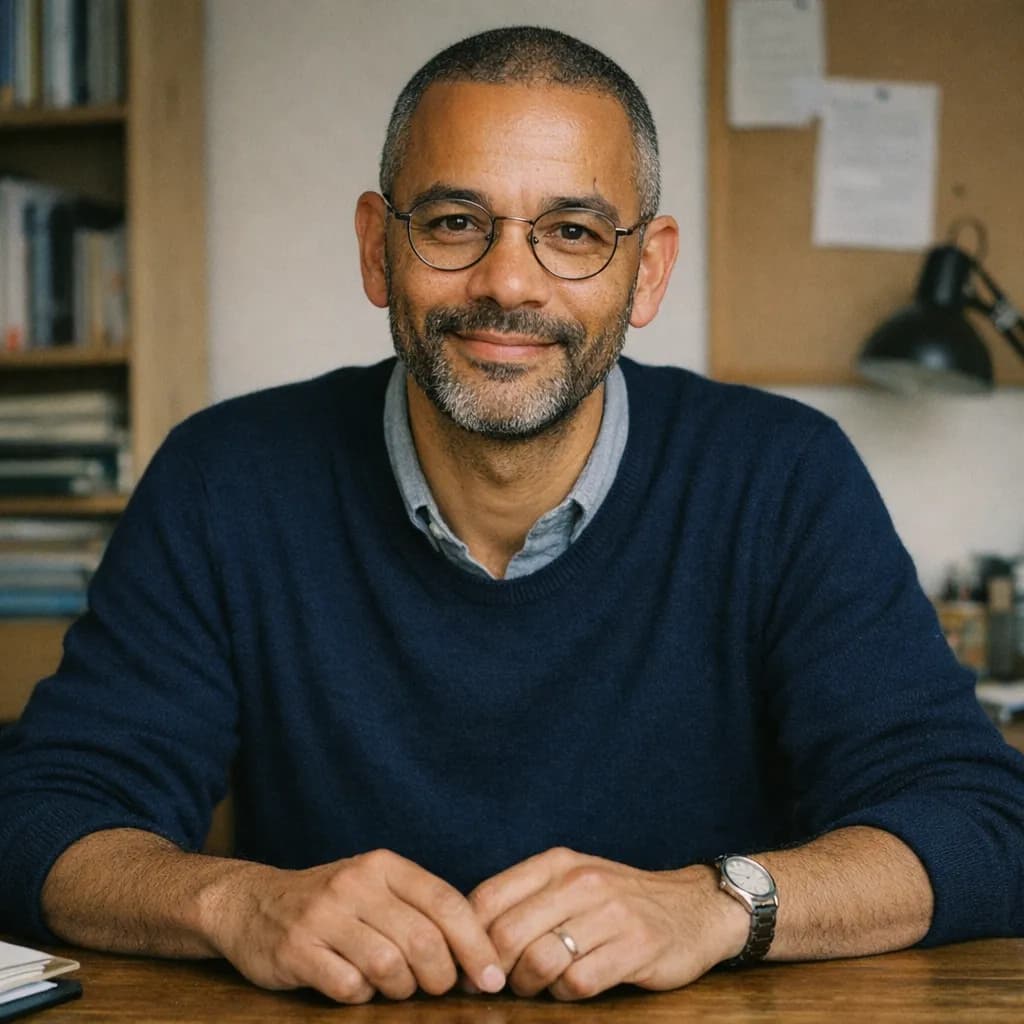
Alistair Rowan McEwan
Developmental Editor and Non-Fiction Manuscript CoachI grew up between Leeds and Glasgow, in that half-and-half way where you’re never fully from one place, so you learn to listen for what people mean instead of what they say. My mum kept old paperbacks and my dad kept newspapers, and I read both with the same suspicion. I still hear my gran’s voice when I write notes: she’d tap the page and say, “Aye, but what made that happen?” At nineteen I worked nights stacking shelves and days in a dull admin job for a small training provider, mostly because rent doesn’t care about your plans. They had me tidying course handouts and “improving the flow,” which meant cutting waffle and moving sections around until the trainer could teach without apologising. Around that time I got obsessed with making the perfect chilli recipe and kept a notebook of tiny tweaks. It didn’t make me a better editor, but I still do it, and I still overreact when a list of ingredients comes before the method. I didn’t set out to be an editor. A friend needed a second pair of eyes on a grant application, then another person asked, then a whole department started sliding documents onto my desk because I’d tell them the truth without making it personal. Later, I ended up in a communications role after a reorg - pure convenience - and I started doing beta-style reads for people writing practical books and narrative non-fiction on the side. Now I work with authors who want a manuscript that can survive a hard reader. I’m calm about most things, but I’m stubborn about causality: if a chapter claims a result, I want to see the choice that led there, and what it cost. I know my bias: I don’t spend long admiring lyrical voice if the argument is dodging responsibility. I’m the person you hand the draft to when you want the first reader who says, “This part doesn’t earn its conclusion,” and then shows you where it went off the rails.
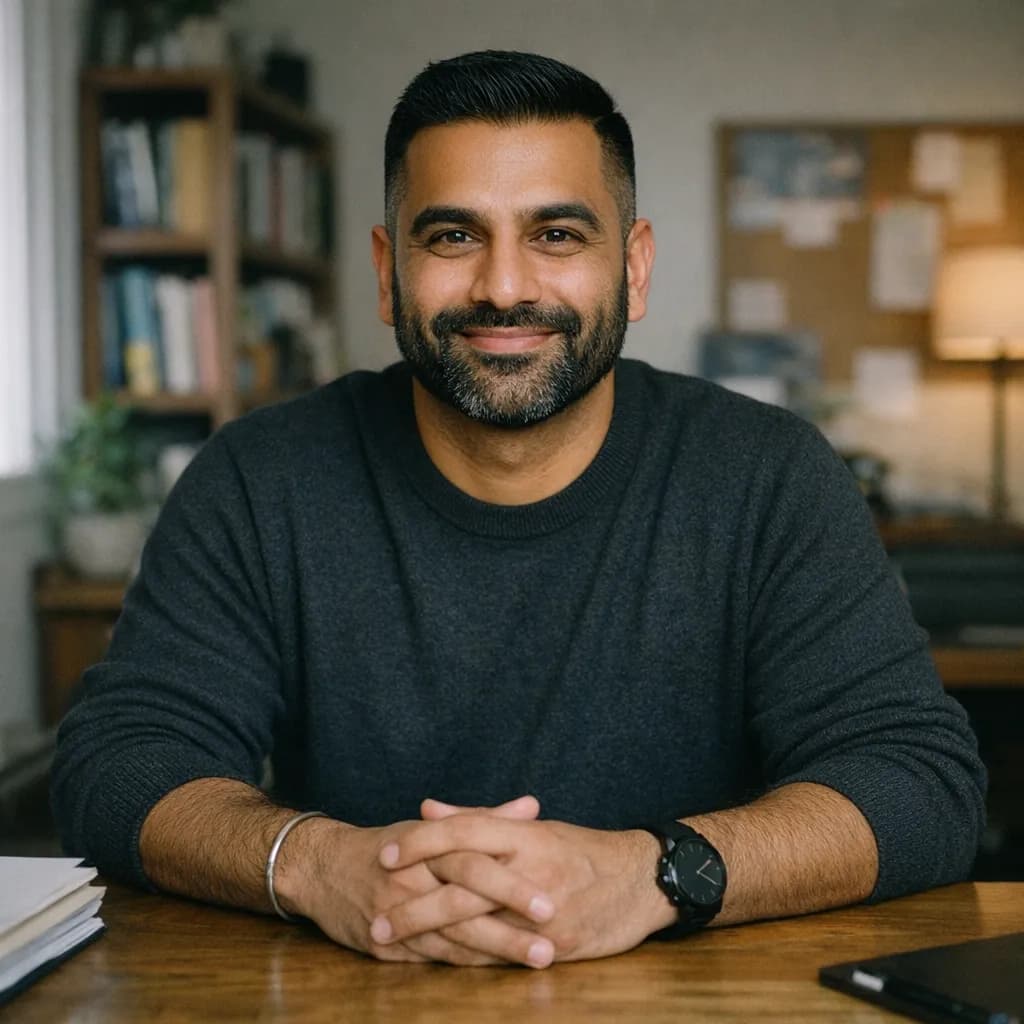
Arjunveer “Arj” Sandhu
Nonfiction Manuscript Editor & Writing Coach (Generalist)I grew up between Punjabi at home and English everywhere else, which taught me early that “I understood it” and “it was said clearly” aren’t the same thing. My dad ran a small trucking outfit and kept every receipt like it was scripture. My mom read Punjabi poetry and refused to explain it. I landed in the middle: I like meaning you can point to, and I don’t trust pretty fog. I didn’t plan on editing. I studied business because it was easy to explain at family dinners, then worked jobs where nobody had time for long sentences - operations, training docs, policy rewrites. I took a night improv course once because a friend wouldn’t go alone. I was bad at it. I still keep the ticket stub like it proves something. I started giving notes because people kept sending drafts with “can you make this make sense?” and I didn’t know how to say no. A supervisor once handed me a 40-page internal guide and said, “Fix it by Friday or we get audited.” That deadline became a habit: I read fast, I mark the real breaks, and I don’t pretend confusion is a personality trait. I’m harsher on fuzzy claims than clunky style, and I’m not interested in correcting that. Now I work with authors who want a first reader who won’t protect feelings at the expense of the book. I still ask, “What are you promising me in the first ten pages?” I don’t care if your voice is charming if your logic cheats. If your structure is designed to wander on purpose, I’m probably not your best match.
Frequently Asked Questions
- What makes The Unwomanly Face of War so compelling?
- Many readers assume the book works because the subject matter carries automatic weight. It doesn’t; weight alone can turn into numbness. Alexievich makes it compelling by shaping testimony into a sequence of turning points: public myth, private detail, moral fracture, and postwar erasure. She also builds a chorus where each new voice revises the last, so your understanding keeps moving. If your own drafts feel static, check whether each scene changes what a key word means.
- Is The Unwomanly Face of War fiction or nonfiction?
- People often force a binary: either “pure journalism” or “novelistic invention.” Alexievich writes literary nonfiction built from interviews, but she applies ruthless narrative shaping—selection, ordering, juxtaposition, and attention to spoken cadence. That craft creates drama without pretending it came from plot twists. If you write in this territory, treat structure as an ethical choice: your arrangement changes meaning, so you need a reason for every cut.
- How long is The Unwomanly Face of War?
- A common assumption says length equals scope, so writers try to cover everything. Most English editions run roughly 300–400 pages, depending on translation and included material. But the book feels expansive because Alexievich uses many short, high-voltage scenes rather than a few long, exhaustive accounts. If you chase breadth, you can lose intensity; aim for a curated sequence where every piece earns its place by changing the reader’s understanding.
- What themes are explored in The Unwomanly Face of War?
- Writers often summarize the themes as “war is traumatic” and stop there. Alexievich goes after sharper tensions: gendered memory, the politics of heroism, bodily reality versus patriotic language, and the afterlife of violence inside ordinary domestic spaces. She also studies shame—who assigns it, who absorbs it, and how it edits speech. When you write theme, don’t announce it; make it the pressure that forces characters to revise what they thought they believed.
- Is The Unwomanly Face of War appropriate for teenagers or sensitive readers?
- People assume “historical” means safe or educationally sanitized. This book includes blunt accounts of death, violence, sexual threat, bodily trauma, and psychological distress, often delivered in matter-of-fact language that can hit harder than graphic description. It can suit mature teens with guidance, but it won’t suit every classroom or every mood. As a writer, notice your own threshold: if you feel yourself numbing out, you need to vary register and pacing.
- How do I write a book like The Unwomanly Face of War?
- The usual advice says, “collect interviews and let people speak.” That produces transcripts, not a book. Alexievich designs an engine: she asks for the private version, listens for the moment the rehearsed story breaks, and then orders voices so they argue with each other across the page. Start smaller than you want to. Draft ten short scenes where each ends with a line that changes the meaning of the opening, then build outward only when the sequence creates momentum.
About Svetlana Alexievich
Stack contrasting testimonies and cut the explanations, so the reader feels the truth argue with itself in real time.
Svetlana Alexievich didn’t “blend fiction and nonfiction” so much as rebuild the book around the human voice. Her pages run on testimony, not plot. She collects speech the way a composer collects motifs: repeated phrases, sudden confessions, defensive jokes, the sentence that breaks mid-breath. Meaning arrives through collision—one person’s certainty against another person’s shame.
The engine is simple and brutal: she puts you in a room where people remember out loud. She uses proximity as persuasion. You don’t get a narrator to tell you what to feel; you get a chain of voices that forces you to do the moral math yourself. That’s why the work hits harder than argument. It bypasses your “opinions” and targets your nervous system.
The technical difficulty hides in the restraint. You must decide what to cut, what to keep, and in what order—without flattening the speaker into a message. You must hold contradictions without resolving them, preserve the speaker’s dignity without sanitizing them, and keep momentum without plot. Most imitations fail because they chase “authentic voices” and forget architecture.
Alexievich’s process centers on long listening, patient transcription, and ruthless shaping: not inventing events, but editing reality into a chorus with escalating pressure. Modern writers should study her because she proved a book can move like a novel while staying accountable to real lives. She changed what readers accept as narrative authority: the author becomes arranger, not oracle—and that demands higher craft, not less.














Ready to improve your draft with direction?
Open Draftly, bring your draft, and move from stuck to a stronger draft without losing your voice. Editors are on standby when you want a deeper pass.
Free welcome credits included. No credit card needed.