Voices from Chernobyl
Book Summary & Analysis
Book summary and writing analysis of Voices from Chernobyl by Svetlana Alexievich.
If you imitate Voices from Chernobyl the lazy way, you’ll collect “powerful stories” and call it a book. Alexievich does something harsher and more engineered. She builds a single central dramatic question—how do ordinary people stay human when the state, the science, and even language fail?—and she answers it through a chorus where each voice pressures the next. You don’t read for what happened. You read to watch meaning collapse, reform, and collapse again.
The protagonist isn’t one person. It’s a collective: Belarusian and Ukrainian citizens who lived through and around the 1986 reactor disaster, and the author herself as the arranger who chooses which consciousness enters when. The primary opposing force also refuses to wear a single face. It shows up as the Soviet machine (secrecy, orders, medals), as radiation (invisible, delayed, intimate), and as the human need to make the story tidy. Alexievich keeps these forces active by letting people contradict each other and themselves without “correcting” them into a clean thesis.
The inciting incident’s mechanics matter because they teach you structure. Alexievich opens with a love story that detonates into body-horror: Lyudmila Ignatenko decides to go to her firefighter husband in the Moscow hospital and refuses to leave, even when officials warn her, isolate him, and treat her presence as contamination. That decision does not “introduce the topic.” It sets the book’s governing rule: people will choose love, pride, denial, duty, and superstition faster than they choose safety, and institutions will exploit that speed.
From there, the book escalates stakes by widening the radius of consequence while narrowing the reader’s sense of safety. First you get the intimate costs—the skin, the breath, the unborn child, the marriage bed. Then Alexievich pushes you into civic costs: evacuations, “liquidators” sent to shovel graphite, villagers who return to milk poisoned cows because hunger feels more real than radiation. Then she reveals the epistemic cost: nobody can trust their senses or their leaders, and language itself turns suspect (“hero,” “accident,” “zone,” “normal”). Each step turns a personal tragedy into a worldview crisis.
Alexievich also uses time and place as a pressure chamber, not a backdrop. You move through Pripyat apartments, buses out of the city, cordons and checkpoints, contaminated forests where people still pick mushrooms, and hospital wards where love and bureaucracy argue over a bedside. The setting anchors you in late-Soviet life—orderlies, party officials, medals, slogans—so that the unreal part (radiation) feels even more obscene because it invades the ordinary.
The structure behaves like a legal case crossed with a requiem. Alexievich sequences monologues to create arguments without announcing them. She places a romantic voice beside a bitter one, a soldier beside a mother, a scientist beside a villager, and you feel the theme shift because the emotional evidence changes, not because the author lectures. You can steal this method today, but only if you accept the constraint it imposes: you must earn your pattern through arrangement, not through commentary.
Here’s the mistake you will make if you try to copy her: you’ll chase “strong quotes” and forget that Alexievich stages collisions. She doesn’t just gather testimony; she edits for friction, repetition, and the moment a speaker fails to keep their story straight. Those failures create suspense in a nonfiction book. The reader waits for the next voice to confirm, deny, or poison what they just heard.
In the end, the book refuses the comfort of resolution. It doesn’t solve Chernobyl. It shows you what catastrophe does to a society’s internal narration—how people rewrite themselves to survive, and how some refuse to rewrite even when it would hurt less. Alexievich leaves you with an ending-state that feels like a new species of grief: not “we mourned and healed,” but “we learned to live inside an invisible threat, and that knowledge changed our souls.” If you want to write with that kind of authority, you must treat structure as ethics, not decoration.
Story Structure & Narrative Arc
Story structure and emotional arc in Voices from Chernobyl.
The emotional trajectory reads like a tragedy built from many “mini Man-in-Hole” curves: brief rises of hope or meaning, followed by deeper drops as reality widens. The collective protagonist begins with faith in systems and familiar stories—heroism, science, the state, the family—and ends with a scarred, vigilant consciousness that can’t fully trust language, memory, or official truth.
Key sentiment shifts land because Alexievich keeps moving the goalposts of what counts as survival. Early on, survival means physical safety; later it means moral safety, then sanity, then the ability to love without turning that love into self-destruction. The low points hit hardest when a speaker reaches for a comforting narrative and another voice, placed immediately after, quietly shatters it with lived detail. The closest thing to a climax arrives not as victory but as accumulation: the reader realizes the disaster never ended, it only changed form.

Studying this book—and stuck on your pages?
Put your draft in Draftly. Fix scenes and dialogue in the text—not in another tab. When you want sharper feedback, AI editors are ready.
Free welcome credits included. No credit card needed.Writing Lessons from Voices from Chernobyl
What writers can learn from Svetlana Alexievich in Voices from Chernobyl.
Alexievich proves you can build plot from testimony if you treat sequencing as causality. Each monologue functions like a scene with a want, an obstacle, and a cost, even when nobody “does” much on the page. She cuts on emotional turns, not on chronology, so the book accrues momentum the way a trial does: one witness destabilizes the previous witness, and the reader keeps revising the verdict.
She controls tone through disciplined restraint. She lets people speak in plain, concrete nouns—bread, boots, a bus, a hospital corridor—and she trusts the reader to feel the dread. When she includes lyrical or philosophical lines, she earns them because they rise out of physical detail, not because she wants a quotable aphorism. Many modern writers do the opposite: they start with the theme, then hunt anecdotes to decorate it.
Watch how she handles dialogue inside monologue, especially in Lyudmila Ignatenko’s account: she quotes nurses and officials who tell her, effectively, to stop loving so loudly. You feel the power dynamic because Alexievich keeps the lines short and unadorned, and she frames them with Lyudmila’s stubborn, intimate logic. That interaction does more than “add realism.” It externalizes the opposing force: bureaucracy weaponizes procedure to enforce emotional compliance.
And look at atmosphere as craft, not mood. She anchors dread in specific places: Pripyat apartments left with toys, checkpoints that turn roads into moral borders, wards where bodies become untouchable. She never uses the common shortcut of generic despair or a single villain. Instead, she builds a world where everyone improvises meaning under radiation’s invisible rules, and that invisibility forces the reader to supply imagination—the most reliable engine for terror and awe.
How to Write Like Svetlana Alexievich
Writing tips inspired by Svetlana Alexievich's Voices from Chernobyl.
If you want this kind of authority, you must earn it with tonal discipline. Keep your sentences clean and your images specific. Don’t “perform” grief with italics, exclamation marks, or lyrical fog. Let a speaker say one ordinary thing next to one impossible thing, and stop. If you feel tempted to add a moral, ask what emotion you don’t trust the reader to feel. Cut that sentence first, then check whether the page got sharper.
Treat each voice like a full character, not a quote dispenser. Give them a private logic, a recurring obsession, and a social mask that slips under pressure. Track what they worship, what they fear, and what they refuse to say. Let them contradict themselves because real people do, especially under trauma. But don’t confuse contradiction with randomness. You must place each contradiction where it changes the reader’s interpretation of what came before.
Avoid the genre trap of turning catastrophe into a single lesson. Writers love to flatten complex events into a neat indictment or a neat inspiration story. Alexievich refuses both. She shows how obedience can look like love, how heroism can look like self-harm, how “truth” can arrive wrapped in superstition. If you push your material toward purity, you’ll get applause from people who already agree with you and boredom from everyone else.
Write one chapter as a chorus experiment. Interview or invent six speakers who share one event. Give each a different stake and vocabulary. Then arrange them so each voice answers the previous voice without referencing it directly. Force escalation by tightening the screws: start with the body, move to the family, then to the community, then to belief. Finally, remove your explanatory paragraphs and see whether the sequencing alone still argues a coherent, unsettling truth.
Who Would Edit This Book?
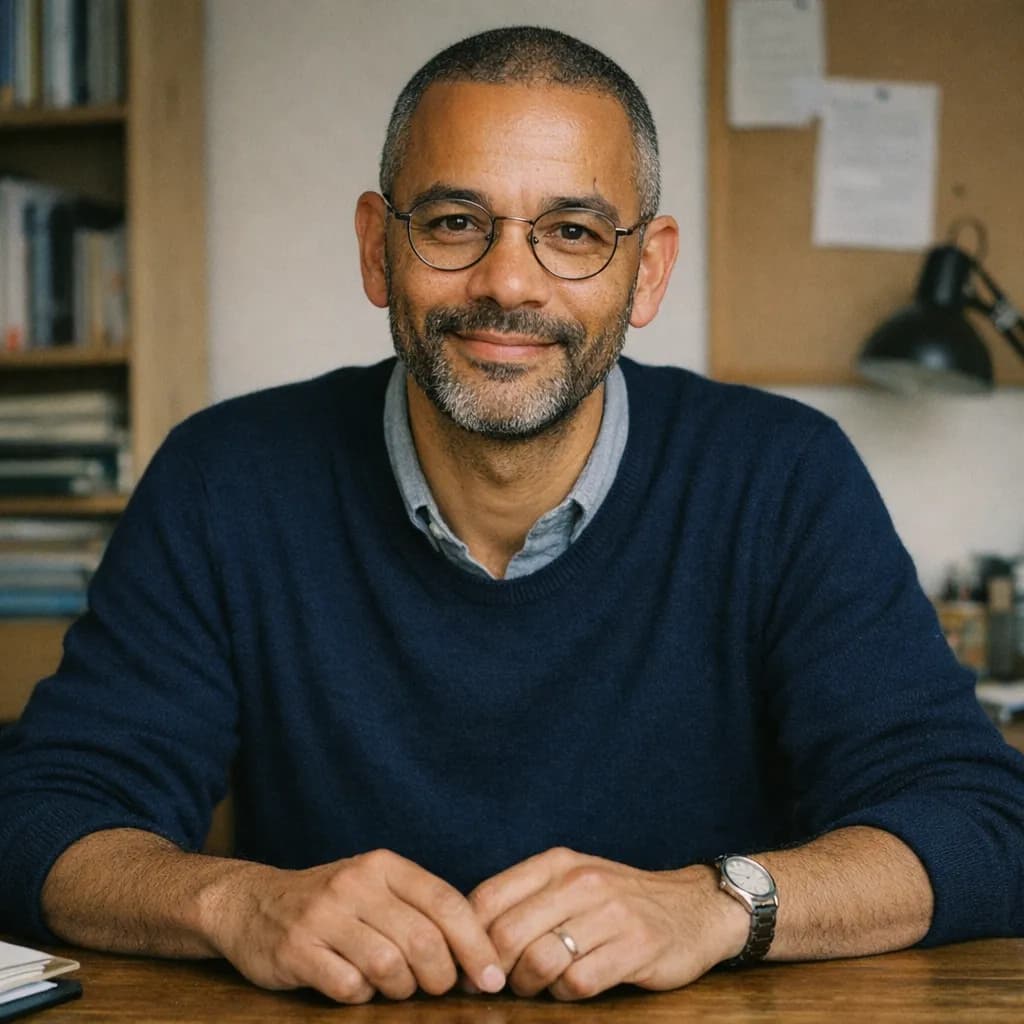
Alistair Rowan McEwan
Developmental Editor and Non-Fiction Manuscript CoachI grew up between Leeds and Glasgow, in that half-and-half way where you’re never fully from one place, so you learn to listen for what people mean instead of what they say. My mum kept old paperbacks and my dad kept newspapers, and I read both with the same suspicion. I still hear my gran’s voice when I write notes: she’d tap the page and say, “Aye, but what made that happen?” At nineteen I worked nights stacking shelves and days in a dull admin job for a small training provider, mostly because rent doesn’t care about your plans. They had me tidying course handouts and “improving the flow,” which meant cutting waffle and moving sections around until the trainer could teach without apologising. Around that time I got obsessed with making the perfect chilli recipe and kept a notebook of tiny tweaks. It didn’t make me a better editor, but I still do it, and I still overreact when a list of ingredients comes before the method. I didn’t set out to be an editor. A friend needed a second pair of eyes on a grant application, then another person asked, then a whole department started sliding documents onto my desk because I’d tell them the truth without making it personal. Later, I ended up in a communications role after a reorg - pure convenience - and I started doing beta-style reads for people writing practical books and narrative non-fiction on the side. Now I work with authors who want a manuscript that can survive a hard reader. I’m calm about most things, but I’m stubborn about causality: if a chapter claims a result, I want to see the choice that led there, and what it cost. I know my bias: I don’t spend long admiring lyrical voice if the argument is dodging responsibility. I’m the person you hand the draft to when you want the first reader who says, “This part doesn’t earn its conclusion,” and then shows you where it went off the rails.
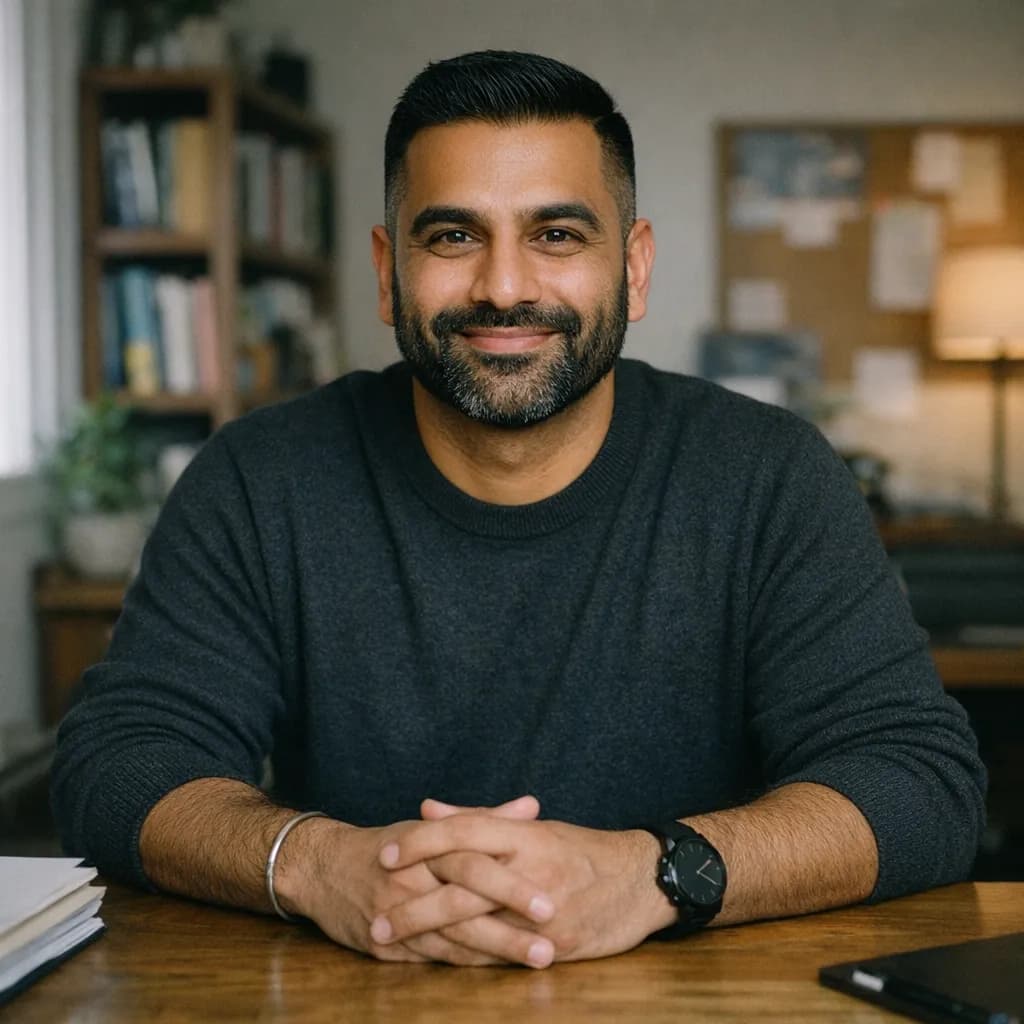
Arjunveer “Arj” Sandhu
Nonfiction Manuscript Editor & Writing Coach (Generalist)I grew up between Punjabi at home and English everywhere else, which taught me early that “I understood it” and “it was said clearly” aren’t the same thing. My dad ran a small trucking outfit and kept every receipt like it was scripture. My mom read Punjabi poetry and refused to explain it. I landed in the middle: I like meaning you can point to, and I don’t trust pretty fog. I didn’t plan on editing. I studied business because it was easy to explain at family dinners, then worked jobs where nobody had time for long sentences - operations, training docs, policy rewrites. I took a night improv course once because a friend wouldn’t go alone. I was bad at it. I still keep the ticket stub like it proves something. I started giving notes because people kept sending drafts with “can you make this make sense?” and I didn’t know how to say no. A supervisor once handed me a 40-page internal guide and said, “Fix it by Friday or we get audited.” That deadline became a habit: I read fast, I mark the real breaks, and I don’t pretend confusion is a personality trait. I’m harsher on fuzzy claims than clunky style, and I’m not interested in correcting that. Now I work with authors who want a first reader who won’t protect feelings at the expense of the book. I still ask, “What are you promising me in the first ten pages?” I don’t care if your voice is charming if your logic cheats. If your structure is designed to wander on purpose, I’m probably not your best match.
Frequently Asked Questions
- What makes Voices from Chernobyl so compelling?
- Most people assume the book works because the subject matter feels inherently dramatic. The deeper reason involves structure: Alexievich turns testimony into a pressure system where each voice redefines what “survival” means. She also refuses a single narrator’s certainty, which forces you to do active meaning-making instead of consuming conclusions. If you want similar force, you must choreograph contradictions and escalation on purpose; you can’t rely on “powerful stories” to self-organize into a book.
- Is Voices from Chernobyl fiction or nonfiction?
- A common assumption says nonfiction must sound neutral and documentary-flat to count as truthful. Alexievich writes nonfiction, but she shapes it with literary tools—selection, compression, sequencing, and recurring motifs—so the reading experience feels novelistic without inventing plot. That choice shifts the craft burden onto you: you must respect facts while still making deliberate narrative decisions. When you draft, separate reporting from arrangement, then interrogate each edit for what it implies.
- How do I write a book like Voices from Chernobyl?
- Many writers think they need a “big topic” and enough interviews. You actually need a governing question, a clear opposing force, and a structural plan for escalation across voices. Alexievich builds a chorus where intimacy leads to ideology, and ideology circles back to the body. Start smaller than you want: map 8–12 voices as story beats, decide what each voice must overturn, and cut any monologue that doesn’t change the reader’s internal verdict.
- What themes are explored in Voices from Chernobyl?
- People often reduce it to themes like tragedy, government failure, or environmental disaster. Those appear, but the craft power comes from themes that attack language itself: what happens when official words stop matching lived reality, and when private love collides with public orders. Alexievich also interrogates heroism as a story people tell to make suffering legible. If you write theme-forward work, test every thematic sentence against a concrete scene; if it can’t survive contact, rewrite it.
- How long is Voices from Chernobyl?
- A standard rule says length tells you reading difficulty, but this book’s intensity matters more than page count. Most editions run roughly 200–300 pages, yet the monologues compress so much emotion and moral complexity that many readers slow down. For craft study, you should read in sections and outline how each voice changes the value charge—hope to dread, pride to shame, certainty to confusion. You’ll learn more from pace mapping than from rushing to finish.
- Is Voices from Chernobyl appropriate for students or sensitive readers?
- Many assume a book about disaster only “gets sad” in an abstract way. Alexievich includes graphic illness, death, and psychological aftermath, often delivered in calm language that hits harder because it doesn’t warn you with melodrama. Students can read it with care and context, but a teacher should frame it as testimony shaped into literature, not as trauma consumed for effect. If you write similar material, set boundaries early and handle detail with responsibility, not spectacle.
About Svetlana Alexievich
Stack contrasting testimonies and cut the explanations, so the reader feels the truth argue with itself in real time.
Svetlana Alexievich didn’t “blend fiction and nonfiction” so much as rebuild the book around the human voice. Her pages run on testimony, not plot. She collects speech the way a composer collects motifs: repeated phrases, sudden confessions, defensive jokes, the sentence that breaks mid-breath. Meaning arrives through collision—one person’s certainty against another person’s shame.
The engine is simple and brutal: she puts you in a room where people remember out loud. She uses proximity as persuasion. You don’t get a narrator to tell you what to feel; you get a chain of voices that forces you to do the moral math yourself. That’s why the work hits harder than argument. It bypasses your “opinions” and targets your nervous system.
The technical difficulty hides in the restraint. You must decide what to cut, what to keep, and in what order—without flattening the speaker into a message. You must hold contradictions without resolving them, preserve the speaker’s dignity without sanitizing them, and keep momentum without plot. Most imitations fail because they chase “authentic voices” and forget architecture.
Alexievich’s process centers on long listening, patient transcription, and ruthless shaping: not inventing events, but editing reality into a chorus with escalating pressure. Modern writers should study her because she proved a book can move like a novel while staying accountable to real lives. She changed what readers accept as narrative authority: the author becomes arranger, not oracle—and that demands higher craft, not less.














Ready to improve your draft with direction?
Open Draftly, bring your draft, and move from stuck to a stronger draft without losing your voice. Editors are on standby when you want a deeper pass.
Free welcome credits included. No credit card needed.