Cargando
Estamos preparando las cosas. Esto no llevará mucho tiempo.
Estamos preparando las cosas. Esto no llevará mucho tiempo.
Write arguments that read like stories—steal Outliers’ “case-study cliffhanger” engine and make readers follow your logic to the last page.
Resumen del libro y análisis escrito de Outliers por Malcolm Gladwell.
Outliers works because Gladwell turns an abstract promise—explaining “success”—into a suspense problem you can’t stop testing. The central dramatic question sounds simple but bites hard: if talent doesn’t explain big winners, what does? Gladwell plays protagonist himself, a curious narrator-reporter moving through late-20th-century North America and parts of Asia (from elite youth hockey rinks in Canada to the tech corridors of the U.S., to rice paddies and classrooms abroad). He doesn’t just present ideas. He builds a tribunal: every chapter calls a new witness, and you sit on the jury.
The inciting incident arrives early through a specific maneuver, not a moment of personal drama. Gladwell introduces the shock of skewed birthdates in Canadian hockey—an ordinary system producing extraordinary “winners.” That’s the first clean fracture between your default belief (merit rules) and the observed world (selection systems rule). If you try to imitate this book naively, you’ll copy the topic (success) and miss the craft: he starts with a pattern you can verify, then he uses it as a pry bar to open your mind.
The “opposing force” in Outliers doesn’t wear a face. It wears your favorite story: the lone genius. Gladwell positions that myth as the antagonist because it offers emotional comfort and narrative simplicity. Each section escalates stakes by increasing the cost of being wrong. At first, the cost looks academic: you misread hockey. Then the cost becomes social and moral: you misjudge what people “deserve,” how schools sort kids, how workplaces grind people down, and why some groups keep paying hidden taxes for “opportunity.”
Gladwell raises the pressure through structure. He alternates between a clean anecdotal hook, a tranche of data, and a return to a human-scale scene that makes the numbers feel like consequences. You watch him widen the aperture from individual advantage (relative age, coaching access) to compounding advantage (practice time, mentorship), then to cultural inheritance (communication styles, attitudes toward authority, notions of “hard work”). That widening creates a sense of inevitability: you don’t get to opt out of context.
He also engineers mini-climaxes inside chapters: a counterexample appears, the thesis wobbles, then a deeper variable restores coherence. That rhythm stops the book from reading like a lecture. It reads like a series of trials where the prosecution (context) keeps finding new evidence. If you copy the surface pattern—cute story, then a statistic—you’ll write a blog post. Gladwell writes each chapter as a self-contained argument with reversals.
Descubra editores que se especializan en libros como este y les encantaría trabajar en proyectos similares.
I grew up between Leeds and Glasgow, in that half-and-half way where you’re never fully from one place, so you learn to listen for what people mean instead of what they say. My mum kept old paperbacks and my dad kept newspapers, and I read both with the same suspicion. I still hear my gran’s voice when I write notes: she’d tap the page and say, “Aye, but what made that happen?” At nineteen I worked nights stacking shelves and days in a dull admin job for a small training provider, mostly because rent doesn’t care about your plans. They had me tidying course handouts and “improving the flow,” which meant cutting waffle and moving sections around until the trainer could teach without apologising. Around that time I got obsessed with making the perfect chilli recipe and kept a notebook of tiny tweaks. It didn’t make me a better editor, but I still do it, and I still overreact when a list of ingredients comes before the method. I didn’t set out to be an editor. A friend needed a second pair of eyes on a grant application, then another person asked, then a whole department started sliding documents onto my desk because I’d tell them the truth without making it personal. Later, I ended up in a communications role after a reorg - pure convenience - and I started doing beta-style reads for people writing practical books and narrative non-fiction on the side. Now I work with authors who want a manuscript that can survive a hard reader. I’m calm about most things, but I’m stubborn about causality: if a chapter claims a result, I want to see the choice that led there, and what it cost. I know my bias: I don’t spend long admiring lyrical voice if the argument is dodging responsibility. I’m the person you hand the draft to when you want the first reader who says, “This part doesn’t earn its conclusion,” and then shows you where it went off the rails.
Cresci entre Setúbal e a casa da minha avó em Santiago, em Cabo Verde, embora tenha passado mais tempo a ouvir histórias da ilha do que a vivê-las. A minha mãe trabalhava numa repartição e o meu pai conduzia autocarros. Em casa havia jornais dobrados na mesa da cozinha, recibos dentro de livros e gente a corrigir factos uns aos outros com uma calma que às vezes era carinho e às vezes era guerra. Ainda me lembro do meu avô dizer que um livro sem datas era conversa de café. Não concordo com isso. Mas quando leio uma memória sem chão temporal, a minha mão vai sozinha à margem. Não fui parar à edição por plano. Estudei Comunicação em Portalegre porque era o curso que dava para pagar com bolsa e quarto partilhado. Fiz rádio local, transcrevi entrevistas para uma produtora e passei um Verão inteiro num armazém de cortiça a separar placas por espessura. Esse Verão não me tornou melhor editor, acho eu. Mas ainda hoje reparo no som seco das coisas quando batem na mesa, e às vezes isso entra no modo como leio uma cena. Também trabalhei numa pastelaria em Évora onde aprendi a não acreditar em pessoas que dizem “é rápido” sem explicar o processo. A primeira passagem séria para manuscritos aconteceu porque uma revista onde eu fazia fact-checking perdeu financiamento e uma editora pequena precisava de alguém barato para ler propostas de memórias e ensaios narrativos. Eu aceitei por conveniência. Lia no comboio, com folhas impressas no colo, e comecei a perceber que muitos textos não falhavam por falta de estilo. Falhavam porque o narrador queria ser compreendido antes de mostrar a escolha que tinha feito. Isso ficou comigo. Talvez demais. Hoje trabalho sobretudo com Non fiction, memórias e ensaio narrativo. Sou bom a desmontar causalidade, promessa, estrutura e responsabilidade do narrador. Também sei que tenho uma limitação: tenho pouca paciência para manuscritos muito associativos que recusam hierarquia até ao fim. Posso lê-los. Posso respeitá-los. Mas vou sempre procurar uma coluna vertebral, e não finjo o contrário. Prefiro avisar cedo do que fingir neutralidade.
Preguntas comunes sobre cómo escribir un libro como Outliers.
Use a small, vivid story as a Trojan horse for an idea so the reader feels entertained first—and convinced second.
Malcolm Gladwell writes like a prosecutor who moonlights as a raconteur. He opens with a story that feels harmless—an eccentric person, a small mystery, a counterintuitive fact—then he quietly builds a case. The trick is that you don’t notice the “argument” until you’ve already agreed with half of it. He earns that consent with scene, voice, and an implied promise: stick with me, and I’ll show you why the obvious explanation is wrong.
His engine runs on controlled surprise. He sets up a familiar frame, then swivels it at the last second with a named concept, a study, or a social pattern. But the concept is never the point; it’s the lever. He uses it to turn anecdotes into meaning, and meaning into a takeaway you can repeat at dinner. That repeatability is craft, not charisma: he engineers quotable clarity by narrowing the lens, not widening it.
Imitating him fails when you copy the surface: the quirky anecdote, the clever term, the “what this really means” pivot. What you miss is the scaffolding: which questions he withholds, when he cashes in evidence, and how he pre-answers your skepticism before you speak. The difficulty sits in sequencing. He sounds casual while he performs tight cognitive choreography.
Modern writers still need to study him because he proved that idea-driven nonfiction can borrow the page-turn economics of narrative. He drafts in units of curiosity: a hook, a complication, a pattern, a concession, a reframed conclusion. Revision becomes less about prettier sentences and more about where the reader’s doubt spikes—and how fast you pay it down without killing momentum.
Abre Draftly, traiga tu borrador y pase de un borrador estancado a uno más fuerte sin perder la voz. Los editores están en espera cuando quieres un pase más profundo.
🤑 Créditos de bienvenida gratuitos incluidos. No se necesita tarjeta de crédito.The midpoint energy spike comes when “10,000 hours” enters the cultural bloodstream. Notice what he actually does: he gives you a number not because it’s precise, but because it’s portable. That portability creates a new stake: readers now repeat the idea, so the author must defend it against simplifications. He meets that risk by stacking specific timelines and opportunities (who got unusual access, who sat near the right people, who arrived in the right decade). He turns a slogan into a chain of circumstances.
The later sections darken the palette. He shifts from “who gets in” to “who gets hurt,” using settings like workplaces with brutal schedules and communities shaped by historical poverty. He uses tragedy as evidence, not decoration. You feel the weight because he refuses to blame victims or canonize heroes. If you imitate carelessly, you’ll cherry-pick feel-good exceptions and call it insight. Gladwell earns his conclusions by showing systems that punish as reliably as they reward.
By the end, the book doesn’t crown a single definition of success. It rewires your default lens. Gladwell, the protagonist, moves from a neat explanatory impulse to a more unsettling clarity: your environment authors you as much as you author yourself. That ending lands because he never lets you stay in abstraction. He keeps dragging you back to concrete gates, calendars, classrooms, accents, and rules—places where “merit” meets machinery.
Estructura de la historia y arco emocional en Outliers.
Outliers follows a “Man in the Hole” trajectory disguised as uplifting nonfiction. Gladwell starts with a confident cultural mood—success equals talent plus grit—then drops you into a colder recognition: systems quietly stack the deck. He ends in a steadier, more adult stance. You don’t lose hope, but you lose the comforting fairy tale.
The strongest sentiment shifts come from repeated reversals: a triumphant “outlier” story appears, then a hidden scaffold of timing, gatekeepers, and cultural habits snaps into view. The low points land because Gladwell ties them to real costs—misjudged people, wasted potential, preventable harm—then climbs out by offering an explanatory lens that feels usable. The climax doesn’t explode; it locks into place, like the last piece of a mechanism clicking home.
Lo que los escritores pueden aprender de Malcolm Gladwell en Outliers.
Gladwell’s core device looks simple but it’s surgical: he treats each chapter like a courtroom argument. He opens with a vivid, almost gossipy case (a junior hockey roster, a prodigy’s timeline, a workplace rule), then he introduces a clean variable that flips your first interpretation. That flip gives you narrative propulsion. You don’t read to “learn,” you read to see whether your instinct survives the next piece of evidence. Most modern nonfiction settles for a thesis statement and supportive examples; Gladwell builds a series of reversible bets.
Watch his control of exposition. He doesn’t dump context; he parcels it out as answers to questions he just made you ask. He also repeats key terms with slight variation so the idea feels stable while the implications keep changing. That repetition works like a chorus in a song: familiar enough to anchor you, altered enough to keep you listening. If you write “smart” nonfiction and nobody finishes it, you probably explained too early and proved too late.
He uses dialogue sparingly but strategically to signal power dynamics. In the section that examines airline cockpit culture, he recounts interactions where a subordinate softens a warning to a superior instead of stating it bluntly. The exact phrasing matters because it shows how politeness can become a technical risk. He lets the reader hear status, deference, and hesitation, then he ties that sound to consequence. Many writers summarize interpersonal tension (“they couldn’t communicate”); Gladwell lets you hear the communication fail.
His atmosphere comes from concrete institutions, not decorative description. You stand in specific places: Canadian youth leagues with cutoff dates, elite schools with admissions filters, workplaces with punishing schedules, cultural classrooms where authority shapes speech. That grounded world-building keeps the book honest because you can imagine the rulebook, the calendar, the gate. The common shortcut today involves vibes and slogans—“systems are rigged,” “work hard”—without a mechanism. Gladwell names the mechanism, shows it operating, then lets you feel the result.
Consejos de escritura inspirados en Outliers de Malcolm Gladwell.
Write with the confidence of someone who expects pushback. Gladwell’s tone never begs for belief, but it also never sneers at the reader’s old worldview. He sounds like a curious prosecutor, not a motivational speaker. You should do the same. State what most people assume, then treat it as a reasonable first draft, not a stupid mistake. Keep your sentences clean. Save your flair for the turn, where one detail changes the meaning of everything.
Build your “protagonist” on the page, even in nonfiction. Gladwell uses himself as the moving point of attention: he notices a pattern, follows it, hits resistance, reframes, and continues. If you remove that movement, you’ll write a report. Decide what you want your reader to feel you doing in real time: doubting, testing, arguing, conceding, sharpening. Give your opposing force a face, even if it’s an idea like the self-made genius myth, and keep letting it tempt the reader.
Avoid the genre trap of the single-cause miracle. A lot of books in this lane sell one lever because it markets well. Outliers stays compelling because it resists tidy monocausality. Gladwell uses numbers as doors, not destinations. He also earns the right to generalize by showing you the selection rules, the timelines, and the institutional incentives. If you chase the same effect with cherry-picked anecdotes, readers will smell it. They don’t hate persuasion; they hate being cornered.
Try this exercise. Pick one outcome people romanticize in your niche, then find a gate that controls entry: a cutoff date, a credential, a schedule, a geography, a mentor network. Write a 1,200-word chapter that begins with a single person who “made it,” then reveal the gate with one hard, checkable fact. Add two more cases that look different but share the same gate. End by naming the reader’s default story and showing exactly where it breaks.
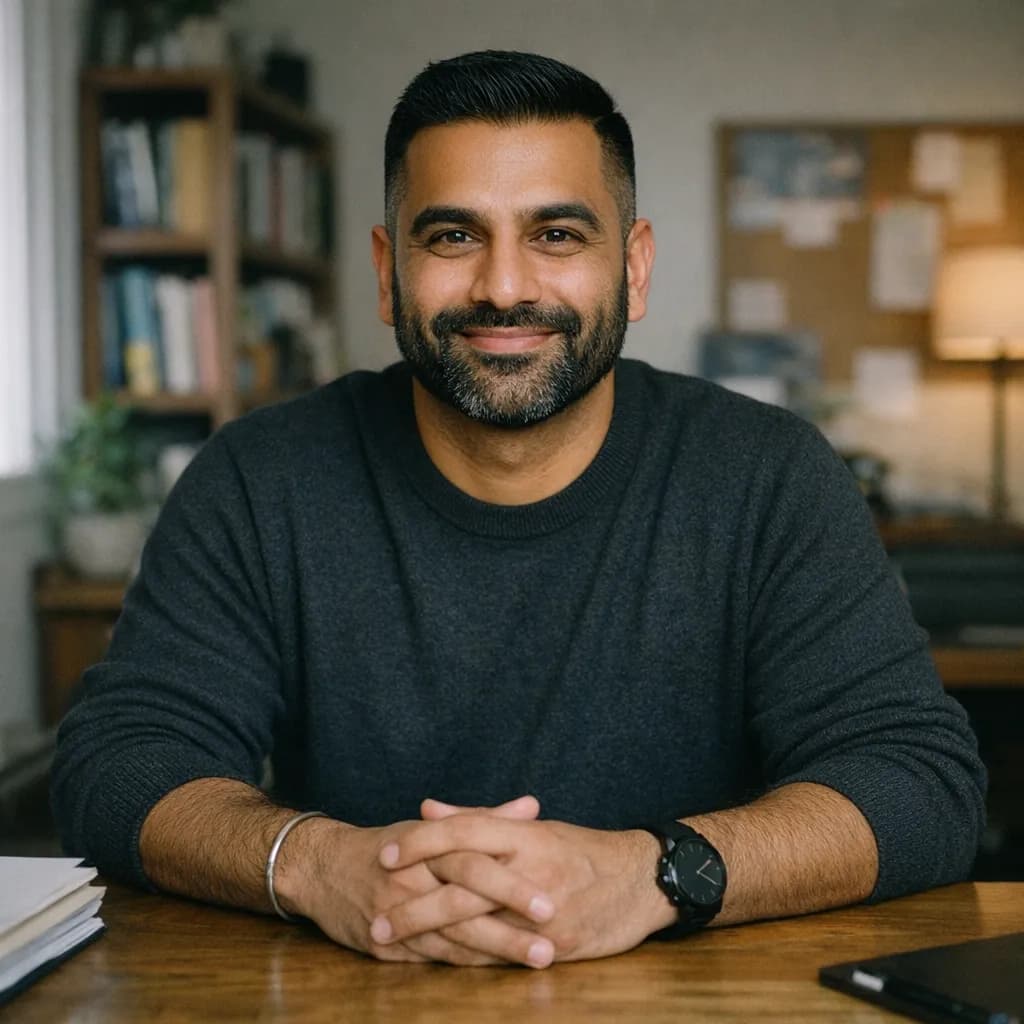
I grew up between Punjabi at home and English everywhere else, which taught me early that “I understood it” and “it was said clearly” aren’t the same thing. My dad ran a small trucking outfit and kept every receipt like it was scripture. My mom read Punjabi poetry and refused to explain it. I landed in the middle: I like meaning you can point to, and I don’t trust pretty fog. I didn’t plan on editing. I studied business because it was easy to explain at family dinners, then worked jobs where nobody had time for long sentences - operations, training docs, policy rewrites. I took a night improv course once because a friend wouldn’t go alone. I was bad at it. I still keep the ticket stub like it proves something. I started giving notes because people kept sending drafts with “can you make this make sense?” and I didn’t know how to say no. A supervisor once handed me a 40-page internal guide and said, “Fix it by Friday or we get audited.” That deadline became a habit: I read fast, I mark the real breaks, and I don’t pretend confusion is a personality trait. I’m harsher on fuzzy claims than clunky style, and I’m not interested in correcting that. Now I work with authors who want a first reader who won’t protect feelings at the expense of the book. I still ask, “What are you promising me in the first ten pages?” I don’t care if your voice is charming if your logic cheats. If your structure is designed to wander on purpose, I’m probably not your best match.

Pon tu borrador en Draftly. Corrija escenas y diálogos en el texto, no en otra pestaña. Cuando desee comentarios más precisos, los editores de IA están listos.
🤑 Créditos de bienvenida gratuitos incluidos. No se necesita tarjeta de crédito.