Cargando
Estamos preparando las cosas. Esto no llevará mucho tiempo.
Estamos preparando las cosas. Esto no llevará mucho tiempo.
Write scenes that feel like lived memory, not plotted content—steal My Ántonia’s engine for turning landscape, longing, and time into story pressure.
Resumen del libro y análisis escrito de My Ántonia por Willa Cather.
My Ántonia works because it refuses the usual bargain of “big plot in exchange for your attention.” Cather builds a different engine: a narrator (Jim Burden) tries to pin down what a person meant to him before time smooths the edges. The central dramatic question doesn’t ask “Will they win?” It asks “Can Jim tell the truth about Ántonia—and about himself—without turning her into a symbol?” If you imitate this book naively, you’ll copy the prairie and miss the real motor: a mind revising its own past in public.
The inciting incident happens early and it looks almost too quiet to count: orphaned Jim rides the wagon out to his grandparents’ Nebraska farm near Black Hawk and meets the new Bohemian neighbors, the Shimerdas. Jim’s choice to cross that social and physical distance—and to keep crossing it—creates the story. That meeting sets up the true opposition, which doesn’t wear a villain’s hat. It comes as poverty, immigrant isolation, gendered labor, and the blunt indifference of weather and reputation. Cather turns those forces into pressure by making intimacy costly.
The setting does heavy lifting, but not as postcard description. Cather uses late-19th-century Nebraska as a moral physics lab: winter punishes, summer seduces, the town judges, and the land demands endurance. You watch Jim move between the open country and the tidier, narrower world of Black Hawk. Each shift in place changes what he notices, what he allows himself to feel, and how safe it feels to want things. That’s the craft trick: setting doesn’t decorate the story, it edits the narrator.
Stakes escalate through a chain of irreversible losses and compromises, not through a single rising conflict line. The Shimerdas arrive already in debt and confusion; the land doesn’t care. When the family’s strain breaks into tragedy, Jim learns that affection doesn’t protect anyone from consequence. Later, as Ántonia grows into her strength, the town converts that strength into gossip and suspicion. Then the book tightens the screws: desire and opportunity separate along class and gender lines. Jim can leave. Ántonia must stay and carry the visible costs.
Cather structures the novel as memory arranged into “books” and episodes, but each episode functions like a test. The question always stays the same—what does loyalty mean here?—and the answer keeps changing as Jim’s vantage point changes. A small scene can carry a whole season of moral weather. That’s why the book keeps its grip without cliffhangers: every return to Ántonia forces Jim to confront a new version of himself, and the reader feels that gap widen.
Descubra editores que se especializan en libros como este y les encantaría trabajar en proyectos similares.
J’ai grandi entre Pont-l’Abbé et Quimperlé, dans une famille où l’on parlait peu des choses importantes. Mon père réparait des bateaux de pêche, ma mère tenait les comptes d’une petite entreprise de matériaux. Les histoires arrivaient par morceaux : une tante qui changeait de sujet, un voisin qui ne passait plus devant une maison, une photo retournée dans un tiroir. J’ai gardé cette manie de croire qu’un silence doit avoir une cause. Je sais que ce n’est pas toujours vrai. Je continue quand même à lire comme ça. Je n’ai pas prévu de travailler avec des manuscrits. J’ai fait de l’histoire, puis un stage aux archives municipales de Lorient parce qu’un autre étudiant s’était désisté. Je classais des dossiers d’urbanisme, des plaintes de voisinage, des lettres sèches envoyées trop tard. Ce qui m’a frappé, ce n’était pas le passé. C’était le moment précis où quelqu’un aurait pu agir autrement. Après ça, j’ai corrigé des dossiers pour une petite maison associative, puis des romans pour des auteurs qui n’avaient pas d’éditeur. Le loyer décidait souvent plus que moi. Pendant deux ans, j’ai aussi travaillé trois soirs par semaine à l’accueil d’une salle d’escalade. Ça ne m’a pas rendu meilleur éditeur, je crois. Je vérifiais des abonnements, je nettoyais des prises, je regardais des gens s’énerver contre un mur jaune. J’aimais la craie sur les mains et le bruit sourd des chutes sur les tapis. Je repense encore à un habitué qui recommençait toujours la même voie sans changer de méthode. Je ne sais pas pourquoi ce souvenir reste là. Aujourd’hui, je lis surtout des romans, des novellas et des nouvelles où les personnages prétendent ne pas choisir. Je suis utile quand une intrigue perd sa colonne vertébrale, quand un secret remplace une décision, quand le climax arrive parce que le plan l’exige. Mon biais est net : je supporte mal les protagonistes longtemps passifs, même quand cette passivité est fine ou réaliste. Je le sais. Je ne corrige pas vraiment ce biais, parce qu’il protège souvent le lecteur contre l’ennui poli.
I grew up between Wagga and my aunt’s place out near Narrandera, in a family that could argue for sport and then feed you like nothing happened. Books were around, but not in a precious way. My old man liked stories where people did what they said they’d do, even if it cost them. I still hear that voice when a character “can’t” make a decision because the plot needs another chapter. I didn’t set out to be an editor. I studied teaching, worked a few rough years in classrooms, and then left after a run of short contracts and one admin reshuffle that made it clear I was replaceable. A mate pulled me into doing learning materials and assessments because I could spot where people were gaming the question. That work taught me to watch for what the text rewards versus what it claims to reward - which is the same problem in a lot of manuscripts. I also spent a couple of seasons doing night shifts at a servo when money got tight. I kept a notebook behind the counter and wrote scenes between customers, mostly to stay awake. I remember one bloke coming in every Thursday, buying the same pie, and telling me the same story about a dog he swore was smarter than his ex. I don’t know why I remember that, but I do. Editing started as favour-work. People in town found out I’d read their drafts and I’d send back long emails with scene-by-scene notes. Somewhere along the line it became my paid work, mostly because I was consistent and because I’m not afraid to say, “This turn doesn’t belong to your protagonist.” I’m biased toward decisive characters and I don’t plan to cure myself of it; I’d rather a story risk an ugly choice than drift into polite inevitability.
Preguntas comunes sobre cómo escribir un libro como My Ántonia.
Use selective concrete details to make the reader supply the emotion you refuse to explain.
Willa Cather writes as if she trusts the reader’s nervous system. She gives you the visible world—light on grass, dust in a room, the weight of a tool—and lets meaning rise from contact, not explanation. Her engine runs on selection: she chooses the few details that carry a whole life, then stops before the prose starts performing. You feel steadied, then quietly rearranged.
Her craft looks “simple” until you try it. Cather’s restraint demands ruthless control over emphasis. She underwrites emotion, but she never under-builds it. She plants pressure in objects, work, weather, and small social rules, then lets characters act inside those constraints. The psychology comes from what she refuses to state: you sense the unsaid verdict, and you participate by finishing it.
She also treats time like an editor, not a diarist. She skips the obvious scenes and arrives after decisions, when consequences already set. She uses summary like a blade, then slows down for a charged image or a single conversation that tilts a life. That balance makes her work feel inevitable—like the story existed before the sentences.
Modern writers need her because she proves you can write with dignity without writing blandly. She changed what “dramatic” can mean on the page: not fireworks, but a clean line through experience. If you revise like her, you revise by subtraction—cut the explanations, keep the anchors, and make every remaining detail do two jobs: show the world and judge it.
Abre Draftly, traiga tu borrador y pase de un borrador estancado a uno más fuerte sin perder la voz. Los editores están en espera cuando quieres un pase más profundo.
🤑 Créditos de bienvenida gratuitos incluidos. No se necesita tarjeta de crédito.The primary opposing force, in practical terms, includes Black Hawk’s social code (especially around women’s respectability), the economic grind that narrows choices, and Jim’s own romantic distance. He wants Ántonia to stand for “the country” and “the past,” which sounds flattering until you notice how it reduces her. Cather lets you feel Jim’s admiration and his evasion at the same time. If you try to copy this novel by writing “beautifully” about nostalgia, you’ll produce perfume. Cather produces friction.
By the end, the book resolves its dramatic question in a sideways way. Jim can’t preserve the past, and he can’t fix what happened to Ántonia. He can only see her whole, in the present, without demanding she match his private myth. That recognition lands because Cather earned it through a long pattern of concrete costs. You don’t finish My Ántonia thinking, “What a plot.” You finish thinking, “That’s what it feels like to remember honestly.”
Here’s the warning label for writers: don’t confuse episodic structure with looseness. Cather chooses scenes that carry double duty—story event plus moral revelation plus sensory anchoring. If you treat this as a “slice-of-life classic” and write whatever comes to mind, you’ll drift. Cather never drifts. She simply hides her rails under snow, grass, and quiet sentences.
Estructura de la historia y arco emocional en My Ántonia.
The emotional shape reads like a quiet Man-in-Hole hybrid: Jim starts displaced but hopeful, then drops into grief and disillusionment, and ends with a steadier, less romantic kind of peace. Internally, he begins by treating the prairie and Ántonia as sources of wonder and identity. He ends by accepting that time changes meaning, and that love can exist without possession.
Key sentiment shifts land because Cather times them against seasons, moves, and social thresholds. The early lift comes from discovery and friendship; the first deep drop comes when hardship turns lethal and Jim realizes the land doesn’t reward innocence. Later, the story rises on youthful energy and work, then dips again when town judgment and adult consequences narrow Ántonia’s options. The final rise doesn’t “fix” anything; it stabilizes. Jim’s last emotion carries weight because Cather denies him a neat triumph and gives him clarity instead.
Lo que los escritores pueden aprender de Willa Cather en My Ántonia.
Cather teaches you how to make “memory” feel like narrative, not like a scrapbook. She filters everything through Jim’s selective attention, then she makes that selectivity part of the meaning. Notice how the prose stays clean and concrete, even when Jim talks about big feelings. He names what he sees—the cut of the land, the weight of winter, the look of a face in lamplight—and you feel emotion arrive as a byproduct. Many modern drafts announce the emotion first and hunt for an image later. Cather reverses the order and gets credibility.
She also shows you how to build a book out of episodes without writing a baggy, plotless “vibes novel.” Each episode changes the moral weather. Early wonder turns into responsibility; friendship turns into obligation; admiration turns into distance. The prairie outside Black Hawk never functions as backdrop. It acts like a force that shapes behavior: long distances create dependence, storms create urgency, and abundance creates risk-taking. If you want to write setting well, stop describing. Start asking what the place makes your characters do.
Watch her dialogue strategy, especially around the hired girls and the town’s code. In conversations that include Lena Lingard, Ántonia, and Jim, Cather lets subtext do the heavy work. People don’t declare, “Society oppresses women.” They tease, boast, dodge, and warn each other. Jim hears more than he says, which matches his role as observer and, frankly, as someone who can leave. Modern dialogue often tries to sound “real” by adding chatter. Cather makes dialogue real by making every line carry a social cost.
Finally, Cather handles judgment without writing a cartoon town full of villains. Black Hawk doesn’t hate Ántonia; it evaluates her. That difference matters. The book gains power because you see how ordinary people enforce reputation, how they translate a woman’s labor into a threat, and how quickly desire turns into condemnation. Many contemporary stories shortcut this by making the community openly cruel from page one. Cather makes it familiar first, then she shows you the blade inside the handshake. That’s how you write harm that readers recognize.
Consejos de escritura inspirados en My Ántonia de Willa Cather.
Write your narrator like a person with a stake, not like a tour guide. Jim doesn’t “tell a story”; he tries to hold onto meaning that time keeps changing. You can copy that by letting your voice show its preferences and blind spots in the same sentence. Keep the language plain. Earn lyric moments by anchoring them to a physical fact the narrator can’t deny. If you chase “beautiful prose” as a goal, you’ll varnish the page. If you chase accurate noticing, beauty shows up on its own.
Build characters through what they can endure and what they refuse to say out loud. Ántonia feels alive because Cather gives her contradictory pressures that never resolve into a brand. She works hard, she boasts, she gets hurt, she returns to work anyway. Jim grows by misreading her, then correcting himself slowly. Give your cast jobs, chores, and social constraints that shape their choices. Don’t rely on backstory speeches. Make the reader infer history from how a person handles a bad day.
Avoid the prestige trap of “nothing happens.” Cather writes a quiet book, but she never writes an inconsequential scene. Each episode turns a screw: the land demands more, the town judges more, time removes options. Writers who imitate the calm surface often skip escalation and call it subtlety. Subtlety still moves. Make every scene change the narrator’s valuation of someone, or change what the narrator believes the future can hold. If the value doesn’t shift, cut the scene.
Try this exercise for craft, not nostalgia. Write ten short scenes from the same narrator across fifteen years of contact with one person. Set five scenes in one location that changes by season, and set five in a “civilized” place with rules and spectators. In each scene, force a small decision that costs something social, practical, or emotional. After you draft, underline the concrete details and circle any abstract claims about what something “meant.” Replace half those abstractions with an object, a gesture, or a refusal to speak.
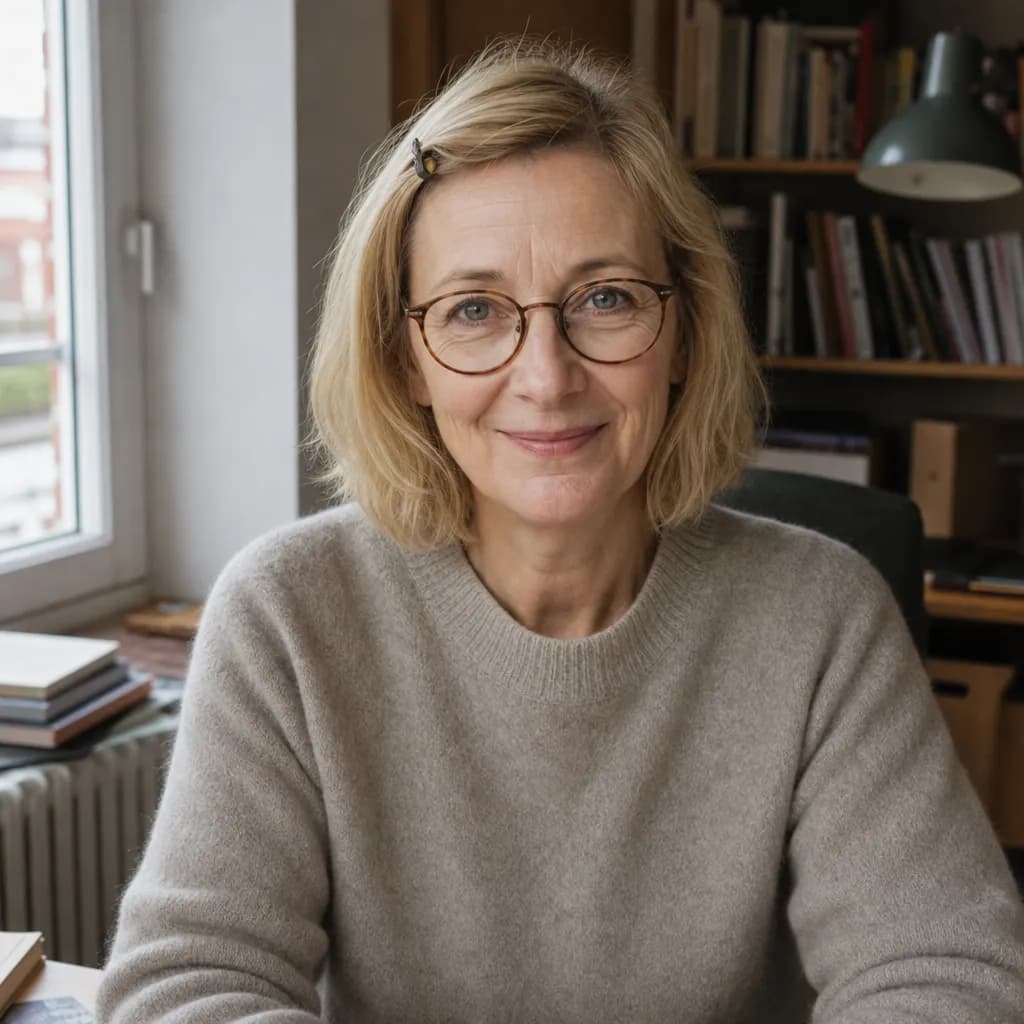
Je suis née à Bourges, dans une famille où l’on parlait peu des livres mais beaucoup des factures, des repas et des voisins. Mon père réparait des machines agricoles. Ma mère tenait les comptes d’une petite entreprise de menuiserie. On ne m’a pas élevée dans l’idée que les histoires sauvaient quoi que ce soit. Pourtant, le dimanche soir, je lisais dans le couloir, assise contre le radiateur, parce que ma chambre était trop froide et que le salon appartenait à la télévision. J’ai d’abord travaillé dans une bibliothèque municipale, puis dans une librairie à Orléans, et je suis arrivée en Belgique après une séparation que je n’avais pas prévue. Le poste à Tournai était temporaire. Je devais rester six mois. J’y suis encore. Une éditrice locale m’a demandé un jour de lire un manuscrit parce que sa lectrice habituelle était malade. J’ai rendu douze pages de notes sur les décisions du personnage principal au lieu de corriger les adjectifs. Elle m’a rappelée. Pendant trois ans, j’ai aussi tenu la caisse d’une petite salle de cinéma. Ce n’était pas glorieux. Je vendais des tickets, je vérifiais les réservations, je ramassais des gobelets après les séances tardives. Je ne sais pas si cela m’a rendue meilleure lectrice. Je me souviens surtout d’un vieil homme qui venait tous les jeudis, même pour les mauvais films, et qui disait toujours : « Au moins, ils ont essayé. » Je n’ai jamais su si je trouvais ça tendre ou lâche. Aujourd’hui, je travaille surtout avec des romanciers qui ont déjà une matière vivante mais pas encore une colonne vertébrale. Je suis bonne pour repérer les scènes qui décorent au lieu de modifier le cours du récit. Je suis moins patiente avec les textes très atmosphériques où rien ne se décide pendant longtemps. Je le sais, et je ne corrige pas vraiment ce biais. Je préfère le nommer tôt. Si un manuscrit me demande d’attendre cent pages avant qu’un personnage agisse, je vais probablement résister.

Pon tu borrador en Draftly. Corrija escenas y diálogos en el texto, no en otra pestaña. Cuando desee comentarios más precisos, los editores de IA están listos.
🤑 Créditos de bienvenida gratuitos incluidos. No se necesita tarjeta de crédito.