Caricamento
Stiamo preparando tutto. Non ci vorrà molto.
Stiamo preparando tutto. Non ci vorrà molto.
Write moral suspense that actually hurts: steal Crime and Punishment’s engine for turning an idea into a cage you can’t narrate your way out of.
Trama del libro e analisi della scrittura di Crime and Punishment di Fyodor Dostoyevsky.
Crime and Punishment works because it refuses to treat “will he get caught?” as the main question. It treats the crime as an argument the protagonist makes with his life, then forces him to defend it under cross-examination. The central dramatic question reads like this: can Rodion Raskolnikov live inside his theory of being an “extraordinary man,” or will reality (and his own conscience) break him? If you imitate the surface—bleak streets, feverish monologues, a shocking act—you miss the real machine: Dostoyevsky builds a courtroom inside one mind and makes every scene a witness.
You get a setting that behaves like a pressure chamber: 1860s St. Petersburg, cramped rented rooms, taverns, stairwells, police offices, pawnbrokers’ apartments. Heat, stink, noise, and poverty do not decorate the story; they squeeze it. Raskolnikov starts with isolation and pride disguised as philosophy. He lives like a man already on trial, and he keeps rewriting his own motives to avoid a verdict.
The inciting incident does not land as a random temptation or a convenient opportunity. It lands as a decision scene: Raskolnikov overhears a student and an officer discuss Alyona Ivanovna, the pawnbroker, and the “logic” of killing one “louse” to save many. He treats that conversation like permission, then tests the plan in the real world by visiting her, noticing the axe, the timing, the door. Dostoyevsky shows you the mechanics of self-justification: Raskolnikov does not “snap.” He rehearses.
Then the book commits a move many modern imitators dodge. It spends less craft energy on the murder than on the aftermath—the social, physical, and spiritual consequences that ripple outward. The stakes escalate through exposure, yes, but more through fragmentation. Raskolnikov’s body betrays him with fever and exhaustion. His relationships crack under the strain. His theory begins to sound like a lie even to him, and he cannot stop talking.
The primary opposing force wears two masks. One mask looks like the law in the form of Porfiry Petrovich, the investigating magistrate, who fights with psychology, not handcuffs. The other mask looks like grace in the form of Sonya Marmeladova, whose presence threatens Raskolnikov’s self-image more than any police file. Together they corner him from both sides: Porfiry tightens the net outside; Sonya tightens it inside.
Structure matters here because Dostoyevsky escalates by forcing Raskolnikov into rooms where he must perform. He must face Razumikhin’s honest decency, Dunya’s fierce loyalty, Luzhin’s petty calculation, Svidrigailov’s predatory nihilism. Each encounter tests a different clause of his philosophy. The “plot” keeps asking: will he confess through action, through speech, or through collapse? And every time he almost escapes, Dostoyevsky drags him back into contact with other people—the one thing his theory cannot survive.
Scopri gli editor specializzati in libri come questo, desiderosi di lavorare su progetti simili.
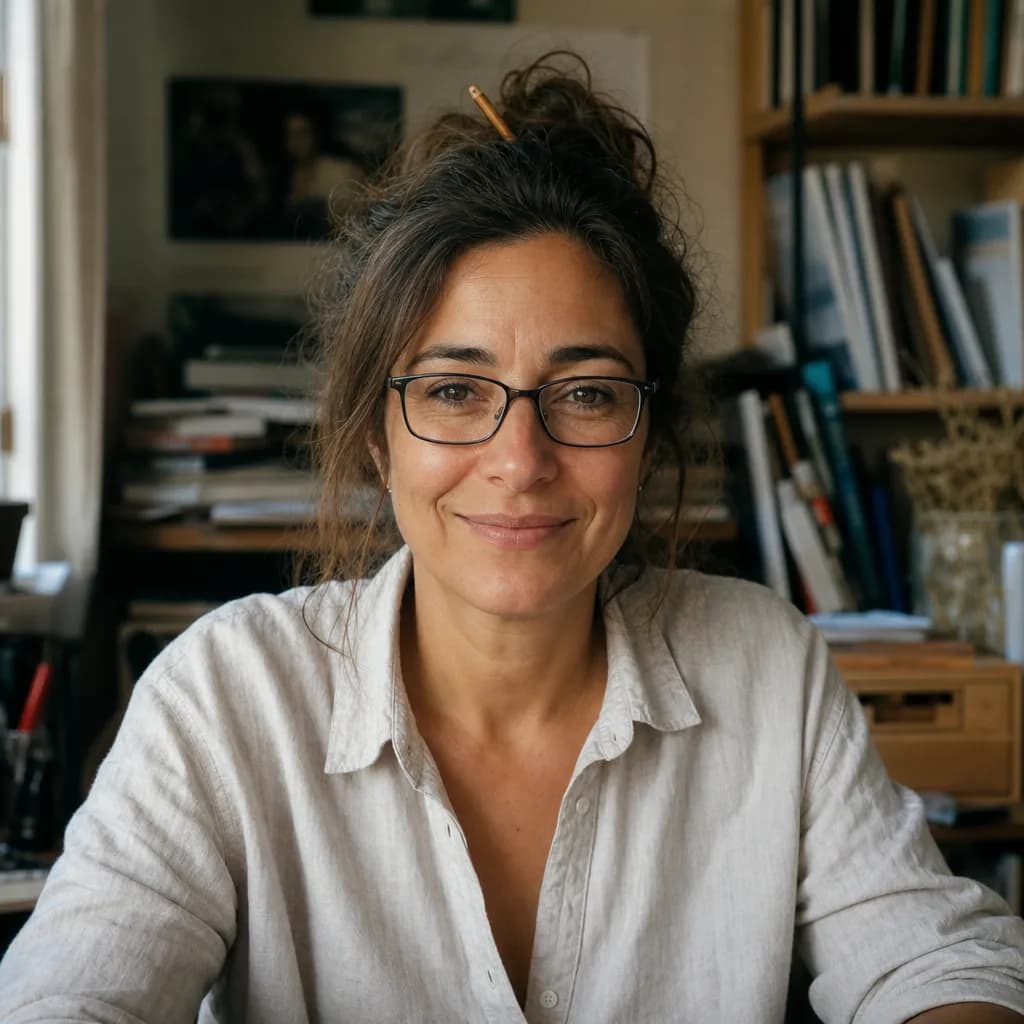
Sono cresciuta a Prato sopra una merceria di famiglia, tra rocchetti, fatture e telefonate in tre lingue. Mia madre parlava poco quando era stanca. Mio padre faceva conti su foglietti piegati in quattro. In casa i racconti finivano quasi sempre con qualcuno che aveva deciso troppo tardi. Mia nonna diceva: “Chi non decide, obbedisce.” Io me la sono scritta dentro, anche se oggi non sono sicura che sia vero. Però quando leggo un personaggio fermo troppo a lungo, la matita mi va da sola sul margine. Non sono arrivata ai libri con un piano. Ho studiato economia perché sembrava una cosa utile e perché in casa nessuno aveva voglia di discutere ancora di affitti, stipendi e futuro. Per un’estate ho riparato biciclette nell’officina di mio zio a Campi Bisenzio. Non c’entra molto con il mio lavoro, credo. Ricordo solo il grasso nero sotto le unghie e il rumore secco delle camere d’aria quando scoppiavano. Ancora oggi, quando una trama perde pressione, penso a quel suono prima di trovare le parole giuste. Il primo lavoro editoriale è arrivato per convenienza, non per vocazione. Una piccola casa editrice cercava qualcuno che sapesse usare bene Excel, leggere contratti e non spaventarsi davanti a manoscritti lunghi. Una redattrice era in maternità. Io avevo bisogno di pagare il mutuo. Ho iniziato sistemando schede, bozze, lettere agli autori. Poi mi hanno passato romanzi completi perché ero “quella che trovava dove la storia smetteva di fare i conti con se stessa”. Non era un complimento elegante, ma era abbastanza preciso. Adesso lavoro come editor generalista perché molti manoscritti non hanno un solo problema. Hanno una scelta mancata al capitolo tre, una promessa di genere dimenticata al centro, dialoghi che coprono il vuoto e un finale che arriva per comodità. So di essere più dura con i protagonisti contemplativi che con quelli impulsivi. Non provo a correggere del tutto questo limite. Nella Fiction posso accettare lentezza, ambiguità e silenzio, ma non accetto che il romanzo chieda al lettore di aspettare cento pagine prima di vedere qualcuno pagare il prezzo di una decisione.
Domande comuni su come scrivere un libro come Crime and Punishment.
Use self-contradicting interior logic to make your reader argue with your character while still fearing they’re right.
Dostoyevsky writes like a man arguing with himself in public—and winning by losing. He turns story into a moral pressure chamber: each scene pushes a character toward a choice they can’t live with, then makes them live with it anyway. The trick isn’t “dark themes.” It’s control of contradiction. He lets a character speak with absolute certainty, then shows the cost of that certainty in the next breath.
His engine runs on psychological leverage. He builds meaning by forcing motives to collide: pride vs need, faith vs suspicion, love vs humiliation. He keeps you reading by staging confession as suspense. You don’t wait for a gunshot; you wait for a sentence that finally tells the truth—and then you doubt it. He uses rumor, accusation, and self-justification as plot, so the real action happens inside the reader: judgment, recoil, uneasy recognition.
The technical difficulty hides in the mess. Dostoyevsky’s pages look chaotic, but they obey a ruthless hierarchy: every rant, interruption, and digression serves a tighter noose around the character’s moral neck. If you imitate the noise without the structure, you get melodrama. If you imitate the philosophy without the heat, you get an essay wearing a trench coat.
Modern writers still need him because he proved you can build a page around competing voices, not tidy conclusions. He drafted under brutal deadlines and still revised for dramatic effect: he compresses time, sharpens confrontations, and rearranges reveals to maximize inner conflict. He didn’t change literature by making it “deep.” He changed it by making conscience behave like a plot device.
Apri Draftly, porta la tua bozza e passa dall'impasse a una bozza più solida senza perdere la tua voce. Gli editor sono in attesa quando vuoi un'analisi più approfondita.
🤑 Crediti di benvenuto gratuiti inclusi. Nessuna carta di credito richiesta.If you try to copy this novel naively, you will overvalue misery and undervalue design. Dostoyevsky does not win by piling on suffering; he wins by making every external event echo an internal choice. He also does not hide the theme under a tasteful veil. He puts the theme onstage, then dares himself to keep it dramatic. That takes craft: you must write scenes where ideas fight like characters, and you must keep score with consequences.
By the end, the question stops sounding like “will he get away with it?” and starts sounding like “what counts as punishment?” Dostoyevsky answers with a brutal but usable lesson for you: a story about guilt does not climax at capture. It climaxes at surrender—when the protagonist gives up the story he tells himself, and accepts a reality he can no longer edit.
Struttura della storia e arco emotivo in Crime and Punishment.
Crime and Punishment runs on a subversive Man-in-a-Hole arc where the fall begins before page one and the “rise” looks like defeat. Raskolnikov starts emotionally armored: proud, sealed off, convinced he can reason his way past ordinary morality. He ends stripped down and human, and the book treats that as progress, not comfort.
Key sentiment shifts hit because Dostoyevsky makes every spike of hope feel temporary and earned, then punctures it with a sharper self-revelation. The murder does not deliver catharsis; it delivers contamination. The investigation does not only threaten arrest; it forces intimacy with Porfiry’s mind games. Sonya’s tenderness lands like an assault on pride. Low points work because they arrive through specific humiliations—missteps, contradictions, impulsive speeches—so you watch Raskolnikov destroy his own defenses in public.
Cosa possono imparare gli scrittori da Fyodor Dostoyevsky in Crime and Punishment.
Dostoyevsky builds suspense with interior contradiction, not plot concealment. He tells you early what Raskolnikov thinks he believes, then he engineers scenes where his body, speech, and impulses contradict that belief. You watch a mind argue against itself in real time. Modern writers often shortcut this by naming a “flaw” and repeating it as a label. Dostoyevsky forces the flaw to evolve: pride becomes disgust, disgust becomes mania, mania becomes yearning for punishment.
He also uses dialogue as interrogation, not exchange. Watch Porfiry Petrovich talk with Raskolnikov: Porfiry doesn’t ask direct questions to “get answers.” He stages intellectual flirtations, retreats, returns, and lets Raskolnikov fill silence with self-incrimination. You can steal that tactic today. Write dialogue where one character controls the frame, and the other character keeps trying to change the subject back to dignity.
For atmosphere, he refuses the modern habit of “one vivid paragraph of grit” and then back to clean plot. He anchors moral decay in physical space: stairwells, cheap rooms, the pawnbroker’s apartment, taverns where Marmeladov collapses into confession. Those locations do not simply look grim; they force proximity. Characters can’t step away to “process” neatly. The city behaves like a conspirator that keeps pushing them into contact.
Structurally, he makes theme audible without turning scenes into essays, and that takes nerve. He lets characters embody positions—Razumikhin’s practical goodness, Luzhin’s transactional morality, Svidrigailov’s amoral appetite, Sonya’s suffering faith—then he collides them with Raskolnikov at the moment his self-story starts to wobble. Many modern books hide their arguments behind vague “complexity” or ironic distance. Dostoyevsky does the opposite: he states the argument, then proves you can still make it savage, funny, and suspenseful through consequences.
Consigli di scrittura ispirati a Crime and Punishment di Fyodor Dostoyevsky.
You can’t fake this voice by adding gloom and rhetorical questions. Build a narrator’s stance that stays intimate with the protagonist’s mind but refuses to tidy it. Let sentences speed up when the character rationalizes, then break them when reality interrupts. Keep the diction plain when you describe action, then let it sharpen when you expose self-deception. If you sound “literary” all the time, you will numb the reader. Make the voice react, not perform.
Construct your protagonist around a theory, not a vibe. Give them a belief that sounds coherent in a café and lethal in a hallway. Then design secondary characters who each threaten a different part of that belief. Razumikhin pressures Raskolnikov through honest friendship, Porfiry through playful intellect, Sonya through unearned compassion, Svidrigailov through the mirror of “what if you meant it.” Track how each encounter forces a new mask, and how each mask fails.
Don’t fall into the genre trap of treating crime as the story and guilt as the epilogue. Dostoyevsky flips that. The act takes minutes; the consequences take hundreds of pages. He avoids the cheap thrill of the “perfect plan” and the cheap lesson of instant remorse. He gives you oscillation: pride, nausea, defiance, tenderness, panic, grandiosity. If you only write one note—misery or swagger—you will miss the engine.
Write an exercise straight from the book’s mechanics. Draft a scene where your character overhears a moral argument that tempts them, and make them adopt it as if it grants permission. Then draft the next scene where they attempt the act, and insert one unplanned complication that forces a second, worse choice. After that, write three short conversations with three different characters: one kind, one clever, one needy. In each, let your protagonist accidentally confess without using facts.

Metti la tua bozza in Draftly. Correggi scene e dialoghi nel testo — non in un'altra scheda. Quando vuoi un feedback più preciso, gli editor AI sono pronti.
🤑 Crediti di benvenuto gratuiti inclusi. Nessuna carta di credito richiesta.