Invisible Cities
Book Summary & Analysis
Book summary and writing analysis of Invisible Cities by Italo Calvino.
Invisible Cities works because it disguises a high-stakes argument as a travelogue. The central dramatic question does not ask, “What happens next?” It asks, “How do you tell the truth about a world you can’t hold in one story—and what do you do when your listener only wants proof?” You watch Marco Polo try to make Kublai Khan see his empire clearly, while the Khan tries to trap Polo’s meaning inside maps, inventories, and control. That conflict drives everything.
The inciting incident lands in the framing scenes where Polo, newly arrived at the Khan’s court, cannot or will not speak the court’s language, so he performs his reports with objects, gestures, and pantomime. He forces interpretation. The Khan must supply meaning, and that act puts the Khan on the hook. If the Khan misreads, his empire misreads itself. Writers miss this and copy the book as “pretty descriptions.” Calvino starts with a communication problem, not a mood.
The setting stays concrete even when the cities float toward myth. You sit in Kublai Khan’s palace and gardens, within the administrative heart of a vast Mongol empire, late in the age of expansion, when an emperor starts to fear he built a machine too large to understand. Every return to the court reminds you that the cities do not exist as postcards; they exist as intelligence reports, seductions, evasions, and sometimes confessions. The court scenes anchor the book’s dream logic to a power dynamic you recognize.
The stakes escalate through structure, not plot twists. Polo’s cities arrive in themed clusters, and those clusters behave like a prosecutor’s sequence: memory, desire, signs, thin cities, trading cities, eyes, names, the dead, the sky, continuous cities, hidden cities. Each set tightens the net around one idea: the empire does not crumble because enemies attack; it crumbles because language, systems, and longing distort perception. Meanwhile, the Khan’s questions sharpen from curiosity into interrogation. He wants to know whether Polo describes real places, possible places, or warnings.
Calvino uses repetition as pressure. Cities echo each other with small mutations, so your mind starts doing the book’s work: you compare, you infer, you diagnose. The “engine” pushes you toward pattern-recognition, then punishes you for it by offering cities that break the pattern. That push-pull creates forward motion without conventional causality. If you imitate the surface, you will write interchangeable vignettes. If you imitate the engine, you will design variations that argue with each other.
The primary opposing force to Polo does not wear armor. It wears certainty. Kublai Khan represents the hunger to finalize meaning: to make the world legible, countable, governable. Polo represents the opposite urge: to keep meaning alive by keeping it plural. As the book progresses, you feel the Khan’s fatigue and dread grow. He senses that every map leaves something out, and every omission costs lives, beauty, or sanity.
The climax does not arrive as a battle; it arrives as a reframing. The Khan imagines the inferno of the living—an empire that already burns—and Polo offers the only “action” the book believes in: learn to recognize what does not belong to the inferno and give it space. That moment lands because Calvino built to it with accumulating evidence, not speeches. He earns the philosophy by making you live through the variations first.
If you try to write “like Calvino” by stacking lyrical miniatures, you will produce a museum brochure. Invisible Cities works because each city functions as a move in a contested conversation, and the conversation carries risk: misunderstanding, domination, and despair. Calvino never forgets the listener. You cannot either. Your fragments must aim at someone, and that someone must resist you.
Story Structure & Narrative Arc
Story structure and emotional arc in Invisible Cities.
The emotional trajectory runs as a subversive Man-in-Hole: wonder rises, then drains into dread, then steadies into a hard-earned, disciplined hope. Marco Polo begins as an emissary who can still treat description as play. He ends as a witness who treats description as ethical work. Kublai Khan starts hungry for total knowledge and ends facing the limits of knowledge without fully surrendering his need to order the world.
Key sentiment shifts land because Calvino alternates intoxication and diagnosis. The cities seduce you with impossible elegance, then the court scenes snap you back to power, boredom, and fear. Low points hit when the Khan’s questions turn from “Tell me” into “Prove it,” because that demand threatens to kill the very imagination that keeps the empire human. The closing lift does not erase the darkness; it teaches you how to look at it without turning away.

Studying this book—and stuck on your pages?
Put your draft in Draftly. Fix scenes and dialogue in the text—not in another tab. When you want sharper feedback, AI editors are ready.
Free welcome credits included. No credit card needed.Writing Lessons from Invisible Cities
What writers can learn from Italo Calvino in Invisible Cities.
Calvino builds a novel out of modules, then he hides the rivets. Each “city” operates like a prose poem with a job: it embodies one idea in spatial form, then hands that idea to the next city to contradict, refine, or corrupt. He uses constrained categories (memory, desire, signs, names, the dead, and so on) the way a composer uses movements. You feel freedom because he commits to rules. Modern writers often chase “vibes” and call it structure; Calvino proves you can keep the dream and still run a machine.
He also solves a problem most writers dodge: how to create suspense without plot escalation. He does it through interpretive suspense. You keep asking, “What do these cities mean, and why does Polo choose this one now?” Repetition does the heavy lifting. A bridge appears, then appears again as absence, then as obsession. A city doubles, then doubles the doubling. That patterning trains you to read actively, then rewards you with sudden clarity when you spot the hidden argument.
Watch the dialogue between Marco Polo and Kublai Khan. The Khan pushes for certainty, the kind a ruler can file and act on; Polo answers with images that refuse to sit still. When the Khan challenges the reliability of words and the usefulness of maps, Calvino stages the writer’s oldest fight: the listener who wants utility versus the speaker who knows utility can become violence. Many modern books dump “philosophical” lines into a character’s mouth and hope you call it depth. Calvino makes philosophy a tug-of-war between two named people with incompatible needs.
Even the atmosphere teaches craft. The palace scenes—an emperor among gardens, chessboards, and administrative fantasies—feel quiet, but they throb with dread: the sense that the empire already exceeds human scale. Then the cities flash like lantern slides: Zaira as memory architecture, Zora as a trap of perfect recall, the trading cities as desire with a ledger. Calvino never world-builds by inventory. He world-builds by pressure: each place forces a human choice, then shows the cost of choosing wrong.
How to Write Like Italo Calvino
Writing tips inspired by Italo Calvino's Invisible Cities.
Write your narrator like you mean it. Calvino’s voice sounds calm, but it never feels neutral. He chooses sentences that act like careful hands: they pick up an image, turn it, and set it down so you see the underside. If you only chase “lyrical,” you will smear meaning. Give each paragraph a point of view on the world, not just a description of it. And keep your humor dry. A tiny, precise joke can puncture grandness and make the next line hit harder.
Do not treat character as optional because you plan to write fragments. Polo and Kublai Khan carry the book on their backs. You learn them through what they demand, what they fear, and what they refuse to accept, not through backstory dumps. Build your two forces the same way. One character must need certainty, control, proof, or closure. The other must need multiplicity, ambiguity, play, or mercy. Then let every “fragment” function as a move in their ongoing negotiation.
Avoid the prestige trap of interchangeable vignettes. Readers forgive abstraction when you give them consequence. Calvino avoids sameness by engineering variation with teeth: each city revises an earlier city’s promise and exposes a new failure mode of the same desire. If your pieces could shuffle without changing the effect, you wrote a scrapbook, not a book. Make sequence matter. Make category matter. Make the framing scenes tighten, so the reader feels time passing and patience running out.
Try this exercise and do it straight. Invent eleven places, each built to embody one human need you actually struggle with. Use the same template every time: name the place, give one governing rule, show one sensory detail, then reveal the hidden cost in the final line. After every two places, write a short dialogue exchange between a storyteller and a skeptical listener who wants proof. Let the listener’s questions force the next place. When you finish, reorder nothing. Rewrite until the order feels inevitable.
Who Would Edit This Book?
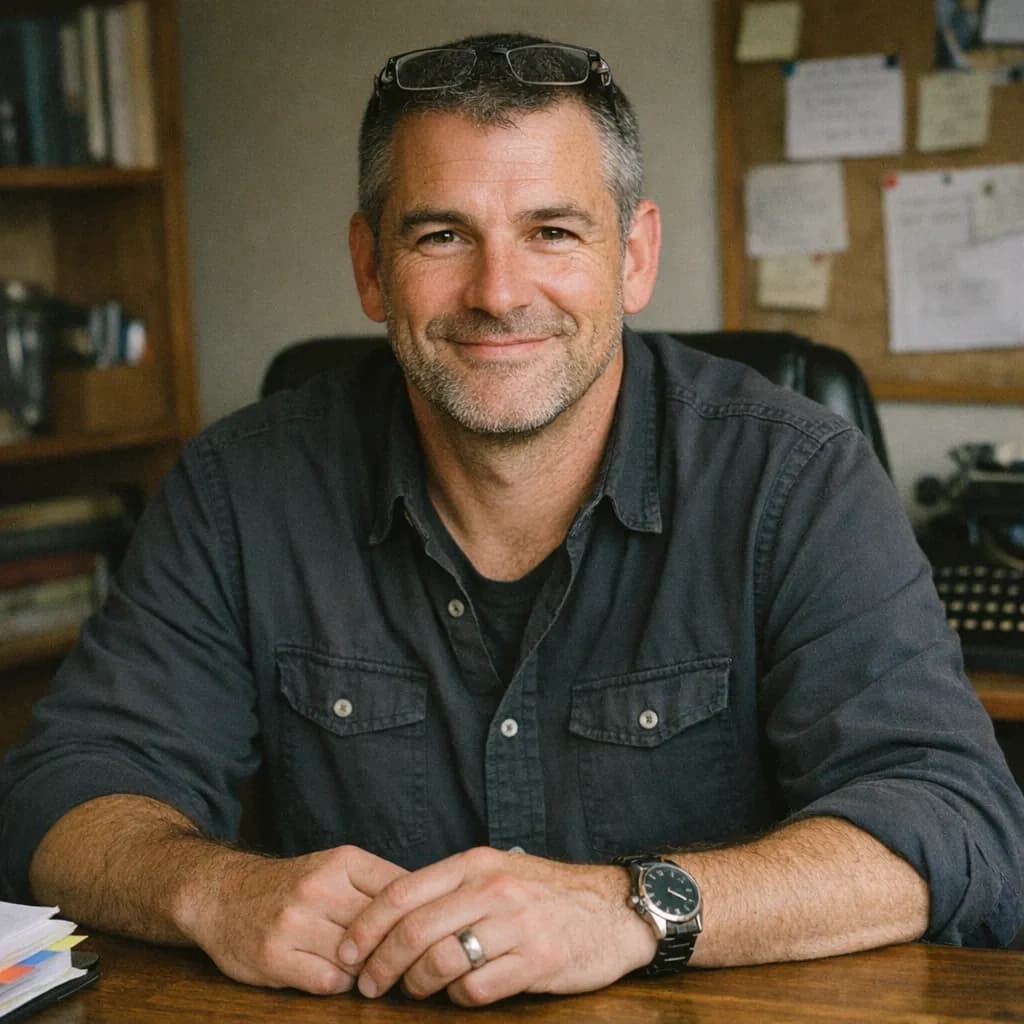
Callum Rhys Mahoney
Developmental Fiction Editor and Manuscript CoachI grew up between Wagga and my aunt’s place out near Narrandera, in a family that could argue for sport and then feed you like nothing happened. Books were around, but not in a precious way. My old man liked stories where people did what they said they’d do, even if it cost them. I still hear that voice when a character “can’t” make a decision because the plot needs another chapter. I didn’t set out to be an editor. I studied teaching, worked a few rough years in classrooms, and then left after a run of short contracts and one admin reshuffle that made it clear I was replaceable. A mate pulled me into doing learning materials and assessments because I could spot where people were gaming the question. That work taught me to watch for what the text rewards versus what it claims to reward - which is the same problem in a lot of manuscripts. I also spent a couple of seasons doing night shifts at a servo when money got tight. I kept a notebook behind the counter and wrote scenes between customers, mostly to stay awake. I remember one bloke coming in every Thursday, buying the same pie, and telling me the same story about a dog he swore was smarter than his ex. I don’t know why I remember that, but I do. Editing started as favour-work. People in town found out I’d read their drafts and I’d send back long emails with scene-by-scene notes. Somewhere along the line it became my paid work, mostly because I was consistent and because I’m not afraid to say, “This turn doesn’t belong to your protagonist.” I’m biased toward decisive characters and I don’t plan to cure myself of it; I’d rather a story risk an ugly choice than drift into polite inevitability.
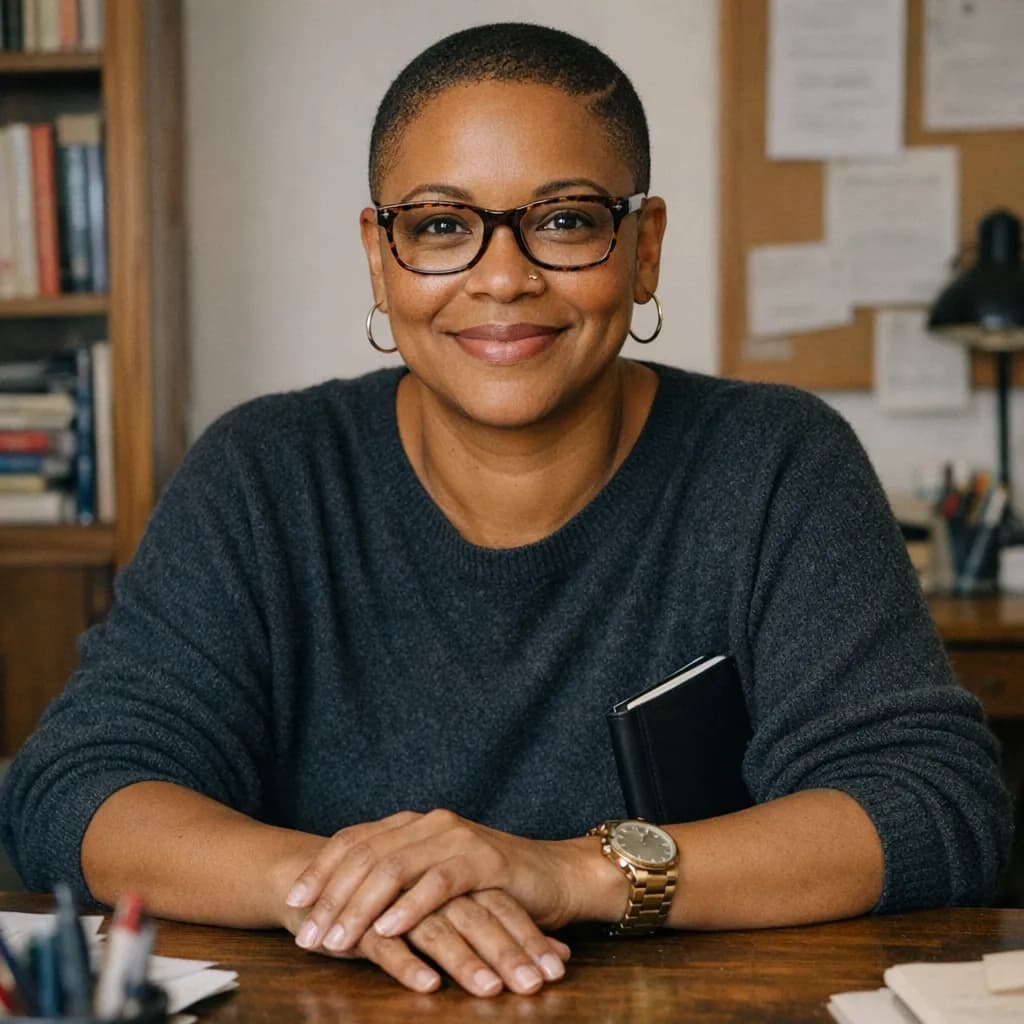
Danae Marcelline Brooks
Developmental Fiction Editor & Manuscript CoachI grew up between church basements, tidewater heat, and people who could tell a whole family story while stirring a pot and never looking up. My mom kept paperback romances in a shoebox like they were contraband, and my aunt kept a shelf of mystery novels with cracked spines. I read both. I learned early that readers forgive a lot, but they don’t forgive being bored or being lied to. I didn’t come up dreaming about editing. I wanted steadier work than “writer,” and I was the kid who could take notes fast, so I ended up in admin jobs where I got volunteered into fixing other people’s documents. Outside of that, I spent a couple years doing hair out of a friend’s kitchen. That part of my life doesn’t explain my editing, but it’s true: I still remember the sound of a cape snapping and how people tell you the most pointed truths when they think you’re not allowed to answer back. Sometimes I miss that kind of honesty. A storm took out power for a week when I was in my late twenties, and I agreed to help a neighbor organize a stack of workshop pages because there wasn’t much else to do at night. The pages were a mess, but the voice was alive. I wrote margin notes the way I talk, not the way school taught me, and the neighbor asked for more. That turned into being the person people handed drafts to. I still carry this old belief that if you “work hard enough,” the story will behave. I don’t defend it, but I catch myself acting like it’s true when I see a writer piling scenes on top of scenes. Now I’m a developmental editor because I’m impatient with pretty sentences that protect a story from making decisions. My bias is I’ll side-eye passive main characters harder than most editors will, even when the genre gives them excuses. I don’t correct that. It’s the lens I read through, and writers who want a gentler read should pick someone else. If you want a first reader who will point at the exact scene where your book starts dodging consequences, I’m your person.
Frequently Asked Questions
- What makes Invisible Cities so compelling for writers?
- Many people assume the book “works” because the language sounds beautiful. Beauty helps, but Calvino mainly wins through design: he uses a frame conversation (Marco Polo and Kublai Khan) to turn each city into a strategic answer, not a standalone vignette. The recurring categories create controlled repetition, so you feel momentum without a plot spine. If you borrow anything, borrow the pressure between speaker and listener, because that pressure keeps the fragments from floating away.
- How long is Invisible Cities?
- A common assumption says experimental books run long because they ramble. Invisible Cities stays relatively short—often around 160–180 pages depending on edition—because Calvino writes in concentrated units and lets pattern do the connective work. Each city reads fast, but the meaning compounds when you compare them. Treat length as a function of architecture: if your modules repeat without escalation, the same page count will feel twice as long to a reader.
- Is Invisible Cities appropriate for beginner writers?
- People often warn beginners away from “fragmentary” novels as if only experts can touch them. You can learn a lot from this book early, but you must study the constraints, not just the imagery. Calvino commits to a frame, a sequence, and a set of thematic bins, then he revises ideas across variations. Use it as a lesson in control. If you cannot explain what each fragment changes from the previous one, you will copy the style and miss the craft.
- What themes are explored in Invisible Cities?
- It’s tempting to label the themes as broad concepts like memory, desire, and death and stop there. Calvino treats those themes as operational forces that shape cities: how systems train attention, how naming changes what you can love, how perfect recall can become a prison, how growth can erase meaning. The frame adds a political edge: an emperor wants legibility, a traveler offers ambiguity. When you write theme, make it behave like physics in your world, not like a message.
- How does Invisible Cities create tension without a traditional plot?
- A common rule says you need escalating external conflict to keep pages turning. Calvino proves you can escalate interpretive conflict: each city raises the stakes of what the Khan believes about his empire and what Polo can responsibly say. The categories build expectation, then each variation complicates the previous “answer.” The court scenes intensify the interrogation, so the reader senses narrowing options. If you attempt this, make your listener character smarter and more demanding than you feel comfortable with.
- How do I write a book like Invisible Cities?
- Most writers assume they should start by inventing a pile of clever micro-worlds. Start instead with a frame argument: two characters with incompatible needs, where every fragment functions as a move in that argument. Then build constrained variation—same slots, different outcomes—so the reader tracks change, not just novelty. Finally, enforce consequence: each new piece must alter what the listener believes, fears, or decides. If your fragments don’t change anyone, you don’t have a book yet; you have notes.
About Italo Calvino
Use a strict story rule (a constraint) to create playful clarity—and make the reader trust your strange idea fast.
Calvino writes like a watchmaker who also happens to love fairy tales. He builds stories from clear, testable rules: a constraint, a lens, a game. Then he uses that structure to smuggle in emotion and philosophy without begging for it. The reader feels guided, not shoved, because each paragraph earns the next by logic, surprise, or a clean change of angle.
His core engine is controlled wonder. He makes you believe an impossible premise by treating it with calm precision, then he uses that belief to ask sharper questions than realism often can. Instead of “What happens next?”, he trains you to ask “What does this way of telling change?” That shift in reader psychology is the trick: you read for meaning as a moving target, not a hidden treasure.
The technical difficulty sits in the balance. Copycats grab the whimsy and forget the scaffolding. Calvino’s lightness comes from heavy planning: modular scenes, recurring patterns, and an exact sense of when to explain and when to withhold. He drafts like an architect: design the system first, then let the sentences walk around inside it.
Modern writers need him because he solved a problem you still have: how to stay intelligent on the page without sounding like you’re trying to win an argument. He changed the range of what “story” can do—making form itself a carrier of feeling—while keeping the prose readable enough to pull you forward.














Ready to improve your draft with direction?
Open Draftly, bring your draft, and move from stuck to a stronger draft without losing your voice. Editors are on standby when you want a deeper pass.
Free welcome credits included. No credit card needed.