Caricamento
Stiamo preparando tutto. Non ci vorrà molto.
Stiamo preparando tutto. Non ci vorrà molto.
Build a novel that feels infinite without losing the reader—learn Calvino’s modular “city engine” for structure, voice, and escalating stakes.
Trama del libro e analisi della scrittura di Invisible Cities di Italo Calvino.
Invisible Cities works because it disguises a high-stakes argument as a travelogue. The central dramatic question does not ask, “What happens next?” It asks, “How do you tell the truth about a world you can’t hold in one story—and what do you do when your listener only wants proof?” You watch Marco Polo try to make Kublai Khan see his empire clearly, while the Khan tries to trap Polo’s meaning inside maps, inventories, and control. That conflict drives everything.
The inciting incident lands in the framing scenes where Polo, newly arrived at the Khan’s court, cannot or will not speak the court’s language, so he performs his reports with objects, gestures, and pantomime. He forces interpretation. The Khan must supply meaning, and that act puts the Khan on the hook. If the Khan misreads, his empire misreads itself. Writers miss this and copy the book as “pretty descriptions.” Calvino starts with a communication problem, not a mood.
The setting stays concrete even when the cities float toward myth. You sit in Kublai Khan’s palace and gardens, within the administrative heart of a vast Mongol empire, late in the age of expansion, when an emperor starts to fear he built a machine too large to understand. Every return to the court reminds you that the cities do not exist as postcards; they exist as intelligence reports, seductions, evasions, and sometimes confessions. The court scenes anchor the book’s dream logic to a power dynamic you recognize.
The stakes escalate through structure, not plot twists. Polo’s cities arrive in themed clusters, and those clusters behave like a prosecutor’s sequence: memory, desire, signs, thin cities, trading cities, eyes, names, the dead, the sky, continuous cities, hidden cities. Each set tightens the net around one idea: the empire does not crumble because enemies attack; it crumbles because language, systems, and longing distort perception. Meanwhile, the Khan’s questions sharpen from curiosity into interrogation. He wants to know whether Polo describes real places, possible places, or warnings.
Calvino uses repetition as pressure. Cities echo each other with small mutations, so your mind starts doing the book’s work: you compare, you infer, you diagnose. The “engine” pushes you toward pattern-recognition, then punishes you for it by offering cities that break the pattern. That push-pull creates forward motion without conventional causality. If you imitate the surface, you will write interchangeable vignettes. If you imitate the engine, you will design variations that argue with each other.
Scopri gli editor specializzati in libri come questo, desiderosi di lavorare su progetti simili.
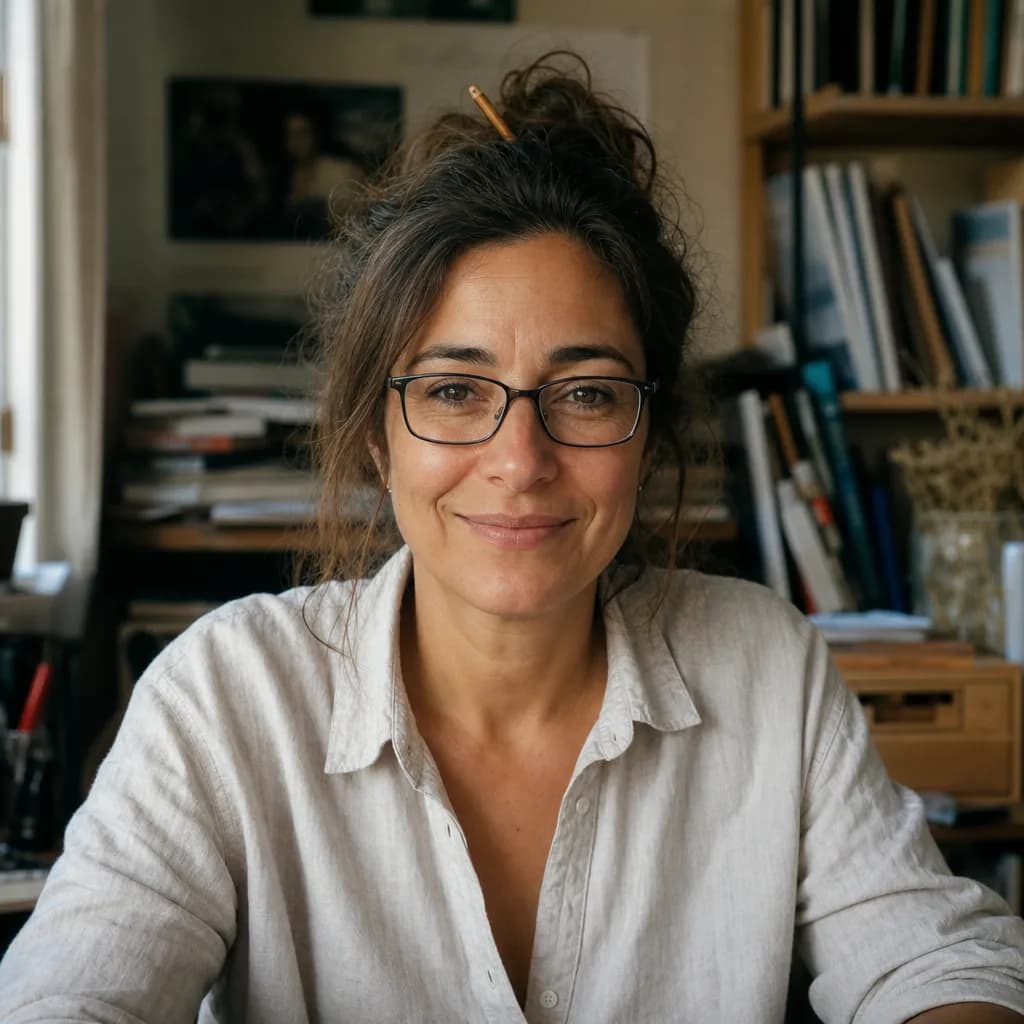
Sono cresciuta a Prato sopra una merceria di famiglia, tra rocchetti, fatture e telefonate in tre lingue. Mia madre parlava poco quando era stanca. Mio padre faceva conti su foglietti piegati in quattro. In casa i racconti finivano quasi sempre con qualcuno che aveva deciso troppo tardi. Mia nonna diceva: “Chi non decide, obbedisce.” Io me la sono scritta dentro, anche se oggi non sono sicura che sia vero. Però quando leggo un personaggio fermo troppo a lungo, la matita mi va da sola sul margine. Non sono arrivata ai libri con un piano. Ho studiato economia perché sembrava una cosa utile e perché in casa nessuno aveva voglia di discutere ancora di affitti, stipendi e futuro. Per un’estate ho riparato biciclette nell’officina di mio zio a Campi Bisenzio. Non c’entra molto con il mio lavoro, credo. Ricordo solo il grasso nero sotto le unghie e il rumore secco delle camere d’aria quando scoppiavano. Ancora oggi, quando una trama perde pressione, penso a quel suono prima di trovare le parole giuste. Il primo lavoro editoriale è arrivato per convenienza, non per vocazione. Una piccola casa editrice cercava qualcuno che sapesse usare bene Excel, leggere contratti e non spaventarsi davanti a manoscritti lunghi. Una redattrice era in maternità. Io avevo bisogno di pagare il mutuo. Ho iniziato sistemando schede, bozze, lettere agli autori. Poi mi hanno passato romanzi completi perché ero “quella che trovava dove la storia smetteva di fare i conti con se stessa”. Non era un complimento elegante, ma era abbastanza preciso. Adesso lavoro come editor generalista perché molti manoscritti non hanno un solo problema. Hanno una scelta mancata al capitolo tre, una promessa di genere dimenticata al centro, dialoghi che coprono il vuoto e un finale che arriva per comodità. So di essere più dura con i protagonisti contemplativi che con quelli impulsivi. Non provo a correggere del tutto questo limite. Nella Fiction posso accettare lentezza, ambiguità e silenzio, ma non accetto che il romanzo chieda al lettore di aspettare cento pagine prima di vedere qualcuno pagare il prezzo di una decisione.
Domande comuni su come scrivere un libro come Invisible Cities.
Use a strict story rule (a constraint) to create playful clarity—and make the reader trust your strange idea fast.
Calvino writes like a watchmaker who also happens to love fairy tales. He builds stories from clear, testable rules: a constraint, a lens, a game. Then he uses that structure to smuggle in emotion and philosophy without begging for it. The reader feels guided, not shoved, because each paragraph earns the next by logic, surprise, or a clean change of angle.
His core engine is controlled wonder. He makes you believe an impossible premise by treating it with calm precision, then he uses that belief to ask sharper questions than realism often can. Instead of “What happens next?”, he trains you to ask “What does this way of telling change?” That shift in reader psychology is the trick: you read for meaning as a moving target, not a hidden treasure.
The technical difficulty sits in the balance. Copycats grab the whimsy and forget the scaffolding. Calvino’s lightness comes from heavy planning: modular scenes, recurring patterns, and an exact sense of when to explain and when to withhold. He drafts like an architect: design the system first, then let the sentences walk around inside it.
Modern writers need him because he solved a problem you still have: how to stay intelligent on the page without sounding like you’re trying to win an argument. He changed the range of what “story” can do—making form itself a carrier of feeling—while keeping the prose readable enough to pull you forward.
Apri Draftly, porta la tua bozza e passa dall'impasse a una bozza più solida senza perdere la tua voce. Gli editor sono in attesa quando vuoi un'analisi più approfondita.
🤑 Crediti di benvenuto gratuiti inclusi. Nessuna carta di credito richiesta.The primary opposing force to Polo does not wear armor. It wears certainty. Kublai Khan represents the hunger to finalize meaning: to make the world legible, countable, governable. Polo represents the opposite urge: to keep meaning alive by keeping it plural. As the book progresses, you feel the Khan’s fatigue and dread grow. He senses that every map leaves something out, and every omission costs lives, beauty, or sanity.
The climax does not arrive as a battle; it arrives as a reframing. The Khan imagines the inferno of the living—an empire that already burns—and Polo offers the only “action” the book believes in: learn to recognize what does not belong to the inferno and give it space. That moment lands because Calvino built to it with accumulating evidence, not speeches. He earns the philosophy by making you live through the variations first.
If you try to write “like Calvino” by stacking lyrical miniatures, you will produce a museum brochure. Invisible Cities works because each city functions as a move in a contested conversation, and the conversation carries risk: misunderstanding, domination, and despair. Calvino never forgets the listener. You cannot either. Your fragments must aim at someone, and that someone must resist you.
Struttura della storia e arco emotivo in Invisible Cities.
The emotional trajectory runs as a subversive Man-in-Hole: wonder rises, then drains into dread, then steadies into a hard-earned, disciplined hope. Marco Polo begins as an emissary who can still treat description as play. He ends as a witness who treats description as ethical work. Kublai Khan starts hungry for total knowledge and ends facing the limits of knowledge without fully surrendering his need to order the world.
Key sentiment shifts land because Calvino alternates intoxication and diagnosis. The cities seduce you with impossible elegance, then the court scenes snap you back to power, boredom, and fear. Low points hit when the Khan’s questions turn from “Tell me” into “Prove it,” because that demand threatens to kill the very imagination that keeps the empire human. The closing lift does not erase the darkness; it teaches you how to look at it without turning away.
Cosa possono imparare gli scrittori da Italo Calvino in Invisible Cities.
Calvino builds a novel out of modules, then he hides the rivets. Each “city” operates like a prose poem with a job: it embodies one idea in spatial form, then hands that idea to the next city to contradict, refine, or corrupt. He uses constrained categories (memory, desire, signs, names, the dead, and so on) the way a composer uses movements. You feel freedom because he commits to rules. Modern writers often chase “vibes” and call it structure; Calvino proves you can keep the dream and still run a machine.
He also solves a problem most writers dodge: how to create suspense without plot escalation. He does it through interpretive suspense. You keep asking, “What do these cities mean, and why does Polo choose this one now?” Repetition does the heavy lifting. A bridge appears, then appears again as absence, then as obsession. A city doubles, then doubles the doubling. That patterning trains you to read actively, then rewards you with sudden clarity when you spot the hidden argument.
Watch the dialogue between Marco Polo and Kublai Khan. The Khan pushes for certainty, the kind a ruler can file and act on; Polo answers with images that refuse to sit still. When the Khan challenges the reliability of words and the usefulness of maps, Calvino stages the writer’s oldest fight: the listener who wants utility versus the speaker who knows utility can become violence. Many modern books dump “philosophical” lines into a character’s mouth and hope you call it depth. Calvino makes philosophy a tug-of-war between two named people with incompatible needs.
Even the atmosphere teaches craft. The palace scenes—an emperor among gardens, chessboards, and administrative fantasies—feel quiet, but they throb with dread: the sense that the empire already exceeds human scale. Then the cities flash like lantern slides: Zaira as memory architecture, Zora as a trap of perfect recall, the trading cities as desire with a ledger. Calvino never world-builds by inventory. He world-builds by pressure: each place forces a human choice, then shows the cost of choosing wrong.
Consigli di scrittura ispirati a Invisible Cities di Italo Calvino.
Write your narrator like you mean it. Calvino’s voice sounds calm, but it never feels neutral. He chooses sentences that act like careful hands: they pick up an image, turn it, and set it down so you see the underside. If you only chase “lyrical,” you will smear meaning. Give each paragraph a point of view on the world, not just a description of it. And keep your humor dry. A tiny, precise joke can puncture grandness and make the next line hit harder.
Do not treat character as optional because you plan to write fragments. Polo and Kublai Khan carry the book on their backs. You learn them through what they demand, what they fear, and what they refuse to accept, not through backstory dumps. Build your two forces the same way. One character must need certainty, control, proof, or closure. The other must need multiplicity, ambiguity, play, or mercy. Then let every “fragment” function as a move in their ongoing negotiation.
Avoid the prestige trap of interchangeable vignettes. Readers forgive abstraction when you give them consequence. Calvino avoids sameness by engineering variation with teeth: each city revises an earlier city’s promise and exposes a new failure mode of the same desire. If your pieces could shuffle without changing the effect, you wrote a scrapbook, not a book. Make sequence matter. Make category matter. Make the framing scenes tighten, so the reader feels time passing and patience running out.
Try this exercise and do it straight. Invent eleven places, each built to embody one human need you actually struggle with. Use the same template every time: name the place, give one governing rule, show one sensory detail, then reveal the hidden cost in the final line. After every two places, write a short dialogue exchange between a storyteller and a skeptical listener who wants proof. Let the listener’s questions force the next place. When you finish, reorder nothing. Rewrite until the order feels inevitable.

Metti la tua bozza in Draftly. Correggi scene e dialoghi nel testo — non in un'altra scheda. Quando vuoi un feedback più preciso, gli editor AI sono pronti.
🤑 Crediti di benvenuto gratuiti inclusi. Nessuna carta di credito richiesta.