The Savage Detectives
Book Summary & Analysis
Book summary and writing analysis of The Savage Detectives by Roberto Bolaño.
The Savage Detectives works because it treats story like an investigation with missing evidence, not like a straight line with a neat payoff. The central dramatic question never asks “Will the hero win?” It asks “Who were these people really—and what did they do to everyone who met them?” You keep reading because each new account changes the shape of the last one. Bolaño makes absence do the heavy lifting: the more you can’t pin Belano and Lima down, the more force they generate.
The inciting incident sits in Mexico City, 1975–76, inside cafés, apartments, and poetry readings where young writers posture, feud, and recruit. Juan García Madero, a teen diarist, joins the “visceral realists,” and he doesn’t just join a group—he adopts a way of seeing. He starts naming names, tallying quarrels, recording sexual bravado, and taking poetry seriously enough to ruin his life for it. If you imitate this book naïvely, you’ll copy the bohemian chatter and miss the real inciting mechanism: the moment the narrator binds himself to a cause that demands action, not vibes.
The protagonist role splits. On the surface, García Madero anchors the opening and closing through his diary. In the broader architecture, Arturo Belano and Ulises Lima function as the gravitational center: the protagonists you rarely get direct access to, the ones everyone else orbits. The primary opposing force looks like “society” at first—poverty, authority, literary gatekeepers—but the true antagonist acts more specific: time plus the characters’ own hunger for myth. Every year that passes turns their choices into legend, and legend fights back against truth.
Bolaño escalates stakes by widening the lens instead of raising the body count. After the early Mexico City sections establish appetite and allegiance, the book detonates into a long relay of testimonies spanning continents and decades: Barcelona, Paris, Tel Aviv, Vienna, Managua, the Sonoran Desert. Each witness carries a private stake—love, resentment, debt, envy, gratitude—and each stake pressures the reader’s understanding of Belano/Lima. The “plot” becomes: watch how a small movement of poets leaves wreckage, inspiration, and confusion across a whole generation.
The structure runs on a simple pressure system: a quest you can state plainly, and a method that refuses to deliver it cleanly. The characters chase Cesárea Tinajero, an elusive poet tied to their movement’s origin myth. Bolaño turns that chase into a test of devotion. Who will cross a city at night, skip work, sleep on floors, risk violence, and keep believing? The quest gives you direction; the chorus of voices gives you friction.
The climax doesn’t land because it “resolves the mystery.” It lands because it forces the book’s two modes—youthful immediacy and adult recollection—into contact. When the story reaches the desert and the pursuit turns physical, you feel how the earlier talk and theory always carried a blade inside it. Then the ending refuses the comfort of tidy meaning. Bolaño makes you accept a writer’s hardest lesson: some stories end with a shape, not an answer.
Here’s the common mistake: writers try to copy the fragmented interviews and think fragmentation equals depth. It doesn’t. Bolaño earns fragmentation by giving every speaker a motive, a social position, and a private angle on the central absence. Each voice advances the investigation while betraying the witness. If your fragments don’t change the reader’s understanding of the core figures, you don’t have a mosaic. You have a pile of postcards.
Under pressure, the novel proves you can build suspense without hiding “twists.” You reveal everything—sex, failures, petty rivalries, embarrassing ambition—and still create compulsion because you make identity the mystery. You don’t ask “What happened next?” You ask “What kind of person does that?” And you let the answers contradict each other until the reader starts doing the work a real editor wants: interpreting, weighing, doubting, deciding.
Story Structure & Narrative Arc
Story structure and emotional arc in The Savage Detectives.
The emotional trajectory runs as a subversive Man-in-a-Hole that keeps changing who counts as “the man.” García Madero starts intoxicated by belonging—young, eager, convinced art will fix his life. By the end, the book leaves you with motion instead of closure: the protagonists keep moving, and the emotional state shifts from certainty to a lucid, bruised ambiguity.
Key sentiment shifts hit because Bolaño stacks intimacy against distance. The diary sections give you heat, appetite, and immediate consequence; the testimony section cools everything into memory, damage reports, and nostalgia with teeth. The low points land when witnesses reveal how charisma curdles into neglect, and how “freedom” often means someone else pays. The climactic desert sequence spikes force because the book finally converts years of talk into physical risk, then refuses to hand you a moral that would make the pain feel useful.

Studying this book—and stuck on your pages?
Put your draft in Draftly. Fix scenes and dialogue in the text—not in another tab. When you want sharper feedback, AI editors are ready.
Free welcome credits included. No credit card needed.Writing Lessons from The Savage Detectives
What writers can learn from Roberto Bolaño in The Savage Detectives.
Bolaño shows you how to make structure out of testimony. He doesn’t write “multiple POV” the way a lot of modern novels do, where each voice carries equal authority and the author quietly arranges them into a single, correct meaning. He writes witnesses who talk to protect themselves, impress the listener, settle scores, or finally confess. That motive gives every monologue a hook. You don’t read to collect facts; you read to watch people reveal themselves while they pretend they talk about someone else.
He also uses a missing center as a propulsion system. Belano and Lima rarely explain themselves directly, so every speaker projects onto them: saint, parasite, genius, coward, brother. That projection creates a living argument on the page. You can reuse this engine right now: pick one figure who refuses to “clarify,” then force a rotating cast to define them—and contradict each other—under social pressure. The book keeps its promises by delivering constant redefinition, not constant plot.
Pay attention to how he handles dialogue as status combat, not information transfer. When García Madero sits with older poets and gatekeepers, they don’t “discuss literature.” They fence. They test his seriousness, his vocabulary, his sexual confidence, his willingness to be humiliated for admission. And when Belano and Lima confront the establishment poet Octavio Paz’s shadow (and the scene that venerates it), Bolaño frames the exchange as a fight over who gets to name reality. If you write scene dialogue as friendly explanation, you kill this book’s voltage.
He builds atmosphere through specific rooms and routes, not through mood paragraphs. You smell Mexico City through cramped apartments, late-night cafés, cheap drinks, the walk between readings, the sudden drop into the Sonoran Desert’s indifferent space. That concreteness keeps the book from floating off into “bohemian” wallpaper. A common shortcut today replaces lived geography with aesthetic tags—playlist energy, vibes, “found family” banter. Bolaño does the opposite: he lets place constrain behavior, and he lets behavior expose character, even when it makes the characters look ridiculous.
How to Write Like Roberto Bolaño
Writing tips inspired by Roberto Bolaño's The Savage Detectives.
Control your voice like you control temperature. This book sounds loose, but Bolaño calibrates each voice to a social class, an education level, and a private wound. If you want the effect, stop chasing “cool” lines and start chasing credibility. Give each narrator a tell: what they over-explain, what they refuse to name, what they brag about to cover fear. Then keep the sentences clean. You can sound wild without writing sloppy.
Build characters by designing their orbit, not their backstory. Belano and Lima work because other people can’t stop talking about them, and because those descriptions expose the speaker’s needs. If you try to imitate the novel by inventing a hundred quirky witnesses, you’ll drown. Instead, cast witnesses with opposing stakes: the lover, the rival, the student, the benefactor, the victim, the hanger-on. Make each one answer the same question about your central figures, and force the answers to clash.
Avoid the genre trap of “fragmentation as camouflage.” A lot of literary quest novels hide thin plotting behind stylish discontinuity. Bolaño avoids that by keeping a hard spine: a specific origin myth, a specific search, and a timeline that keeps grinding forward even when the book jumps. If you can’t state your quest in one sentence and name what your characters sacrifice to pursue it, your fragments won’t feel mysterious. They’ll feel evasive.
Run this exercise for two weeks. Invent a legendary pair in your own scene and refuse to let them narrate. Write ten testimonies of 600–900 words each from people who met them in different cities and years. Give each witness a private reason to distort the truth. In every piece, include one concrete object that proves the meeting happened and one line that accidentally reveals the witness’s self-interest. After the tenth, write a short diary entry from a naïve newcomer who decides to join the myth anyway.
Who Would Edit This Book?
Callum Rhys Mahoney
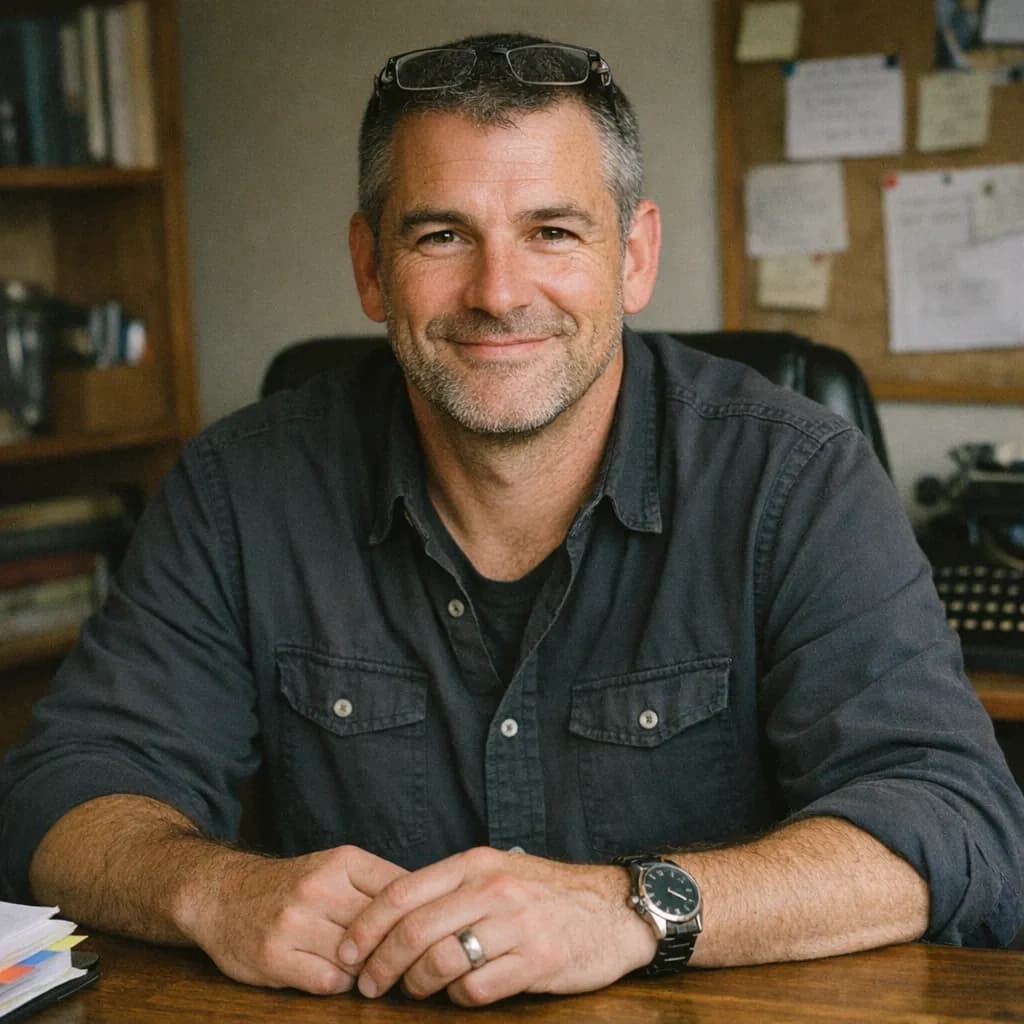
Developmental Fiction Editor and Manuscript CoachI grew up between Wagga and my aunt’s place out near Narrandera, in a family that could argue for sport and then feed you like nothing happened. Books were around, but not in a precious way. My old man liked stories where people did what they said they’d do, even if it cost them. I still hear that voice when a character “can’t” make a decision because the plot needs another chapter. I didn’t set out to be an editor. I studied teaching, worked a few rough years in classrooms, and then left after a run of short contracts and one admin reshuffle that made it clear I was replaceable. A mate pulled me into doing learning materials and assessments because I could spot where people were gaming the question. That work taught me to watch for what the text rewards versus what it claims to reward - which is the same problem in a lot of manuscripts. I also spent a couple of seasons doing night shifts at a servo when money got tight. I kept a notebook behind the counter and wrote scenes between customers, mostly to stay awake. I remember one bloke coming in every Thursday, buying the same pie, and telling me the same story about a dog he swore was smarter than his ex. I don’t know why I remember that, but I do. Editing started as favour-work. People in town found out I’d read their drafts and I’d send back long emails with scene-by-scene notes. Somewhere along the line it became my paid work, mostly because I was consistent and because I’m not afraid to say, “This turn doesn’t belong to your protagonist.” I’m biased toward decisive characters and I don’t plan to cure myself of it; I’d rather a story risk an ugly choice than drift into polite inevitability.

Danae Marcelline Brooks
Developmental Fiction Editor & Manuscript CoachI grew up between church basements, tidewater heat, and people who could tell a whole family story while stirring a pot and never looking up. My mom kept paperback romances in a shoebox like they were contraband, and my aunt kept a shelf of mystery novels with cracked spines. I read both. I learned early that readers forgive a lot, but they don’t forgive being bored or being lied to. I didn’t come up dreaming about editing. I wanted steadier work than “writer,” and I was the kid who could take notes fast, so I ended up in admin jobs where I got volunteered into fixing other people’s documents. Outside of that, I spent a couple years doing hair out of a friend’s kitchen. That part of my life doesn’t explain my editing, but it’s true: I still remember the sound of a cape snapping and how people tell you the most pointed truths when they think you’re not allowed to answer back. Sometimes I miss that kind of honesty. A storm took out power for a week when I was in my late twenties, and I agreed to help a neighbor organize a stack of workshop pages because there wasn’t much else to do at night. The pages were a mess, but the voice was alive. I wrote margin notes the way I talk, not the way school taught me, and the neighbor asked for more. That turned into being the person people handed drafts to. I still carry this old belief that if you “work hard enough,” the story will behave. I don’t defend it, but I catch myself acting like it’s true when I see a writer piling scenes on top of scenes. Now I’m a developmental editor because I’m impatient with pretty sentences that protect a story from making decisions. My bias is I’ll side-eye passive main characters harder than most editors will, even when the genre gives them excuses. I don’t correct that. It’s the lens I read through, and writers who want a gentler read should pick someone else. If you want a first reader who will point at the exact scene where your book starts dodging consequences, I’m your person.
Frequently Asked Questions
- What makes The Savage Detectives so compelling?
- A common assumption says readers need a tight plot and a single reliable narrator to stay hooked. Bolaño proves the opposite: he hooks you with a pursuit and keeps you with a chorus of biased witnesses who reshape the pursuit every time they speak. The book turns identity into the mystery, so each story acts like new evidence in a case you can’t close. If you borrow the approach, track what each new voice changes in the reader’s belief, not what it repeats about “the vibe.”
- How long is The Savage Detectives?
- People often assume length equals sprawl, and sprawl equals indulgence. The Savage Detectives runs long (often published around 550–650 pages in English editions), but the length supports its method: it needs many testimonies to create a credible legend with real contradictions and fallout. For craft study, you don’t need to read it like a sprint; you can map how each section shifts your interpretation of the central figures. Measure the book by momentum per page, not page count.
- How is The Savage Detectives structured?
- Many readers expect a three-act plot with clean escalation and payoff. Bolaño uses a framed structure: diary sections at the beginning and end, and a massive middle made of interviews/monologues across years and countries. That middle doesn’t “stall” the story; it becomes the story, because it converts events into reputation, rumor, and consequence. If you want to emulate it, design a spine question that stays stable while the method of answering it stays unstable.
- What themes are explored in The Savage Detectives?
- A common rule says themes should appear as tidy statements characters learn by the end. Bolaño handles theme as lived contradiction: art as salvation and as excuse, friendship as loyalty and as dependency, youth as freedom and as self-harm, exile as liberation and as erasure. He embeds these ideas in choices—who gets left behind, who gets mythologized, who pays the bill. When you write them, put theme under pressure in scenes, not in speeches.
- Is The Savage Detectives appropriate for new writers to study?
- Some people think new writers should only study clean, conventional storytelling first. You can study Bolaño early, but you must study him like an engineer, not like a fan: track motive, voice control, and structural promises. The book includes explicit sex, drugs, and violence-adjacent episodes, so content may distract if you focus on shock instead of technique. Use a notebook and mark what each voice wants, what it hides, and how it changes your judgment.
- How do I write a book like The Savage Detectives?
- The tempting misconception says you can copy the surface: fragmented testimonies, bohemian chatter, a roaming cast, and some literary name-dropping. Bolaño’s real trick lies underneath: he gives you a quest, then makes every witness a biased instrument that bends the quest into a portrait of desire and damage. Start by defining your missing center, then cast witnesses with conflicting stakes, and force each scene to alter the reader’s belief. Revise for consequence: every voice must cost someone something.
About Roberto Bolaño
Use witness-style narration (testimony, lists, reports) to create credibility fast—then withhold the motive so the reader supplies the dread.
Roberto Bolaño writes like an investigator who refuses to solve the case. He builds meaning by stacking testimonies, rumors, letters, travel anecdotes, and half-remembered scenes until the reader starts doing the joining-up. The trick is not “mystery.” It’s delegated attention: he makes you notice what the characters refuse to name, then he leaves you alone with it.
His engine runs on drift with purpose. He lets scenes wander through bookstores, cheap rooms, deserts, bars, and conversations that feel offhand—then he locks in a detail that changes the temperature. The reader’s psychology flips from relaxed to alert because the narration acts casual while the stakes keep creeping up.
The technical difficulty hides in the balance. Bolaño keeps a plain surface and an unstable structure: long stretches of report-like calm, sudden lyric spikes, and hard cuts that pretend they aren’t cuts. He also knows when to withhold the “why.” He offers credible specificity (names, dates, jobs, addresses) so you’ll accept spiritual uncertainty.
Modern writers need him because he proved you can write big moral novels without tidy moral math. He showed how to make a story feel like a continent: partially mapped, full of dead ends, and still compulsive. His drafting approach often favored accumulation—writing outward, collecting fragments—then revising by arrangement: what to place next, what to omit, and where to stop so the silence keeps working after the last line.














Ready to improve your draft with direction?
Open Draftly, bring your draft, and move from stuck to a stronger draft without losing your voice. Editors are on standby when you want a deeper pass.
Free welcome credits included. No credit card needed.