Caricamento
Stiamo preparando tutto. Non ci vorrà molto.
Stiamo preparando tutto. Non ci vorrà molto.
Write a novel that feels bigger than its plot—by learning Bolaño’s engine: how to turn witnesses, rumor, and absence into relentless narrative momentum.
Trama del libro e analisi della scrittura di The Savage Detectives di Roberto Bolaño.
The Savage Detectives works because it treats story like an investigation with missing evidence, not like a straight line with a neat payoff. The central dramatic question never asks “Will the hero win?” It asks “Who were these people really—and what did they do to everyone who met them?” You keep reading because each new account changes the shape of the last one. Bolaño makes absence do the heavy lifting: the more you can’t pin Belano and Lima down, the more force they generate.
The inciting incident sits in Mexico City, 1975–76, inside cafés, apartments, and poetry readings where young writers posture, feud, and recruit. Juan García Madero, a teen diarist, joins the “visceral realists,” and he doesn’t just join a group—he adopts a way of seeing. He starts naming names, tallying quarrels, recording sexual bravado, and taking poetry seriously enough to ruin his life for it. If you imitate this book naïvely, you’ll copy the bohemian chatter and miss the real inciting mechanism: the moment the narrator binds himself to a cause that demands action, not vibes.
The protagonist role splits. On the surface, García Madero anchors the opening and closing through his diary. In the broader architecture, Arturo Belano and Ulises Lima function as the gravitational center: the protagonists you rarely get direct access to, the ones everyone else orbits. The primary opposing force looks like “society” at first—poverty, authority, literary gatekeepers—but the true antagonist acts more specific: time plus the characters’ own hunger for myth. Every year that passes turns their choices into legend, and legend fights back against truth.
Bolaño escalates stakes by widening the lens instead of raising the body count. After the early Mexico City sections establish appetite and allegiance, the book detonates into a long relay of testimonies spanning continents and decades: Barcelona, Paris, Tel Aviv, Vienna, Managua, the Sonoran Desert. Each witness carries a private stake—love, resentment, debt, envy, gratitude—and each stake pressures the reader’s understanding of Belano/Lima. The “plot” becomes: watch how a small movement of poets leaves wreckage, inspiration, and confusion across a whole generation.
The structure runs on a simple pressure system: a quest you can state plainly, and a method that refuses to deliver it cleanly. The characters chase Cesárea Tinajero, an elusive poet tied to their movement’s origin myth. Bolaño turns that chase into a test of devotion. Who will cross a city at night, skip work, sleep on floors, risk violence, and keep believing? The quest gives you direction; the chorus of voices gives you friction.
Scopri gli editor specializzati in libri come questo, desiderosi di lavorare su progetti simili.
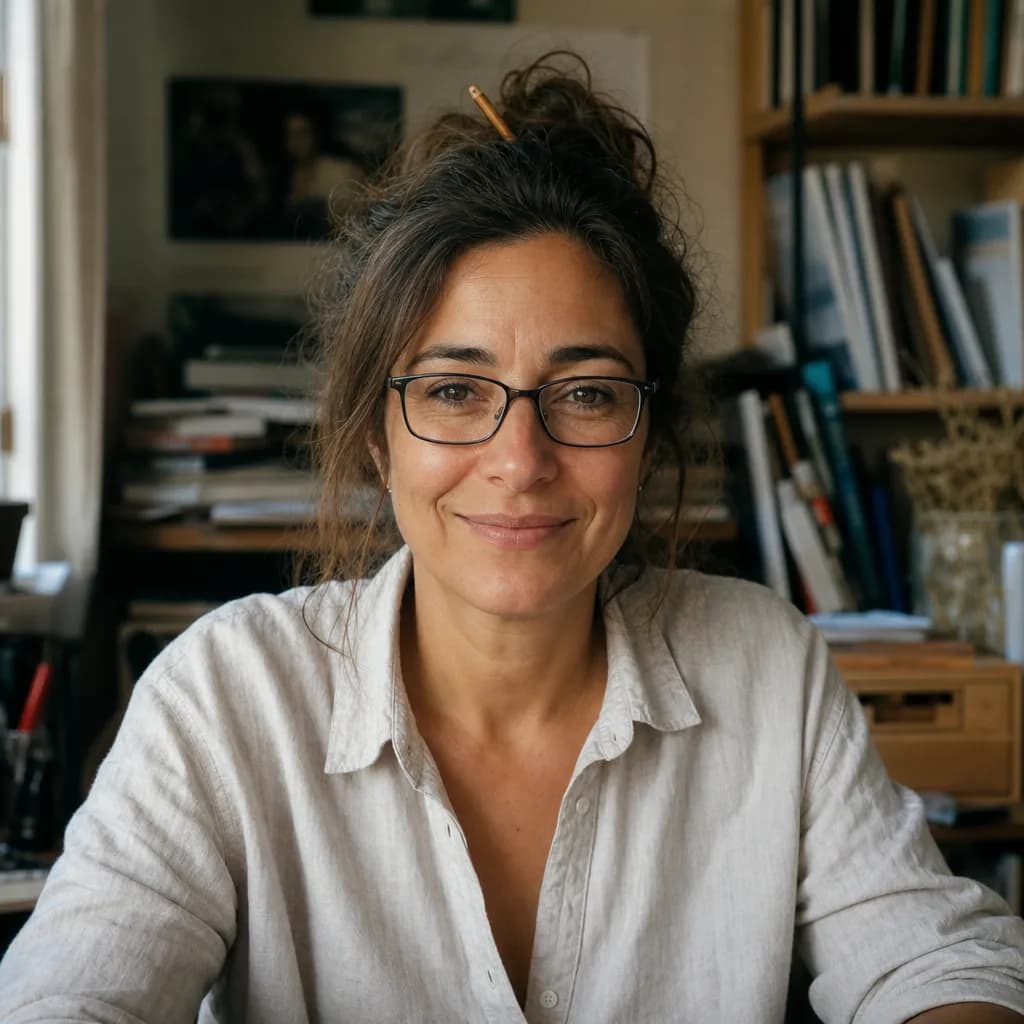
Sono cresciuta a Prato sopra una merceria di famiglia, tra rocchetti, fatture e telefonate in tre lingue. Mia madre parlava poco quando era stanca. Mio padre faceva conti su foglietti piegati in quattro. In casa i racconti finivano quasi sempre con qualcuno che aveva deciso troppo tardi. Mia nonna diceva: “Chi non decide, obbedisce.” Io me la sono scritta dentro, anche se oggi non sono sicura che sia vero. Però quando leggo un personaggio fermo troppo a lungo, la matita mi va da sola sul margine. Non sono arrivata ai libri con un piano. Ho studiato economia perché sembrava una cosa utile e perché in casa nessuno aveva voglia di discutere ancora di affitti, stipendi e futuro. Per un’estate ho riparato biciclette nell’officina di mio zio a Campi Bisenzio. Non c’entra molto con il mio lavoro, credo. Ricordo solo il grasso nero sotto le unghie e il rumore secco delle camere d’aria quando scoppiavano. Ancora oggi, quando una trama perde pressione, penso a quel suono prima di trovare le parole giuste. Il primo lavoro editoriale è arrivato per convenienza, non per vocazione. Una piccola casa editrice cercava qualcuno che sapesse usare bene Excel, leggere contratti e non spaventarsi davanti a manoscritti lunghi. Una redattrice era in maternità. Io avevo bisogno di pagare il mutuo. Ho iniziato sistemando schede, bozze, lettere agli autori. Poi mi hanno passato romanzi completi perché ero “quella che trovava dove la storia smetteva di fare i conti con se stessa”. Non era un complimento elegante, ma era abbastanza preciso. Adesso lavoro come editor generalista perché molti manoscritti non hanno un solo problema. Hanno una scelta mancata al capitolo tre, una promessa di genere dimenticata al centro, dialoghi che coprono il vuoto e un finale che arriva per comodità. So di essere più dura con i protagonisti contemplativi che con quelli impulsivi. Non provo a correggere del tutto questo limite. Nella Fiction posso accettare lentezza, ambiguità e silenzio, ma non accetto che il romanzo chieda al lettore di aspettare cento pagine prima di vedere qualcuno pagare il prezzo di una decisione.
Domande comuni su come scrivere un libro come The Savage Detectives.
Use witness-style narration (testimony, lists, reports) to create credibility fast—then withhold the motive so the reader supplies the dread.
Roberto Bolaño writes like an investigator who refuses to solve the case. He builds meaning by stacking testimonies, rumors, letters, travel anecdotes, and half-remembered scenes until the reader starts doing the joining-up. The trick is not “mystery.” It’s delegated attention: he makes you notice what the characters refuse to name, then he leaves you alone with it.
His engine runs on drift with purpose. He lets scenes wander through bookstores, cheap rooms, deserts, bars, and conversations that feel offhand—then he locks in a detail that changes the temperature. The reader’s psychology flips from relaxed to alert because the narration acts casual while the stakes keep creeping up.
The technical difficulty hides in the balance. Bolaño keeps a plain surface and an unstable structure: long stretches of report-like calm, sudden lyric spikes, and hard cuts that pretend they aren’t cuts. He also knows when to withhold the “why.” He offers credible specificity (names, dates, jobs, addresses) so you’ll accept spiritual uncertainty.
Modern writers need him because he proved you can write big moral novels without tidy moral math. He showed how to make a story feel like a continent: partially mapped, full of dead ends, and still compulsive. His drafting approach often favored accumulation—writing outward, collecting fragments—then revising by arrangement: what to place next, what to omit, and where to stop so the silence keeps working after the last line.
Apri Draftly, porta la tua bozza e passa dall'impasse a una bozza più solida senza perdere la tua voce. Gli editor sono in attesa quando vuoi un'analisi più approfondita.
🤑 Crediti di benvenuto gratuiti inclusi. Nessuna carta di credito richiesta.The climax doesn’t land because it “resolves the mystery.” It lands because it forces the book’s two modes—youthful immediacy and adult recollection—into contact. When the story reaches the desert and the pursuit turns physical, you feel how the earlier talk and theory always carried a blade inside it. Then the ending refuses the comfort of tidy meaning. Bolaño makes you accept a writer’s hardest lesson: some stories end with a shape, not an answer.
Here’s the common mistake: writers try to copy the fragmented interviews and think fragmentation equals depth. It doesn’t. Bolaño earns fragmentation by giving every speaker a motive, a social position, and a private angle on the central absence. Each voice advances the investigation while betraying the witness. If your fragments don’t change the reader’s understanding of the core figures, you don’t have a mosaic. You have a pile of postcards.
Under pressure, the novel proves you can build suspense without hiding “twists.” You reveal everything—sex, failures, petty rivalries, embarrassing ambition—and still create compulsion because you make identity the mystery. You don’t ask “What happened next?” You ask “What kind of person does that?” And you let the answers contradict each other until the reader starts doing the work a real editor wants: interpreting, weighing, doubting, deciding.
Struttura della storia e arco emotivo in The Savage Detectives.
The emotional trajectory runs as a subversive Man-in-a-Hole that keeps changing who counts as “the man.” García Madero starts intoxicated by belonging—young, eager, convinced art will fix his life. By the end, the book leaves you with motion instead of closure: the protagonists keep moving, and the emotional state shifts from certainty to a lucid, bruised ambiguity.
Key sentiment shifts hit because Bolaño stacks intimacy against distance. The diary sections give you heat, appetite, and immediate consequence; the testimony section cools everything into memory, damage reports, and nostalgia with teeth. The low points land when witnesses reveal how charisma curdles into neglect, and how “freedom” often means someone else pays. The climactic desert sequence spikes force because the book finally converts years of talk into physical risk, then refuses to hand you a moral that would make the pain feel useful.
Cosa possono imparare gli scrittori da Roberto Bolaño in The Savage Detectives.
Bolaño shows you how to make structure out of testimony. He doesn’t write “multiple POV” the way a lot of modern novels do, where each voice carries equal authority and the author quietly arranges them into a single, correct meaning. He writes witnesses who talk to protect themselves, impress the listener, settle scores, or finally confess. That motive gives every monologue a hook. You don’t read to collect facts; you read to watch people reveal themselves while they pretend they talk about someone else.
He also uses a missing center as a propulsion system. Belano and Lima rarely explain themselves directly, so every speaker projects onto them: saint, parasite, genius, coward, brother. That projection creates a living argument on the page. You can reuse this engine right now: pick one figure who refuses to “clarify,” then force a rotating cast to define them—and contradict each other—under social pressure. The book keeps its promises by delivering constant redefinition, not constant plot.
Pay attention to how he handles dialogue as status combat, not information transfer. When García Madero sits with older poets and gatekeepers, they don’t “discuss literature.” They fence. They test his seriousness, his vocabulary, his sexual confidence, his willingness to be humiliated for admission. And when Belano and Lima confront the establishment poet Octavio Paz’s shadow (and the scene that venerates it), Bolaño frames the exchange as a fight over who gets to name reality. If you write scene dialogue as friendly explanation, you kill this book’s voltage.
He builds atmosphere through specific rooms and routes, not through mood paragraphs. You smell Mexico City through cramped apartments, late-night cafés, cheap drinks, the walk between readings, the sudden drop into the Sonoran Desert’s indifferent space. That concreteness keeps the book from floating off into “bohemian” wallpaper. A common shortcut today replaces lived geography with aesthetic tags—playlist energy, vibes, “found family” banter. Bolaño does the opposite: he lets place constrain behavior, and he lets behavior expose character, even when it makes the characters look ridiculous.
Consigli di scrittura ispirati a The Savage Detectives di Roberto Bolaño.
Control your voice like you control temperature. This book sounds loose, but Bolaño calibrates each voice to a social class, an education level, and a private wound. If you want the effect, stop chasing “cool” lines and start chasing credibility. Give each narrator a tell: what they over-explain, what they refuse to name, what they brag about to cover fear. Then keep the sentences clean. You can sound wild without writing sloppy.
Build characters by designing their orbit, not their backstory. Belano and Lima work because other people can’t stop talking about them, and because those descriptions expose the speaker’s needs. If you try to imitate the novel by inventing a hundred quirky witnesses, you’ll drown. Instead, cast witnesses with opposing stakes: the lover, the rival, the student, the benefactor, the victim, the hanger-on. Make each one answer the same question about your central figures, and force the answers to clash.
Avoid the genre trap of “fragmentation as camouflage.” A lot of literary quest novels hide thin plotting behind stylish discontinuity. Bolaño avoids that by keeping a hard spine: a specific origin myth, a specific search, and a timeline that keeps grinding forward even when the book jumps. If you can’t state your quest in one sentence and name what your characters sacrifice to pursue it, your fragments won’t feel mysterious. They’ll feel evasive.
Run this exercise for two weeks. Invent a legendary pair in your own scene and refuse to let them narrate. Write ten testimonies of 600–900 words each from people who met them in different cities and years. Give each witness a private reason to distort the truth. In every piece, include one concrete object that proves the meeting happened and one line that accidentally reveals the witness’s self-interest. After the tenth, write a short diary entry from a naïve newcomer who decides to join the myth anyway.

Metti la tua bozza in Draftly. Correggi scene e dialoghi nel testo — non in un'altra scheda. Quando vuoi un feedback più preciso, gli editor AI sono pronti.
🤑 Crediti di benvenuto gratuiti inclusi. Nessuna carta di credito richiesta.