Chargement
Nous préparons tout. Cela ne prendra pas longtemps.
Nous préparons tout. Cela ne prendra pas longtemps.
Write arguments that feel like thrillers, not lectures—steal Said’s “enemy-making” engine and learn how to turn research into narrative pressure.
Résumé et analyse littéraire de Orientalism par Edward W. Said.
Most writers copy Orientalism the wrong way. They copy the tone: stern, scholarly, certain. Said’s real power comes from something less cosmetic and more reusable. He builds a story of how ideas take over institutions, then he forces you to watch the takeover happen in public, on paper, with names attached. He doesn’t ask you to admire his intelligence. He asks you to notice your own mental habits and then he tightens the screws.
The central dramatic question reads like a craft problem you probably dodge in your own work: can one writer prove that a whole “field” of knowledge functions less like neutral study and more like a machine that produces useful stereotypes? Said casts himself as the protagonist, but not the hero. He plays the investigator who must persuade an audience that thinks it already knows what the “Orient” is. The primary opposing force isn’t a single villain. It’s a durable system: academic authority, literary prestige, state power, and the reader’s craving for simple categories.
Said sets the arena with concrete precision. He targets Western Europe and the United States from the late 18th century through the 20th, with heavy attention to Britain and France at their imperial peak, and to U.S. geopolitical influence later. The setting also includes libraries, travel writing, lecture halls, and policy offices—places where language hardens into “knowledge.” If you want to reuse this engine, notice that the drama lives in these rooms, not on battlefields.
The inciting incident doesn’t look like a scene because this book doesn’t stage itself as memoir. But it does make a clear, consequential opening move: Said defines “Orientalism” as a style of thought and a corporate institution for dealing with the East, and he ties it explicitly to power. That definitional decision functions like a protagonist kicking a door open. He refuses the safer project (“some texts contain bias”) and chooses the riskier one (“a whole discourse manufactures reality”). If you imitate him naively, you’ll start with your conclusion and call it courage. He earns his conclusion by promising, then delivering, a method.
From there, the stakes escalate structurally the way a good courtroom argument escalates. He begins by building the conceptual frame, then he tests it on canonical authors and scholars (the “evidence exhibits”), then he widens the frame until it touches policy and modern media. Each stage raises the cost of disagreement. If he’s right, you can’t treat literature as “just art,” scholarship as “just study,” or foreign policy as “just strategy.” You must treat them as mutually reinforcing acts of description.
Découvrez les éditeurs spécialisés dans des livres comme celui-ci et qui seraient ravis de travailler sur des projets similaires.
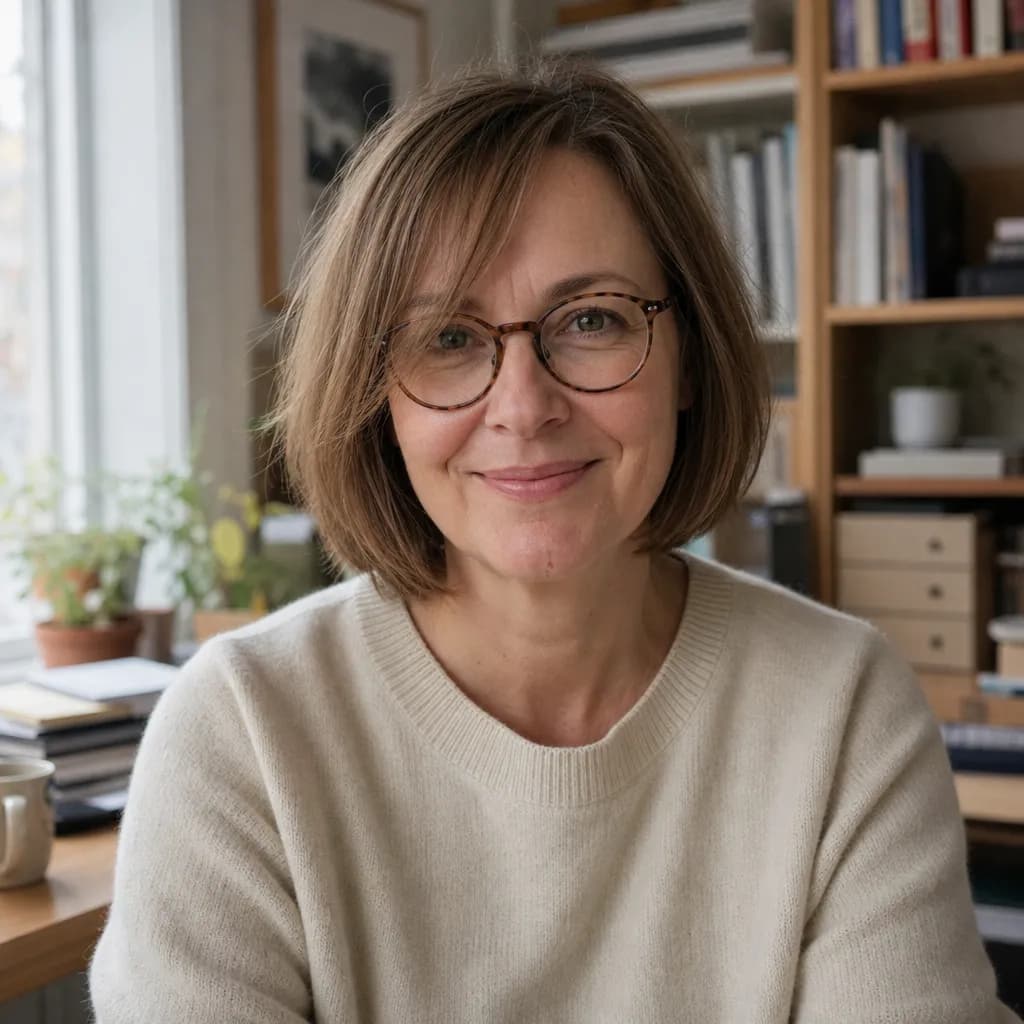
Je suis née à Poitiers, dans une famille qui parlait peu mais corrigeait beaucoup. Mon père entourait les fautes dans le journal local avec un stylo rouge. Ma mère recopiait les listes d’épicerie pour qu’elles soient plus propres. Je trouvais ça un peu triste, et pourtant je fais encore mes listes au propre quand je suis fatiguée. J’ai grandi avec l’idée qu’une erreur imprimée reste plus longtemps qu’une excuse orale. Je ne défends pas cette idée. Je ne m’en suis pas débarrassée non plus. Je ne suis pas venue au métier par vocation. J’ai étudié les lettres parce que j’aimais les bibliothèques chauffées et les examens écrits. Après un déménagement au Québec pour suivre un conjoint qui avait obtenu un contrat à Rimouski, j’ai accepté un remplacement de trois mois dans une maison d’édition scolaire. La réviseure titulaire était partie plus tôt que prévu en congé de maladie. Il fallait relire des cahiers d’exercices, des encadrés historiques, des consignes, des corrigés. Je ne savais pas encore bien entendre le français d’ici. Alors je vérifiais tout deux fois, parfois trois. Pendant deux ans, j’ai aussi travaillé dans une petite boutique de cadres. Je mesurais des passe-partout, je coupais du carton, je nettoyais le verre avec un chiffon qui laissait parfois plus de traces qu’avant. Ce travail n’a pas fait de moi une meilleure réviseure, pas directement. Mais je me souviens encore d’un client qui voulait centrer une photo de travers parce que son fils l’avait prise ainsi. Je l’ai laissé faire. Je pense souvent à cette photo quand un auteur tient à une bizarrerie qui n’est pas une erreur. Aujourd’hui, je révise surtout des manuscrits de Non fiction : essais personnels, ouvrages pratiques, récits documentaires, mémoires. Je suis bonne pour trouver les glissements de termes, les dates qui mentent, les pronoms sans antécédent, les paragraphes qui promettent une preuve et livrent une humeur. Mon biais est net : je préfère la précision à la musique. Je le sais. Je ne le corrige pas. Un texte peut être élégant plus tard. S’il est inexact maintenant, je m’arrête là.
Questions courantes sur l'écriture d'un livre comme Orientalism.
Use a quoted claim as your anchor, then pivot to its hidden assumptions to make the reader feel their “common sense” wobble.
Edward W. Said writes like a critic who refuses to let the page pretend it sits outside power. He builds arguments that feel like close reading and cross-examination at once: he quotes, frames, and then shows you the hidden contract the text asks you to sign. The craft trick is simple to name and hard to execute: he makes interpretation feel like evidence.
His engine runs on controlled repositioning. He starts with what “everyone knows,” then tilts the camera: who gets to speak, who gets described, and what the description already assumes. He guides your attention away from the obvious claim and onto the terms of the claim. You don’t just learn an idea; you feel your own reading habits become part of the topic.
The technical difficulty is his balance of three pressures: philosophical abstraction, concrete citation, and moral urgency. Most imitations pick one and lose the other two. Said keeps all three in play by staging each paragraph as a small argument with a hinge: a concession, a pivot, and a tighter restatement that changes the stakes.
Modern writers still need him because he changed what “clarity” can mean in nonfiction: not simplification, but exposure. He drafted by working through sources, then revising for line-of-force—what each section compels the next to answer. If you study him well, you stop writing essays that “share thoughts” and start writing pieces that trap lazy assumptions in their own words.
Ouvrez Draftly, apportez votre brouillon, et passez du blocage à un texte plus solide sans perdre votre voix. Des éditeurs sont disponibles quand vous souhaitez un regard plus approfondi.
🤑 Crédits de bienvenue offerts inclus. Aucune carte bancaire requise.Watch how he maintains pressure: he keeps returning to the same accusation in new clothing. Not “Westerners were mean,” but “representation behaves like possession.” He shows how texts repeat each other, cite each other, and pre-authorize each other’s claims until the “Orient” becomes a stable character in the Western imagination. That character then justifies real decisions about real people. You can reuse this by tracking repetition across your own material like it counts as plot, because in this kind of book, repetition equals escalation.
The book’s midpoint turn arrives when he shifts from diagnosing “the archive” to showing how it reproduces itself—how institutions train experts to see what the discourse already expects. He starts talking less like a taxonomist and more like a strategist. He also begins to acknowledge counterarguments and internal variation, which increases his credibility while keeping the prosecution intact. Many writers fear nuance because they think it dilutes force. Said uses nuance as a weapon.
By the end, the conflict resolves in a morally uneasy place rather than a tidy win. Said doesn’t claim he has purified knowledge. He argues for vigilance, self-critique, and a rethinking of how the West narrates the non-West. The opposing force persists, which means the protagonist’s “victory” looks like a new responsibility. That’s the final craft lesson: you can end without a cure, as long as you end with a sharper instrument.
Structure narrative et arc émotionnel dans Orientalism.
Orientalism follows a subversive Man-vs-System arc that reads like a detective story told by a wary prosecutor. Said starts in a controlled, analytic stance—confident he can name the mechanism—but he also knows the room will resist him. He ends with a heavier, more ethically charged awareness: the machine he describes keeps running, and the writer’s job shifts from “proving” to “staying lucid inside power.”
The book’s strongest sentiment shifts come from tactical zooms. Said moves from calm definition to pointed case studies, then to the shock of scale when he shows the same pattern spanning centuries, genres, and institutions. Low points land when he demonstrates how even admired writers and respected scholars repeat the same framing, which denies the reader the comfort of blaming only cartoon villains. The climactic force comes from accumulation: each example feels arguable alone, but together they create inevitability—and that inevitability feels like a trap snapping shut.
Ce que les écrivains peuvent apprendre de Edward W. Said dans Orientalism.
Said makes a definition behave like a plot event. In the opening, he doesn’t “set context” and wander off. He asserts a controlling term, then he treats that term as a lens that must survive contact with the world. That move creates narrative propulsion: every chapter functions as a stress test. Many modern essays skip this and stack hot takes. You don’t trust hot takes because they never risk falsification. Said risks it, then he keeps showing you the receipts.
He uses montage across centuries the way a novelist uses recurring motifs. He lines up travel accounts, philology, novels, and policy-adjacent writing so you feel repetition, not just see it. The craft trick hides in sequencing: he doesn’t pick the single most damning quote and declare victory. He builds a pattern the reader can predict, then he delivers the next example that confirms the prediction. That prediction-confirmation loop produces the same satisfaction you get from detective fiction.
His “character work” lives in how he renders institutions as personalities. He describes the Orientalist as a type with habits, incentives, and blind spots, and he shows how that type changes costumes over time while keeping the same posture of authority. He also stages implied dialogue with specific interlocutors—think of his extended engagement with Michel Foucault’s ideas about discourse and power. He borrows the tool, then he pushes back where it breaks, which creates a genuine intellectual confrontation on the page instead of name-dropping.
Notice the atmosphere: it doesn’t come from sensory description. It comes from rooms of authority—archives, universities, diplomatic imaginaries—where a tone of “knowing” replaces contact with lived reality. When he writes about Napoleon’s Egypt or the later U.S. context, he anchors the argument in concrete historical moments that make the abstractions bite. The modern shortcut treats power as a vibe and representation as personal attitude. Said treats power as infrastructure and representation as labor, which forces you to write with consequences, not slogans.
Conseils d'écriture inspirés de Orientalism par Edward W. Said.
Write with controlled heat. Said never begs you to agree, and he never performs neutrality either. He builds a voice that sounds like a patient attorney who also feels the human cost of the case. If you copy only the indignation, you’ll sound brittle. If you copy only the academic calm, you’ll sound bloodless. Choose a governing stance early, then police your own sentences for tells: cheap sarcasm, vague moralizing, and any claim you can’t cash with a specific text, date, or decision.
Treat your “protagonist” as a mind at work, not a person with a backstory. Said’s on-page character comes from his method: what he notices, what he refuses to grant, what he concedes, and when he changes levels from close reading to historical framing. Build your own investigator persona the same way. Give the reader a consistent set of moves. Let them learn your habits so they can feel the argument tighten. When you introduce opponents, don’t straw-man them. Make them smart enough to wound you.
Avoid the genre trap of confusing a thesis with a story. In this lane, writers often front-load the conclusion, then spend 200 pages restating it with different examples. Said avoids that by escalating the nature of the claim: from language, to canon, to institutions, to modern political consequences. Each step changes what “being right” would mean. Copy that escalation, or your piece will plateau. Also avoid the cheap binary of “good people vs bad people.” He indicts a system that rewards certain descriptions, which feels more unsettling and more true.
Run this exercise. Pick one loaded label people treat as obvious in your field. Write a tight definition that includes how the label gains authority and what it enables in practice. Then collect eight sources across at least three domains, like journalism, scholarship, and policy. Arrange them so the reader feels repetition before you announce it. After each source, write two sentences: one that grants its best intention, and one that shows the cost of its framing. End by revising your opening definition to survive what you found.

Déposez votre brouillon dans Draftly. Corrigez scènes et dialogues directement dans le texte—pas dans un autre onglet. Quand vous voulez un retour plus approfondi, des éditeurs IA sont prêts.
🤑 Crédits de bienvenue offerts. Aucune carte bancaire requise.