Caricamento
Stiamo preparando tutto. Non ci vorrà molto.
Stiamo preparando tutto. Non ci vorrà molto.
Write nonfiction that hits like a novel: steal Hersey’s “six lives, one blast” engine and learn how to build unstoppable narrative momentum without melodrama.
Trama del libro e analisi della scrittura di Hiroshima di John Hersey.
Hiroshima works because it refuses the usual war-story bargain: big events, big speeches, big conclusions. Hersey builds a narrative engine out of six ordinary trajectories moving through one extraordinary rupture. Your central dramatic question never asks, “What happened?” You already know. It asks, “How does a human life keep going when the rules of reality collapse in a single morning?” If you try to imitate the book by copying its restraint, you will likely produce something flat. Hersey doesn’t “write calmly.” He designs calm as a delivery system for horror.
The inciting incident lands with surgical clarity: at 8:15 a.m., August 6, 1945, in Hiroshima, a flash interrupts six separate, mundane actions. A clerk turns his head; a doctor stands on a porch; a seamstress sits at work; a Methodist pastor carries something; a German Jesuit reads; a young mother minds her children. Hersey doesn’t stage a debate, a decision, or a foreboding omen. He cuts the ground out from under routine. That matters because you can reuse this mechanic today: you don’t need pre-explosion setup if you can make “normal” specific enough that the rupture feels like a personal violation.
The “protagonist” functions as a braided collective: Miss Toshiko Sasaki, Dr. Masakazu Fujii, Mrs. Hatsuyo Nakamura, Reverend Kiyoshi Tanimoto, Father Wilhelm Kleinsorge, and Dr. Terufumi Sasaki. The primary opposing force never takes the shape of a villain. It takes the shape of cascading systems: blast physics, fire, crush injuries, radiation sickness, medical scarcity, bureaucracy, stigma, and time itself. If you look for a single antagonist with a face, you miss Hersey’s actual craft choice. He makes the enemy impersonal so the reader can’t discharge feeling onto one target and move on.
Hersey escalates stakes through a sequence of narrowing options. First, survive the immediate damage: broken buildings, glass, flame, and the shock of bodies behaving like objects. Next, find water, shade, and a way out of streets that no longer function as streets. Then, locate loved ones in a city that has turned into a map of guesses. After that comes the cruelest escalation: the body begins to fail for reasons nobody in the scene can fully name. You watch characters “win” a small safety—shelter, a ride, a bandage—and then lose it to a new rule: infection, fever, hair falling out, wounds reopening, exhaustion that feels moral as much as physical.
Structure does the heavy lifting. Hersey runs the opening like a relay race of attention, handing you from one person to the next before you can settle into comfort. Then he keeps returning to those same lives, and each return changes the meaning of the previous scene. You think you read an escape; you later learn it served as the beginning of a longer injury. You think you read a moment of help; you later learn it required a moral cost, like leaving someone behind or becoming numb enough to step over the dead. This “recontextualizing return” lets him avoid cheap cliffhangers while still generating propulsion.
The book’s most modern lesson hides in its refusal to editorialize. Hersey trusts selection. He chooses details that force inference: a woman’s skin slipping, a hospital that becomes a triage pile, a river crowded with the living and the dead. He doesn’t tell you what to think; he arranges what you can’t unsee. If you imitate that naively, you will underwrite the reader’s intelligence. You will cut too much connective tissue and call it “restraint.” Hersey’s restraint comes from aggressive clarity, not vagueness.
By the end, the narrative doesn’t “resolve” in a satisfying arc because the event doesn’t resolve. Hersey shifts the stakes from immediate survival to long-duration adaptation: disability, social labeling of survivors, the slow politics of aid, and the body’s delayed betrayals. He turns survival into a second inciting incident. That’s the engine you can reuse: let the catastrophe open a new genre inside your book. The blast creates a survival story; the aftermath becomes an endurance story; the endurance story becomes a study in meaning-making under insult. That layering keeps the book alive long after the last page.
Struttura della storia e arco emotivo in Hiroshima.
Hiroshima follows a tragedy-driven “survival spiral” rather than a heroic rise. The six focal characters start inside ordinary certainty—work, chores, faith, routines—and end inside a new, unstable normal where survival itself feels provisional. Internally, they move from assumption (“the world makes sense”) to calibrated endurance (“I can’t control this, but I can choose my next act”).
The sentiment shifts land because Hersey stacks small, credible reversals instead of one grand turning point. Relief arrives in sips—water, shade, a working boat, a friendly hand—and each relief exposes a harsher layer: the fires spread, the hospitals fail, the body collapses later, and the social world brands survivors. The lowest points don’t peak with a single death scene; they accumulate through depletion, moral triage, and delayed illness, so the “climax” feels like a recognition: the disaster keeps writing new chapters inside a living body.

Metti la tua bozza in Draftly. Correggi scene e dialoghi nel testo — non in un'altra scheda. Quando vuoi un feedback più preciso, gli editor AI sono pronti.
🤑 Crediti di benvenuto gratuiti inclusi. Nessuna carta di credito richiesta.Cosa possono imparare gli scrittori da John Hersey in Hiroshima.
Hersey’s most teachable move looks simple and costs the most skill: he reports like a journalist while pacing like a novelist. He controls distance with microscopic specificity, not emotive language. When he names an object or action, he picks one that forces the reader to do the emotional math. That choice creates authority. You believe the voice because it never begs you to feel; it hands you evidence and lets your nervous system react.
He also solves a structural problem most writers bungle: how to make a mass event readable without turning people into statistics. The six-viewpoint braid keeps scale and intimacy in the same frame. Each return to a character acts like a calibration mark: you measure the city’s collapse by watching a single body try to perform an ordinary task under impossible conditions. Modern writers often “solve” this by widening the lens—big history, big context, montage. Hersey narrows it, then repeats the narrowing until the reader feels the weight of numbers through one life.
Watch his dialogue for how he preserves realism under shock. He doesn’t write eloquent speeches in the rubble. He uses brief, functional exchanges that reveal priority and panic. When Reverend Tanimoto interacts with the injured and stranded while he tries to ferry people and find help, you hear need, misunderstanding, and urgent courtesy rather than theatrical confession. That’s the point: catastrophe doesn’t make people poetic; it makes them transactional, and that transaction tells you who they are.
Atmosphere comes from logistics. He builds Hiroshima through movement: along the river, through makeshift aid stations, past shattered neighborhoods, into overwhelmed medical spaces that no longer operate as “hospitals.” He anchors dread to concrete locations—a bridge jammed with bodies, a riverbank crowded with the burned, a clinic forced into triage by scarcity—so the setting acts like an opposing force. Many modern accounts lean on adjectives and moral framing to generate mood. Hersey uses routes, constraints, and cause-and-effect, and the horror arrives on time.
Consigli di scrittura ispirati a Hiroshima di John Hersey.
Write with controlled neutrality, but don’t confuse neutrality with blandness. You must pick details that carry voltage. Replace any sentence that tells the reader how to feel with a sentence that shows the reader what a person does next. Keep your syntax clean. Let short sentences do the heavy lifting when the world fractures. And never perform grief. If your tone tries to look tasteful, it will look evasive. Clarity gives you restraint; restraint never gives you clarity.
Build characters through functions under pressure, not through backstory dumps. Give each person a role in the social machine, then break the machine and watch what they improvise. Track three things per character across the whole structure: what they protect, what they can’t admit, and what they learn to do without. Hersey makes you remember six people because he assigns them distinct trajectories of labor, faith, caretaking, and injury. Don’t add more viewpoints than you can differentiate at the level of choice.
Avoid the signature trap of catastrophe writing: the easy moral summary. Writers love to step in and “make sense” of atrocity with lessons, villains, or speeches. Hersey refuses that comfort and pays for it with tighter selection. He lets contradictions stand. Helpers act selfishly. Victims act cruelly. Survival looks like compromise. If you chase purity, you will falsify the record and flatten the reader’s response. You don’t need cynicism; you need honesty about trade-offs.
Run this exercise. Pick six people who occupy different positions in the same system on the same morning. Give each one a specific, ordinary action at a specific time and place. At the same minute, rupture their world with a single event. Write one page per person in the same calm voice. Then cycle back through them twice more, each time forcing a new constraint: scarcity of aid, then delayed consequences. On revision, cut every abstract sentence until only cause-and-effect remains.
Scopri gli editor specializzati in libri come questo, desiderosi di lavorare su progetti simili.

Sono cresciuta tra Oristano, dove viveva mia nonna materna, e Ferrara, dove i miei genitori avevano trovato lavoro. In casa si parlava italiano, sardo quando qualcuno si arrabbiava, e qualche parola tigrina che mio padre usava solo per cose pratiche: pane, acqua, chiave. Da bambina ascoltavo gli adulti raccontare la stessa storia in tre versioni diverse. Io non decidevo quale fosse quella vera. Segnavo chi aveva tolto un dettaglio. Ho studiato storia contemporanea a Bologna senza un piano pulito. Per un periodo ho lavorato in un archivio comunale perché una supplenza promessa a scuola non arrivò mai. Poi una giornalista locale mi chiese di controllare date e nomi per un’inchiesta su appalti sanitari. Accettai perché pagavano subito. Non c’era nessuna vocazione luminosa. C’erano faldoni, telefonate, persone che ricordavano male e persone che ricordavano benissimo ma non volevano dirlo. Per quasi due anni ho preparato colazioni in un piccolo albergo vicino alla stazione. Mi alzavo alle quattro e tagliavo frutta in silenzio. Ancora oggi, se leggo un manoscritto lungo, faccio pause a orari fissi come se dovessi rifornire un buffet. Mia madre diceva che un lavoro vero lascia la schiena stanca. Io non sono d’accordo, almeno non del tutto. Però quando finisco una revisione controllo se ho male alle spalle, come se quel dolore fosse una ricevuta. Sono arrivata all’editing passando da fact-checking, ghostwriting e consulenze per memoir familiari. Oggi lavoro soprattutto su Non fiction narrativa, memoir e reportage. Ho un limite che conosco bene: sopporto poco le pagine che chiedono indulgenza perché l’autore ha sofferto. Non correggo questo pregiudizio. Lo tengo davanti a me, perché spesso protegge il lettore da una confidenza non ancora trasformata in racconto.
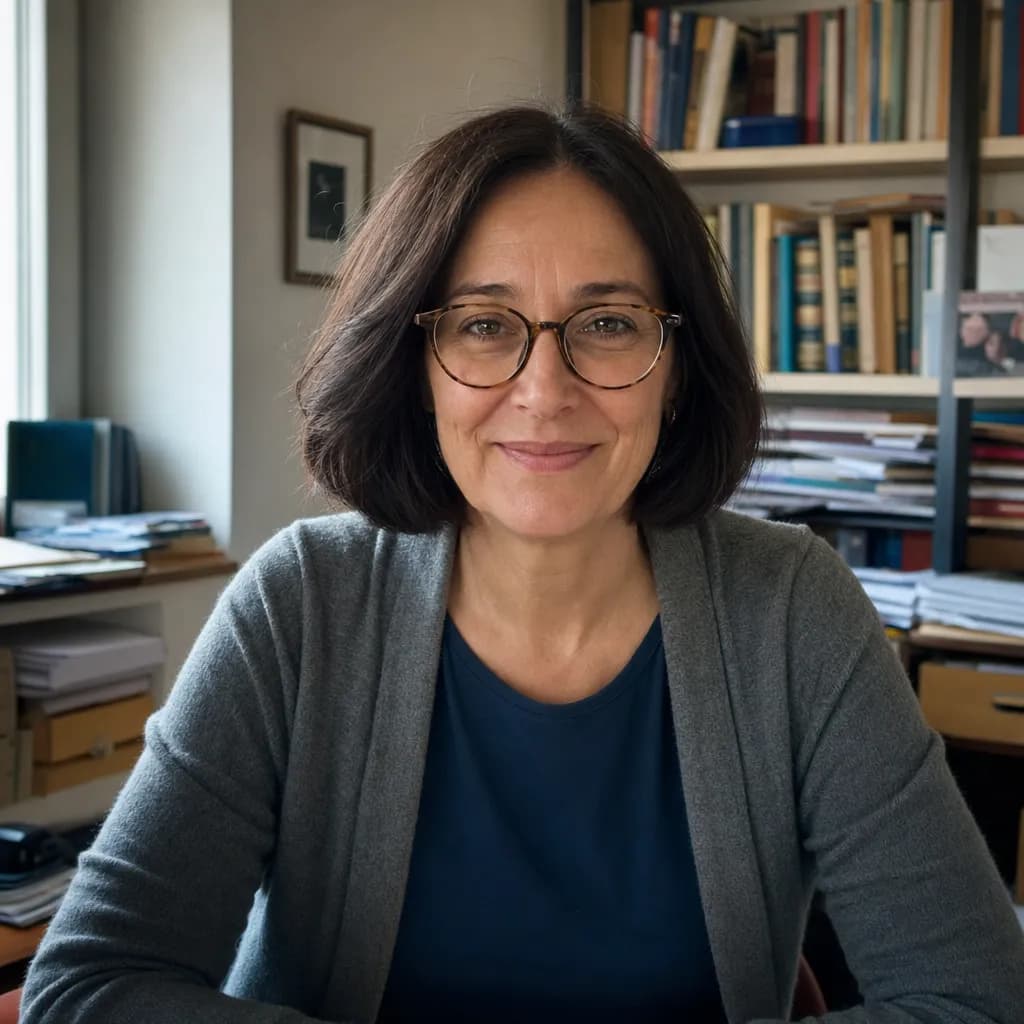
Sono cresciuta tra Ferrara e i viaggi estivi a Oristano, con una madre che correggeva i cartelli scritti male nei negozi e un padre che leggeva il giornale con una penna in mano. Non era una casa colta nel senso elegante. Era una casa dove una data sbagliata restava sul tavolo finché qualcuno non la verificava. Ancora oggi, quando vedo un numero tondo in un manoscritto, mi fermo. Mio padre diceva che “un libro serio non deve farsi notare”. Io non ci credo del tutto, ma quando una frase si mette in posa la segno quasi sempre. Dopo la laurea in lettere moderne ho fatto supplenze, schede bibliografiche per una biblioteca civica e turni in una piccola redazione locale perché serviva qualcuno che sapesse chiudere le pagine senza lamentarsi degli orari. Il passaggio al copy editing è arrivato per convenienza: pagavano poco, ma pagavano in tempo. Mi hanno dato biografie, saggi divulgativi, manuali civici e libri di storia locale. Ho imparato a non fidarmi delle maiuscole, delle citazioni ricordate a memoria e dei titoli di capitolo cambiati all’ultimo. Per un anno ho anche gestito gli ordini in una ferramenta di quartiere. Ancora distinguo a colpo d’occhio una vite a testa svasata da una rondella larga. Mi piaceva il rumore dei cassetti metallici e il fatto che la gente entrasse chiedendo “quella cosa lì” e pretendesse precisione. La sera copiavo codici prodotto su foglietti gialli. Non ho trasformato quell’anno in una lezione: è stato un lavoro. Oggi leggo manoscritti di Non fiction con un fastidio utile per l’imprecisione. Sono brava con cronologie, nomi, note, coerenza terminologica e frasi che sembrano chiare solo perché l’autore sa già cosa voleva dire. Ho un limite che conosco e non correggo: diffido della prosa troppo lirica nella saggistica, anche quando funziona. Preferisco tagliare una bella immagine piuttosto che lasciare una frase ambigua. Non chiedo scusa per questo. Chi mi cerca sa che non vendo entusiasmo.
Domande comuni su come scrivere un libro come Hiroshima.
Use reported, physical detail instead of commentary to make readers feel the weight of events without you begging for it.
John Hersey writes like a witness who refuses to decorate the testimony. He builds meaning by choosing plain facts, then placing them in an order that makes your moral nerves fire on their own. You keep reading because he never tells you what to feel; he lets your mind do the sentencing. That restraint creates a strange intimacy: you trust him because he does not try to earn your trust.
His engine runs on reported specificity and controlled distance. He gives you names, jobs, small actions, and the practical physics of a moment. Then he trims away the authorial spotlight. The reader effect feels “objective,” but it takes hard choices: which detail earns a place, which gets cut, and where the camera stands. He turns summary into suspense by withholding interpretation until your brain starts supplying it.
Imitating him fails because writers copy the surface calm and forget the underlying rigor. Hersey’s clean sentences carry heavy structural labor: they manage time, they ration context, and they keep causality legible while emotion stays implicit. If you skip the reporting mindset—verifiable textures, consistent viewpoint, disciplined transitions—you get flat prose that feels like a school report.
Modern writers still need him because he shows how to write urgency without theatrics. He helped normalize narrative nonfiction techniques—scene, character, continuity—without surrendering to melodrama. His approach implies a tough revision ethic: cut your commentary, strengthen your sequence, and make every factual choice pull double duty as story pressure.
Apri Draftly, porta la tua bozza e passa dall'impasse a una bozza più solida senza perdere la tua voce. Gli editor sono in attesa quando vuoi un'analisi più approfondita.
🤑 Crediti di benvenuto gratuiti inclusi. Nessuna carta di credito richiesta.












