A carregar
Estamos a preparar tudo. Não vai demorar muito.
Estamos a preparar tudo. Não vai demorar muito.
Write a mystery that tightens like a noose—learn Christie’s “closed system” engine (fair clues, shrinking options, rising paranoia) and stop losing readers in chapter three.
Resumo do livro e análise de escrita de And Then There Were None por Agatha Christie.
And Then There Were None works because Christie builds a perfectly sealed narrative machine, then turns the crank and never lets you look away. The central dramatic question stays brutally simple: who controls the island, and who dies next? You don’t read to “solve” in a cozy way; you read to survive in your imagination. Christie makes every page answer the question and worsen the answer.
You can’t imitate this book by copying the body count or the nursery rhyme gimmick. If you do, you’ll produce noise: a string of deaths without moral pressure. Christie’s engine runs on accusation and complicity. Each guest arrives with a private story they don’t want exposed, and the plot weaponizes that secrecy. The novel doesn’t ask, “Who is the killer?” first. It asks, “What do these people deserve?” and then uses that to ration sympathy.
The inciting incident happens at the first dinner on Soldier Island, off the Devon coast, in a newly built modern house that feels too clean to trust. A recorded voice plays and publicly charges each person with a specific death they caused or allowed. That moment forces a decision: confess, deny, or counterattack. Christie doesn’t “start with a murder.” She starts with a courtroom that has no judge, no exits, and no agreed rules. If you start your version with a corpse, you’ll miss the real ignition: public accusation that forces characters to act against their self-image.
Christie assigns the protagonist role to Justice Wargrave in the slyest way possible: she makes him feel like the story’s stabilizing mind. He speaks in reasoned, legal terms, proposes procedures, and seems committed to safety. The primary opposing force looks like an external killer, but the deeper antagonist operates as a system: isolation, dwindling supplies, and the group’s collapsing trust. Christie turns “Who did it?” into “Who will the group choose to believe?” and that gives every conversation stakes.
Stakes escalate by narrowing options in three directions at once. Physical escape vanishes first: the boat fails to arrive, the weather turns, the sea stays indifferent. Social escape vanishes next: the group needs unity but can’t afford it, because any unity creates a target. Psychological escape vanishes last: even if you behave perfectly, your past can convict you. Each death removes not just a person, but a skillset, an alibi possibility, a witness, a potential ally.
If you imitate Christie naively, you’ll over-explain your puzzle or under-build your suspects. Christie does the opposite. She gives you crisp roles and readable temperaments (the soldier, the doctor, the governess, the mercenary) and then she pressures those roles until they crack. She also keeps the clue stream “quiet.” Clues show up as ordinary logistics and ordinary speech. That’s why the reveal lands: you realize you watched the mechanism the whole time and kept calling it atmosphere.
Descobre editores especializados em livros como este que adorariam trabalhar em projetos semelhantes.
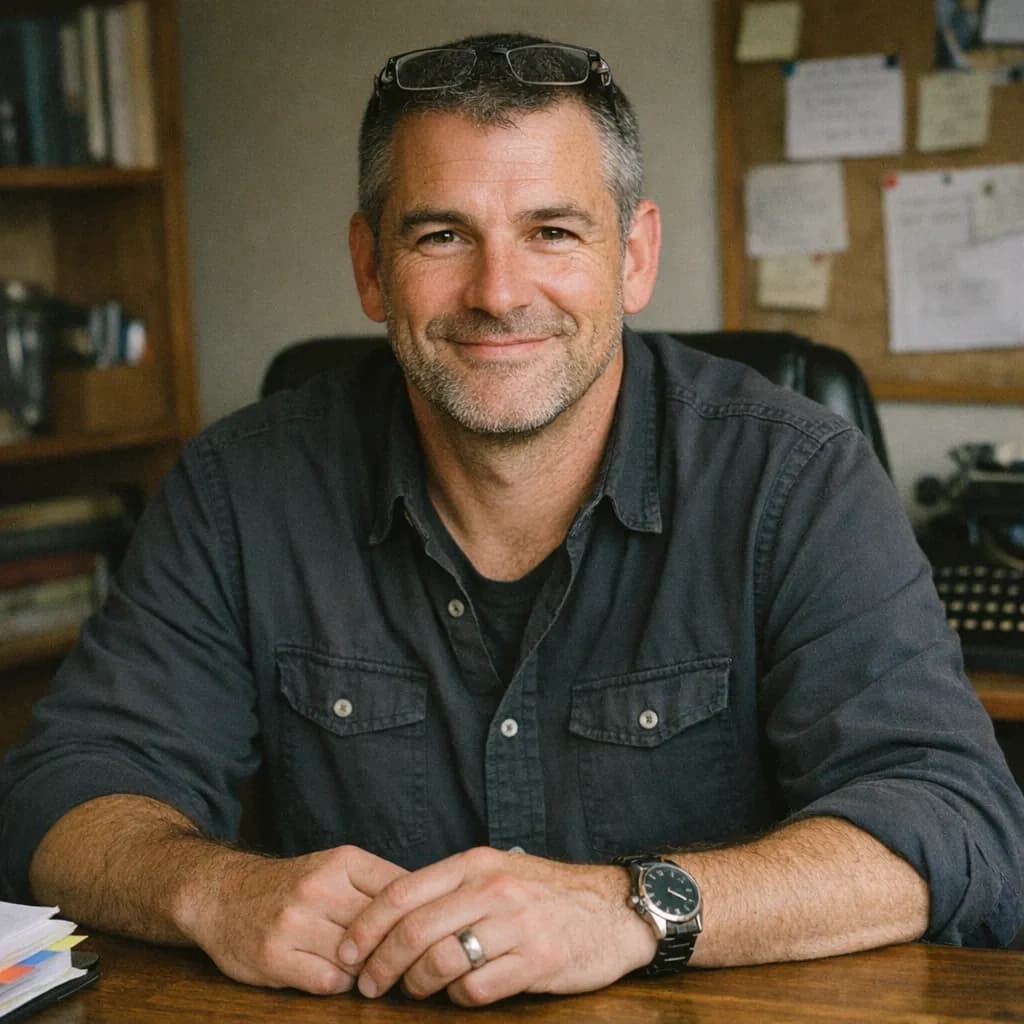
J’ai grandi entre Pont-l’Abbé et Quimperlé, dans une famille où l’on parlait peu des choses importantes. Mon père réparait des bateaux de pêche, ma mère tenait les comptes d’une petite entreprise de matériaux. Les histoires arrivaient par morceaux : une tante qui changeait de sujet, un voisin qui ne passait plus devant une maison, une photo retournée dans un tiroir. J’ai gardé cette manie de croire qu’un silence doit avoir une cause. Je sais que ce n’est pas toujours vrai. Je continue quand même à lire comme ça. Je n’ai pas prévu de travailler avec des manuscrits. J’ai fait de l’histoire, puis un stage aux archives municipales de Lorient parce qu’un autre étudiant s’était désisté. Je classais des dossiers d’urbanisme, des plaintes de voisinage, des lettres sèches envoyées trop tard. Ce qui m’a frappé, ce n’était pas le passé. C’était le moment précis où quelqu’un aurait pu agir autrement. Après ça, j’ai corrigé des dossiers pour une petite maison associative, puis des romans pour des auteurs qui n’avaient pas d’éditeur. Le loyer décidait souvent plus que moi. Pendant deux ans, j’ai aussi travaillé trois soirs par semaine à l’accueil d’une salle d’escalade. Ça ne m’a pas rendu meilleur éditeur, je crois. Je vérifiais des abonnements, je nettoyais des prises, je regardais des gens s’énerver contre un mur jaune. J’aimais la craie sur les mains et le bruit sourd des chutes sur les tapis. Je repense encore à un habitué qui recommençait toujours la même voie sans changer de méthode. Je ne sais pas pourquoi ce souvenir reste là. Aujourd’hui, je lis surtout des romans, des novellas et des nouvelles où les personnages prétendent ne pas choisir. Je suis utile quand une intrigue perd sa colonne vertébrale, quand un secret remplace une décision, quand le climax arrive parce que le plan l’exige. Mon biais est net : je supporte mal les protagonistes longtemps passifs, même quand cette passivité est fine ou réaliste. Je le sais. Je ne corrige pas vraiment ce biais, parce qu’il protège souvent le lecteur contre l’ennui poli.
I grew up between Wagga and my aunt’s place out near Narrandera, in a family that could argue for sport and then feed you like nothing happened. Books were around, but not in a precious way. My old man liked stories where people did what they said they’d do, even if it cost them. I still hear that voice when a character “can’t” make a decision because the plot needs another chapter. I didn’t set out to be an editor. I studied teaching, worked a few rough years in classrooms, and then left after a run of short contracts and one admin reshuffle that made it clear I was replaceable. A mate pulled me into doing learning materials and assessments because I could spot where people were gaming the question. That work taught me to watch for what the text rewards versus what it claims to reward - which is the same problem in a lot of manuscripts. I also spent a couple of seasons doing night shifts at a servo when money got tight. I kept a notebook behind the counter and wrote scenes between customers, mostly to stay awake. I remember one bloke coming in every Thursday, buying the same pie, and telling me the same story about a dog he swore was smarter than his ex. I don’t know why I remember that, but I do. Editing started as favour-work. People in town found out I’d read their drafts and I’d send back long emails with scene-by-scene notes. Somewhere along the line it became my paid work, mostly because I was consistent and because I’m not afraid to say, “This turn doesn’t belong to your protagonist.” I’m biased toward decisive characters and I don’t plan to cure myself of it; I’d rather a story risk an ugly choice than drift into polite inevitability.
Perguntas comuns sobre como escrever um livro como And Then There Were None.
Use clean, ordinary scenes to hide one misinterpretable fact, and you’ll make readers accuse the wrong person with confidence.
Agatha Christie made mystery feel effortless by doing the hardest thing on purpose: she controlled what you notice. Her engine runs on misdirection that stays fair. She points your attention at true facts that carry the wrong meaning, then lets you convict the wrong person with your own logic. You don’t “miss” the clue. You misfile it.
Her sentences rarely show off. They move. She keeps the surface calm so your brain stops bracing for tricks. Meanwhile she builds a clean chain of cause and effect, then quietly swaps the link you assumed mattered. The magic isn’t surprise. It’s inevitability—after the reveal, you see how you talked yourself into the mistake.
The technical difficulty sits in structure, not sparkle. Christie balances clue-density with story-life: motives, alibis, timing, and social friction. She also writes suspects who can carry ordinary conversation while hiding lethal information. Many writers can invent a twist. Few can plant it without bending character, time, or fairness.
Study her now because modern readers come armed with spoiler culture and twist literacy. Christie still wins because she doesn’t rely on novelty; she relies on controlled inference. Accounts of her process often mention plotting and then writing quickly, revising to smooth the trail—cutting anything that points too clearly, and adding small normal moments that make the lie feel safe.
Abre o Draftly, traz o teu rascunho, e passa de bloqueado a um rascunho mais forte sem perder a tua voz. Os editores estão de prontidão quando quiseres uma passagem mais aprofundada.
🤑 Créditos de boas-vindas gratuitos incluídos. Sem cartão de crédito.The setting matters because it behaves like a character with a contract. Late 1930s England gives Christie a culture of reputation and class performance, so denial carries social weight. Soldier Island gives her a finite map you can hold in your head: the house, the cliffs, the shoreline, the bedrooms, the dining room with the recorded voice. When the cast shrinks, that map grows louder. You don’t need a bigger world; you need a smaller one that becomes harder to live in.
The book ultimately succeeds because it runs a moral experiment under thriller lighting. Everyone tries to control the narrative of their own guilt; the story punishes that impulse. And Christie does it without sermonizing. She just keeps making the next step feel like the only step, until the only steps left point inward. That’s the blueprint: trap your characters inside a decision machine, then make each decision cost them more than they expected.
Estrutura da história e arco emocional em And Then There Were None.
The emotional trajectory plays like a subversive Tragedy disguised as a puzzle-box thriller. The group starts with ordinary confidence—polite manners, private agendas, the belief that reason and procedure can control events. It ends in atomized fear and moral exposure, where “innocent until proven guilty” turns into “alive until proven dead.” Wargrave begins as a voice of order; he ends as the architect of order taken to monstrous completion.
Christie lands her low points by converting safety rituals into threats. Dinner conversation becomes testimony. Sleeping becomes vulnerability. A headcount becomes a verdict. Sentiment flips whenever the group thinks it has stabilized—after a plan, after a speech, after a supposed certainty—and then a death proves the plan naive. The climactic force comes less from surprise and more from inevitability: the reader senses the system tightening, but keeps hoping for a loophole that the story refuses to provide.
O que os escritores podem aprender com Agatha Christie em And Then There Were None.
Christie’s masterstroke sits in her control of information temperature. She doesn’t “withhold clues” in a theatrical way; she normalizes them. She makes the island’s practical details—locked rooms, missing objects, timing, who heard what—feel like background until you realize background drives causality. That choice keeps the prose brisk and the reader confident, which matters because confidence makes readers careless. Careless readers misjudge the obvious.
Watch how she uses dialogue as a weapon, not a delivery system. After the recorded accusation, characters don’t swap exposition; they negotiate blame in real time. When Vera Claythorne clashes with Philip Lombard, their exchanges keep shifting between flirtation, contempt, and calculation. Christie lets their tone changes tell you more than their words. Modern writers often slap in “snappy banter” to keep pace. Christie uses verbal friction to change the power map of the room.
She builds atmosphere through logistics, not purple fog. The new house on Soldier Island feels clinical, staged, almost like a showroom. That matters because it denies the characters comforting history. They can’t lean on tradition or familiar routines; they must invent procedure while fear rises. Notice how often Christie returns you to concrete spaces—the dining room where the voice speaks, the bedrooms where people listen to footsteps, the shoreline where rescue fails. She makes place enforce behavior.
Structurally, she treats each death as a plot edit, not a shock beat. Every removal simplifies some possibilities and complicates others. The remaining cast loses a function: a doctor’s authority, a soldier’s discipline, a servant’s access, a judge’s procedure. Many modern thrillers rely on late twists to “earn” momentum. Christie earns momentum by shrinking the system and making every scene do two jobs: advance the murder sequence and degrade the group’s ability to think together.
Dicas de escrita inspiradas em And Then There Were None de Agatha Christie.
You need a voice that sounds calm while it tightens the screws. Christie writes with clean sentences and steady observation, then lets dread build from what people do, not what the narrator declares. Don’t narrate fear. Stage it. Put characters in ordinary actions—pouring drinks, checking locks, counting figurines—and let those actions carry menace because of context. If you add melodramatic emphasis, you’ll break the spell. Treat horror like paperwork and your reader will supply the panic.
Build characters as moral cases, not quirky profiles. Each guest arrives with a self-justifying story and a social mask they can perform under pressure. Give each person a credible way to sound innocent and a private reason to fear exposure. Then design how they fight: who argues procedure, who bullies, who flatters, who vanishes into silence. Track how guilt changes their tactics. If you can swap two characters’ reactions without rewriting the scene, you don’t have characters yet.
Avoid the genre trap of “random death lottery.” Christie avoids it by making the killings feel like judgments, not accidents, and by making the group’s choices matter. Each attempt to impose order—buddy systems, searches, locking doors—creates new vulnerabilities. If your murderer can strike anytime for any reason, you remove suspense because you remove cause. Tie every major turn to a decision, a misread, or a social rupture. Your reader doesn’t need fairness. They need consequence.
Write this exercise and don’t cheat. Create a closed setting with ten people who each carry a secret wrongdoing. In scene one, force a public accusation that names the wrongdoing precisely. List five “procedures” the group tries to stay safe. For each procedure, write the exact way it fails because of human nature, not because you needed another body. After each death, delete one capability from the group and rewrite the next plan with fewer resources. End when planning collapses into pure psychology.
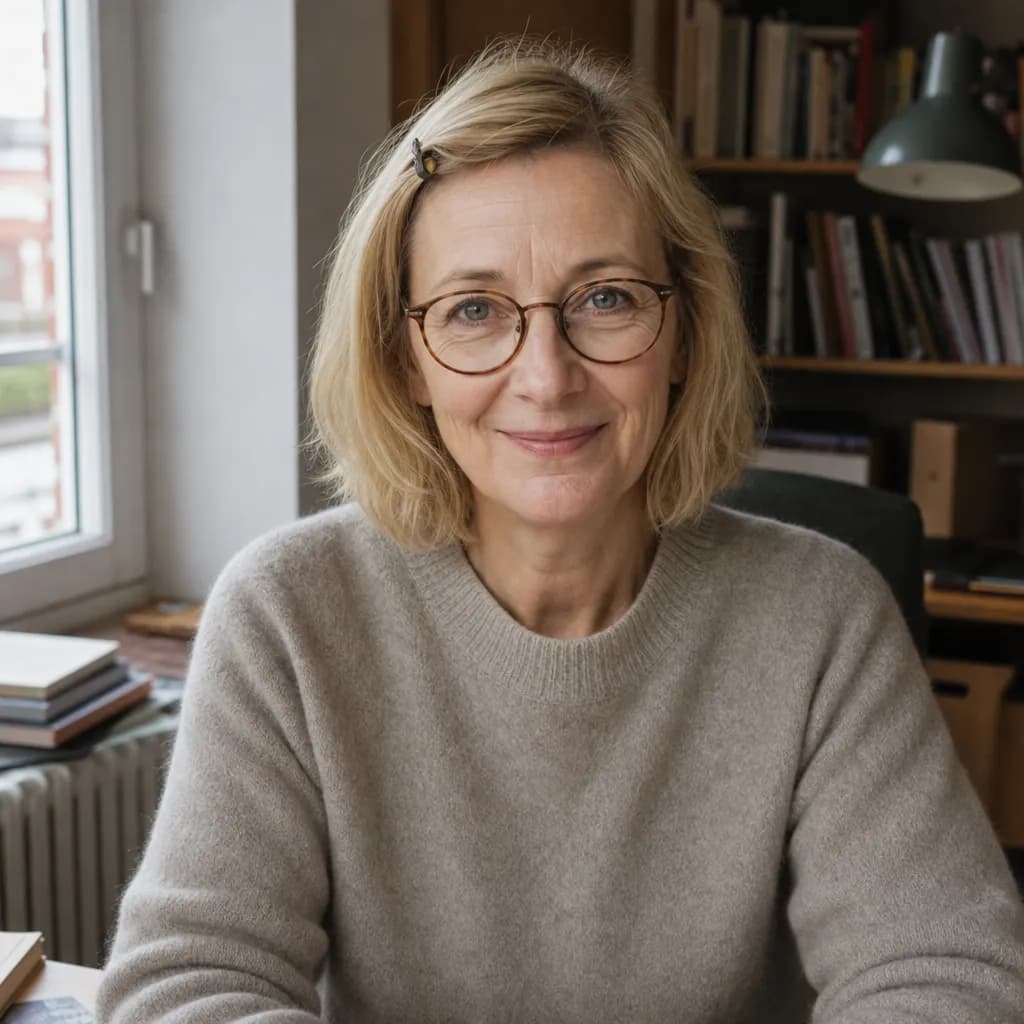
Je suis née à Bourges, dans une famille où l’on parlait peu des livres mais beaucoup des factures, des repas et des voisins. Mon père réparait des machines agricoles. Ma mère tenait les comptes d’une petite entreprise de menuiserie. On ne m’a pas élevée dans l’idée que les histoires sauvaient quoi que ce soit. Pourtant, le dimanche soir, je lisais dans le couloir, assise contre le radiateur, parce que ma chambre était trop froide et que le salon appartenait à la télévision. J’ai d’abord travaillé dans une bibliothèque municipale, puis dans une librairie à Orléans, et je suis arrivée en Belgique après une séparation que je n’avais pas prévue. Le poste à Tournai était temporaire. Je devais rester six mois. J’y suis encore. Une éditrice locale m’a demandé un jour de lire un manuscrit parce que sa lectrice habituelle était malade. J’ai rendu douze pages de notes sur les décisions du personnage principal au lieu de corriger les adjectifs. Elle m’a rappelée. Pendant trois ans, j’ai aussi tenu la caisse d’une petite salle de cinéma. Ce n’était pas glorieux. Je vendais des tickets, je vérifiais les réservations, je ramassais des gobelets après les séances tardives. Je ne sais pas si cela m’a rendue meilleure lectrice. Je me souviens surtout d’un vieil homme qui venait tous les jeudis, même pour les mauvais films, et qui disait toujours : « Au moins, ils ont essayé. » Je n’ai jamais su si je trouvais ça tendre ou lâche. Aujourd’hui, je travaille surtout avec des romanciers qui ont déjà une matière vivante mais pas encore une colonne vertébrale. Je suis bonne pour repérer les scènes qui décorent au lieu de modifier le cours du récit. Je suis moins patiente avec les textes très atmosphériques où rien ne se décide pendant longtemps. Je le sais, et je ne corrige pas vraiment ce biais. Je préfère le nommer tôt. Si un manuscrit me demande d’attendre cent pages avant qu’un personnage agisse, je vais probablement résister.

Coloca o teu rascunho no Draftly. Corrige cenas e diálogos no texto — não noutro separador. Quando quiseres feedback mais afiado, os editores de IA estão prontos.
🤑 Créditos de boas-vindas gratuitos incluídos. Sem cartão de crédito.