A carregar
Estamos a preparar tudo. Não vai demorar muito.
Estamos a preparar tudo. Não vai demorar muito.
Write characters who feel painfully alive by learning Tolstoy’s real trick: how to collide private desire with public consequence until the story has no safe exit.
Resumo do livro e análise de escrita de Anna Karenina por Leo Tolstoy.
Anna Karenina works because Tolstoy rigs the novel like a pressure vessel: he traps private longings inside public institutions that never forgive. The central dramatic question doesn’t ask “Will Anna be happy?” It asks “Can a person build a livable life outside the rules of their class without losing their mind?” You watch Anna Karenina try. You also watch society—family, law, money, gossip, church—act like the opposing force. If you imitate this book naively, you will copy the melodrama and miss the mechanism: Tolstoy doesn’t escalate through bigger events; he escalates through shrinking options.
The setting does real work. Tolstoy plants you in 1870s imperial Russia—Moscow drawing rooms and theater boxes, St. Petersburg salons, country estates with wheat, peasants, and accounts. These places operate like machines. Each location enforces a different version of “what people do,” and Tolstoy uses that to measure a character’s freedom. If you set your story “in high society” as decoration, you will get costumes. Tolstoy uses society as a physics engine.
The inciting incident has a specific hinge: Anna travels to Moscow to patch up her brother Stiva Oblonsky’s marriage after his affair. On the surface, that looks like a side errand. Structurally, it places Anna at the train station, where Tolstoy gives you an omen (a railway worker’s death) and a catalyst (Count Vronsky). Then Anna makes the real inciting decision: she returns to Petersburg and chooses not to treat the attraction as harmless. She keeps seeing Vronsky. She accepts the new story about herself.
From there, Tolstoy escalates stakes in two currencies at once. Anna and Vronsky chase personal happiness, and Tolstoy cashes the bill in social reality: reputation, custody, money, bodily autonomy, spiritual peace. Karenin, Anna’s husband, looks like the antagonist if you read for romance. But Tolstoy writes him as an institution in human form: procedure, propriety, and moral arithmetic. Anna doesn’t battle “a bad man.” She battles a system that even decent people prop up because it keeps their world stable.
The structure tightens like a net. First Tolstoy gives Anna a secret that thrills her; then he makes secrecy costlier than honesty. Pregnancy, public scenes, and the slow hardening of judgment turn her choices into a narrowing corridor. Tolstoy never needs a villain twirling a mustache; he lets consequences do the work. Notice how often he builds a scene around a room full of observers. A glance becomes evidence. A pause becomes a verdict. If you try to mimic Tolstoy with “big dramatic confrontations,” you will miss his weapon: surveillance.
Descobre editores especializados em livros como este que adorariam trabalhar em projetos semelhantes.
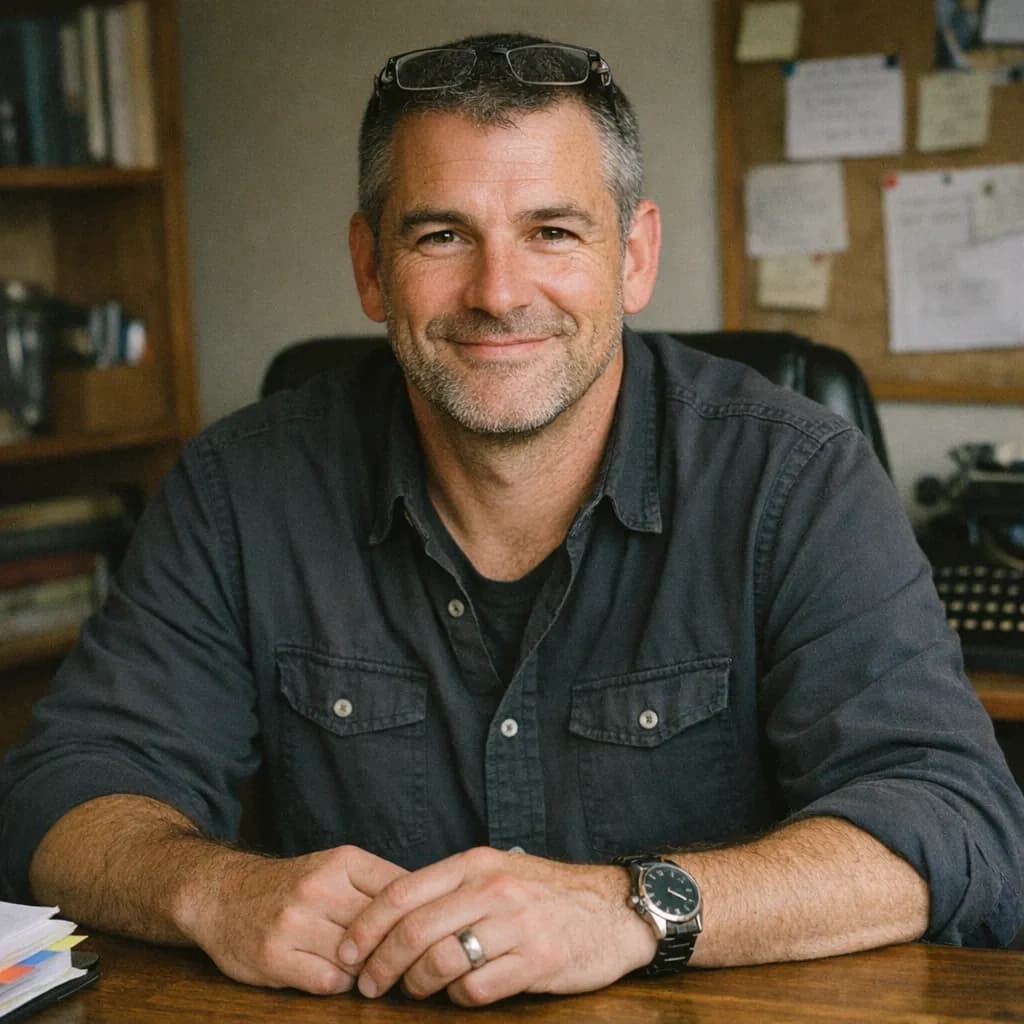
J’ai grandi entre Pont-l’Abbé et Quimperlé, dans une famille où l’on parlait peu des choses importantes. Mon père réparait des bateaux de pêche, ma mère tenait les comptes d’une petite entreprise de matériaux. Les histoires arrivaient par morceaux : une tante qui changeait de sujet, un voisin qui ne passait plus devant une maison, une photo retournée dans un tiroir. J’ai gardé cette manie de croire qu’un silence doit avoir une cause. Je sais que ce n’est pas toujours vrai. Je continue quand même à lire comme ça. Je n’ai pas prévu de travailler avec des manuscrits. J’ai fait de l’histoire, puis un stage aux archives municipales de Lorient parce qu’un autre étudiant s’était désisté. Je classais des dossiers d’urbanisme, des plaintes de voisinage, des lettres sèches envoyées trop tard. Ce qui m’a frappé, ce n’était pas le passé. C’était le moment précis où quelqu’un aurait pu agir autrement. Après ça, j’ai corrigé des dossiers pour une petite maison associative, puis des romans pour des auteurs qui n’avaient pas d’éditeur. Le loyer décidait souvent plus que moi. Pendant deux ans, j’ai aussi travaillé trois soirs par semaine à l’accueil d’une salle d’escalade. Ça ne m’a pas rendu meilleur éditeur, je crois. Je vérifiais des abonnements, je nettoyais des prises, je regardais des gens s’énerver contre un mur jaune. J’aimais la craie sur les mains et le bruit sourd des chutes sur les tapis. Je repense encore à un habitué qui recommençait toujours la même voie sans changer de méthode. Je ne sais pas pourquoi ce souvenir reste là. Aujourd’hui, je lis surtout des romans, des novellas et des nouvelles où les personnages prétendent ne pas choisir. Je suis utile quand une intrigue perd sa colonne vertébrale, quand un secret remplace une décision, quand le climax arrive parce que le plan l’exige. Mon biais est net : je supporte mal les protagonistes longtemps passifs, même quand cette passivité est fine ou réaliste. Je le sais. Je ne corrige pas vraiment ce biais, parce qu’il protège souvent le lecteur contre l’ennui poli.
I grew up between Wagga and my aunt’s place out near Narrandera, in a family that could argue for sport and then feed you like nothing happened. Books were around, but not in a precious way. My old man liked stories where people did what they said they’d do, even if it cost them. I still hear that voice when a character “can’t” make a decision because the plot needs another chapter. I didn’t set out to be an editor. I studied teaching, worked a few rough years in classrooms, and then left after a run of short contracts and one admin reshuffle that made it clear I was replaceable. A mate pulled me into doing learning materials and assessments because I could spot where people were gaming the question. That work taught me to watch for what the text rewards versus what it claims to reward - which is the same problem in a lot of manuscripts. I also spent a couple of seasons doing night shifts at a servo when money got tight. I kept a notebook behind the counter and wrote scenes between customers, mostly to stay awake. I remember one bloke coming in every Thursday, buying the same pie, and telling me the same story about a dog he swore was smarter than his ex. I don’t know why I remember that, but I do. Editing started as favour-work. People in town found out I’d read their drafts and I’d send back long emails with scene-by-scene notes. Somewhere along the line it became my paid work, mostly because I was consistent and because I’m not afraid to say, “This turn doesn’t belong to your protagonist.” I’m biased toward decisive characters and I don’t plan to cure myself of it; I’d rather a story risk an ugly choice than drift into polite inevitability.
Perguntas comuns sobre como escrever um livro como Anna Karenina.
Use precise motive-tracking (want → choice → excuse → consequence) to make ordinary scenes feel inevitable and morally charged.
Tolstoy writes like a moral instrument, not a mood. He takes ordinary social life—meals, visits, dances, paperwork—and loads it with consequence by tracking what people want, what they say, and what they do instead. The trick is not “big themes.” The trick is relentless clarity about motives, plus the courage to show the motive changing mid-sentence.
He builds meaning by splitting the reader in two. One part enjoys the story; the other part judges it. He creates that split with a steady supply of close, specific observation and then a sudden, clean generalization that feels earned. He makes you complicit in a character’s rationalizations, then he turns the light on and shows the cost.
His technical difficulty hides in his apparent simplicity. The sentences look plain until you notice how they carry multiple time-scales at once: the instant of perception, the memory it triggers, the social script the character performs, and the ethical verdict hovering above it. You can’t fake that by writing long or “Russian.” You need control of viewpoint, selection, and timing.
Tolstoy also models ruthless revision in practice: he reworked scenes to sharpen cause-and-effect, recalibrate sympathy, and strip out “writerly” fog. Modern writers need him because he proves you can write with maximum readability and still deliver maximum psychological pressure. He changed the novel by making the inner life feel testable—like evidence, not decoration.
Abre o Draftly, traz o teu rascunho, e passa de bloqueado a um rascunho mais forte sem perder a tua voz. Os editores estão de prontidão quando quiseres uma passagem mais aprofundada.
🤑 Créditos de boas-vindas gratuitos incluídos. Sem cartão de crédito.Tolstoy also counterweights Anna’s plot with Levin’s, not as a theme lecture but as structural contrast. Levin’s line doesn’t “prove” anything; it creates a second measurement system for meaning: work, land, faith, family, ordinary time. The alternation matters because it prevents the book from becoming a single-arc cautionary tale. It also keeps your nervous system from numbness. When Anna’s chapters start to feel like a fever dream, Levin’s chapters reset the baseline of what a stable life might look like—so Anna’s slide registers as a real loss, not just “tragic vibes.”
By the late stages, Tolstoy raises the most dangerous stake: Anna’s ability to trust her own mind. He shows how isolation, jealousy, and social exile distort perception. Even love becomes ambiguous because it must survive in a world that punishes it. The climax lands because Tolstoy has already trained you to see the trap: Anna doesn’t face one terrible choice; she faces a chain of smaller choices that each looked survivable at the time.
If you want to reuse this engine today, don’t copy Russia, trains, or aristocrats. Copy the shape of the pressure. Give your protagonist a desire that society quietly forbids. Put them in rooms where every action gets interpreted. Then, instead of “raising the stakes” with explosions, raise the cost of staying the same person. Make every attempt at relief create a new dependency. That’s the real blueprint.
Estrutura da história e arco emocional em Anna Karenina.
Anna Karenina follows a tragedy arc with a cruelly realistic twist: Anna starts with social belonging and inner confidence, then trades both for a love that can’t coexist with her world. She ends not merely “unhappy,” but cornered—cut off from community, from motherhood as she wants it, and finally from trust in her own perceptions.
The power comes from Tolstoy’s timing of relief and recoil. He gives Anna short peaks of warmth—dances, declarations, the sense of being chosen—then he immediately attaches a social price tag. Each low point lands harder because it arrives after a moment that promised stability: a reconciliation that doesn’t hold, a move that should feel like freedom but turns into exile, a love scene that leaves behind a bill of suspicion and shame.
O que os escritores podem aprender com Leo Tolstoy em Anna Karenina.
Tolstoy controls distance like a master editor. He shifts from close interiority to cool social observation inside the same sequence, so you feel Anna’s hunger and also watch it get judged. That dual lens stops the book from becoming a romance told in soft focus. You learn a practical lesson: when you write a “sympathetic” protagonist, don’t cement the camera to their skull. Let the room have opinions. Let the reader hold two truths at once.
He builds scenes as moral laboratories, not as “plot delivery.” Take the early Moscow sections: the Oblonsky household crisis doesn’t exist to warm up the audience. It stages a theme Tolstoy can vary—betrayal inside marriage—then it introduces Anna as someone who thinks she can manage other people’s chaos. Later, Tolstoy replays that pattern with higher voltage: Anna can advise Dolly, but she can’t advise herself. Modern novels often skip this kind of preparatory mirroring and then wonder why the climax feels unearned.
Notice how Tolstoy writes dialogue as social combat without turning it into quips. In Anna’s conversations with Karenin, they rarely argue about the affair directly at first; they argue about wording, timing, propriety, what “one must” do. That choice matters. People in real life defend themselves with abstractions because abstractions feel clean. If you write every conflict as blunt confession, you flatten class, fear, and self-deception. Tolstoy lets subtext carry the knife.
He also treats atmosphere as economics. He doesn’t describe St. Petersburg salons or the theater to show off wallpaper; he shows you who gets to sit where, who can speak first, who can pretend not to notice. A single location becomes a hierarchy you can feel in your body. Many modern writers use setting as a quick establishing shot and move on. Tolstoy makes setting a rulebook, and then he breaks his characters against it—slowly enough that you believe every fracture.
Dicas de escrita inspiradas em Anna Karenina de Leo Tolstoy.
Write with moral energy, not moral commentary. Tolstoy never sounds like he tries to impress you with cleverness; he sounds like he refuses to lie. You can borrow that tone by cutting your “point-making” sentences and replacing them with concrete perceptions, awkward pauses, and unflattering self-justifications. Make your narrating intelligence sharp, but keep it curious. If you sneer at your characters, you will shrink the story. If you excuse them, you will also shrink it.
Construct characters as bundles of conflicting loyalties, not as traits. Anna wants love, status, motherhood, and self-respect, and those wants cannot all fit in the same room. Karenin wants order, dignity, and moral certainty, and he cannot admit how much he craves affection. Vronsky wants devotion without losing his mirror. Give every major character a public self they protect and a private need they can’t confess. Then force those parts to collide under observation.
Don’t fall into the prestige-tragedy trap where suffering substitutes for causality. Tolstoy earns pain through choices that look reasonable when they happen. He also refuses the shortcut of making society a cartoon villain. Society operates through individuals who act “politely” while they punish. If you write your world as purely oppressive, you remove temptation, and you remove the protagonist’s complicity. Keep the world seductive. Let your character enjoy the very thing that will later exclude them.
Write a two-track outline the way Tolstoy does. Track A follows a desire that breaks a rule; track B follows a desire that tries to live inside a rule. Alternate scenes so each track comments on the other without speeches. Now draft three key public scenes where onlookers change the meaning of a private act: a glance becomes evidence, a joke becomes insult, a silence becomes admission. After each scene, write the consequence as a lost option, not a new problem.
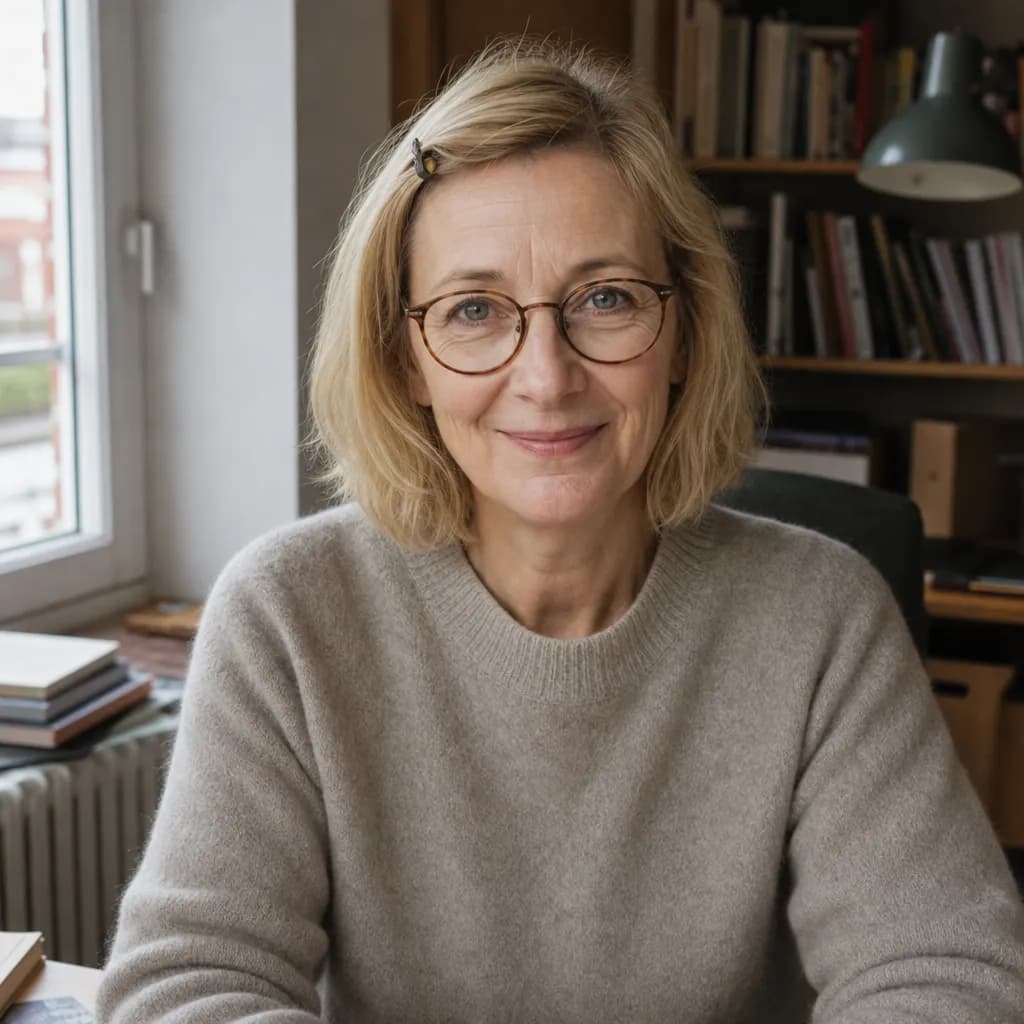
Je suis née à Bourges, dans une famille où l’on parlait peu des livres mais beaucoup des factures, des repas et des voisins. Mon père réparait des machines agricoles. Ma mère tenait les comptes d’une petite entreprise de menuiserie. On ne m’a pas élevée dans l’idée que les histoires sauvaient quoi que ce soit. Pourtant, le dimanche soir, je lisais dans le couloir, assise contre le radiateur, parce que ma chambre était trop froide et que le salon appartenait à la télévision. J’ai d’abord travaillé dans une bibliothèque municipale, puis dans une librairie à Orléans, et je suis arrivée en Belgique après une séparation que je n’avais pas prévue. Le poste à Tournai était temporaire. Je devais rester six mois. J’y suis encore. Une éditrice locale m’a demandé un jour de lire un manuscrit parce que sa lectrice habituelle était malade. J’ai rendu douze pages de notes sur les décisions du personnage principal au lieu de corriger les adjectifs. Elle m’a rappelée. Pendant trois ans, j’ai aussi tenu la caisse d’une petite salle de cinéma. Ce n’était pas glorieux. Je vendais des tickets, je vérifiais les réservations, je ramassais des gobelets après les séances tardives. Je ne sais pas si cela m’a rendue meilleure lectrice. Je me souviens surtout d’un vieil homme qui venait tous les jeudis, même pour les mauvais films, et qui disait toujours : « Au moins, ils ont essayé. » Je n’ai jamais su si je trouvais ça tendre ou lâche. Aujourd’hui, je travaille surtout avec des romanciers qui ont déjà une matière vivante mais pas encore une colonne vertébrale. Je suis bonne pour repérer les scènes qui décorent au lieu de modifier le cours du récit. Je suis moins patiente avec les textes très atmosphériques où rien ne se décide pendant longtemps. Je le sais, et je ne corrige pas vraiment ce biais. Je préfère le nommer tôt. Si un manuscrit me demande d’attendre cent pages avant qu’un personnage agisse, je vais probablement résister.

Coloca o teu rascunho no Draftly. Corrige cenas e diálogos no texto — não noutro separador. Quando quiseres feedback mais afiado, os editores de IA estão prontos.
🤑 Créditos de boas-vindas gratuitos incluídos. Sem cartão de crédito.