Chargement
Nous préparons tout. Cela ne prendra pas longtemps.
Nous préparons tout. Cela ne prendra pas longtemps.
Write a novel that feels infinite without wandering: steal 2666’s engine for building obsession, escalation, and meaning out of seemingly unrelated lives.
Résumé et analyse littéraire de 2666 par Roberto Bolaño.
2666 works because it runs on a single pressure system: obsession collides with a void that refuses to explain itself. The central dramatic question never asks “What happens next?” It asks “Can anyone find the author at the center of this maze, and if they do, will it make the horror make sense?” You watch smart, driven people follow patterns the way gamblers follow a hot hand. Bolaño makes that chase feel like plot, even when he starves you of conventional payoff.
The inciting incident sits early in The Part About the Critics, when Pelletier, Espinoza, Norton, and Morini stop treating Archimboldi as a topic and start treating him as a missing person. They link rumors, sightings, editions, and footnotes, then they choose to travel—first into the machinery of academic prestige, then toward the Mexican border city of Santa Teresa. That decision matters because it turns a private fixation into action, and action creates consequences. If you try to imitate this book by copying the surface (five parts, lots of named characters), you will miss the real trigger: a collective desire hardens into a quest.
Your “protagonist” here shifts, but the book still behaves like it has one: the seeker. In each section, a different character wears that role—four critics, a journalist (Fate), a policeman (Juan de Dios Martínez), and finally Archimboldi himself. The primary opposing force never takes a neat human form. Santa Teresa does. It operates as an adversary made of bureaucracy, impunity, misogyny, desert geography, and the everyday shrug that says, “That’s just how it is here.” Individual men commit crimes, but the system supplies cover, and that system fights like weather.
Bolaño sets the story across late-20th-century Europe and the Americas, but he pins its dread to a specific place and texture: Santa Teresa in the Sonoran desert, with maquiladoras, cheap motels, police stations that run on favors, and empty lots where bodies appear. He uses real-world gravity (the Ciudad Juárez femicides) without turning the book into a message with a bow. He makes the setting behave like a magnet. People arrive for different reasons, and the city reorders their lives around its hidden mass.
The stakes escalate by switching what “success” even means. At first, the critics want intellectual possession: to find Archimboldi, to own the story. Then the novel drags you into moral stakes: the murders of women, the numbing repetition of violence, the cost of looking and not acting. In The Part About the Crimes, the book stops flattering your readerly appetite for mystery. It dares you to keep reading while it denies the comforts of “clues” and “closure.” That choice forces you to feel your own consumption of horror.
Découvrez les éditeurs spécialisés dans des livres comme celui-ci et qui seraient ravis de travailler sur des projets similaires.
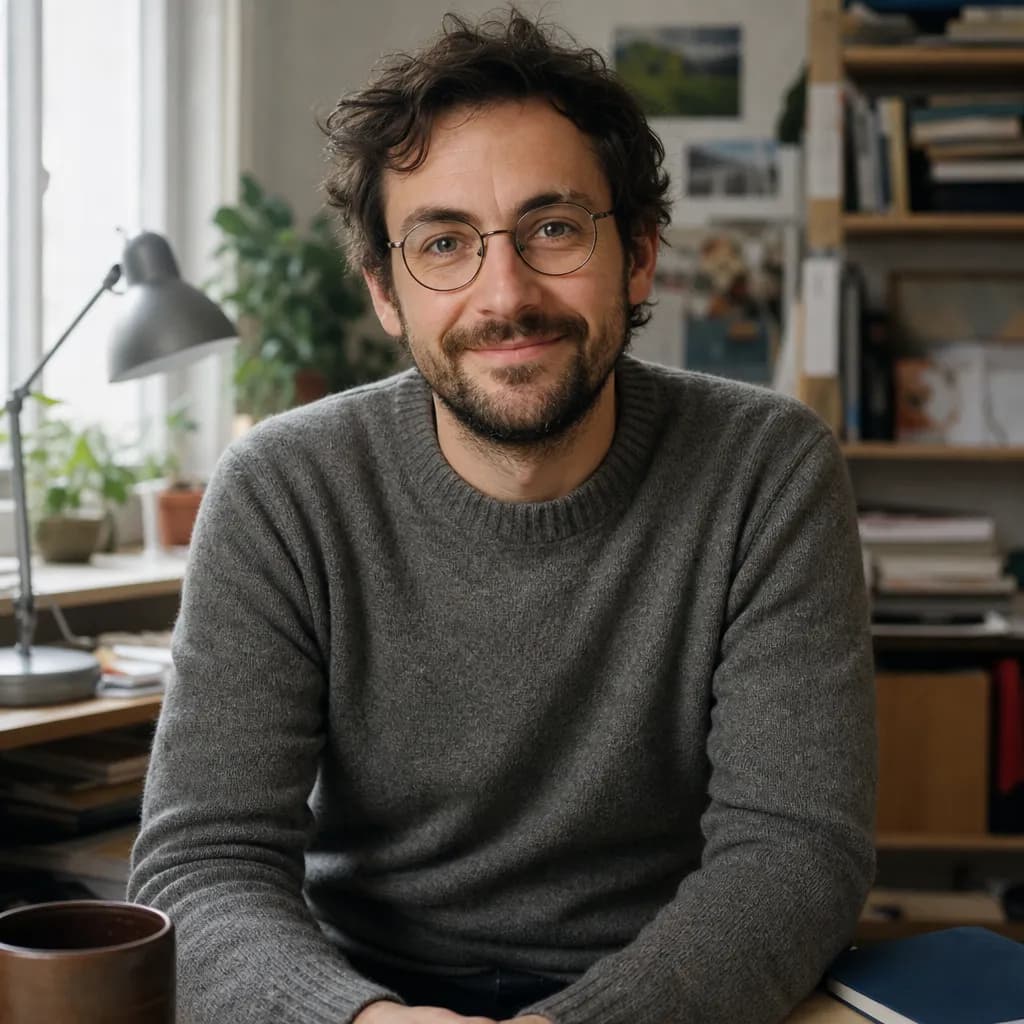
J’ai grandi entre Pont-l’Abbé et Quimperlé, dans une famille où l’on parlait peu des choses importantes. Mon père réparait des bateaux de pêche, ma mère tenait les comptes d’une petite entreprise de matériaux. Les histoires arrivaient par morceaux : une tante qui changeait de sujet, un voisin qui ne passait plus devant une maison, une photo retournée dans un tiroir. J’ai gardé cette manie de croire qu’un silence doit avoir une cause. Je sais que ce n’est pas toujours vrai. Je continue quand même à lire comme ça. Je n’ai pas prévu de travailler avec des manuscrits. J’ai fait de l’histoire, puis un stage aux archives municipales de Lorient parce qu’un autre étudiant s’était désisté. Je classais des dossiers d’urbanisme, des plaintes de voisinage, des lettres sèches envoyées trop tard. Ce qui m’a frappé, ce n’était pas le passé. C’était le moment précis où quelqu’un aurait pu agir autrement. Après ça, j’ai corrigé des dossiers pour une petite maison associative, puis des romans pour des auteurs qui n’avaient pas d’éditeur. Le loyer décidait souvent plus que moi. Pendant deux ans, j’ai aussi travaillé trois soirs par semaine à l’accueil d’une salle d’escalade. Ça ne m’a pas rendu meilleur éditeur, je crois. Je vérifiais des abonnements, je nettoyais des prises, je regardais des gens s’énerver contre un mur jaune. J’aimais la craie sur les mains et le bruit sourd des chutes sur les tapis. Je repense encore à un habitué qui recommençait toujours la même voie sans changer de méthode. Je ne sais pas pourquoi ce souvenir reste là. Aujourd’hui, je lis surtout des romans, des novellas et des nouvelles où les personnages prétendent ne pas choisir. Je suis utile quand une intrigue perd sa colonne vertébrale, quand un secret remplace une décision, quand le climax arrive parce que le plan l’exige. Mon biais est net : je supporte mal les protagonistes longtemps passifs, même quand cette passivité est fine ou réaliste. Je le sais. Je ne corrige pas vraiment ce biais, parce qu’il protège souvent le lecteur contre l’ennui poli.
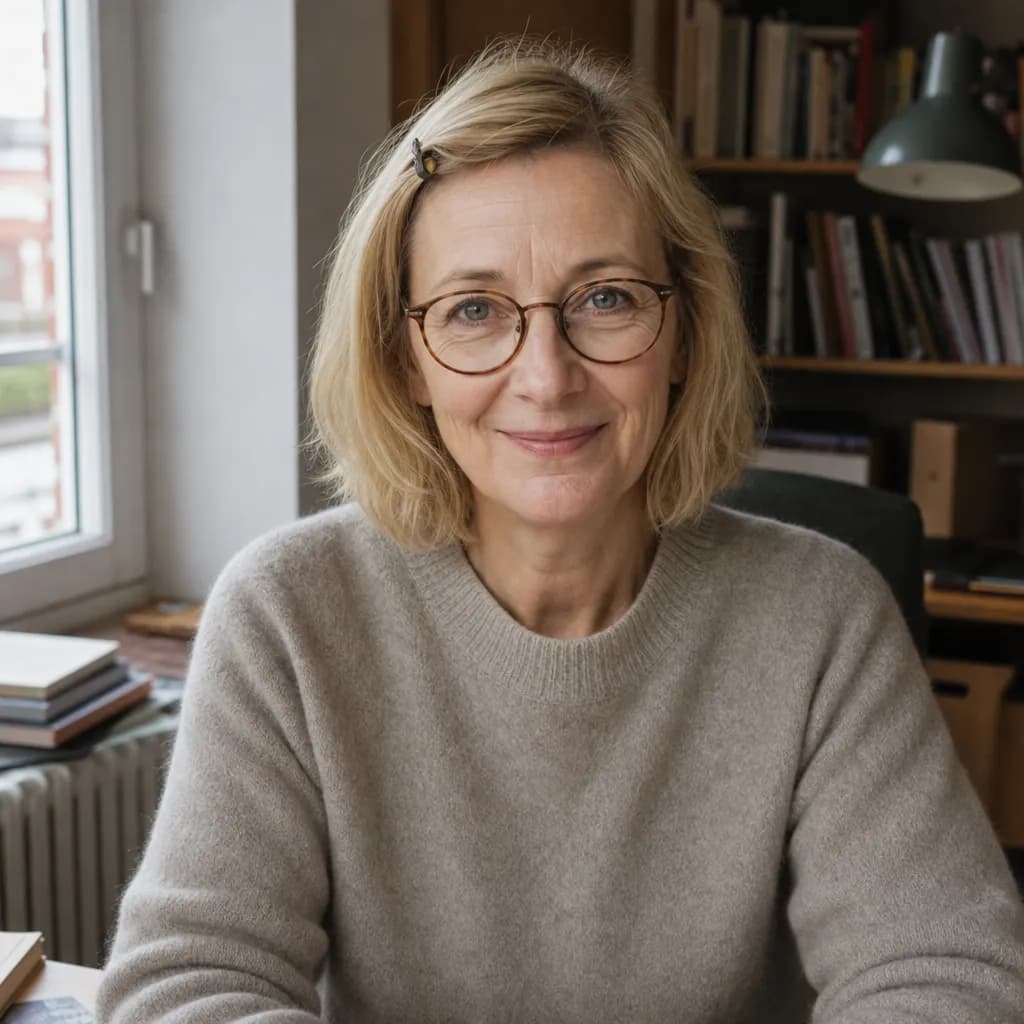
Je suis née à Bourges, dans une famille où l’on parlait peu des livres mais beaucoup des factures, des repas et des voisins. Mon père réparait des machines agricoles. Ma mère tenait les comptes d’une petite entreprise de menuiserie. On ne m’a pas élevée dans l’idée que les histoires sauvaient quoi que ce soit. Pourtant, le dimanche soir, je lisais dans le couloir, assise contre le radiateur, parce que ma chambre était trop froide et que le salon appartenait à la télévision. J’ai d’abord travaillé dans une bibliothèque municipale, puis dans une librairie à Orléans, et je suis arrivée en Belgique après une séparation que je n’avais pas prévue. Le poste à Tournai était temporaire. Je devais rester six mois. J’y suis encore. Une éditrice locale m’a demandé un jour de lire un manuscrit parce que sa lectrice habituelle était malade. J’ai rendu douze pages de notes sur les décisions du personnage principal au lieu de corriger les adjectifs. Elle m’a rappelée. Pendant trois ans, j’ai aussi tenu la caisse d’une petite salle de cinéma. Ce n’était pas glorieux. Je vendais des tickets, je vérifiais les réservations, je ramassais des gobelets après les séances tardives. Je ne sais pas si cela m’a rendue meilleure lectrice. Je me souviens surtout d’un vieil homme qui venait tous les jeudis, même pour les mauvais films, et qui disait toujours : « Au moins, ils ont essayé. » Je n’ai jamais su si je trouvais ça tendre ou lâche. Aujourd’hui, je travaille surtout avec des romanciers qui ont déjà une matière vivante mais pas encore une colonne vertébrale. Je suis bonne pour repérer les scènes qui décorent au lieu de modifier le cours du récit. Je suis moins patiente avec les textes très atmosphériques où rien ne se décide pendant longtemps. Je le sais, et je ne corrige pas vraiment ce biais. Je préfère le nommer tôt. Si un manuscrit me demande d’attendre cent pages avant qu’un personnage agisse, je vais probablement résister.
Questions courantes sur l'écriture d'un livre comme 2666.
Use witness-style narration (testimony, lists, reports) to create credibility fast—then withhold the motive so the reader supplies the dread.
Roberto Bolaño writes like an investigator who refuses to solve the case. He builds meaning by stacking testimonies, rumors, letters, travel anecdotes, and half-remembered scenes until the reader starts doing the joining-up. The trick is not “mystery.” It’s delegated attention: he makes you notice what the characters refuse to name, then he leaves you alone with it.
His engine runs on drift with purpose. He lets scenes wander through bookstores, cheap rooms, deserts, bars, and conversations that feel offhand—then he locks in a detail that changes the temperature. The reader’s psychology flips from relaxed to alert because the narration acts casual while the stakes keep creeping up.
The technical difficulty hides in the balance. Bolaño keeps a plain surface and an unstable structure: long stretches of report-like calm, sudden lyric spikes, and hard cuts that pretend they aren’t cuts. He also knows when to withhold the “why.” He offers credible specificity (names, dates, jobs, addresses) so you’ll accept spiritual uncertainty.
Modern writers need him because he proved you can write big moral novels without tidy moral math. He showed how to make a story feel like a continent: partially mapped, full of dead ends, and still compulsive. His drafting approach often favored accumulation—writing outward, collecting fragments—then revising by arrangement: what to place next, what to omit, and where to stop so the silence keeps working after the last line.
Ouvrez Draftly, apportez votre brouillon, et passez du blocage à un texte plus solide sans perdre votre voix. Des éditeurs sont disponibles quand vous souhaitez un regard plus approfondi.
🤑 Crédits de bienvenue offerts inclus. Aucune carte bancaire requise.The structure looks like a series of novellas, but it behaves like a single long sentence with five clauses. Each part introduces a method of knowing—criticism, confession, journalism, police procedure, biography—and then shows you its limits. The book’s engine builds meaning through recurrence: names reappear, minor incidents echo, locations repeat, and the same unsolved absence (why this violence, why this city, where does Archimboldi fit) keeps tightening.
The climax does not “solve” Santa Teresa. It reframes it. When Bolaño finally gives you Archimboldi’s life—Germany, war, publishing, the slow construction of a writer—he does not redeem the violence or explain it away. He shows you how a person becomes a maker of stories in a world that manufactures slaughter. If you imitate this naively, you will chase sprawl as a virtue. Bolaño earns sprawl by making every detour pay rent to the same landlord: obsession meets the void, and the void collects.
Structure narrative et arc émotionnel dans 2666.
2666 uses a subversive hybrid of “Quest” and “Tragedy,” where each seeker starts with confidence in a method—scholarship, reporting, policing, biography—and ends with a bruised awareness of what that method cannot touch. The internal starting state reads as mastery: the critics think interpretation equals control; Fate thinks professionalism equals safety; the investigators think procedure equals progress. The ending state looks like chastened witness: they can name details, but they cannot fix the world that produces them.
The major sentiment shifts land because Bolaño swaps the reader’s contract midstream. He begins with witty intellectual pursuit and social comedy, then drags that energy into a landscape where wit feels obscene. The low points hit hardest in The Part About the Crimes because he replaces “mystery escalation” with “accumulation,” and the repetition turns each new body into both a singular tragedy and a statistical unit. The climactic force arrives not through a showdown but through revelation of context: Archimboldi’s biography reframes the entire book as a study of how art and atrocity share the same century and the same air.
Ce que les écrivains peuvent apprendre de Roberto Bolaño dans 2666.
Bolaño builds propulsion without a single “main plot” by treating obsession as the plot and switching lenses instead of escalating set pieces. Each part works like a different genre machine—campus satire, confessional melodrama, reportage, procedural, wartime biography—but all of them point at the same absence. He uses recurrence the way a composer uses a motif: Santa Teresa, Archimboldi, rumors, lists, and secondary characters keep reappearing in altered contexts, so your brain keeps trying to reconcile them. That reconciliation impulse becomes your page-turner.
He also controls tone with ruthless line-level discipline. He writes clean, often matter-of-fact sentences, then drops a jolt of surreal or comic detail at the exact moment you start to relax. In Santa Teresa scenes, he often gives you concrete logistics—streets, lots, bus rides, police stations—then lets dread seep in through what characters refuse to say. That restraint beats the modern shortcut of “atmosphere by adjective,” where writers stack gloomy words and hope the reader supplies fear. Bolaño makes fear from behavior, timing, and omission.
Watch how he handles dialogue: he lets it expose hierarchies, not just personality. The critics talk about Archimboldi with competitive tenderness, and their conversations double as dominance games—who knows more, who counts more, who gets Norton’s attention. Later, when Fate talks with Rosa Amalfitano, the conversation turns practical and urgent; it carries the subtext “leave now” without turning into a speech about evil. Bolaño avoids the TED Talk line. He lets dialogue move like real talk: partial, sidelong, full of social risk.
The most audacious device sits in The Part About the Crimes: the near-forensic repetition of murder reports. Many writers mistake that section for “shock value.” It does the opposite. It drains sensationalism by refusing narrative reward, and it forces you to feel the ethics of attention—what it means to look, to list, to move on. Contemporary fiction often tries to solve violence with a twist or a villain you can hate. Bolaño keeps the wound open because the system keeps it open. That choice gives the novel its moral voltage and its strange, unbearable honesty.
Conseils d'écriture inspirés de 2666 par Roberto Bolaño.
Write in a voice that trusts plain statements. If you want Bolaño’s authority, you cannot perform it. You earn it by naming what happens without showing off, then letting one strange detail tilt the whole paragraph. Keep your jokes dry and situational, not wink-at-the-reader. And keep your metaphors on a short leash. When you feel the urge to “sound literary,” stop and ask what your narrator observes that another narrator would miss. Precision beats prettiness every time.
Build characters as vectors of attention. Each major figure in 2666 fixates on a different object and reveals themselves through that fixation: the critics on Archimboldi, Fate on responsibility, the police on procedure, Amalfitano on sanity and fatherhood, Archimboldi on survival and writing. Give every viewpoint character a competence and a blind spot, then test both under stress. Do not “develop” them with backstory dumps. Make them choose, hesitate, rationalize, and misread people in scenes.
Do not confuse sprawl with depth. The common pitfall in books that imitate 2666 involves random tangents, cameo characters, and loosely connected horrors that never accrue meaning. Bolaño connects everything through repeating pressures: institutional shrug, male entitlement, the seduction of interpretation, the failure of systems, the desert’s vastness. If you cannot name the pressure system in one sentence, you will write a bag of fragments. Your reader will feel that you lost the thread, even if you insist you meant it.
Try this exercise: write five short “parts” (1,500–3,000 words each) about the same invisible center. Change the method in each part: a scholar’s pursuit, a family member’s letter, a reporter’s assignment, a cop’s case log, a biography. In every part, plant the same three recurring elements—a place, a name, and an object—but change their meaning each time. End each part with an action decision, not a revelation. Then revise for two things only: clean sentences and escalating moral stakes.

Je viens d’une petite ville près de la plage, dans le sud de la France, entre les pins, les façades claires et les serviettes qui sèchent sur les balcons. Enfant, je lisais sur le sable avec les genoux pleins de crème solaire et je détestais quand les adultes disaient qu’une histoire était belle parce qu’elle finissait bien. Je voulais savoir pourquoi elle finissait comme ça. Ma grand-mère disait souvent qu’une fille raisonnable ne réclame pas la place du conducteur. Je ne suis pas d’accord avec elle. Pourtant, quand je lis une scène, je remarque encore qui tient le volant. Je n’ai pas choisi ce métier avec une grande vision. À dix-neuf ans, je travaillais l’été dans une librairie de bord de mer parce que la propriétaire connaissait ma mère et avait besoin de quelqu’un tout de suite. J’emballais des polars, je rangeais des romances cornées, je souriais aux touristes qui demandaient un roman pas trop triste. Une cliente revenait chaque semaine avec un manuscrit imprimé dans un sac de plage. Elle me faisait lire dix pages pendant ma pause. Je ne corrigeais pas les phrases. Je lui disais où je ne croyais plus au personnage. Plus tard, j’ai suivi un amoureux à Montréal, puis je suis restée au Québec après la rupture parce que le bail était à mon nom et que je n’avais pas l’énergie de tout refaire. J’ai fait de la bêta-lecture pour des autrices francophones, puis de l’accompagnement narratif pour des manuscrits qui avaient de jolies scènes mais aucun vrai basculement. À force, j’ai compris que je lis vite la promesse d’un roman. Je vois assez tôt quand une scène existe seulement parce que l’auteur aime son décor, sa repartie ou son atmosphère. Je vis maintenant à Rimouski, où le fleuve me donne l’impression d’une mer qui réfléchit avant de parler. Je suis bonne pour repérer les choix absents, les enjeux qui se réinitialisent et les fins qui demandent au lecteur de pardonner trop vite. Mon biais, je le connais : je fais moins confiance aux récits très contemplatifs qui refusent l’action nette. Je pourrais corriger ça. Je ne le fais pas vraiment. Si un personnage ne choisit jamais, je finis par lire le silence comme une esquive.

Déposez votre brouillon dans Draftly. Corrigez scènes et dialogues directement dans le texte—pas dans un autre onglet. Quand vous voulez un retour plus approfondi, des éditeurs IA sont prêts.
🤑 Crédits de bienvenue offerts. Aucune carte bancaire requise.