How to start a story
A first line is a decision about where to cut into a scene you already have. Ten ways in with the cost of each attached, three famous first sentences read closely, and one scene opened at four different points so you can watch the choice being made.
What an opening has to do
Sol Stein timed it. In Stein on Writing he describes lunch-hour browsers giving a novel about three pages: jacket copy, page one, then buy it or put it back on the table. That is where the advice to hook your reader comes from.
Verlyn Klinkenborg refuses the premise. The reader doesn't need grabbing, he writes in Several Short Sentences About Writing, and a first sentence built to seduce is usually one trying to do too much. He judges an opening by what it promises rather than by what it grabs.
Neither man forgives the flat opening, and neither does David Lodge, whose survey of first paragraphs in The Art of Fiction supplies most of the list below: the couple who love each other and do not argue, the paragraph that clears its throat, the sentence that generalises because the writer has not yet decided what the scene is. Their disagreement is about the cure.
Ten ways to open a story, and what each one costs you
The omen and the character-in-danger entries come from Stein and the rest from Lodge, neither of whom ranks the list, and the order given here is not a ranking either. Every move costs something, and the cost is the column most advice leaves out: a move you cannot pay for later is a move to leave alone.
| The opening | What it buys | What it costs |
|---|---|---|
| A voice naming itself | A person before a plot. The reader has somebody to sit with on page one. | Nothing is at stake yet, so the second sentence has to supply the stake. |
| A place, described at length | Atmosphere, scale, and a reason the story could happen only here. | The reader is waiting for a human being. Hardy opens The Return of the Native on Egdon Heath and can afford that wait. Most drafts cannot. |
| A conversation already running | Speed. The reader lands mid-thought and has to catch up, which is a form of attention. | Two unnamed voices are hard to tell apart, and confusion is not the same thing as curiosity. |
| An aphorism | A frame the whole book then gets read through. | It generalises, which is the one move Klinkenborg says an opening must not make. |
| A character in immediate danger | Urgency the reader feels before they know who is in trouble. | Danger without attachment is noise. The attachment has to arrive within a page or the danger stops counting. |
| A frame story | Permission to tell it strangely, and a narrator whose motives can be doubted. | A second layer to build before the first one moves. |
| An opinion delivered as fact | A whole community characterised in one sentence. | It works only if the reader hears the irony. Miss it and you have simply published the opinion. |
| A shove at literary convention | A voice unlike anything else on the shelf. | It dates. Salinger's crack about David Copperfield needs a reader who has met David Copperfield. |
| An omen inside ordinary description | Dread the reader cannot locate, which is the kind that lasts. | It is slow. You need three or four sentences before it lands, and an impatient reader leaves after two. |
| Something that does not happen | A shape. What is forbidden tells the reader what the book is about. | To anyone hunting for a hook it reads as no opening at all, and some of those people are agents. |
Three of the ten are read closely below, on the first sentences of Moby-Dick, Pride and Prejudice and Jane Eyre.
Three first sentences, and what each one is doing
Three openings from books you can check for yourself, each taking a different move from the table above.
1Herman Melville, Moby-Dick (1851)
A voice naming itself, in three words.
Three words, and two of them are working. Call is an instruction. So the narrator is speaking to somebody, and somebody is listening. Me is not a name. Ishmael is what he wants to be called, and Melville leaves the gap between those two facts open for the length of Moby-Dick. Lodge files this under the arresting self-introduction, and the arrest is in the grammar rather than in any drama. Nothing has happened yet. A voice has started. Melville spends his next sentence on the state of his purse, which is the least urgent information available to him, and it costs him nothing, because the promise was already made.
Try this. Write your first sentence as an instruction to someone. Then work out who is listening.
Call me Ishmael.
2Jane Austen, Pride and Prejudice (1813)
An opinion delivered as fact, with the narrator watching the people who hold it.
A truth. Universally acknowledged. Must be. The sentence is assembled out of the vocabulary of proof, and what it proves is a piece of neighbourhood gossip about a man who has not arrived. That is the joke, and the joke does the characterisation: not of Bingley, who is still off the page, but of the families who think in this register. Austen has handed you the subject of the novel and the novel's opinion of its subject before a single character speaks. Lodge calls the opening of Emma a velvet glove. This is the same hand, closed a little tighter.
Try this. Take an opinion your characters hold and write it as a fact. Do not signal that you disagree.
It is a truth universally acknowledged, that a single man in possession of a good fortune must be in want of a wife.
3Charlotte Brontë, Jane Eyre (1847)
Something that does not happen.
There is no hook here by any measure Stein would accept. No conflict, no jeopardy, no character who wants something badly. A walk is cancelled. What the sentence has instead is a shape: it opens on the weather and closes on confinement, and the confinement runs the length of the book. The narrator is ten years old, indoors and unwanted, and the first thing she chooses to report is what she was not permitted to do. Read it the way Klinkenborg reads and the promise is plain. Somebody is being kept inside. The question the book answers is who is doing the keeping, and Brontë takes four hundred pages to finish answering it.
Try this. Find the thing your narrator was not allowed to do today, and start there.
There was no possibility of taking a walk that day.
One scene, opened at four different points
Below is a scene in eight sentences. Four of them could be the first line of the book. The events do not change when you move the cut. What changes is what the reader knows first, and how long they will wait for the rest.
Marion's train was late into Doncaster, and she had the key in her coat pocket the whole way.
The flat smelled of the carpet and of nothing else.
She had said she would do the kitchen first, because the kitchen was the part her brother would find a reason to avoid.
Under the sink, behind the bleach, there was a biscuit tin with tape across the lid.
Inside were forty-one letters in the same hand, and the hand was not her father's.
She sat down on the floor with her back against the cupboard door.
She read four of them before she remembered to take her coat off.
Then she put the lid back on and carried the tin out to the car.
- Cut at the train
- The chronological start. It buys a woman with a key and a reason to be nervous, and it costs three sentences before anything is found. This is where most drafts begin, and it is the version the other three are competing with.
- Cut at the tin
- Stein's advice, applied: begin the scene near its climax. The tin arrives on line one and the reader assembles the mother, the brother and the late train afterwards, out of order, while already curious.
- Cut at the letters
- Open on the letters and the book is about the letters. Everything above becomes something the narrator can hand you later in half a line, whenever it suits her to.
- Cut at the coat
- The opening Klinkenborg would go looking for. A woman is reading letters on a kitchen floor with her coat still on, and the promise is in the coat.
First person or third, and what the opening is allowed to know
The person you write in decides what the first sentence can contain. A first-person opening reports only what the narrator noticed, which is a narrow window. A third-person opening can hand over the weather, the year and the state of a marriage before anybody has spoken.
That is why so many first-person novels open on a judgment rather than an event. Ishmael issues an instruction. Jane Eyre reports a walk that did not happen. Both narrators are establishing a temperament, because temperament is the one thing available before the scene has started.
Third person buys width and pays for it in closeness. Third person limited stays inside one head and can open nearly as tight as first person. Omniscient can open anywhere, including above the town, which is why so many nineteenth-century novels begin with a road and a carriage on it.
One test worth running. Write your first sentence twice, once in each person, and see which version has to leave something out. The one that loses information is usually the one to keep, because the thing it cannot say becomes the reason to read on.
What changes when it is a short story
A short story does not get three pages. It gets a paragraph. The opening of a story is doing the work a whole first chapter does in a novel, which is why so much sound advice about openings comes from the people who write them.
The practical difference is what you may defer. A novel can open on a voice and supply the situation by page four, while a story that defers as long has spent a fifth of itself clearing its throat. In a story the first paragraph usually carries the situation and the voice together, which is harder.
Horror opens on the ordinary
Horror is the opening writers ask about most, and the answer is not blood in line one, because a frightening opening sets the ordinary up with unusual care and dread needs something to spoil. Stein's method is to seed one ominous phrase into plain description and let the rhythm carry it, since flat monosyllables at the end of a sentence land heavier than any adjective.
So the horror opening is the omen opening run slower. Give them a room, a routine, one detail in the wrong place. Do not name the wrong detail. A reader who finds it is frightened, and a reader who is told about it has only been informed.
Three moves for a page you cannot start
Each of these works on a draft that already exists, which is the situation most writers are in by the time the opening will not come.
Do not start with the opening
Write the scene you can already see, wherever it falls in the book. A first line is chosen out of a draft that already exists. Stein's advice to journalists holds for novelists: the better opening is often buried further down, and moving it to the front can replace a weaker one and pull the reader through what follows.
Audition them, then throw them away
Klinkenborg's method is to write a great many first sentences and discard them readily, with no sense of loss. The one you keep is whichever promises the most about the sentence after it. That is a faster test than looking for a good sentence.
Delete the paragraph above the action
Read what you have and find the first sentence in which something happens. Cut everything over it. An opening that feels slow is usually a paragraph of setup the writer needed in order to start and the reader does not need in order to continue.
The same opening with an editor on it
Marion's scene once more, this time as the paragraph a writer sent in, read by a developmental editor, with the version that came back after the note.
Drag to compare original and revised text

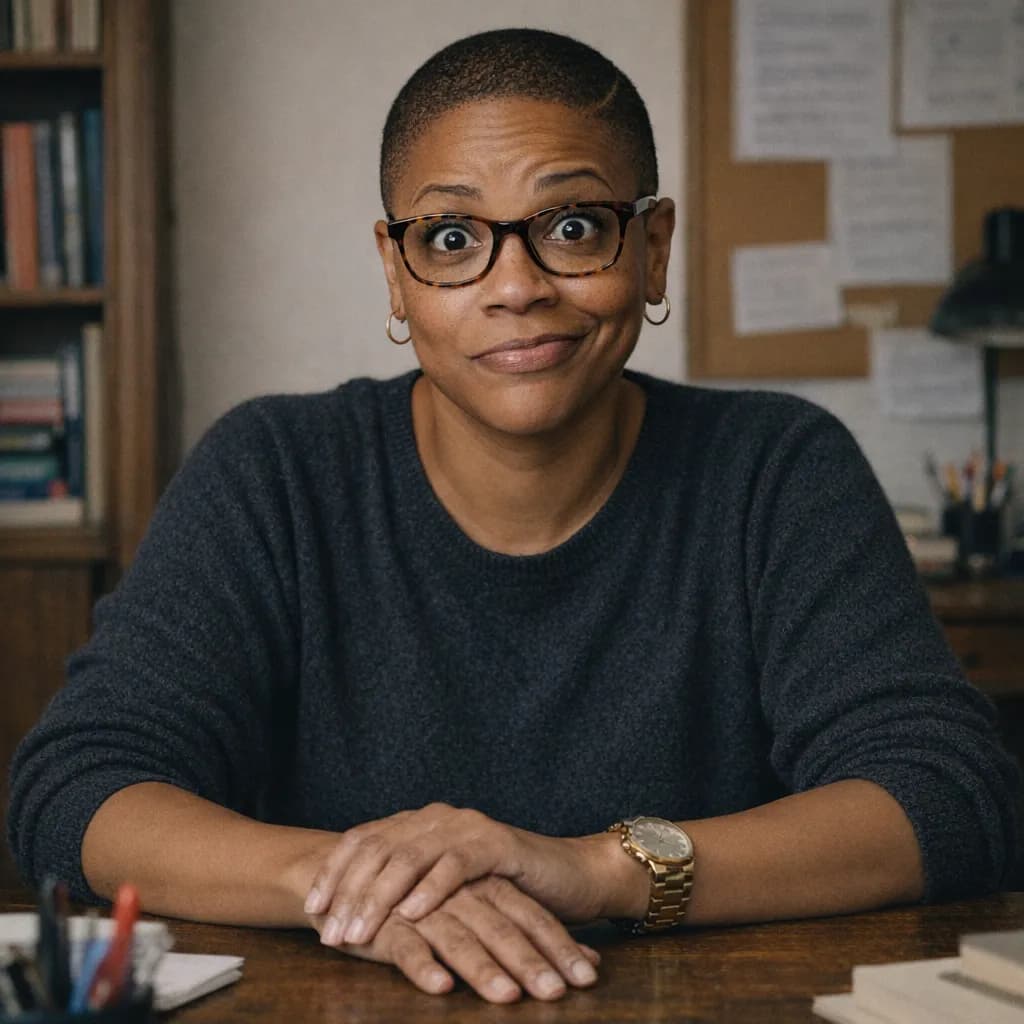
The paragraph above is the same writer's work before and after one note. Nothing was added. A paragraph of setup was cut and one concrete detail was moved to the front.
Questions & Answers
- How do you start a story?
- Cut in as close to the story's turn as you can bear, then judge the line by what it promises rather than by how striking it is. If nothing you write works, the sentence is not where the trouble is: try opening on the scene after the one you have been rewriting.
- How do you start a short story?
- Put the situation and the voice in the same paragraph, because a story has no room to separate them. One page is a rough measure. If the first turn has not arrived by the end of it, you have written a novel opening on a story.
- How do you start a scary story?
- Set the ordinary up carefully, then put one thing in the wrong place and refuse to point at it, because opening on the monster leaves the reader nothing left to lose. The fear lives in the gap between the reader noticing and the narrator admitting.
- What makes a good first sentence?
- A promise about the next sentence, which need not be dramatic. Jane Eyre opens on a walk that is cancelled. The working test is whether the reader is left holding a question they would rather answer than put down.
- When do you start a new paragraph in a story?
- When the speaker changes, when the subject changes, or when you want the reader to slow down. On a first page it matters more than it will later: an early break buys air and makes the page look readable, and a one-sentence paragraph is the strongest emphasis prose has.
- How do you start a story in third person?
- Settle what the narrator may know before you write the line. Third person limited opens inside one character's noticing and reads almost like first person, while omniscient can open above the town and name what no character could see. Keep the whole first page inside whichever you pick.
Find where your story starts
You cannot see which scene is first while the beats are still in your head, so the novel outline template lays them out in order and gives the real opening somewhere to show itself.
Open the novel outline templateUn posto solo per tutto il libro.
Apri un capitolo e tutto quello che gli serve è già accanto: il cast, i luoghi, le regole che hai inventato, la nota che ti sei lasciato a novembre. Niente da cercare, niente da sincronizzare a mano — e senza quell'attrito, i giorni in cui scrivi cominciano a sommarsi.